


Bishkek Adds 6,000 Trees Amid Shrinking Green Space
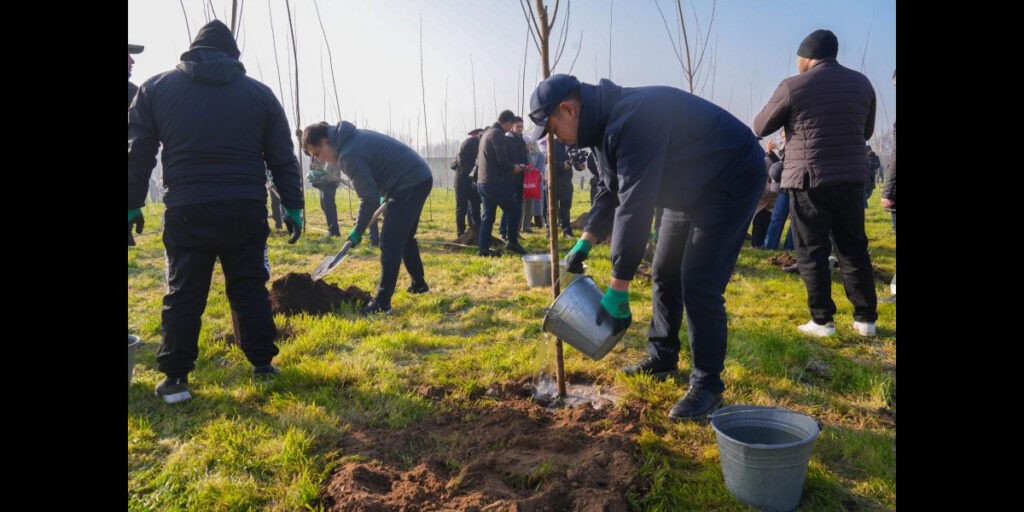
Bishkek planted 6,000 trees along Manas Street on November 14, in what city officials described as a record for a single tree-planting event. The campaign comes amid concerns about the loss of green space to rapid construction in the Kyrgyz capital. Mayor Aibek Junushaliev, members of Kyrgyzstan’s parliament, activists, and residents took part. According to the city administration, 23,232 trees were planted and 110,000 existing trees were treated in the first ten months of 2026. The November 14 event brought this year’s reported plantings to at least 29,232. The city aims to plant 30,000 trees by the end of the year. The Manas Street plantings included 5,263 hybrid poplars, 700 willows, and 37 apple trees. The saplings, which stood three to six meters tall, were grown at a nursery run by the municipal landscaping enterprise Bishkekzelenstroy. The site has an automated irrigation system, and the city plans to plant shrubs and flowers there. At a December 2025 discussion of Bishkek’s master plan, Irina Grishechkina said the city's greenery had fallen by 25%. Grishechkina, one of the plan’s authors and deputy director of the St. Petersburg Research Institute for Prospective Urban Development, linked the decline to rapid housing construction in recent years. Junushaliev directed officials to plant trees only where they can be watered and maintained. He said the city is allocating about 500 million soms ($5.7 million) from its budget to buy saplings. He described the investment as unprecedented for the city’s greening efforts and urged officials to ensure that the newly planted trees survive. The city is also reviewing which trees and flowers are best suited to Bishkek’s climate and considering planting more flowers that grow back each year. Another proposal would encourage businesses to plant at least five tall deciduous trees each. Specialists from Bishkekzelenstroy and the Gareev Botanical Garden say deciduous trees can help filter the air and lower temperatures in hot weather. Urban greening expert Dmitry Pereyaslavsky has also pointed to the role of roadside shrubs in reducing dust and noise. In June 2025, Pereyaslavsky estimated that Bishkek had just 3.5 square meters of public green space per resident. He said parks and small public gardens covered about 3% of the city’s area within its former boundaries. Bishkek’s draft master plan through 2050 called for green corridors along rivers and canals and the development of recreation areas. Kyrgyzstan’s Cabinet of Ministers approved the plan in April 2026. The approved plan sets a target of 16 square meters of public green space per resident, including 6 square meters in residential neighborhoods.
