

• KGS/USD = 0.01144 0%
  • KZT/USD = 0.00199 0%
  • TJS/USD = 0.10503 -0.19%
  • UZS/USD = 0.00008 0%
  • TMT/USD = 0.28571 0%
  • KGS/USD = 0.01144 0%
  • KZT/USD = 0.00199 0%
  • TJS/USD = 0.10503 -0.19%
  • UZS/USD = 0.00008 0%
  • TMT/USD = 0.28571 0%
  • KGS/USD = 0.01144 0%
  • KZT/USD = 0.00199 0%
  • TJS/USD = 0.10503 -0.19%
  • UZS/USD = 0.00008 0%
  • TMT/USD = 0.28571 0%
  • KGS/USD = 0.01144 0%
  • KZT/USD = 0.00199 0%
  • TJS/USD = 0.10503 -0.19%
  • UZS/USD = 0.00008 0%
  • TMT/USD = 0.28571 0%
  • KGS/USD = 0.01144 0%
  • KZT/USD = 0.00199 0%
  • TJS/USD = 0.10503 -0.19%
  • UZS/USD = 0.00008 0%
  • TMT/USD = 0.28571 0%
  • KGS/USD = 0.01144 0%
  • KZT/USD = 0.00199 0%
  • TJS/USD = 0.10503 -0.19%
  • UZS/USD = 0.00008 0%
  • TMT/USD = 0.28571 0%
  • KGS/USD = 0.01144 0%
  • KZT/USD = 0.00199 0%
  • TJS/USD = 0.10503 -0.19%
  • UZS/USD = 0.00008 0%
  • TMT/USD = 0.28571 0%
  • KGS/USD = 0.01144 0%
  • KZT/USD = 0.00199 0%
  • TJS/USD = 0.10503 -0.19%
  • UZS/USD = 0.00008 0%
  • TMT/USD = 0.28571 0%

Viewing results 1 - 6 of 9

Kazakh Government Transfers Control of Controversial Medical Fund to Ministry of Finance

The Kazakh government has restructured the management of the Social Medical Insurance Fund (SMIF), transferring oversight of its operations to the Ministry of Finance. The decision was formalized by Prime Minister Olzhas Bektenov following a comprehensive audit of the fund’s financial activities conducted over the past month. The SMIF serves as the principal operator of Kazakhstan’s Compulsory Social Medical Insurance (CSMI) system. It collects contributions from employees, employers, and the state, then allocates these funds to medical institutions based on the volume of services rendered. However, the fund’s operations have faced sustained public and parliamentary criticism. In January 2025, members of parliament declared that the SMIF had lost the public’s trust and called for tighter oversight of its expenditures. Delayed Audit and Financial Irregularities Despite growing concerns, a large-scale audit had long been postponed. It was not until December 2025 that the Prime Minister tasked the Ministry of Finance with analyzing the fund’s financial flows. Finance Minister Madi Takiev presented the audit’s findings last week. According to the government press service, the results raised serious concerns about the overall effectiveness of the country’s healthcare financing model. Despite a steady rise in expenditures, the Ministry of Finance found that SMIF’s efficiency had not improved. Since 2020, the fund’s investment income totaled $1.1 billion, including $383 million in 2025 alone. A significant portion of these funds, however, was not allocated toward medical services, and instead accumulated in the fund’s reserves. Overbilling and Digital System Failures An IT audit of the healthcare information system revealed extensive violations in service reporting. These included billing for fictitious patients, services provided without medical necessity, and instances of double financing. Numerous cases documented implausibly high volumes of procedures performed within short timeframes. Several high-profile anomalies stood out. In some reports, medical services were recorded for individuals who were deceased at the time. In another case, minors were allegedly prescribed more than a thousand medications in a single day. Tax authorities also conducted a desk audit of the directors of medical institutions, comparing declared incomes with actual property holdings. Transition to Centralized Oversight In response to the audit, Bektenov ordered that all materials be forwarded to law enforcement agencies for further investigation. This marks the effective dismantling of SMIF’s former autonomous governance model in favor of centralized control by the Ministry of Finance. The move comes amid rising fiscal pressure on the healthcare system. In 2026, the government will continue to fund medical insurance premiums for socially vulnerable groups. As previously reported by The Times of Central Asia, the state will finance insurance coverage for over one million unemployed citizens.

Insider’s View – Primary Healthcare 2030: Why Uzbekistan Is Shifting from Hospitals to Prevention and Local Care

For decades, health systems across the world have followed a familiar path: investing in hospitals, expanding specialized care, and treating disease when it becomes severe. Yet evidence from both high- and middle-income countries increasingly shows that this model is costly, inefficient, and poorly suited to today’s disease burden. Uzbekistan’s health reform agenda through 2030 reflects this global rethinking by placing primary healthcare and prevention at the center of the system. The logic is straightforward. The more health problems are resolved at the primary care level, before complications arise, the less pressure there is on hospitals, and the lower the overall cost of care. This principle underpins the World Health Organization’s approach to Universal Health Coverage (UHC) and is now explicitly shaping Uzbekistan’s national strategy. According to the report, “A reformed service delivery system in Uzbekistan should be able to manage about 80% of the population’s outpatient and 85% of inpatient health needs at the primary health care/district level.” The cost of a hospital-centered model Noncommunicable diseases (NCDs) are the main driver behind this shift. In Uzbekistan, as in many countries in the WHO European Region, cardiovascular disease, diabetes, cancer, and chronic respiratory conditions account for the majority of premature mortality. WHO assessments note that the burden of these conditions is rising and that health systems built around inpatient treatment tend to intervene too late, when care is most expensive, and outcomes are poorest. Economic estimates cited in national policy discussions place annual losses associated with NCDs at around $1 billion. These losses are not limited to public spending; they include foregone productivity, long-term disability, and avoidable premature deaths. Without early detection of hypertension, elevated blood glucose, and cholesterol at the primary care level, health systems end up financing complications rather than preventing disease. Diabetes illustrates this dynamic clearly. International projections show a steady rise in adult diabetes prevalence in Uzbekistan through 2045. The most cost-effective interventions, including routine screening, lifestyle counseling, and continuous follow-up, are delivered through primary healthcare. Dialysis, stroke rehabilitation, and complex inpatient care are not. Uzbekistan 2030: from strategy to system design Uzbekistan’s National Health System Strategy 2030 translates this logic into concrete system objectives. Developed with support from the World Bank and international partners, the strategy emphasizes integrated service delivery, strengthened family medicine, and expanded preventive services throughout the country. A central performance objective is resolving the majority of patient needs at the primary healthcare level. This is not about convenience alone; it is about reallocating resources toward early intervention and chronic disease management, while allowing hospitals to focus on cases that genuinely require inpatient treatment. Prevention is being operationalized through specific policy instruments. The strategy includes expanded access to preventive services and micronutrient support, particularly for children and vulnerable groups, with an expected reduction in the prevalence of selected infectious and noncommunicable conditions. This marks a shift from abstract commitments to prevention toward interventions with measurable public health impact. Progress toward UHC provides additional context. According to WHO and World Bank reporting, Uzbekistan’s UHC service...

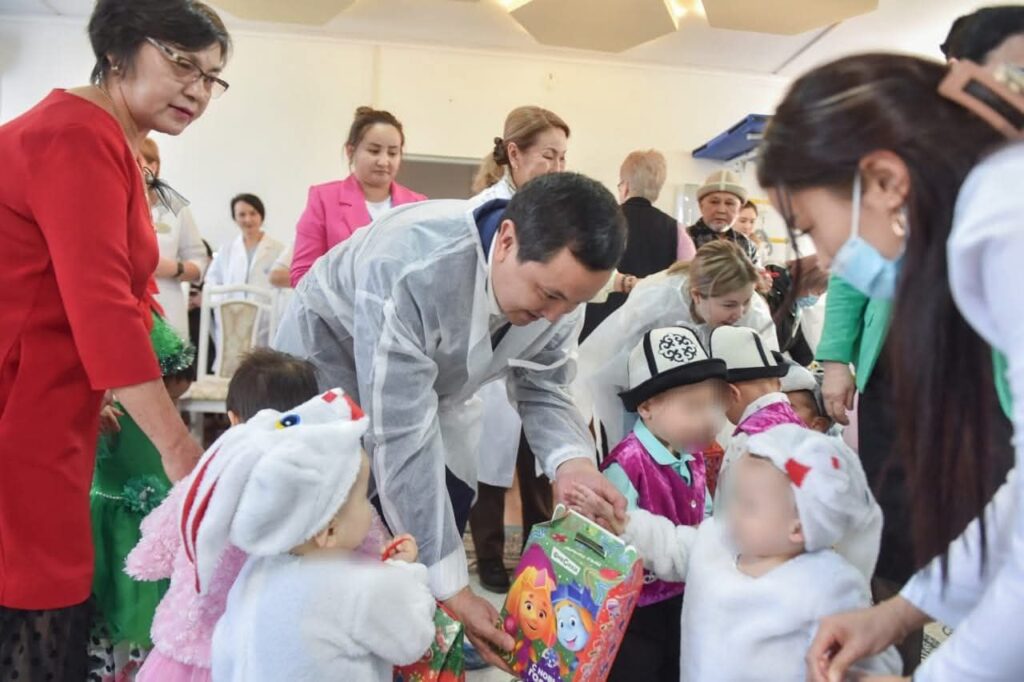
Doctors in Kyrgyzstan to Receive Double Salaries and Subsidized Housing

The Kyrgyz government plans to significantly expand social support for medical workers. According to Health Minister Kanybek Dosmambetov, beginning in April 2026, all doctors across the country will receive a 100% salary increase. In addition, 5,000 mortgage apartments will be provided to medical personnel on a priority basis, bypassing the general housing queue. Dosmambetov announced these measures during visits to the oncology and oncohematology departments of the National Center for Maternal and Child Health and the Center for Child Rehabilitation and Family Support in Bishkek, where he extended New Year greetings to patients and medical staff. Beyond the upcoming salary hike, medical professionals can already benefit from the state mortgage program, which offers access to housing at subsidized interest rates without the standard waiting period. These initiatives, according to the minister, aim to retain skilled personnel in the healthcare sector and enhance the overall appeal of the medical profession. “The ministry has been tasked with effectively reforming the healthcare system, establishing sustainable and transparent mechanisms for its operation, upgrading medical infrastructure, developing maternal and child healthcare, and strengthening public health and disease prevention services,” Dosmambetov said. He added that the coming period will be pivotal for Kyrgyzstan’s healthcare system. Government priorities include establishing a seamless supply chain for affordable, high-quality medicines, ensuring equitable operating conditions for private medical institutions, and reinforcing management discipline and accountability at all administrative levels. Particular attention will also be paid to the adoption of digital technologies aimed at increasing the transparency and accessibility of healthcare services and laying the groundwork for further structural reforms.
