


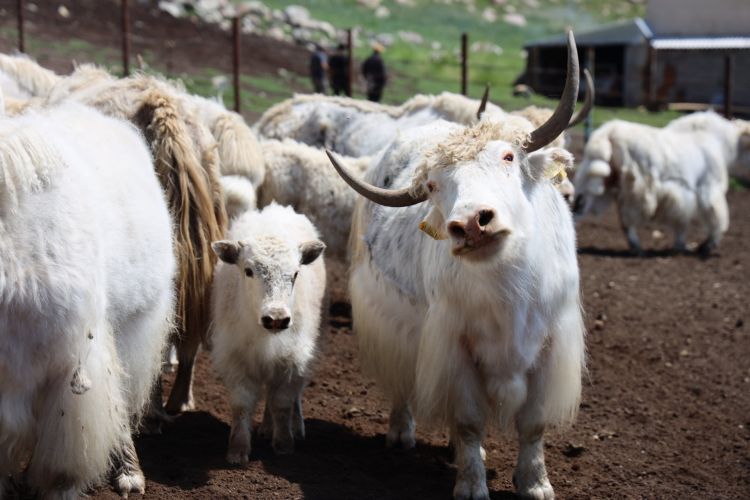
Kyrgyzstan Registers New White Yak Breed to Boost Mountain Livestock Farming
Kyrgyzstan has officially recognized the Kyrgyz White Yak as a new livestock breed after more than a decade of selective breeding. The move is intended to support high-altitude livestock farming and create new export opportunities. The breed was unveiled on July 20 at the high-altitude Syrt pasture in Issyk-Kul Region. Developed between 2014 and 2026, the Kyrgyz White Yak is the result of years of breeding work led by veteran livestock breeder Tashtanbek Akmatov. According to the Ministry of Water Resources, Agriculture and Processing Industry, the animals combine high productivity with strong adaptation to harsh alpine conditions. Unlike traditional dark-coated yaks, the new breed produces naturally white wool and down that can be processed without dyeing, giving it added value for textile manufacturers. Officials say this could help create new export opportunities for Kyrgyz livestock products. Yak farming has been gaining importance in Kyrgyzstan as climate change places increasing pressure on conventional livestock production. At the beginning of 2026, the country had 61,650 yaks, most of them raised in the mountainous Naryn, Issyk-Kul, and Osh regions. Yaks remain on mountain pastures throughout the year and can withstand temperatures as low as -40°C. They are raised for meat, milk, and wool while remaining productive at elevations between 2,000 and 4,500 meters, where other livestock struggle to survive. Officials increasingly see yak farming as a climate-resilient branch of agriculture capable of making use of remote high-altitude pastures while reducing pressure on lower grazing lands. As previously reported by The Times of Central Asia, Kyrgyzstan has expanded pasture restoration and forage production in response to rising livestock numbers. The programs also support farming in mountain regions.
