• KGS/USD = 0.01144 0%
  • KZT/USD = 0.00204 0%
  • TJS/USD = 0.10415 -0.19%
  • UZS/USD = 0.00008 0%
  • TMT/USD = 0.28571 0%
  • KGS/USD = 0.01144 0%
  • KZT/USD = 0.00204 0%
  • TJS/USD = 0.10415 -0.19%
  • UZS/USD = 0.00008 0%
  • TMT/USD = 0.28571 0%
  • KGS/USD = 0.01144 0%
  • KZT/USD = 0.00204 0%
  • TJS/USD = 0.10415 -0.19%
  • UZS/USD = 0.00008 0%
  • TMT/USD = 0.28571 0%
  • KGS/USD = 0.01144 0%
  • KZT/USD = 0.00204 0%
  • TJS/USD = 0.10415 -0.19%
  • UZS/USD = 0.00008 0%
  • TMT/USD = 0.28571 0%
  • KGS/USD = 0.01144 0%
  • KZT/USD = 0.00204 0%
  • TJS/USD = 0.10415 -0.19%
  • UZS/USD = 0.00008 0%
  • TMT/USD = 0.28571 0%
  • KGS/USD = 0.01144 0%
  • KZT/USD = 0.00204 0%
  • TJS/USD = 0.10415 -0.19%
  • UZS/USD = 0.00008 0%
  • TMT/USD = 0.28571 0%
  • KGS/USD = 0.01144 0%
  • KZT/USD = 0.00204 0%
  • TJS/USD = 0.10415 -0.19%
  • UZS/USD = 0.00008 0%
  • TMT/USD = 0.28571 0%
  • KGS/USD = 0.01144 0%
  • KZT/USD = 0.00204 0%
  • TJS/USD = 0.10415 -0.19%
  • UZS/USD = 0.00008 0%
  • TMT/USD = 0.28571 0%

Viewing results 1 - 6 of 8

Hungary Eyes Turkmen Gas to Diversify Energy Imports

Hungary, one of Gazprom’s largest remaining clients within the European Union, is exploring the prospect of importing natural gas from Turkmenistan, The Moscow Times reported. During a recent visit to Ashgabat, Hungary’s Deputy State Secretary for Eastern Relations Development, Ádám Stifter, described Turkmenistan as a promising partner in the energy sector. “Hungary depends on gas imports from different countries, and we view Turkmenistan with great hope. We expect Turkmenistan to become a supplier of gas to Europe, and particularly to Hungary, in the near future,” Stifter said, as quoted by Interfax. The announcement aligns with Budapest’s broader efforts to diversify its energy supply. On Thursday, Hungarian Foreign Minister Péter Szijjártó confirmed that Hungary had signed its longest-ever liquefied natural gas (LNG) agreement, a 10-year deal with French company Engie. Starting in 2028, the contract will provide Hungary with 4 billion cubic meters of LNG, with deliveries continuing through 2038. Earlier in September, Hungary also signed a contract with Shell to purchase 2 billion cubic meters of gas annually for ten years, beginning in 2026. That gas will be delivered via the Czech Republic and Germany. Analysts view Hungary’s interest in Turkmen gas as a notable policy shift. Natalia Milchakova, a senior analyst at Freedom Finance Global, said the move signals a desire to reduce dependence on Russian energy. “Hungary and Slovakia have long relied on Russian oil and gas, but the change in tone from Budapest suggests a drive to diversify supply routes,” she noted. However, the logistics remain complex. Milchakova pointed out that Turkmen gas would likely have to transit through Azerbaijan or Iran, routes complicated by infrastructure limitations and geopolitical challenges, or possibly via the TurkStream pipeline, which is operated in partnership with Gazprom. Hungary currently imports about 4.5 billion cubic meters of Russian gas annually under a long-term contract valid until 2036. According to the Centre for Research on Energy and Clean Air (CREA) in Finland, Hungary spent approximately €500 million on energy imports from Russia in July 2025 alone, €285 million on gas and €200 million on oil. Turkmenistan holds the world’s fourth-largest proven natural gas reserves. However, 80-90% of its gas exports are sent eastward to China via the Central Asia-China pipeline, highlighting the country's long-standing reliance on a single buyer. Strengthening ties with Hungary could signal Ashgabat’s intent to diversify its export geography.

Kazakhstan Begins Oil Exports to Hungary

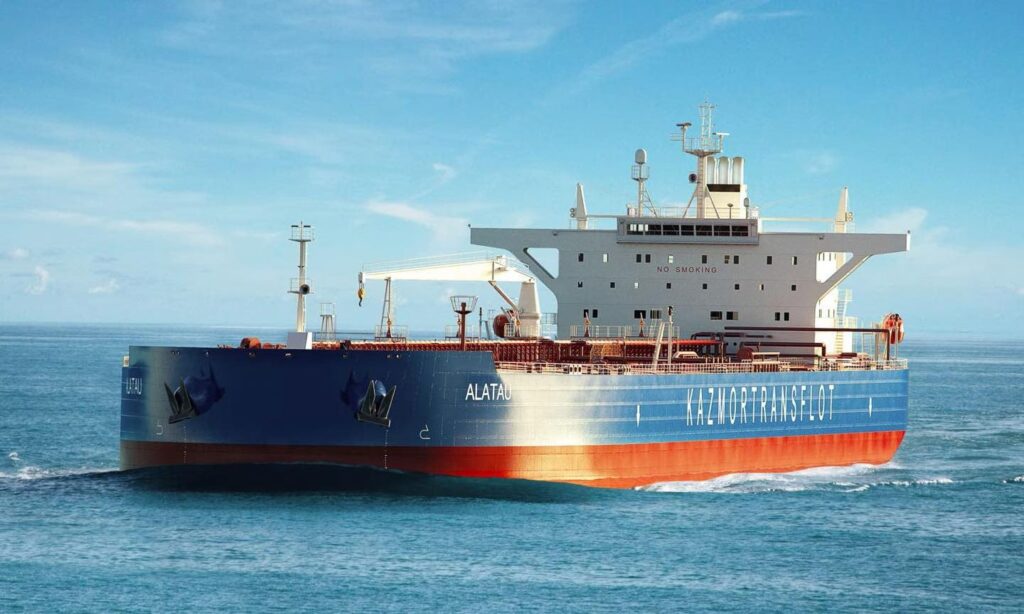
Kazakhstan has shipped its first batch of crude oil to Hungary, marking a significant step in the deepening energy partnership between KazMunayGas (KMG), the country’s national oil and gas company, and Hungary’s MOL Group. According to KMG, 85,000 tons of crude were transported by sea from the Russian port of Novorossiysk to the Croatian port of Omisalj aboard the Alatau tanker, operated by Kazmortransflot, a KMG subsidiary. From there, the oil was transported via the Adriatic pipeline, operated by JANAF, Croatia’s state oil pipeline operator, to the Százhalombatta refinery in Hungary. Upon the tanker's arrival in Croatia, representatives of KMG, MOL Group, and JANAF convened to discuss further cooperation. Following the meeting, KMG and MOL Group signed a framework agreement outlining future oil supply arrangements. The deal broadens the scope of Kazakhstan’s oil exports to the European Union. Kazakhstan already supplies crude to Germany via the Druzhba (Friendship) pipeline, which runs through Russian territory. As previously reported by The Times of Central Asia, Kazakhstan and Hungary reached a preliminary agreement earlier this year to supply Kazakh oil to Hungary through the Druzhba pipeline as well. The agreement was concluded in February during a meeting in Astana between Kazakhstan’s Minister of Energy, Almasadam Satkaliyev, and Hungarian Minister of Foreign Affairs and Trade, Péter Szijjártó. The two sides agreed to conduct trial shipments in 2025. MOL Group has been active in Kazakhstan for over two decades and has invested $200 million in the development of the Rozhkovskoye gas condensate field in western Kazakhstan.

Kazakhstan Looks to Reduce Dependence on Feed Imports

On March 12, Kazakhstan’s Deputy Prime Minister, Serik Zhumangarin, met with executives from Hungary’s UBM Group, which plans to build three plants in Kazakhstan to produce 48,000 tons of premixes and 300,000 tons of compound feed annually. The project also includes the establishment of a laboratory and a training center. According to the Kazakh government’s press service, the project aims to reduce Kazakhstan’s reliance on imported compound animal feed, which currently exceeds 250,000 tons per year. Zhumangarin emphasized that ensuring local livestock farmers have access to high-quality, domestically produced feed is a strategic priority for lowering meat production costs. He also reiterated Kazakhstan’s broader goal of meeting at least 90% of domestic food demand with locally produced goods, particularly essential food products. The UBM Group project will involve the construction of facilities in the Kostanay and Karaganda regions, as well as in Almaty. In the Karaganda region, a business partner and construction site have already been selected. In Kostanay and Almaty, local partners have been identified, but final decisions on construction sites are still pending. To expedite the process, Zhumangarin instructed local administrations and the Ministry of Agriculture to allocate land plots by the end of March, allowing the investor to begin earthworks in the second quarter of this year. The entire construction project is expected to be completed within two years.

Kyrgyzstan Explores Hungarian Agricultural Technologies

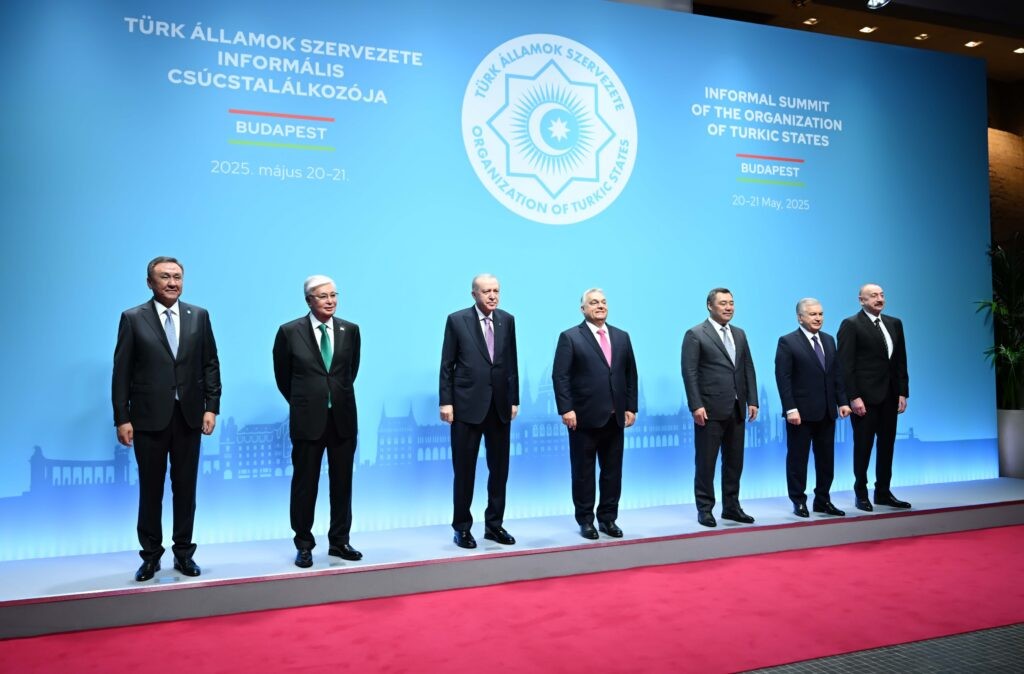
The 3rd Kyrgyz-Hungarian Agricultural Forum was held on January 17 in Budapest, Hungary, with the goal of strengthening ties between agricultural companies from Kyrgyzstan and Hungary. According to the Kyrgyz government’s official website, the forum showcased Hungary’s innovative agricultural technologies and solutions to address challenges in the sector. Focus on Innovation and Sustainability At the forum, leading Hungarian agricultural companies presented modern technologies aimed at increasing crop yields, improving irrigation systems, processing agricultural products, and promoting environmentally sustainable farming practices. These innovations align with Kyrgyzstan’s growing need to modernize its agricultural sector and improve productivity. Kyrgyzstan Seeks Hungarian Expertise Speaking at the forum, Kyrgyzstan’s Deputy Chairman of the Cabinet of Ministers and Minister of Water Resources, Agriculture, and Processing Industry, Bakyt Torobayev, emphasized Kyrgyzstan’s interest in Hungary’s expertise. "Hungary is a reliable partner with extensive experience in agricultural technologies, including processing agricultural products, improving plant varieties, and supporting the development of small and medium-sized farms," Torobayev said. He invited Hungarian entrepreneurs to expand their operations in Kyrgyzstan, noting that the country’s new economic policy focuses on three key sectors: agriculture, energy, and transport and transit. Torobayev highlighted Kyrgyzstan’s strategic location at the crossroads of the ancient Silk Road, which offers unique advantages for international trade. He pointed to the ongoing construction of the China-Kyrgyzstan-Uzbekistan railway as a critical infrastructure project to connect Central Asia with China, South Asia, Europe, and beyond. Meeting Between Kyrgyz and Hungarian Officials On the same day, Torobayev held discussions with Hungary’s Minister of Foreign Affairs and Trade, Péter Szijjártó. The meeting centered on implementing the Declaration of Enhanced Strategic Partnership, signed in November 2023 during Hungarian Prime Minister Viktor Orbán’s visit to Bishkek. One key topic of discussion was the preparation of a comprehensive long-term development plan for Lake Issyk-Kul, Kyrgyzstan’s largest lake and a vital tourist destination. The plan aims to address environmentalconcerns such as climate change, ecosystem degradation, and overuse of natural resources. Hungarian specialists, drawing on their experience with Lake Balaton, will collaborate with Kyrgyz counterparts to develop and regulate the Issyk-Kul region. Enhancing Bilateral Cooperation Another significant outcome of the meeting was the agreement to increase the authorized capital of the Kyrgyz-Hungarian Development Fund by an additional $34 million. This fund plays a crucial role in fostering economic collaboration between the two countries. The ministers also discussed: Increasing exports of Kyrgyz agricultural products to Europe, focusing on environmentally friendly produce. Establishing logistics centers that adhere to European quality and safety standards. Hungary’s Growing Interest in Central Asia Hungary has consistently sought to deepen its engagement with Turkic-speaking countries in Central Asia. As an observer state of the Organization of Turkic States (OTS), which includes Azerbaijan, Kazakhstan, Kyrgyzstan, Turkey, and Uzbekistan, Hungary has prioritized economic and cultural ties with the region. Turkmenistan also holds observer status within the OTS.

Kazakhstan, Hungary, and China Establish Cargo Terminal in Budapest

Kazakhstan Temir Zholy (KTZ, Kazakhstan’s national railway company), L.A.C. Holding (Hungary), and Xi'an Free Trade Port Construction and Operation Co., Ltd (China) have signed a memorandum to establish a joint inter-modal cargo terminal in Budapest. The document was signed on November 20 as part of the state visit of Kazakhstan's President Kassym-Jomart Tokayev to Hungary. The planned terminal will leverage the strategic location of the Hungarian capital in the heart of Europe and its developed transport network for multimodal transportation across the continent. The terminal will have a capacity of 230,000 TEU annually and will increase the number of container trains between China and Europe, including transit along the Trans-Caspian International Transport Route (TITR). The new terminal is expected to reduce delivery times and transportation costs. KTZ continues to expand its terminal network along key transport corridors to strengthen Kazakhstan's position as a key transit hub in Eurasia. On November 12, Kazakhstan, Azerbaijan, and China signed an agreement to establish an inter-modal cargo terminal in the Port of Alat in Baku, Azerbaijan. Commenting on the signed Memorandum at a press briefing in Budapest, Tokayev said this initiative will strengthen trade and transport ties between the participating countries. “New opportunities are opening up for the development of infrastructure, logistics, and international trade. Eighty-five percent of land transit shipments between Asia and Europe pass through Kazakhstan. In the near future, the volume of cargo transportation along this route will reach 10 million tons,” Tokayev said.

Uzbekistan and Hungary Expand Economic Cooperation

On May 7, President of Uzbekistan Shavkat Mirziyoyev received the Minister of Foreign Affairs and Trade of Hungary, Peter Szijjártó at the 9th meeting of the Uzbek-Hungarian Intergovernmental Commission on Economic Cooperation in Taskent. Focus was placed on cooperation on projects in industry, pharmaceuticals, agriculture, fish farming, logistics, and real estate construction, with added emphasis on the importance of accelerating the launch of a special economic zone for projects conducted by Hungarian and European companies in the Tashkent region. Co-chaired by Peter Szijjártó and the Minister of Investment, Industry and Trade of Uzbekistan Laziz Kudratov, the meeting also addressed the further development of cooperation in investment, industrial, trade and economic, banking, cultural and humanitarian sectors. It was stated that over the past 5 years, Uzbek-Hungarian trade turnover has doubled and in the first quarter of 2024 alone, bilateral trade grew six-fold compared to the same period in 2023. Measures to increase bilateral trade include the launch of “Meet Uzbekistan” programs to promote Uzbek products in Budapest’s large retail chains, as well as the organization of roadshows for Uzbek manufacturers in Hungary’s largest cities. Both sides stressed the importance of diversifying transport routes, liberalizing permits for bilateral and transit transportation, resuming direct flights between Tashkent and Budapest, and organizing a logistics hub for Uzbek products in Hungary. Note was made of Hungarian companies’ implementation of projects worth almost $500 million in Uzbekistan, and thanks expressed for Hungary’s provision of a state scholarship ‘Stipendium Hungaricum’ which enables some 300 Uzbek students to study at its universities.