
• KGS/USD = 0.01144 0%
  • KZT/USD = 0.00210 0%
  • TJS/USD = 0.10438 0%
  • UZS/USD = 0.00008 0%
  • TMT/USD = 0.28490 0%
  • KGS/USD = 0.01144 0%
  • KZT/USD = 0.00210 0%
  • TJS/USD = 0.10438 0%
  • UZS/USD = 0.00008 0%
  • TMT/USD = 0.28490 0%
  • KGS/USD = 0.01144 0%
  • KZT/USD = 0.00210 0%
  • TJS/USD = 0.10438 0%
  • UZS/USD = 0.00008 0%
  • TMT/USD = 0.28490 0%
  • KGS/USD = 0.01144 0%
  • KZT/USD = 0.00210 0%
  • TJS/USD = 0.10438 0%
  • UZS/USD = 0.00008 0%
  • TMT/USD = 0.28490 0%
  • KGS/USD = 0.01144 0%
  • KZT/USD = 0.00210 0%
  • TJS/USD = 0.10438 0%
  • UZS/USD = 0.00008 0%
  • TMT/USD = 0.28490 0%
  • KGS/USD = 0.01144 0%
  • KZT/USD = 0.00210 0%
  • TJS/USD = 0.10438 0%
  • UZS/USD = 0.00008 0%
  • TMT/USD = 0.28490 0%
  • KGS/USD = 0.01144 0%
  • KZT/USD = 0.00210 0%
  • TJS/USD = 0.10438 0%
  • UZS/USD = 0.00008 0%
  • TMT/USD = 0.28490 0%
  • KGS/USD = 0.01144 0%
  • KZT/USD = 0.00210 0%
  • TJS/USD = 0.10438 0%
  • UZS/USD = 0.00008 0%
  • TMT/USD = 0.28490 0%

Viewing results 1 - 6 of 3

Azerbaijan’s Aliyev: Uzbekistan’s First Gift Helped Rebuild Karabakh

At a major media forum held in Khankendi, Azerbaijani President Ilham Aliyev expressed gratitude to Uzbekistan for its contribution to the reconstruction of Nagorno-Karabakh. Speaking at the event, Professor Sherzodhon Kudratkhodja, Rector of Uzbekistan’s University of Journalism and Mass Communications, congratulated Aliyev on successfully hosting the 17th Summit of the Economic Cooperation Organization (ECO) in Khankendi. He noted that while Uzbek journalists had visited Karabakh over the past three years, this was their first visit to Khankendi, marking a symbolic step toward reconciliation and renewal. Kudratkhodja praised the recent meeting between Aliyev and Armenian Prime Minister Nikol Pashinyan in Abu Dhabi, calling it “historic” and “a beacon of friendship” amid global uncertainty. He also asked about the strategic importance of the Zangezur corridor, not just for Azerbaijan and Armenia, but for the wider Turkic world. “The corridor will serve as a bridge, reconnecting once-separated lands,” he said. Commending the reconstruction of roads, buildings, mosques, and churches in Karabakh, he added: “This shows the world your tolerance and noble spirit.” Uzbekistan’s First Contribution In response, Aliyev highlighted Uzbekistan’s role in the early phases of Karabakh’s reconstruction following the 2020 Second Karabakh War. He cited the construction of a school for 960 students in Fizuli, initiated by Uzbek President Shavkat Mirziyoyev and named after the renowned Uzbek scholar Mirzo Ulugbek. “Uzbekistan made the first gift in restoring Karabakh,” Aliyev said. “A few days ago, I visited the school again. Over 500 children are already studying there, even though refugees are only just beginning to return to Fizuli. We deeply appreciate this brotherly gesture by the President of Uzbekistan.” Rebuilding Efforts in Karabakh The Second Karabakh War, also known as the 44-day war, ended in November 2020 with a ceasefire agreement restoring Azerbaijani control over formerly occupied territories. By mid-2024, Azerbaijan had spent more than USD $7 billion on reconstruction, including demining, infrastructure development, industrial revitalization, and tourism initiatives. Aliyev emphasized the symbolism of hosting the ECO Summit at Khankendi’s new congress center, built on the site of the former separatist parliament. Leaders from eight ECO member states attended the event, underscoring normalization in the region. Nearby, reconstruction continues at a Soviet-era hotel and Victory Square, the former site of the communist party headquarters, which is being transformed with the construction of a new Victory Museum. Zangezur Corridor and Regional Connectivity Aliyev also underlined the strategic significance of the Zangezur corridor, which is intended to link mainland Azerbaijan with its exclave of Nakhchivan and further to Turkey. He cited billions of dollars in national infrastructure investment, including the Caspian Sea’s largest port, expanded roadways, and the Baku-Tbilisi-Kars railway-now capable of handling 25 million tonnes of freight annually. “During President Mirziyoyev’s visit, we discussed increasing freight traffic through this corridor,” Aliyev said. He also referenced the development of the China-Kyrgyzstan-Uzbekistan-Turkmenistan railway, which will provide an additional route across the Caspian Sea and enhance regional connectivity. “These links are proof that our region can grow stronger together,” Aliyev stated. A Shared Legacy Both speakers highlighted...

Turkish Court Orders Deportation of Two Turkmen Bloggers

A Turkish court in the city of Samsun has ordered the deportation of two Turkmen bloggers, Alisher Sakhadov and Abdullah Orusov, despite their applications for international protection. The Turkmenistan Helsinki Foundation for Human Rights reported that the court issued its ruling on June 13, 2025, and officially notified the men's lawyer on June 27. The court found both men to be residing in Turkey illegally and rejected their asylum claims. According to documents reviewed by their lawyer, the decisions in the two cases were nearly identical, with some sections reportedly copied verbatim. Sakhadov applied for protection in April 2023 but was later issued a permanent entry ban under Code G-82, which Turkish authorities assign to individuals deemed threats to national security. The court concluded that he faced no credible risk of mistreatment if returned to Turkmenistan. Orusov’s case followed a similar pattern. He applied for protection in July 2023 and received the same security designation. The court similarly ruled that his return would not expose him to torture or degrading treatment. Their legal team plans to appeal the ruling to Turkey’s Constitutional Court. Requests for the release of both men from deportation centers were denied on June 25 and 26. Alisher Sahatov is one of the most prominent Turkmen activists in Turkey. He became a well-known figure within the diaspora through his YouTube channel Erkin Garaýyş, where he highlighted the challenges faced by Turkmen migrants. Abdullah Orusov was also active on social media, where he regularly criticized the Turkmen authorities. His posts often resonated widely among migrants and human rights advocates. As previously reported by The Times of Central Asia, another Turkmen activist, Dushemov, completed a four-year prison sentence in June 2025 but was transferred to a pre-trial detention center instead of being released. New charges were filed against him following an alleged altercation with another inmate. Dushemov and human rights organizations claim the case was fabricated to extend his detention, part of what they describe as a broader campaign of repression against government critics.

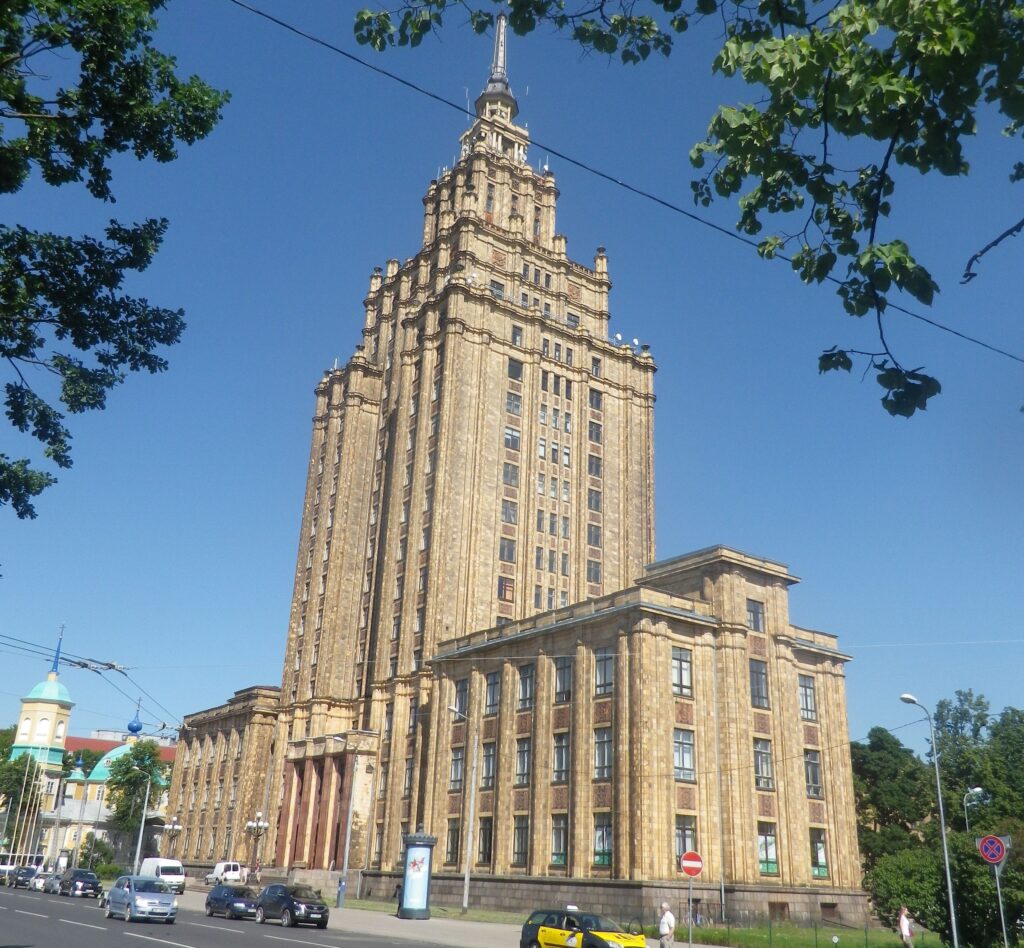
Latvia Coaches Central Asia on Borders While Hardening Russia Frontier

Last month, Central Asian border and law enforcement authorities on a training visit to Latvia got a look at the Baltic state’s border with Russia, which the Latvian government is fortifying because of tension over the Ukraine war.  Officials from Kazakhstan, Kyrgyzstan, Tajikistan and Turkmenistan met in the Latvian capital of Riga on August 27-29 to talk about how to secure their own borders and work together on trade corridors. The trip ended with a visit to Latvia’s 330-kilometer border to the east with Russia, where “conference participants got acquainted with the infrastructure, equipment and specifics of the border surveillance,” said an EU-backed agency that promotes Central Asian border security and is known by the acronym BOMCA. Unlike the Central Asian countries, Latvia is a NATO member that has provided military aid to Ukraine and considers Russia and Russian ally Belarus, with which it also shares a border (160 kilometers), to be adversaries. Latvia is preparing strongholds, anti-tank ditches and ammunition depots along its border with both countries.  The border buildup of Latvia, which was invaded by both Soviet and German forces during World War II before eventual Soviet occupation, differs from the experience of Central Asia’s former Soviet republics, which were formed in the 1920s and 1930s. Of those Central Asian countries, only Kazakhstan shares a border (at about 7,600 kilometers) to the north with Russia, which has longstanding security and trade relations with the region despite the often harsh legacy of Soviet rule.  Still, Latvia’s role as a leader of the 20-year-old European Union program to help Central Asia develop and integrate its border management systems comes at a fraught time for the Baltic country as it hardens its borders with Russia and Belarus. The Central Asian officials who inspected Latvia’s border with Russia last month also toured the Border Guard College of Latvia in the eastern town of Rēzekne, whose landmarks include an arch of the ruins of a castle that was mostly destroyed during fighting centuries ago.  A Russian military drone entered Latvian airspace from Belarus and fell in the Rēzekne region on Saturday, according to Latvian defense officials. Defense Minister Andris Sprūds said that air defense and electronic warfare development will “allow us to limit the operation of drones of various uses." Latvia has also grappled with illegal crossings by migrants coming from Belarus, which has denied Western accusations that it facilitated border breaches in order to put pressure on the European Union.  The EU-backed border training for Central Asia started long before Russia’s full-scale invasion of Ukraine in February 2022 and is designed to help Central Asian countries with their own challenges, which include drug smuggling and human trafficking. There are historical border disputes in Central Asia, but some have been moving toward resolution.  Currently, Latvia and neighboring Lithuania are hosting several months of training for Central Asian handlers of K9s, dogs that search for illegal drugs and explosives. Latvia, in turn, is getting its own help from allies. Earlier this year, the United...
