Uzbekistan and Azerbaijan Target $1 Billion in Trade as Investment and Transit Links Expand
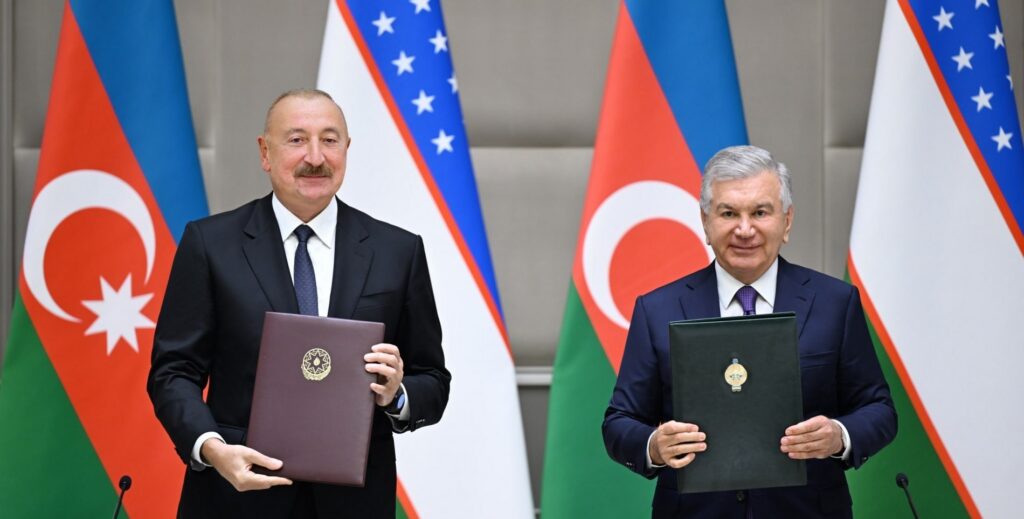
Uzbekistan and Azerbaijan have set a target of increasing bilateral trade to $1 billion by 2030, as economic ties expand from a relatively low base into vehicle manufacturing, oil and gas, investment, and transport across the Caspian Sea. Azerbaijani President Ilham Aliyev’s state visit to Uzbekistan on August 23–24 added new projects to that list. The two presidents signed a Treaty on Eternal Friendship and a program aimed at increasing bilateral trade to $1 billion by 2030. Political relations, meanwhile, have been moving faster than economic ties. In 2023, the two countries established the Supreme Interstate Council, and a year later they signed a Treaty on Allied Relations. The latest trip was Aliyev’s third state visit to Uzbekistan in five years and his seventh visit overall. Aliyev said ahead of his trip to Tashkent that bilateral trade more than tripled in 2025 to reach $795 million. Uzbekistan’s Center for Economic Research and Reforms, however, reported a much lower total of $307.3 million for the same year. Neither side has explained the discrepancy, which may reflect different definitions of trade. Sustaining growth toward the $1 billion target will require broader trade and more joint production, including goods aimed at markets beyond the two countries. From Trade to Investment The Azerbaijan-Uzbekistan Investment Company is intended to help turn some of these plans into operating businesses. Established in 2023 with $500 million in capital, the company finances projects in both countries. Some areas of cooperation have already reached the production stage. Azerbaijan’s Azermash CP works with Uzbek manufacturers to produce Chevrolet and Isuzu vehicles in Azerbaijan. By July, more than 10,700 Chevrolet vehicles and 275 Isuzu buses had been produced. More than 130 commercial entities with Uzbek investment are registered in Azerbaijan. During the latest visit, the two sides opened a gypsum plant. They also laid foundations for five SOCAR filling stations and a silver-ore enrichment plant. For Baku, the interest in Uzbekistan is understandable. With a population of more than 38 million, Uzbekistan is Central Asia’s most populous country. The Uzbek economy is growing rapidly, while the authorities are opening more sectors to private and foreign capital. For Azerbaijani companies, this offers access to a market considerably larger than their own as well as a foothold in Central Asia. For Tashkent, Azerbaijan offers investment and expertise in the oil and gas sector. SOCAR, the Azerbaijani state oil company, has been operating in Uzbekistan for years. A joint venture between Uzbekistan’s O‘ZLITINEFTGAZ and the Azerbaijani company’s research institute has been operating since 2016. Cooperation is now gradually moving from engineering services toward much larger exploration and potential production projects. The main project is on the Ustyurt Plateau in western Uzbekistan. BP joined the project in May 2026 with a 40% stake, while SOCAR, which is the operator, and Uzbekneftegaz each hold 30%. Total investment could reach around $2 billion if commercially viable reserves are found and the project proceeds to development. As previously reported by The Times of Central Asia, the project envisages extensive seismic...