
• KZT/USD = 0.00220
  • TJS/USD = 0.10830
  • UZS/USD = 0.00008
  • TMT/USD = 0.29760
  • KZT/USD = 0.00220
  • TJS/USD = 0.10830
  • UZS/USD = 0.00008
  • TMT/USD = 0.29760
  • KZT/USD = 0.00220
  • TJS/USD = 0.10830
  • UZS/USD = 0.00008
  • TMT/USD = 0.29760
  • KZT/USD = 0.00220
  • TJS/USD = 0.10830
  • UZS/USD = 0.00008
  • TMT/USD = 0.29760
  • KZT/USD = 0.00220
  • TJS/USD = 0.10830
  • UZS/USD = 0.00008
  • TMT/USD = 0.29760
  • KZT/USD = 0.00220
  • TJS/USD = 0.10830
  • UZS/USD = 0.00008
  • TMT/USD = 0.29760
  • KZT/USD = 0.00220
  • TJS/USD = 0.10830
  • UZS/USD = 0.00008
  • TMT/USD = 0.29760
  • KZT/USD = 0.00220
  • TJS/USD = 0.10830
  • UZS/USD = 0.00008
  • TMT/USD = 0.29760
16 October 2026

Viewing results 1 - 6 of 2

Kazakhstan Plans Six New Earth Observation Satellites

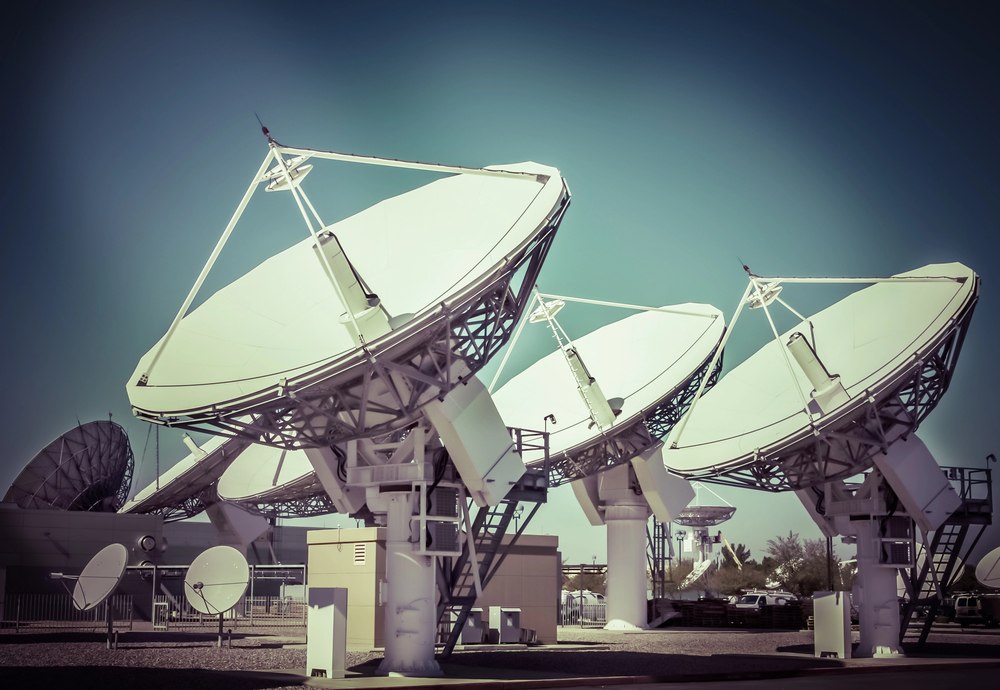
Kazakhstan plans to build six Earth observation satellites, including three high-resolution and three medium-resolution spacecraft. Deputy Prime Minister and Minister of Artificial Intelligence and Digital Development Zhaslan Madiyev announced the expansion at a government meeting on October 6. The country’s existing system operates three satellites. Their imagery can be used to monitor fires and floods and detect illegal mining, construction, and land use. For Kazakhstan, which covers about 2.7 million square kilometers, satellite imagery makes it possible to monitor large areas regularly without continuous ground inspections. Madiyev put the economic impact of space-based monitoring over the past five years at 977 billion tenge, around $2.14 billion. Kazakhstan is also trying to turn its satellite technology into an export business. It is implementing three projects with Mongolia, the Republic of the Congo, and Nigeria, worth about $70 million in total. These partners are expected to participate in a Kazakhstan-led international Earth observation constellation. Earlier government plans envisaged nine satellites by 2030, comprising six spacecraft from Kazakhstan and one from each partner country, with a possible later expansion to 14. Madiyev said the larger constellation is now expected by that date. Operating the satellites as a shared constellation would allow areas to be photographed more frequently and increase coverage. Kazakhstan has a satellite assembly and testing complex in Astana. The state-owned Kazakhstan Gharysh Sapary operates the country’s Earth observation system, while Ghalam, a Kazakh-French joint venture, develops spacecraft and components at the complex. In September, Kazakhstan signed a strategic cooperation agreement with South Korea’s CONTEC Co., Ltd. on satellite manufacturing, ground infrastructure, Earth observation data processing, and commercialization. A separate investment agreement involving CONTEC and Ghalam is intended to expand production and technological capabilities in Kazakhstan. Kazakhstan also operates the KazSat-2 and KazSat-3 communications satellites. Madiyev said the system has generated 72 billion tenge, around $158 million, in revenue. KazSat-3 is due to reach the end of its planned service life in 2029 and be replaced by the KazSat-3R system. The government has already allocated 10.4 billion tenge, about $22.3 million, from its reserve toward the project.

Kazakhstan Allocates More Than $22 Million for New Communications Satellite

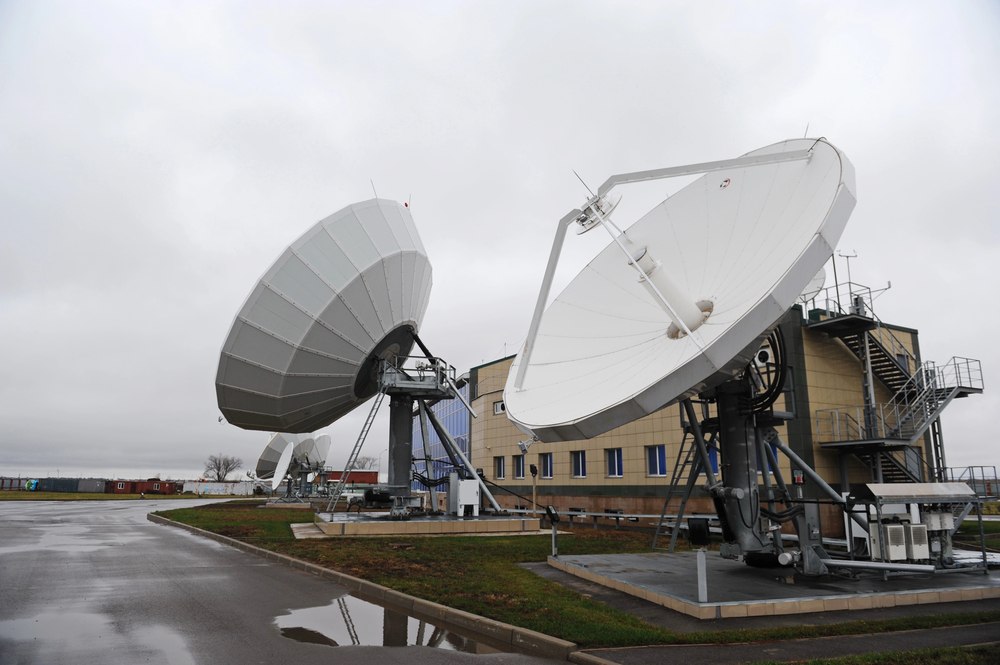
Kazakhstan has begun upgrading its national satellite infrastructure by financing the development of a new communications satellite, KazSat-3R, which is expected to replace the existing KazSat-3 by the end of the decade. The government is also working to expand the country’s Earth-observation satellite network and develop domestic manufacturing capacity. It is also preparing for commercial launches from the Baikonur Cosmodrome. The government has allocated approximately $22.3 million from its reserve for the KazSat-3R project. The new satellite will replace KazSat-3, whose planned service life expires in 2029. Kazakhstan’s national satellite communications system currently consists of two satellites, KazSat-2 and KazSat-3, as well as two ground control centers, Akkol and Kokterek. The system provides television and radio broadcasting, data transmission, telephone services, and internet access across Kazakhstan, Central Asia, and parts of Russia. KazSat-3’s approaching retirement is one reason for its replacement. In 2023, a power-system malfunction temporarily took the satellite out of service, disrupting satellite television broadcasts and exposing Kazakhstan’s dependence on its own orbital infrastructure. In May 2025, Senator Andrey Lukin, chair of the Senate Committee on International Relations, Defense and Security, previously said KazSat-3R could require 40.2 billion tenge, approximately $86 million, in state financing. He also warned that public procurement rules could restrict the participation of foreign satellite manufacturers and called for the project to be handled under a special procedure. The KazSat system is used by 19 telecommunications operators and provides television services to more than two million subscribers, the government said. It supports television and radio broadcasting, as well as data transmission. The system also provides mobile communications and internet access, particularly in remote areas where building ground-based infrastructure is difficult. Government figures indicate that 99% of Kazakhstan’s population has access to high-speed internet. The country’s population stood at 20,5 million on June 1, 2026, the Bureau of National Statistics reported. The new communications satellite is one element of Kazakhstan’s national space program. The country plans to launch three KazEOSat-MR Earth-observation satellites in 2027 to replace KazEOSat-2. Three more satellites are planned for 2029–2030, which would bring the constellation to six. Kazakhstan is also developing its own launch infrastructure. The Baiterek project, implemented with Russia, has modernized a launch complex at the Baikonur Cosmodrome for the Soyuz-5 launch vehicle. The first test launch took place successfully on April 30, 2026. The government said the test confirmed the complex’s operational readiness. The cost of a commercial Soyuz-5 launch is estimated at between $50 million and $60 million, depending on the rocket configuration and upper stage. By comparison, a commercial launch of SpaceX’s Falcon 9 is priced at approximately $67 million. Kazakh authorities expect this cost structure to allow the project to compete in the international launch-services market. Kazakhstan is also considering satellite exports as a potential area of commercial growth. Domestic companies are exploring projects to manufacture satellites for the Democratic Republic of the Congo, Mongolia, and Nigeria, with a combined potential value estimated at approximately $75 million. As previously reported by The Times of Central Asia,...