
• KZT/USD = 0.00217
  • TJS/USD = 0.10830
  • UZS/USD = 0.00008
  • TMT/USD = 0.29760
  • KZT/USD = 0.00217
  • TJS/USD = 0.10830
  • UZS/USD = 0.00008
  • TMT/USD = 0.29760
  • KZT/USD = 0.00217
  • TJS/USD = 0.10830
  • UZS/USD = 0.00008
  • TMT/USD = 0.29760
  • KZT/USD = 0.00217
  • TJS/USD = 0.10830
  • UZS/USD = 0.00008
  • TMT/USD = 0.29760
  • KZT/USD = 0.00217
  • TJS/USD = 0.10830
  • UZS/USD = 0.00008
  • TMT/USD = 0.29760
  • KZT/USD = 0.00217
  • TJS/USD = 0.10830
  • UZS/USD = 0.00008
  • TMT/USD = 0.29760
  • KZT/USD = 0.00217
  • TJS/USD = 0.10830
  • UZS/USD = 0.00008
  • TMT/USD = 0.29760
  • KZT/USD = 0.00217
  • TJS/USD = 0.10830
  • UZS/USD = 0.00008
  • TMT/USD = 0.29760
24 November 2026

Viewing results 1 - 6 of 2

Former Silk Mill Considered for AI Lab in Tajikistan

A former silk mill in Khujand, northern Tajikistan, could become home to an AI research lab. The proposed facility would be part of A7LAS, a technology park being developed on the site. Azizjon Azimi, chair of Tajikistan’s Council for Development of Artificial Intelligence, discussed the proposal with Toloka founder and chief executive Olga Megorskaya on November 21 at the Digitec technology forum in Yerevan. The talks also covered facilities for preparing training data at the park and joint projects in applied AI. Toloka prepares data used to train and test AI systems. Its work includes labeling images and checking responses generated by language models for errors. The company also develops tests to assess how well AI models solve mathematical problems and perform in different languages. The first phase of A7LAS is scheduled to open by June 2027, with further development planned through 2030. Plans for the former mill include facilities for research and data processing. The park would also provide space to train specialists and develop robotics and manufacturing projects. Tajikistan adopted its national AI development strategy in September 2022. By 2040, the government aims to train 5,000 specialists, including data analysts and machine learning engineers. It wants AI-related activity to account for 5% of gross domestic product by then. The strategy calls for research labs with international partners and identifies quality control and demand forecasting as uses for AI in manufacturing. On November 7, during Tajik President Emomali Rahmon’s official visit to Astana, Tajikistan and Kazakhstan agreed to conduct joint AI research and train specialists. The memorandum on AI cooperation, signed by Tajikistan’s Agency of Innovation and Digital Technologies and Kazakhstan’s Ministry of Artificial Intelligence and Digital Development, also covers computing infrastructure. The two agencies plan to form a working group to coordinate the projects. Azimi also founded zypl.ai, a Tajik financial technology company that developed an algorithm for assessing borrowers’ creditworthiness. In 2024, he said more than 30 banks in over ten countries were using it.
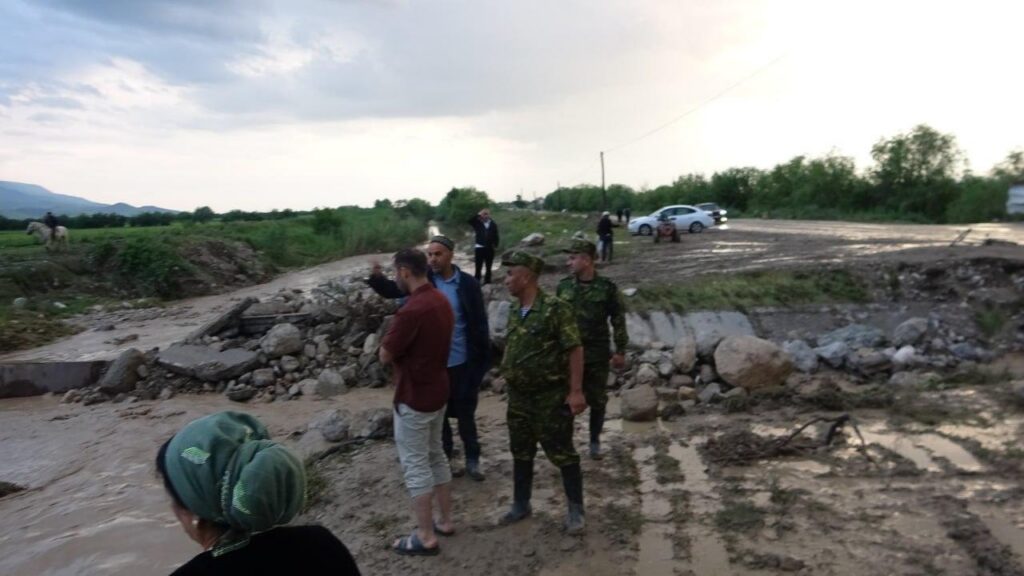

Heavy Rain and Mudflows Kill Four in Tajikistan

Heavy rain and landslides have swept parts of Tajikistan in recent days, killing at least four people and damaging dozens of homes, as well as roads and farmland. In one incident, a boat carrying students capsized in a river but all the passengers were rescued. Three people were killed and three others were hospitalized in the southern city of Kulob after an overnight deluge, the press office of Tajikistan’s presidency said on Saturday. President Emomali Rahmon expressed condolences and instructed top officials to go to the scene of the disaster and help affected families. Intense rainfall continued over the weekend. One person died and two others were seriously injured in a lightning strike in Kaduchi village on Sunday afternoon, according to Tajikistan’s Committee for Emergency Situations and Civil Defense. The victims were taken to a hospital in the western city of Tursunzoda. Mudflows damaged homes, roads, and other infrastructure in several villages and settlements. Some canals filled with mud, stones, and gravel before overflowing into nearby streets. Emergency workers brought in heavy machinery and pumps to clear debris and water. The boat that capsized on Sunday afternoon was carrying seven secondary school students and their class teacher on the Syr Darya River, which runs through the northern city of Khujand. The group had arrived at a cultural and entertainment park for the excursion. Boatmen and other people rescued the students, according to an official account.