

• KGS/USD = 0.01144 0%
  • KZT/USD = 0.00205 0%
  • TJS/USD = 0.10685 -0.37%
  • UZS/USD = 0.00008 0%
  • TMT/USD = 0.28490 0%
  • KGS/USD = 0.01144 0%
  • KZT/USD = 0.00205 0%
  • TJS/USD = 0.10685 -0.37%
  • UZS/USD = 0.00008 0%
  • TMT/USD = 0.28490 0%
  • KGS/USD = 0.01144 0%
  • KZT/USD = 0.00205 0%
  • TJS/USD = 0.10685 -0.37%
  • UZS/USD = 0.00008 0%
  • TMT/USD = 0.28490 0%
  • KGS/USD = 0.01144 0%
  • KZT/USD = 0.00205 0%
  • TJS/USD = 0.10685 -0.37%
  • UZS/USD = 0.00008 0%
  • TMT/USD = 0.28490 0%
  • KGS/USD = 0.01144 0%
  • KZT/USD = 0.00205 0%
  • TJS/USD = 0.10685 -0.37%
  • UZS/USD = 0.00008 0%
  • TMT/USD = 0.28490 0%
  • KGS/USD = 0.01144 0%
  • KZT/USD = 0.00205 0%
  • TJS/USD = 0.10685 -0.37%
  • UZS/USD = 0.00008 0%
  • TMT/USD = 0.28490 0%
  • KGS/USD = 0.01144 0%
  • KZT/USD = 0.00205 0%
  • TJS/USD = 0.10685 -0.37%
  • UZS/USD = 0.00008 0%
  • TMT/USD = 0.28490 0%
  • KGS/USD = 0.01144 0%
  • KZT/USD = 0.00205 0%
  • TJS/USD = 0.10685 -0.37%
  • UZS/USD = 0.00008 0%
  • TMT/USD = 0.28490 0%

Viewing results 1 - 6 of 6

Kazakhstan Plans to Power New Alatau City With Gas and Renewable Energy

Kazakhstan plans to power the future megacity of Alatau City near Almaty through a combination of gas-fired generation and renewable sources, as authorities seek to address chronic electricity shortages in the country’s south while creating a low-carbon “smart city” model. Deputy Prime Minister Kanat Bozumbayev outlined the government’s energy strategy for the project during a briefing in Astana. According to him, Alatau City’s population could reach between 2.8 million and 3 million people by 2050, roughly equivalent to the current population of Almaty. “We expect that Alatau City will rely primarily on gas generation, given the area’s relatively low population density, along with renewable energy facilities,” Bozumbayev said. The new city is being developed on the site of the village of Zhetygen, approximately 50 kilometers from Almaty. The project will also encompass the settlements of Enbek, Zhanaarna and Kuigan, as well as parts of Konaev and the Talgar district in the Almaty Region. Authorities envision Alatau City as a future hub for technology companies, logistics and export-oriented industry. Under the current concept, the city will be divided into four functional districts: the financial and business-oriented Gate District, the educational and medical Golden District, the industrial Growing District, and the entertainment-focused Green District. The government expects rapid growth in both population and industrial activity to drive a sharp increase in electricity consumption. According to official estimates, electricity demand in Alatau City could reach 1.45 gigawatts by 2030 and rise further to 1.7 gigawatts by 2040. For comparison, Almaty’s electricity consumption in 2024 stood at approximately 982 megawatts. During the initial phase over the next three years, the city is expected to require around 50-100 megawatts of electricity. However, once industrial facilities become operational, demand could rise to between 500 and 1,000 megawatts, Bozumbayev said. Authorities have already prepared an infrastructure plan that includes the construction of transmission lines, substations, and new generating facilities. The government’s emphasis on gas-fired power generation is aimed at reducing southern Kazakhstan’s dependence on electricity transfers from northern Kazakhstan and neighboring countries. According to Bozumbayev, the launch of new power plants in Kyzylorda, Turkestan, and other southern regions should eventually create an electricity surplus in southern Kazakhstan, which currently remains energy deficient. The development of Alatau City is also part of Kazakhstan’s effort to modernize its power system and gradually increase the share of renewable energy in the national mix. In recent years, the country has expanded solar and wind power projects while remaining heavily dependent on coal-fired generation. Alongside energy infrastructure, authorities are promoting Alatau City as a testing ground for advanced transportation technologies. Bozumbayev said preliminary estimates suggest that air taxi rides in the city could cost around $1 per kilometer. “As competition develops in the market, prices could decrease,” the deputy prime minister said. He added that the testing of the air taxi system is expected to be completed by 2026, with commercial services potentially launching in 2027. However, Almaty Region Governor Marat Sultangaziev previously stated that full commercial operation of air taxi services...

Air Taxi Service in Kazakhstan Unlikely to Launch Commercially Before 2029

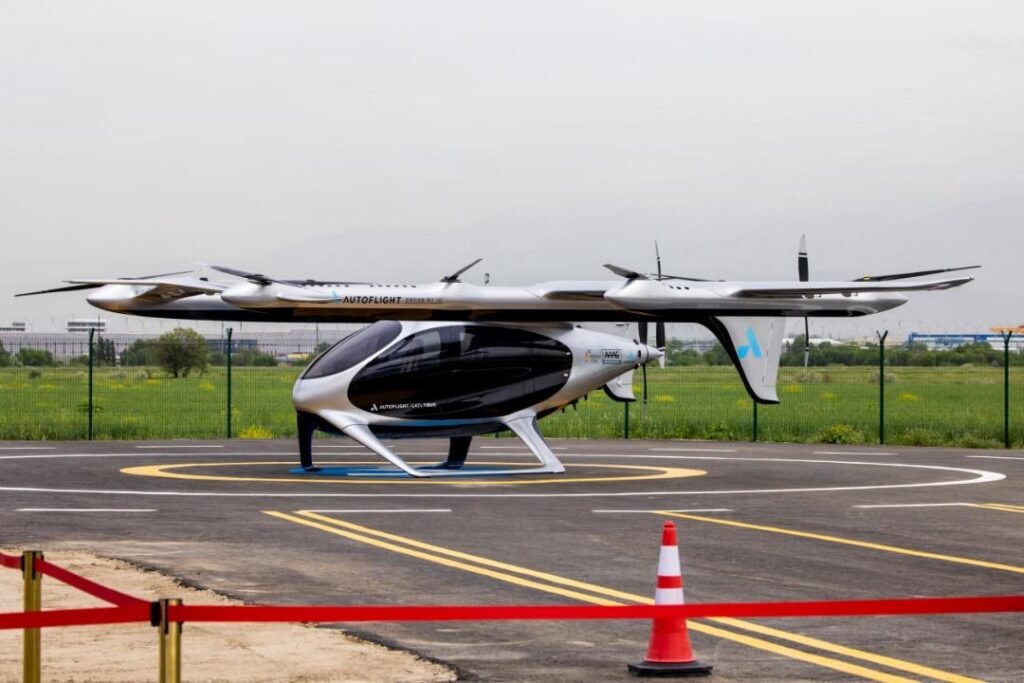
An air taxi service being developed in Kazakhstan’s Almaty Region is unlikely to begin full commercial operations before 2029, Almaty Region Governor Marat Sultangaziev said during test flights of the new transport system in Alatau, a newly established “city of the future” near Almaty. On May 19, Alatau hosted Central Asia’s first public launch of an electric vertical takeoff and landing (eVTOL) aircraft, marking the debut of air taxi technology in the region. Developers say the electric air taxi is expected to help reduce traffic congestion, connect tourist destinations, and shorten travel times. The aircraft can reach speeds of up to 200 kilometers per hour and travel distances of up to 200 kilometers on a single charge. Equipped with 13 electric motors, the air taxi is designed to carry one pilot and five passengers. In accordance with safety requirements, the first demonstration flight was conducted without passengers, the press service of the Almaty regional administration reported. Almaty Region Governor Marat Sultangaziev, who attended the launch event, described the initiative as strategically important for Kazakhstan’s transport sector. At the same time, he said the project would require infrastructure development and a comprehensive legal framework before commercial operations could begin. “Project initiators are now working on that process, and we will support them where necessary. They plan to transition from test operations to industrial-scale implementation around 2029. This initiative fully aligns with the concept of developing Alatau as a center for innovation and digitalization,” Sultangaziev said. Alisher Abdykadyrov, CEO of the Alatau City Authority state fund, said specially equipped vertiports would be used for eVTOL takeoffs and landings. The facilities would include charging and navigation systems and could be integrated into urban environments, including rooftops, transport hubs, and business districts. Construction of the first vertiport in Alatau has already begun, Abdykadyrov said, with additional facilities planned for Almaty and tourist destinations across the Almaty Region. The future network is expected to connect key transport hubs throughout the region. “Today we are witnessing a historic moment for Kazakhstan,” Abdykadyrov said. “This is not simply a demonstration of a new technology, but the beginning of a new phase in the city’s development based on innovation and digital technologies. Alatau is envisioned as a city of the future, which makes it especially symbolic that the development of air mobility and a new industry begins here.” “Our goal is not only to introduce the technology itself, but to build a complete ecosystem around it, creating infrastructure, developing engineering expertise, and generating new jobs,” he added. Regarding the legal regulation of the new mode of transport, Daniyar Uteulin, project manager at Alatau Advanced Air Group (AAAG), said the first package of regulatory proposals has already been prepared and submitted to the government for consideration. According to Uteulin, the draft regulations are based on the experience of countries where urban air mobility technologies are already developing rapidly, including the United States, China, South Korea, and several Middle Eastern countries. Kazakhstan is expected to designate a separate flight corridor...