
• KZT/USD = 0.00218
  • TJS/USD = 0.10810
  • UZS/USD = 0.00009
  • TMT/USD = 0.29850
  • KZT/USD = 0.00218
  • TJS/USD = 0.10810
  • UZS/USD = 0.00009
  • TMT/USD = 0.29850
  • KZT/USD = 0.00218
  • TJS/USD = 0.10810
  • UZS/USD = 0.00009
  • TMT/USD = 0.29850
  • KZT/USD = 0.00218
  • TJS/USD = 0.10810
  • UZS/USD = 0.00009
  • TMT/USD = 0.29850
  • KZT/USD = 0.00218
  • TJS/USD = 0.10810
  • UZS/USD = 0.00009
  • TMT/USD = 0.29850
  • KZT/USD = 0.00218
  • TJS/USD = 0.10810
  • UZS/USD = 0.00009
  • TMT/USD = 0.29850
  • KZT/USD = 0.00218
  • TJS/USD = 0.10810
  • UZS/USD = 0.00009
  • TMT/USD = 0.29850
  • KZT/USD = 0.00218
  • TJS/USD = 0.10810
  • UZS/USD = 0.00009
  • TMT/USD = 0.29850
01 September 2026

Viewing results 1 - 6 of 2

Central Asian Judoka Take Seven Medals at Lausanne Grand Slam

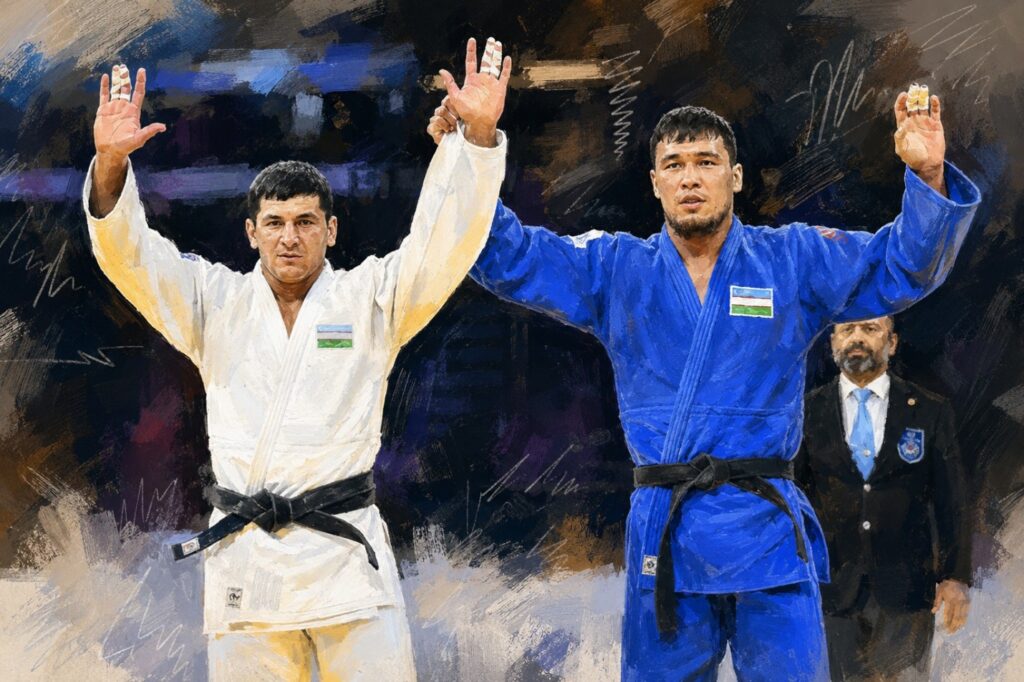
Judoka from Uzbekistan, Kazakhstan, and Tajikistan won seven medals at the inaugural Lausanne Grand Slam in Switzerland, collecting two golds, two silvers, and three bronzes. The International Judo Federation event, held August 28-30 at the Vaudoise Arena, brought together 513 competitors from 77 countries. The official standings list five medals for Uzbekistan, one for Kazakhstan, and one for Tajikistan. Uzbekistan finished sixth overall, Kazakhstan ninth, and Tajikistan joint 22nd. Uzbekistan Takes Five Medals Central Asian athletes met in two finals and one bronze-medal contest. The men’s under-90 kg final was an all-Uzbek contest, with Umar Bozorov defeating teammate Nurbek Murtozoev. After a closely fought contest, Bozorov countered an attack and threw Murtozoev for ippon. The victory gave Bozorov his second Grand Slam title. He had won his first in Tbilisi in 2025 before taking silver at the Ulaanbaatar Grand Slam later that year. Murtozoev reached the first Grand Slam final of his career after previously winning silver at the 2025 Asian Championships and bronze at the Tashkent Grand Slam. [caption id="attachment_55168" align="alignnone" width="300"] Men’s -90 kg final: Umar Bozorov (Uzbekistan) vs Nurbek Murtozoev (Uzbekistan) Image: IJF[/caption] Uzbekistan’s other medals came from Arslonbek Tojiev, who took silver in the under-81 kg division, and bronze medallists Samariddin Kuchkarov and Ernazar Sarsenbaev. Tojiev arrived in Lausanne with an established record at senior international level. He took silver at the Tashkent Grand Slam and bronze at the Asian Championships in 2025 and finished fifth at that year’s World Championships. His Lausanne run ended against Kazakhstan’s Abylaikhan Zhubanazar in the second final involving two Central Asian judoka. Kuchkarov, 20, defeated Kazakhstan’s Sherzod Davlatov in the under-60 kg bronze-medal contest. Almost two minutes into golden score, Kuchkarov used sumi-otoshi to record the decisive yuko. The result continued a strong year in which he had already taken bronze at both the Tbilisi Grand Slam and the Asian Championships. Sarsenbaev, 25, secured under-100 kg bronze against Japan’s Tetta Hamada with a sumi-gaeshi. He had taken silver at the Tashkent Grand Slam and bronze at the Asian Championships earlier this year. Zhubanazar Wins Kazakhstan’s Gold In the under-81 kg final, Abylaikhan Zhubanazar and Tojiev remained scoreless for much of the contest, with each receiving one shido. In the closing stages, Zhubanazar used a de-ashi-harai to record the decisive yuko and claim his first Grand Slam title. The 26-year-old Kazakh judoka had already taken bronze at the Paris Grand Slam and Asian Championships earlier this year, following another Grand Slam bronze at the Qazaqstan Barysy event in 2025. His Lausanne victory moved him to eighth in the IJF world rankings in the under-81 kg division. [caption id="attachment_55167" align="alignnone" width="300"] Men’s -81 kg final: Abylaikhan Zhubanazar (Kazakhstan) vs Arslonbek Tojiev (Uzbekistan); Image: The National Olympic Committee of the Republic of Kazakhstan[/caption] “Winning my first Grand Slam gold is an incredible feeling,” Zhubanazar said after the final, adding that the result gave him confidence ahead of the World Championships in Baku. Asadulloev Extends Strong Tajik Season Tajikistan added the region’s seventh medal...

A Eurasian Imprint on Judo’s Paris Grand Slam

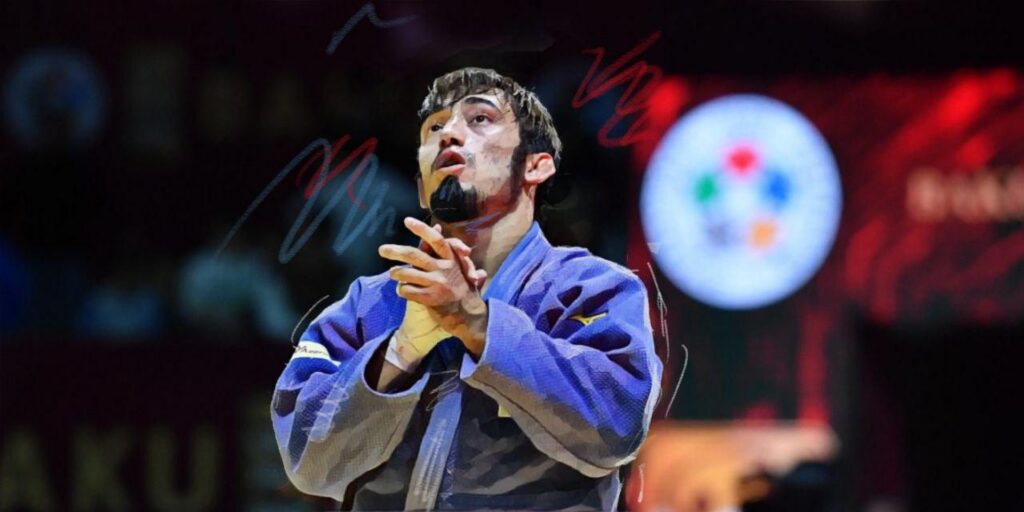
The Paris Judo Grand Slam took place on February 7–8 at a sold-out Accor Arena, drawing more than 20,000 spectators to one of the sport’s most prestigious annual events. Held under the auspices of the International Judo Federation (IJF) as a flagship stop on the IJF World Tour, the competition carried significant world-ranking points early in the qualification cycle for the Los Angeles 2028 Olympic Games. Nearly 500 athletes from 78 countries participated. While Japan and France dominated the medal table at the Paris Judo Grand Slam, the tournament also underscored a quieter but enduring force in international judo: the sustained competitive influence of Central Asia and the South Caucasus. Japan topped the medal table with gold medals from Takeshi Takeoka (–66 kg), Yuhei Oino (–81 kg), Goki Tajima (–90 kg), and Dota Arai (–100 kg). France secured three home victories through Shirine Boukli (–48 kg), Sarah-Léonie Cysique (–57 kg), and Romane Dicko (+78 kg). The remaining titles reflected the tournament’s global reach. Balabay Aghayev delivered gold for Azerbaijan at –60 kg, Distria Krasniqi won –52 kg for Kosovo, Rafaela Silva captured –63 kg for Brazil, Makhmadbek Makhmadbekov claimed the –73 kg title representing the United Arab Emirates, and Szofi Özbas secured the –70 kg title for Hungary, according to official IJF results. While Azerbaijan is geographically part of the South Caucasus, its Turkic cultural ties, Soviet-era sporting systems, and shared wrestling traditions closely align with Central Asia’s judo landscape. Aghayev’s gold for Azerbaijan, alongside Makhmadbekov’s –73 kg victory, highlighted transnational athlete pathways rooted in a common Eurasian combat sports tradition. Makhmadbekov—an ethnically Tajik judoka born in Russia—has represented the United Arab Emirates in international competition since 2024, reflecting the increasingly transnational nature of elite judo careers. [caption id="attachment_43589" align="aligncenter" width="800"] 73 kg Final: Makhmadbek Makhmadbekov (United Arab Emirates) vs. Manuel Lombardo (Italy); image: Tamara Kulumbegashvili[/caption] Kazakhstan’s national judo team reinforced that regional presence by concluding the Paris Grand Slam with three bronze medals, one of its strongest results in the tournament’s history. Aman Bakhytzhan reached the podium in the –60 kg division, while Abylaikhan Zhubanazar (–81 kg) and Nurlykhan Sharkhan (–100 kg) added further medals on the second day. [caption id="attachment_43590" align="aligncenter" width="796"] 60 kg Final: Balabay Aghayev (Azerbaijan) vs. Dilshot Khalmatov (Uzbekistan); image: Tamara Kulumbegashvili [/caption] Martial arts occupy a distinctive place across Central Asia and Azerbaijan, where indigenous wrestling traditions long predate modern Olympic disciplines. Styles such as kurash in Uzbekistan, kazakh kuresi in Kazakhstan, and gushtingiri in Azerbaijan, alongside their more traditional forms such as gulesh and zorkhana-influenced pekhlivan wrestling, emphasize balance, explosive throws, and physical control. These attributes remain clearly visible in contemporary judo. These traditions continue to be showcased at events such as the World Nomad Games and regional festivals across Central Asia and the Caspian region. They were further refined during the Soviet era, which institutionalized sports and established the region as a major development base for elite combat athletes. Since gaining their independence, Central Asian countries, as well as Azerbaijan, have continued to...