


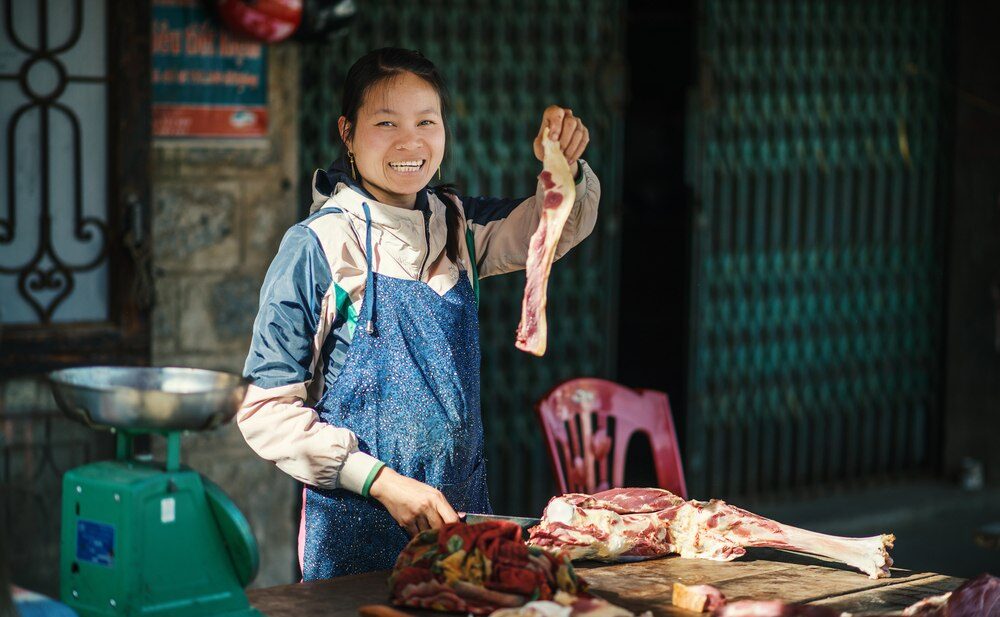
Meat Prices in Tajikistan Among Highest in Central Asia
Beef prices in Tajikistan remain among the highest in Central Asia, with average retail prices ranging from $10 to $11 per kilogram, higher than in neighboring Kyrgyzstan, Kazakhstan, and Turkmenistan. By comparison, beef costs around $7.6 per kilogram in Kyrgyzstan, approximately $7-7.5 in Turkmenistan, and about $8.66 in Kazakhstan. Uzbekistan is at a similar level to Tajikistan, with prices averaging $10.85 per kilogram. Globally, meat prices continue to rise. According to the Food and Agriculture Organization (FAO), prices increased by about 1% in March compared with February and were up 8% year-on-year. Analysts say the increase is largely driven by rising pork prices, particularly in Europe, along with reduced meat production in Brazil. At the same time, lamb and poultry prices have edged down slightly. Experts warn that declining production in the United States and Brazil, combined with strong demand in Europe, could push beef prices even higher. The highest beef prices globally are recorded in Switzerland, where they reach $45.72 per kilogram. Other high-cost markets include Norway ($32.67), Luxembourg ($27.09), South Korea ($25.23), and Singapore ($25.02). The lowest prices are found in Nigeria ($4.56), Pakistan ($4.70), Kenya ($5.17), India ($5.33), and Nepal ($5.40). Among former Soviet countries, price differences are also significant, with the highest costs in the Baltic states. In Estonia, beef is priced at $20.48 per kilogram; in Latvia, $13.71; and in Lithuania, $12.43. Mid-range prices are seen in Armenia ($11.59), Russia ($10.80), Azerbaijan ($10.64), and Georgia ($9.91). Lower prices are found in Belarus ($9.25), Moldova ($8.59), and Ukraine ($7.22). Despite high prices, domestic meat production in Tajikistan is increasing. According to official data, output of livestock and poultry (in live weight) reached 54,700 tons in January-March 2026, up 11.5% year-on-year. However, prices remain elevated due to supply shortages. The country meets only about 58% of domestic demand, while imports account for just 4-6% of the market. Imported meat, particularly from Belarus and Kazakhstan, is cheaper and helps contain prices, but due to consumer preferences it is mainly used in the food service sector and does not replace locally produced meat. Experts say the high cost of meat in Tajikistan is driven by structural factors, including underdeveloped livestock farming, feed shortages, and limited systemic support for farmers. Imports, they note, provide only temporary relief and do not address the underlying causes of high prices.
