
• KZT/USD = 0.00220
  • TJS/USD = 0.10840
  • UZS/USD = 0.00008
  • TMT/USD = 0.29850
  • KZT/USD = 0.00220
  • TJS/USD = 0.10840
  • UZS/USD = 0.00008
  • TMT/USD = 0.29850
  • KZT/USD = 0.00220
  • TJS/USD = 0.10840
  • UZS/USD = 0.00008
  • TMT/USD = 0.29850
  • KZT/USD = 0.00220
  • TJS/USD = 0.10840
  • UZS/USD = 0.00008
  • TMT/USD = 0.29850
  • KZT/USD = 0.00220
  • TJS/USD = 0.10840
  • UZS/USD = 0.00008
  • TMT/USD = 0.29850
  • KZT/USD = 0.00220
  • TJS/USD = 0.10840
  • UZS/USD = 0.00008
  • TMT/USD = 0.29850
  • KZT/USD = 0.00220
  • TJS/USD = 0.10840
  • UZS/USD = 0.00008
  • TMT/USD = 0.29850
  • KZT/USD = 0.00220
  • TJS/USD = 0.10840
  • UZS/USD = 0.00008
  • TMT/USD = 0.29850
23 November 2026

Viewing results 1 - 6 of 2

Tokayev Names Zhanassova Deputy Prime Minister in Transport Shake-Up

Kazakhstan’s President Kassym-Jomart Tokayev has replaced his transport minister and given the incoming officeholder the rank of deputy prime minister. The November 3 appointment puts Asel Zhanassova in charge of the ministry as Kazakhstan prepares a major infrastructure expansion. Zhanassova, previously deputy head of the Presidential Administration, succeeds Nurlan Sauranbayev. Her appointment decree formally combines the positions of deputy prime minister and transport minister, raising the portfolio’s standing within the government. Zhanassova becomes one of six deputy prime ministers, including First Deputy Prime Minister Nurlybek Nalibayev. The change comes less than a week after Tokayev announced plans to accelerate construction and expand freight routes linking China and Europe. Several major transport projects face deadlines in 2027, giving the new minister an immediate delivery agenda. Akorda gave no reason for Sauranbayev’s dismissal and announced no new appointment for him. His departure came six days after Tokayev criticized road quality and officials passing responsibility between central and local government. A New Minister with a Digital Background Zhanassova brings experience in digital technology and the management of Kazakhstan’s national postal operator. Born in Almaty in 1987, she graduated from the University of Cambridge in 2010 with a computer science degree. She studied under Kazakhstan’s Bolashak scholarship program. According to her published biography, her early career included technology and cybersecurity positions at an international company in London. She subsequently worked at Kazakhstan’s central bank and headed the state technology holding Zerde. She later held senior digital roles at the Astana International Financial Centre before becoming vice minister of trade and integration. From 2022 to 2025, she chaired Kazpost, a position that gave her experience managing a nationwide delivery network. Zhanassova became an adviser to Tokayev in June 2025 and deputy head of the Presidential Administration in December of that year. Her latest promotion moves her into a cabinet role combining transport management with deputy prime minister responsibilities. Sauranbayev had been appointed transport minister on June 30, 2025. His departure marks another leadership change in a ministry already subject to presidential scrutiny. His predecessor, Marat Karabayev, was dismissed in June 2025, following criticism of transport infrastructure and delays affecting transit development. An Extensive Construction Agenda In his October 28 State of the Nation Address, Tokayev outlined plans to allocate 6.5 trillion tenge, approximately $14.3 billion, from the National Fund to infrastructure by 2029. He also proposed designating 2027 as a year of large-scale construction. Transport forms a substantial part of that agenda. The 272-kilometer Bakhty–Ayagoz railway is scheduled to open in 2027, adding a border crossing with China. The project is expected to increase annual rail freight capacity between the two countries by 20 million metric tons. The Aral–Caspian Highway is another major undertaking. The approximately 800-kilometer route will connect Beineu in western Kazakhstan with Saksaulsk, near the Aral Sea. Construction began in August, with Tokayev saying the highway would shorten the freight route between China and Europe by approximately 1,000 kilometers and cut delivery times by three days. The government’s summary of the address...
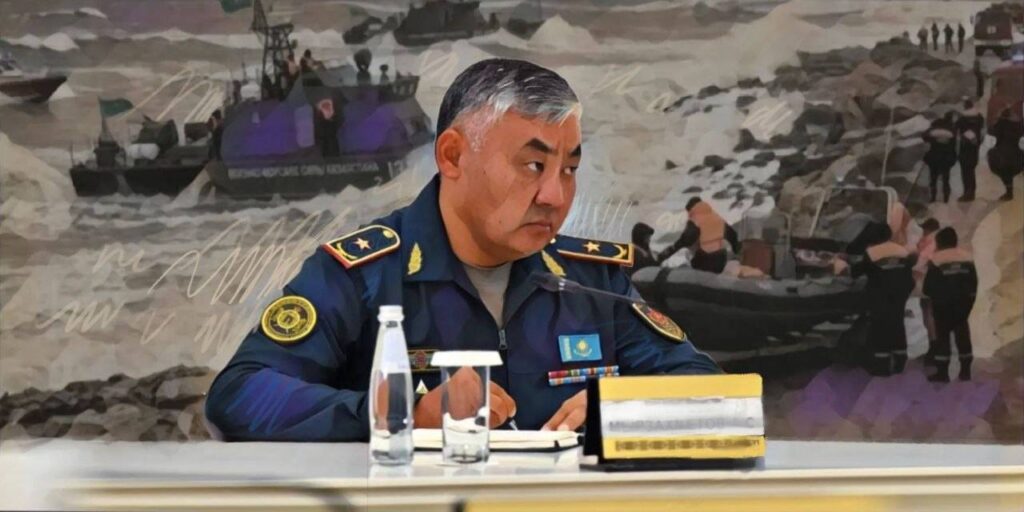

Kazakhstan Orders Military Overhaul After 14 Die in Caspian Drills

Kazakh President Kassym-Jomart Tokayev has replaced the country’s defense minister, three days after 14 servicemen were killed during military exercises in the Caspian Sea. Tokayev appointed Aidos Myrzakhmetov to lead the ministry, ordered a broad inspection of the Defense Ministry, and gave officials ten days to prepare a military reform plan. Dauren Kosanov, who had held the role since June 2025, was dismissed on September 27. On the same day, Tokayev appointed Myrzakhmetov and introduced him at a meeting of senior Defense Ministry officials. Myrzakhmetov, 45, is a career officer who spent much of his career in the State Guard Service before being appointed commander of the Armed Forces’ Special Operations Forces in January 2024. He graduated from the National Defense University in 2025 and holds the rank of major general. [caption id="attachment_57120" align="aligncenter" width="750"] New Defense Minister of the Republic of Kazakhstan meets with the President; image: Akorda[/caption] Political analyst Adil Seifullin said the appointment appeared to continue a practice of moving officers with State Guard Service experience into senior government roles where officials face difficult decisions. He said Myrzakhmetov’s combination of experience in the service and direct command of the Special Operations Forces may have been among the factors behind his selection. Tokayev set several priorities for the new minister, including reassessing the effectiveness of military spending, overhauling the command system, accelerating digitalization, and using technology instead of personnel for dangerous tasks where possible. He also said appointments to command positions should be based on experience and professional qualifications “rather than the principle of personal loyalty.” “Our army is stuck in the last century,” Tokayev said, calling for the command system to be rebuilt using international experience. The Security Council staff and Defense Ministry have ten days to prepare a phased military reform plan, which is due to be considered at a Security Council meeting in the second half of October. Tokayev specifically instructed officials not to produce another set of lengthy concepts and road maps, but to propose concrete measures. The overhaul follows the deaths of 14 servicemen during the Khazar Qorgany 2026 exercises in the Mangystau region on September 24. Seventeen servicemen were swept into the sea during a personnel landing operation from the Qaisar boat. Three were rescued, and 14 died. September 25 was declared a day of national mourning in Kazakhstan. The Interior Ministry’s military investigative department opened a criminal case over suspected negligence and violations of navigation rules. Five members of the military command were subsequently detained as suspects. These included the chief of staff and first deputy commander-in-chief of the Naval Forces, two military unit commanders, a Marine Corps company commander, and the commander of the boat. The Times of Central Asia previously reported on the tragedy and investigation, as well as the response of victims’ relatives. The tragedy also raised questions about how the landing operation itself was organized. Azerbaijani military expert and reserve colonel Shair Ramaldanov said that, as he understood it, the Qaisar normally carried a crew of four...