• KZT/USD = 0.00219
  • TJS/USD = 0.10860
  • UZS/USD = 0.00008
  • TMT/USD = 0.29760
  • KZT/USD = 0.00219
  • TJS/USD = 0.10860
  • UZS/USD = 0.00008
  • TMT/USD = 0.29760
  • KZT/USD = 0.00219
  • TJS/USD = 0.10860
  • UZS/USD = 0.00008
  • TMT/USD = 0.29760
  • KZT/USD = 0.00219
  • TJS/USD = 0.10860
  • UZS/USD = 0.00008
  • TMT/USD = 0.29760
  • KZT/USD = 0.00219
  • TJS/USD = 0.10860
  • UZS/USD = 0.00008
  • TMT/USD = 0.29760
  • KZT/USD = 0.00219
  • TJS/USD = 0.10860
  • UZS/USD = 0.00008
  • TMT/USD = 0.29760
  • KZT/USD = 0.00219
  • TJS/USD = 0.10860
  • UZS/USD = 0.00008
  • TMT/USD = 0.29760
  • KZT/USD = 0.00219
  • TJS/USD = 0.10860
  • UZS/USD = 0.00008
  • TMT/USD = 0.29760
20 November 2026

Viewing results 1 - 6 of 2

Kyrgyzstan’s Land-Use Plan Favors Apartments to Protect Farmland

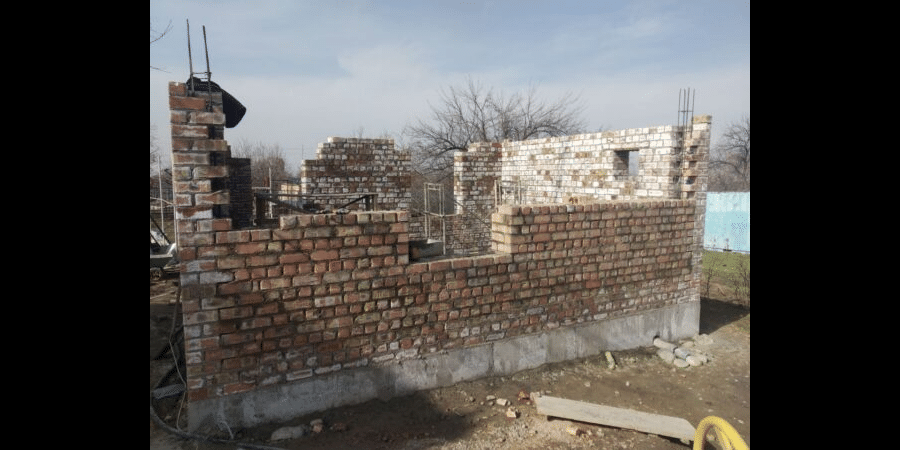
Kyrgyzstan plans to preserve farmland by encouraging more compact development in towns and villages. The country’s plan for land use and spatial development through 2050 calls for earthquake-resistant mid- and high-rise housing. President Sadyr Japarov approved it by decree on November 16. In many regions, towns and villages are expanding as single-family homes go up on new lots. The plan says this pattern consumes farmland and drives up spending on roads and public facilities. Extending power grids and water and sewer networks adds to the cost. From January through October 2026, Kyrgyzstan added 8,150 single family homes with a combined floor area of about 1.12 million square meters. According to the National Statistical Committee of the Kyrgyz Republic, that was 3.8% more floor space than in the same period in 2025. The plan proposes stronger protections for irrigated farmland, particularly near towns and villages. To rezone especially valuable irrigated land for housing or industry, authorities would have to show that the law permits the change and that the project cannot be built on degraded land or on plots of lower value or productivity. The plan calls for stricter enforcement against illegal construction and the unauthorized occupation of land. Officials would also check whether plots are used for their designated purpose. At a November 8 meeting with residents of Kara-Balta and the Jayyl and Panfilov districts, Japarov explained the limits on new housing plots. He said that continuing to hand out plots for single-family homes could lead to the loss of irrigated farmland and pastures. When a woman told him her son had been waiting years for a plot, Japarov suggested he join the waiting list for an apartment through the State Mortgage Company. The master plan for Karakol, a city in the Issyk-Kul region, already includes multistory housing, as do those for Manas and Osh. Local tour guide Albina Alimova told The Times of Central Asia that new buildings were obscuring historic sites and blocking mountain views. She warned that continued construction could change the city’s historic character. The first phase of the national plan, from 2027 to 2030, calls for a digital land inventory and pilot projects. According to Tazabek, one pilot site will be the rural municipality of Karakol in the Talas region. The pilot would test a layout that places homes and services closer together. Terrace farming and water-saving irrigation are also planned, along with digital monitoring of pastures and other land as well as water resources. The next two phases are scheduled for 2031–2040 and 2041–2050. The Cabinet of Ministers has three months to approve an implementation plan for the first phase. It must set deadlines and specify which agency will carry out each measure and how the work will be funded.


Why Strong Economic Growth in Central Asia Masks Underlying Risks

Central Asian countries are significantly outperforming the global average in GDP growth, largely due to differing economic models across the region. However, rapid expansion does not remove deep structural vulnerabilities. As early as March, data showed that the combined economies of Central Asian countries grew by nearly 7% in 2025 compared to the previous year. The World Bank estimates regional growth at 6.2%, while the Eurasian Development Bank (EDB) places it at 6.6%. These calculations include Kazakhstan, Uzbekistan, Kyrgyzstan, and Tajikistan; Turkmenistan is excluded due to limited statistical transparency. By comparison, growth rates in advanced economies are much lower. The EDB expects around 1.6% growth in the U.S. and approximately 1.1% in the eurozone in 2026, while China’s economy is projected to expand by about 4.6%. Nevertheless, experts note that the region’s economic outlook remains complicated by high inflation, income inequality, and continued dependence on external factors. Investment activity and domestic demand have been the key drivers of growth, according to the EDB. Kazakhstan recorded its highest growth in 13 years (6.5%), with industry leading the expansion: mining grew by 9.4% and manufacturing by 6.4%. In 2026, the non-resource sector is expected to play a greater role. Kyrgyzstan has led the region in GDP growth for the third consecutive year: GDP grew by 11.1% in 2025 and by 9% in January 2026. In Uzbekistan, GDP increased by 7.7% in 2025 (up from 6.7% a year earlier), supported by investment, trade, services, and construction. Tajikistan’s GDP rose by 8.4% in 2025, matching the previous year’s performance. Growth continues to be driven by expanding industrial production and strong domestic demand. Early 2026 data suggest this momentum is holding. Uzbekistan’s Record In April, the World Bank highlighted Uzbekistan’s resilience to external challenges and strong growth dynamics. According to its updated report, the country’s 2025 GDP growth was revised upward by 1.5 percentage points to 7.7%. The outlook is 6.4% for 2026 and 6.7% for 2027. Key drivers include high global gold prices, investment inflows, expanded lending, and ongoing structural reforms. Rising household incomes have also played an important role, supported by remittances, which increased by 37% last year to reach $18.9 billion. By the end of 2025, Uzbekistan ranked among the fastest-growing economies in developing countries in Europe and Central Asia, alongside Kyrgyzstan and Tajikistan. The region as a whole is experiencing its highest growth rates in 14 years. At the same time, analysts point to persistent structural constraints, including a large public sector and the dominance of state-owned enterprises, which hinder private sector development. External risks, including geopolitical instability and potential disruptions in energy and fertilizer supplies, remain significant. In 2025, Uzbekistan’s GDP exceeded €133 billion, compared to approximately €56 billion nine years earlier. Over the same period, GDP per capita rose from about €1,750 to around €3,220, nearly doubling average income levels. Investment in fixed capital increased by more than 15% year-on-year in 2025, while export value grew by over 33%. Persistently high global gold prices played a major role: export...