• KGS/USD = 0.01144 0%
  • KZT/USD = 0.00208 0%
  • TJS/USD = 0.10516 0.77%
  • UZS/USD = 0.00008 0%
  • TMT/USD = 0.28571 0%
  • KGS/USD = 0.01144 0%
  • KZT/USD = 0.00208 0%
  • TJS/USD = 0.10516 0.77%
  • UZS/USD = 0.00008 0%
  • TMT/USD = 0.28571 0%
  • KGS/USD = 0.01144 0%
  • KZT/USD = 0.00208 0%
  • TJS/USD = 0.10516 0.77%
  • UZS/USD = 0.00008 0%
  • TMT/USD = 0.28571 0%
  • KGS/USD = 0.01144 0%
  • KZT/USD = 0.00208 0%
  • TJS/USD = 0.10516 0.77%
  • UZS/USD = 0.00008 0%
  • TMT/USD = 0.28571 0%
  • KGS/USD = 0.01144 0%
  • KZT/USD = 0.00208 0%
  • TJS/USD = 0.10516 0.77%
  • UZS/USD = 0.00008 0%
  • TMT/USD = 0.28571 0%
  • KGS/USD = 0.01144 0%
  • KZT/USD = 0.00208 0%
  • TJS/USD = 0.10516 0.77%
  • UZS/USD = 0.00008 0%
  • TMT/USD = 0.28571 0%
  • KGS/USD = 0.01144 0%
  • KZT/USD = 0.00208 0%
  • TJS/USD = 0.10516 0.77%
  • UZS/USD = 0.00008 0%
  • TMT/USD = 0.28571 0%
  • KGS/USD = 0.01144 0%
  • KZT/USD = 0.00208 0%
  • TJS/USD = 0.10516 0.77%
  • UZS/USD = 0.00008 0%
  • TMT/USD = 0.28571 0%

Viewing results 1 - 6 of 8

Tajik Border Troops Kill Three Afghans Suspected of Opium Smuggling

An armed clash occurred on the evening of January 29 along the Tajik-Afghan border, in Tajikistan's Shamsiddin Shokhin district, as local border forces intercepted an attempted drug smuggling operation. According to the Border Troops of the State Committee for National Security (GKNB), the incident occurred around 7:30 p.m. in the area overseen by the Bahorak border post of military unit 0341. The GKNB reported that five Afghan nationals illegally crossed into Tajikistan. Once the group was located, border guards attempted to apprehend them. The intruders resisted arrest and opened fire in an attempt to retreat across the border. In the ensuing exchange, three were killed on the spot. The GKNB identified the deceased as Jovid Valadi Davlatmand and Rashid Valadi Davlatmand, residents of Kariai Vorich, and Sobir Valadi Zohir from Kariai Andjir, Takhar province. Two others managed to flee under the cover of darkness, retreating toward Afghan territory. The Tajik-Afghan border has seen a steady rise in armed incidents over the past year, driven largely by drug trafficking and the movement of armed groups across remote mountain crossings. Tajik authorities have repeatedly warned that narcotics smuggling networks operating out of northern Afghanistan remain a persistent security threat despite stepped-up patrols and surveillance. At the scene, border guards recovered three Kalashnikov rifles with four magazines, approximately 150 rounds of mixed-caliber ammunition, a large number of spent cartridges, and four bags containing 73 packages of narcotics, identified as hashish and opium. A boat, likely used for crossing the border, was also discovered. Officials say drug trafficking remains the primary driver of cross-border violence in the region. Afghanistan remains the world’s largest producer of opiates, and Tajikistan is a key transit route for narcotics moving north toward Central Asia and Russia, making the border a frequent flashpoint for armed encounters. The January 29 clash adds to a series of escalating incidents along the Tajik-Afghan border. Two weeks ago, on the night of January 18, Tajik security forces killed four armed individuals, whom they identified as members of a terrorist organization, in the same border zone. Border violence has intensified since last November. In two separate incidents, five Chinese citizens were killed in attacks originating from Afghan territory. In December, two Tajik border guards were killed during a confrontation with armed intruders in the Sarchashma border detachment's area of responsibility. Tajik security forces maintain that full control over the national border is being upheld, and have vowed to respond to all threats with force and immediacy.
Uzbekistan Fires Counter-Narcotics Chief as Drug Trade Surges

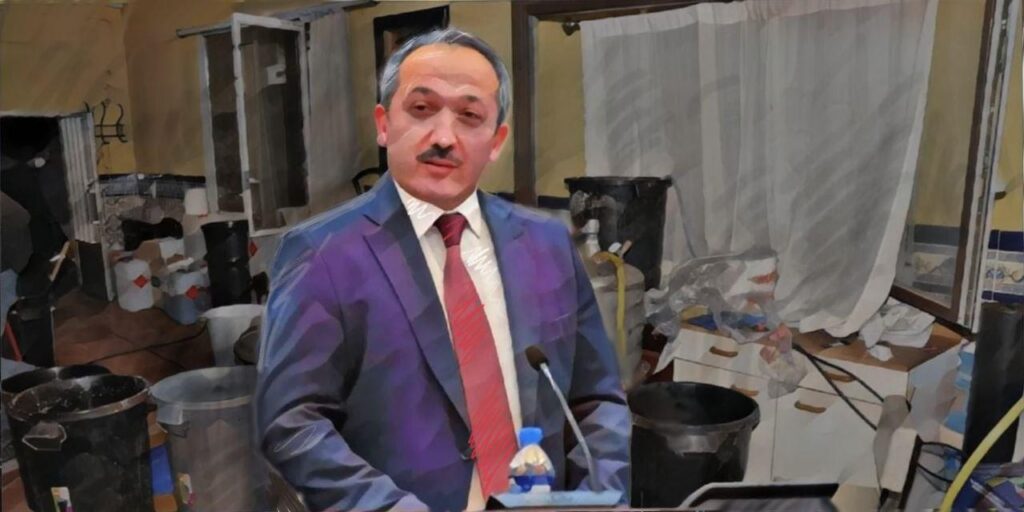
In late January, Uzbek President Shavkat Mirziyoyev sacked a series of high-ranking officials in the Interior Ministry, National Guard, and the Emergency Situations Ministry. Their dismissals for corruption overshadowed the firing of the director of the Agency for Control of Narcotics and Illegal Firearms, who was let go for failing badly to combat illegal trafficking and use of drugs. Poor Results Ravshan Mamatov was appointed director of the National Center for Narcotics Control in August 2024. In July 2025, a presidential decree transformed the center into the Agency for Control of Narcotics and Illegal Firearms. On January 27, President Mirziyoyev criticized the work of the Narcotics Control Agency and warned Mamatov to engage in more than simply “analytical work and international cooperation.” Mirziyoyev dismissed Mamatov the next day, and it was not a surprise. Exactly two weeks earlier, Bahodir Kurbanov, the head of Uzbekistan’s State Security Service (SGB), spoke at a session of the country’s Security Council, chaired by President Mirziyoyev. Kurbanov detailed security measures along Uzbekistan’s borders, including the use of military surveillance drones. The security chief also spoke about illegal narcotics, noting the amount of drugs seized in 2024 was some 1,700 kilograms and that figure more than doubled to 3,600 kilograms in 2025. Kurbanov noted the 2025 figure included more than 180 kilograms of synthetic drugs and more than one million doses of psychotropic drugs. Additionally, the number of people arrested for illegal narcotics went from some 2,600 in 2024 to some 4,500 in 2025. In his January 27 comments, President Mirziyoyev said that during the last three months, the authorities in the capital Tashkent, had detained members from approximately 50 major narcotics trafficking groups and seized some 500 kilograms of illegal drugs. “Last year, more than 1,500 drug users were officially registered in the capital,” Mirziyoyev said, noting, “The saddest part is that the number of drug addicts living in the shadows is even higher.” The Uzbek president added that most were young people and that “in their quest to raise money, drug addicts naturally resort to crime.” Mirziyoyev also criticized the penal system, remarking that a significant number of people convicted for illegal narcotics were released from jail before serving even half their sentences. Mirziyoyev said that this has led to a 25% increase in the number of repeat offenders. Mamatov addressed Uzbekistan’s parliament on December 17, admitting the amount of synthetic drugs being seized had increased phenomenally during the last five years and that the number of crimes involving illegal narcotics had doubled during that time. Mamatov claimed that in a number of cases, “drug trafficking was being facilitated by officials,” though he did not name any specific officials. A Regional Problem The other Central Asian countries are facing the same problems as Uzbekistan. The amounts of drugs seized and people arrested have been growing in the last few years and continue to increase. Part of the problem is that the region’s counter-narcotics agencies are facing a new situation in combating the illegal drug...

Kazakhstan Drug Seizure Tops Six Tons in First Half of 2025

Kazakh authorities seized 6.4 tons of narcotic substances in the first half of 2025, Interior Minister Yerzhan Sadenov announced at a recent meeting of the Interdepartmental Commission on Crime Prevention. For comparison, the Ministry of Internal Affairs reported a total of 21 tons of drugs confiscated in 2024. That figure included 547 kilograms of synthetic substances, 2.5 kilograms of heroin, over 10 tons of marijuana, and 572 kilograms of hashish. Authorities also recorded more than 8,000 drug-related offenses, dismantled 63 drug laboratories, and identified 7,400 internet resources involved in the distribution of drug-related content. Between January and June 2025, the volume of synthetic drugs seized nearly doubled compared to the same period last year, reaching 570 kilograms. In addition, law enforcement blocked over 17,000 drug-related websites and detained 474 individuals on drug charges, including 28 administrators of Telegram channels. Authorities shut down 103 underground drug labs and uncovered 63 drug smuggling cases. Twenty-one criminal cases have been opened against organized drug trafficking groups, including three transnational networks. Health Minister Akmaral Alnazarova reported that more than 17,000 individuals suffering from drug addiction are registered with medical facilities across Kazakhstan. While the number of opioid users has declined by 50 percent over the past five years, there has been a marked rise in addictions linked to synthetic stimulants and poly-drug use. In response to these developments, Prime Minister Olzhas Bektenov has ordered the implementation of stricter mechanisms to identify and block online drug content and to restrict financial transactions associated with drug trafficking. “The increase in drug use among young people is particularly concerning,” Bektenov stated. “Distribution occurs via the internet, postal services, hidden ‘stash’ drops, and anonymous electronic payments, removing direct contact between dealers and consumers.” The Prime Minister also called for tighter control over the dispensation of addictive pharmaceuticals, the expansion of rehabilitation centers including those for minors, and stronger efforts for early detection and treatment of drug dependence. As previously reported by The Times of Central Asia, Central Asia remains a significant transit corridor for narcotics smuggled from Afghanistan. However, the situation is becoming increasingly complex, as more drugs are now being consumed within the region itself.

Central Asia Counts the Cost of Drug Trafficking

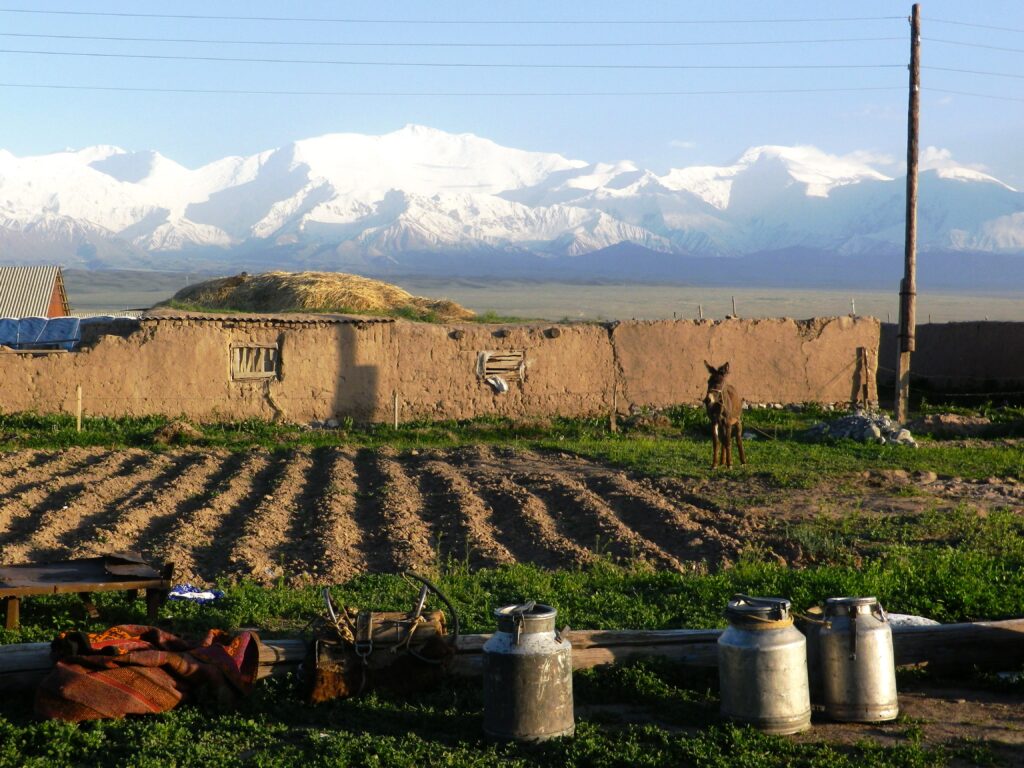
Speaking at the 67th session of the UN Commission on Narcotic Drugs in March, Zafar Samad - director of the Narcotics Control Agency under the President of Tajikistan - admitted that vast quantities of drugs are being smuggled to Europe and Russia through Tajikistan’s “northern route.” In other Central Asian nations, increased efforts are being made to curtail the problem. Kazakhstan, for example, is strengthening its legal systems and policies to effectively counter the laundering of proceeds from drug trafficking in cooperation with the United Nations Office on Drugs and Crime (UNODC). The Kazakh government also recently approved a Comprehensive Plan to Combat Drug Addiction and Trafficking. Given its long and porous border with Afghanistan, however, the problem in Tajikistan remains acute. “The increase in the volume of drug seizures in Tajikistan indicates that there are large stocks of drugs in the northern provinces of Afghanistan intended for shipment along the northern route,” Samad stated. Smugglers are “assessing the situation and exploring the possibilities of transporting drugs into Tajikistan, taking into account the measures taken by the Tajik Government to strengthen the Tajik-Afghan border by creating new border facilities.” This year will see the adoption of a CSTO program aimed at fortifying the border between Tajikistan and Afghanistan. However, the “northern route” - sometimes called the “Heroin Highway” - has a long and checkered history, which has not always led to interstate cooperation. [caption id="attachment_16236" align="aligncenter" width="495"] The village of Karakul, GBAO[/caption]   The Pamir Highway route was established in the 1990s, opening up new avenues for suppliers following the collapse of the Soviet Union. Beginning in the Kyrgyz second city of Osh, the highway - the second highest international road in the world - traverses the length of Tajikistan and down through the south of Uzbekistan before terminating in Afghanistan. An estimated 15 tons of opium and 80 tons of heroin are trafficked through Tajikistan each year, the majority passing through the poverty-stricken, self-governing Gorno-Badakhshan Autonomous Oblast (GBAO) along a desolate mountainous route known locally as Bam-i-Dunya - the Roof of the World. Said by locals to be older than Rome, Osh is a dusty spread of Soviet-era buildings adorned with satellite dishes and murals of MIG fighter jets and Misha the Bear. Having long been dubbed one of the drug capitals of Central Asia, Kalashnikov-wielding soldiers guarded cafés after dark. An ancient Silk Road route in use for millennia, the modern Pamirsky Trakt was completed in 1937. From Osh, the red soil highway ascends to the windswept mud-brick hamlet of Sary Tash, a major stopover on the smuggling route where the roads to Kashgar in China and the border with Tajikistan converge. Despite covering 45% of its landmass, the self-governing Gorno-Badakhshan Autonomous Oblast (GBAO) is home to just 3% of the population of Tajikistan. The only Central Asian country to have descended into civil war following the collapse of the USSR, the Pamiris chose the losing side, with the five-year-long conflict leaving approximately 100,000 dead and 1.2 million...