• KGS/USD = 0.01144 0%
  • KZT/USD = 0.00205 0%
  • TJS/USD = 0.10771 0%
  • UZS/USD = 0.00009 0%
  • TMT/USD = 0.28571 0.28%
  • KGS/USD = 0.01144 0%
  • KZT/USD = 0.00205 0%
  • TJS/USD = 0.10771 0%
  • UZS/USD = 0.00009 0%
  • TMT/USD = 0.28571 0.28%
  • KGS/USD = 0.01144 0%
  • KZT/USD = 0.00205 0%
  • TJS/USD = 0.10771 0%
  • UZS/USD = 0.00009 0%
  • TMT/USD = 0.28571 0.28%
  • KGS/USD = 0.01144 0%
  • KZT/USD = 0.00205 0%
  • TJS/USD = 0.10771 0%
  • UZS/USD = 0.00009 0%
  • TMT/USD = 0.28571 0.28%
  • KGS/USD = 0.01144 0%
  • KZT/USD = 0.00205 0%
  • TJS/USD = 0.10771 0%
  • UZS/USD = 0.00009 0%
  • TMT/USD = 0.28571 0.28%
  • KGS/USD = 0.01144 0%
  • KZT/USD = 0.00205 0%
  • TJS/USD = 0.10771 0%
  • UZS/USD = 0.00009 0%
  • TMT/USD = 0.28571 0.28%
  • KGS/USD = 0.01144 0%
  • KZT/USD = 0.00205 0%
  • TJS/USD = 0.10771 0%
  • UZS/USD = 0.00009 0%
  • TMT/USD = 0.28571 0.28%
  • KGS/USD = 0.01144 0%
  • KZT/USD = 0.00205 0%
  • TJS/USD = 0.10771 0%
  • UZS/USD = 0.00009 0%
  • TMT/USD = 0.28571 0.28%

Viewing results 1 - 6 of 63

Kazakhstan Enters Era of Peaceful Nuclear Energy

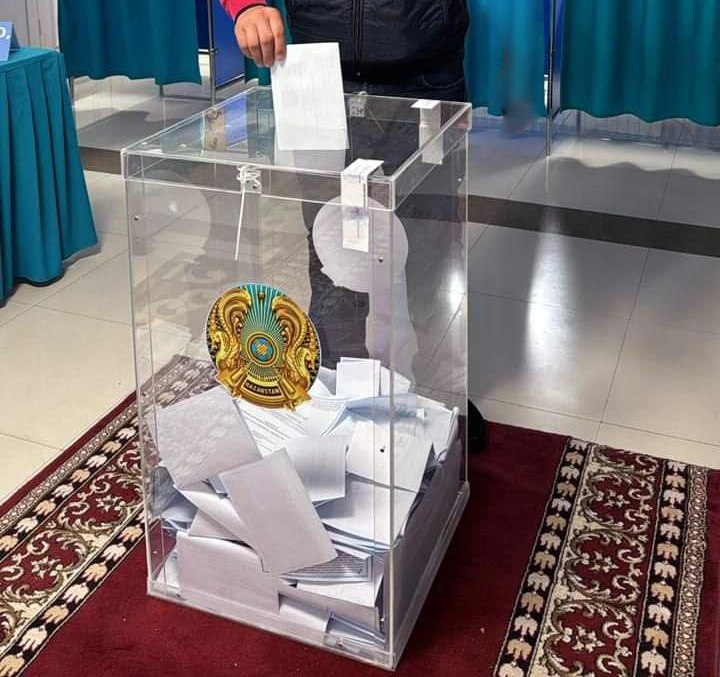
Kazakh President Kassym-Jomart Tokayev's bet on a referendum to secure citizens' consent to construct a nuclear power plant has worked. The Central Election Commission of Kazakhstan announced the final results of the referendum held last Sunday, in which 63,66% of citizens eligible to vote showed up at the polling stations. 71.12 % answered “Yes” to the question on the ballot paper about consent to constructing the nuclear power plant. Organizations engaged in sociological surveys of voters at the exit polls announced similar results on Sunday night and Monday. “The exit poll of the Institute of Complex Social Studies - Astana (SOCIS-A) called the referendum participants' decision to favor the construction of nuclear power plants in Kazakhstan. 'For' voted 69.8%, ‘Against’ - 30.2%. Similar figures were shown by the Institute of Eurasian Integration exit poll ('For' - 71.8%, 'Against' - 28.2%). According to the Institute of Public Policy of the Amanat party, 72.3% of referendum participants voted in favor of the NPP construction. In comparison, 27.7% voted against,” Kazakhstani political analyst Eduard Poletayev said on his Facebook account. His colleague Daniyar Ashimbayev, commenting on the exit poll data, emphasized that Kazakhstanis have managed to overcome old phobias related to Chernobyl and tests at the Semipalatinsk nuclear test site, as well as “enemy propaganda.” By 'propaganda', he means the agitation work of opponents to NPP construction. [caption id="attachment_24131" align="alignnone" width="300"] @ТСА/Kubaizhanov[/caption] “For many years, projects to return to nuclear energy were discussed, but there was always a lack of political will, and powerful foreign pressure prevented the decision necessary for the country. And even now, during the campaign period, we have seen the active work of propagandists paid from abroad to not only disrupt the plans for the construction of nuclear power plants but also to try to destabilize the situation in the country,” said Ashimbayev. Ashimbayev implies that the United States is putting sticks in the wheels of the development of Kazakhstan's nuclear industry. And the point here is not that American nuclear corporations were left off the shortlist, which Kazakhstan is considering, but in the usual policy of containment. Not Kazakhstan, of course, but Russia and China - Washington's main geopolitical rivals and competitors. Realizing this, Tokayev, after voting in the referendum and answering journalists' questions afterward, said that he would like the NPP to be built by an international consortium, presumably from the companies of those countries that were on the shortlist: Russia, China, South Korea, and France. “This is not an easy question. The government should engage in analysis and conduct appropriate negotiations. My vision for this issue is for an international consortium to work in Kazakhstan, consisting of global companies with the most advanced technologies. Further, as they say, life will show,” Tokayev said. Kazakhstan has turned another significant page in its history. In 400 days of discussing nuclear power plants - how long it took from when Tokayev first mentioned atomic power to the end of the campaign period - the president's team has managed the...

Kazakhstan Awaits Results of Nuclear Referendum; Exit Polls Indicate a “Yes” Vote

Kazakhstan is awaiting the official results of a referendum on whether to build its first nuclear power plant, though exit polls showed “yes” voters were in the majority, according to state-run media reports. The project could ease chronic energy shortages and reduce reliance on coal-fired facilities but is fraught with concerns about costs, transparency, and the legacy of the human and environmental cost of Soviet nuclear weapons testing decades ago. Led by President Kassym-Jomart Tokayev, Kazakhstan’s political establishment has backed the idea of peaceful nuclear power as a way to move the country forward and the referendum appears aimed partly at giving people a sense of agency after the trauma of Soviet testing at Semipalatinsk. But some opponents allege that authorities restricted their efforts to organize a “no” campaign with detentions and other pressure designed to lock in an expected vote in favor. Officials results had not been announced as of early Monday morning. Voting at polling stations in Kazakhstan ended at 8 p.m. on Sunday and turnout among eligible voters was 63.87%, according to the Central Election Commission. The highest turnout was in the Kyzylorda region (82.48%) and the lowest turnout was in the city of Almaty (25.39%). Turnout in Astana, Kazakhstan’s capital, was 50.81%. “The precinct referendum commissions have begun counting the votes. The counting process at each polling station must not exceed twelve hours from the start of the count,” the commission said. Additionally, more than 7,358 Kazakh citizens voted at polling stations abroad, including in Asia, South America, Europe, and the United States, according to Roman Vassilenko, Kazakhstan’s Deputy Minister of Foreign Affairs. He noted at a briefing on Sunday night that the referendum had been monitored by observers from regional organizations, including the Shanghai Cooperation Organization, the Organization of Turkic States, and the Astana-based Conference on Interaction and Confidence-Building Measures in Asia. The heads of the observer missions said the referendum was “open, free, and legitimate, with no violations detected at any polling stations,” Vassilenko said. Kazakhstan also invited observers from the Organization for Security and Cooperation in Europe, but the OSCE declined to send a delegation “due to heavy workload,” reported the state-run Kazinform news agency. The OSCE sent a mission to observe a 2022 referendum on constitutional changes in Kazakhstan and concluded that it took place “in an environment short of genuine political pluralism.” One critic of the rules surrounding the nuclear referendum is Tamara Yeslyamova, editor-in-chief of the Uralskaya Nedelya, a newspaper that has sparred with the government over the years. A judge issued her with a fine for 110,760 tenge ($230) after she conducted video interviews about the referendum on nuclear power with half a dozen people on the street, the newspaper reported. It said the judge concluded that the interviews amounted to a public opinion survey; the law says such a poll can only be done by a state-sanctioned entity.

Kazakhstanis Will Be Able to Vote in 61 Countries in the Nuclear Power Referendum

Speaking at a briefing, Secretary of the Central Election Commission of Kazakhstan Mukhtar Erman said that 76 polling stations in 61 countries abroad will be opened for citizens to participate in the referendum on constructing nuclear power plants. However, the polling station in Lebanon will not open due to the current situation there. “Just today, we held consultations with the Foreign Ministry, and we received information from our colleagues that one polling station in Lebanon will not be opened because, you know, there are full-scale hostilities in that country. The situation there is tough; we cannot risk our voters' and fellow citizens' lives and health. That is why there are currently 76 polling stations and 61 countries,” Erman said, noting that all procedures relating to voting abroad — opening of polling stations, counting of votes, and transfer of information — will be carried out in strict accordance with Kazakhstan's current legislation. Earlier, The Times of Central Asia reported that 177 international observers from 30 countries and four international organizations will monitor the referendum on NPP in Kazakhstan. In addition, on the day of the referendum, 200 foreign journalists from 37 countries will be on the ground to ensure the transparency and objectivity of the referendum. The idea of holding the referendum, which will be held on October 6, 2024, emerged against the backdrop of regular problems with energy supply and the need to modernize infrastructure. An active debate has accompanied the move.

Observers From 30 Countries Will Follow the Referendum on NPP in Kazakhstan

The secretary of the Central Referendum Commission, Mukhtar Erman, has announced that 177 international observers will monitor the referendum on constructing a nuclear power plant (NPP) in Kazakhstan. Erman specified that observers represent 30 countries and four international organizations. Major international organizations invited by Kazakhstan include the OSCE, SCO, CIS, and Organization of Turkic States; however, the OSCE will not participate due to its high workload. Deputy Foreign Minister Roman Vassilenko added that 200 foreign journalists from 37 countries, including international media representatives, will work on the day of the referendum. According to Vassilenko, this will ensure transparency and objectivity. The idea of holding the referendum, which will be held on October 6, 2024, emerged against the backdrop of regular problems with energy supply and the need to modernize infrastructure. An active debate has characterized the build-up to the referendum, a project supported by the authorities as a solution to combat energy shortages and carbon dioxide emissions, whilst some quarters of the population remain concerned about environmental risks and Kazakhstan's historical connection to nuclear testing.

Rosatom Considering Constructing Nuclear Power Plant in Northern Kyrgyzstan

Representatives of the Russian company Rosatom announced at a briefing that a low-capacity nuclear power plant may be built in Kyrgyzstan's northern Chui region. According to them, a preliminary feasibility study has already been developed. According to Rosatom, the company's specialists have studied the seismic potential of southern Kyrgyzstan and concluded that there are many faults in the earth's crust. This fact is reason enough not to build the plant in the south of the country. In contrast, Kyrgyzstan's north is less prone to seismic fluctuations. “The most suitable location for this project is the northern Chui oblast [region], where seismicity is the lowest. But we have not been able to name a specific site so far. A detailed study is needed. There are places in Kyrgyzstan where a nuclear power plant can be built, but not many,” said Dmitry Konstantinov, general director of Rosatom's Russian representative office in Kyrgyzstan. He said many parameters must be considered when choosing a construction site. These include seismic activity, remoteness from population centers, power lines, and a water source needed to cool the plant. Rosatom stated that the design for the small nuclear power plant potentially being built in Kyrgyzstan was developed by adapting shipboard small-power technology currently used in ships. Each unit at the plant would have a capacity of 55 MW, with the possibility of installing up to six units, allowing the plant’s total capacity to reach 300 MW. For comparison, by 2025, Kyrgyz authorities aim to achieve a capacity of 400 MW (excluding the nuclear plant) through the completion of large hydroelectric power projects. Two years ago, a memorandum on constructing a low-capacity nuclear power plant was signed between Bishkek and Moscow. Since then, the Russian company has been working on a feasibility study and studying land plots for the plant's construction. According to the head of the representative office, serious discussions are continuing with the republic's authorities. “The decision to build a nuclear power plant in Kyrgyzstan will be made by the people together with the government. And we, for our part, will provide all the necessary information and technology to make it objective. We will inform the population about our technologies and decisions so that they feel safe,” emphasized Konstantinov. Rosatom signed a memorandum with Uzbek authorities on constructing a small nuclear power plant earlier this year. According to the Russian company, construction has already begun, and the first power unit may operate in 2029. On October 6, Kazakhstan will hold a popular referendum on constructing a nuclear power plant in Kazakhstan. Among the most likely candidates for construction are companies from Russia, China, South Korea, and France.

From Test Sites to Power Plants: Kazakhstan’s Nuclear Journey

The history of nuclear power in Kazakhstan has many chapters: the arms race, the suffering of people due to test sites, the highest achievements in the name of science, and the service of the nuclear industry for the benefit of society are closely intertwined here. On the eve of the referendum on Kazakhstan's first atomic power plant, it is necessary to revisit these pages in history.   A dark past Construction of the Semipalatinsk nuclear test site began in the Kazakh Soviet Socialist Republic in 1947. The test site is located on the border of the Semipalatinsk (now Abay), Pavlodar, and Karaganda regions, 130 kilometers northwest of Semipalatinsk (now Semey), on the left bank of the Irtysh River. On its territory is the previously closed city of Kurchatov, renamed as such in honor of Soviet-era physicist, Igor Kurchatov. The first nuclear weapons test held in the Soviet Union was conducted at this site on August 29, 1949. The power of the bomb totaled 22 kilotons. From 1949 to 1989, at least 456 nuclear tests were conducted at the Semipalatinsk nuclear test site. The long-term operation of this site and its negative impact on residents' health and the surrounding environment help to explain the fear of nuclear energy in Kazakhstan. Two million people were affected across 300 square kilometers; with all agriculture banned, a vast swathe of land still remains off-limits. Pregnancies are still screened for possible termination, with 6% of babies born “polygon” (the name for the "closed zone".) [caption id="attachment_23475" align="aligncenter" width="1200"] Polygon baby, National Museum of Kazakhstan, Astana; image: TCA, Stephen M. Bland[/caption]   Shutdowns and shortages On August 29, 1991, Kazakhstan's first president, Nursultan Nazarbayev, closed the Semipalatinsk test site. Prior to this, citizens had held rallies protesting against nuclear testing and its development. By 1994, Kazakhstan had voluntarily relinquished its part of the USSR's nuclear arsenal. On May 15, 1992, the National Nuclear Center in the city of Kurchatov was established based on the complex of the former Semipalatinsk test site. The Center deals with eliminating the consequences of nuclear tests and also conducts active and multidisciplinary scientific activities on the remaining research reactors in Kurchatov. Scientific research occurs internationally and touches upon safety technologies, the space program, and more. In 1957, the Institute of Nuclear Physics of the Kazakh SSR Academy of Sciences was founded near Almaty (then Alma-Ata), where the VVR-K reactor, which is still operating today, was launched in 1967. The reactor was shut down in the late 1980s after the Chernobyl disaster and the earthquake in Spitak (Armenia); it was restarted in 1997, and the complex underwent safety and seismic reinforcement modernization. The Institute owns eight experimental facilities: the VVR-K research reactor, a "Критический стенд" lit. "critical stand," and six charged particle gas pedal complexes. In 1972, a unique fast neutron reactor BN-350 was launched in Aktau (then Shevchenko) at the Mangistau Atomic Energy Combine (MAEC). The reactor provided the Mangistau Peninsula with electricity and heat, and supported the operation of desalination plants...