
• KZT/USD = 0.00223
  • TJS/USD = 0.10830
  • UZS/USD = 0.00009
  • TMT/USD = 0.29850
  • KZT/USD = 0.00223
  • TJS/USD = 0.10830
  • UZS/USD = 0.00009
  • TMT/USD = 0.29850
  • KZT/USD = 0.00223
  • TJS/USD = 0.10830
  • UZS/USD = 0.00009
  • TMT/USD = 0.29850
  • KZT/USD = 0.00223
  • TJS/USD = 0.10830
  • UZS/USD = 0.00009
  • TMT/USD = 0.29850
  • KZT/USD = 0.00223
  • TJS/USD = 0.10830
  • UZS/USD = 0.00009
  • TMT/USD = 0.29850
  • KZT/USD = 0.00223
  • TJS/USD = 0.10830
  • UZS/USD = 0.00009
  • TMT/USD = 0.29850
  • KZT/USD = 0.00223
  • TJS/USD = 0.10830
  • UZS/USD = 0.00009
  • TMT/USD = 0.29850
  • KZT/USD = 0.00223
  • TJS/USD = 0.10830
  • UZS/USD = 0.00009
  • TMT/USD = 0.29850
03 October 2026

Viewing results 1 - 6 of 45

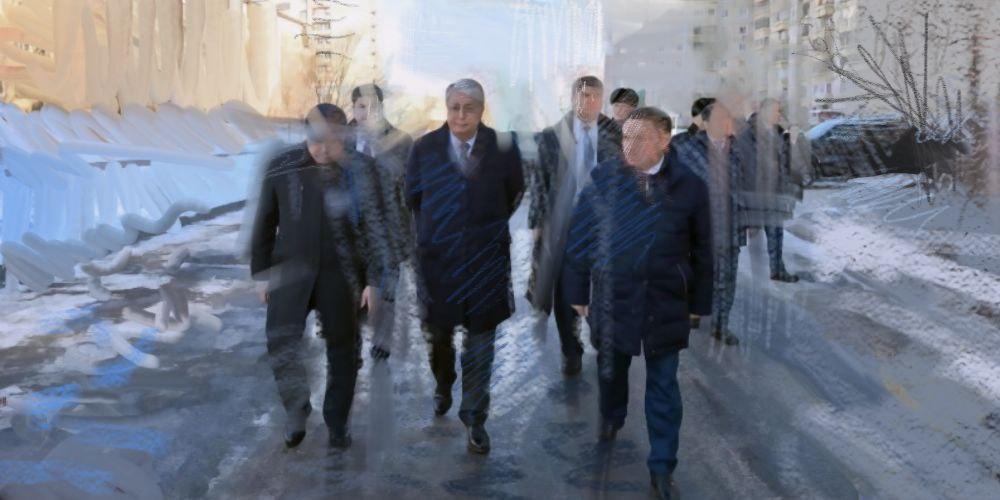
Tokayev’s Approval Rating Soars Amid Economic Gains, But Leadership Challenges Persist

President Kassym-Jomart Tokayev’s approval rating remains consistently high, as confirmed by multiple surveys. However, experts note challenges within Kazakhstan's political landscape, including a lack of standout leaders and frequent staff turnover in government structures. High Approval Ratings Linked to Economic Well-Being In December 2024, the Social and Political Research Foundation "Strategy" released a survey showing President Tokayev's approval rating at 80.4%. This marks an increase from December 2023, when the foundation reported a 76.4% approval rating. Other studies corroborate these findings; for instance, the Kazakhstan Institute for Strategic Studies found in July 2024 that 77.1% of Kazakhstanis trust the president. Explaining the methodology behind these surveys, Gulmira Ileuova, head of the Strategy Foundation and a member of the advisory public organization, the National Kurultai, told the Times of Central Asia: “The question to respondents is framed as, ‘Do you approve of the activities of the president, parliament, and government?’ Of those surveyed, 80.4% chose ‘I approve/Somewhat approve.’ Additionally, a separate project showed trust in the president at 77%.” Ileuova highlighted that Tokayev has faced numerous social, economic, and political challenges during his tenure. She noted a significant drop in his approval rating during December 2021, when the COVID-19 pandemic and quarantine restrictions were in effect. At that time, his approval rating fell to 40%. However, it rebounded in the subsequent years, reaching its highest level in 2024. By comparison, the government and parliament lag in terms of public support, with approval ratings of 59% and 54%, respectively. Ileuova explained that such gaps between the president’s popularity and that of other branches of government were also characteristic during the presidency of Nursultan Nazarbayev, which ended in 2019. The sustainability of these high ratings, she argued, hinges on the country’s economic performance. Historically, fluctuations in citizens’ well-being have had a direct impact on the approval ratings of political leaders. Criticism and Public Perception Despite the high ratings, Ileuova acknowledged skepticism toward her research. Critics often accuse survey organizations of bias, particularly those who inhabit what she describes as “information bubbles.” “On social media, individuals often focus solely on content that aligns with their negative perception of the president or the country’s overall situation. For example, some claim the government failed to help flood victims. While isolated cases exist, most victims received aid, and houses were built for them. Of course, there are valid reasons for criticism, but there are also many achievements that benefit ordinary people,” she explained. The connection between Tokayev’s approval rating and public living standards is evident. According to Strategy’s December 2024 survey, 29.6% of respondents described their financial situation as “good” or “very good,” while 15% rated theirs as “bad” or “very bad.” The majority - 52.8% - said their family’s financial situation is “average.” The Challenge of Personnel Management Experts point to difficulties in assessing President Tokayev’s personnel policies. While some figures - such as Mazhilis Speaker Yerlan Koshanov, Senate Speaker Maulen Ashimbayev, State Counselor Yerlan Karin, and Prime Minister Olzhas Bektenov - maintain steady approval ratings,...
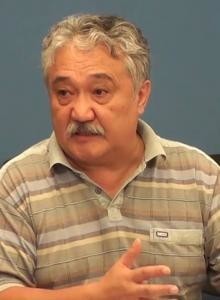
Bakyt Baketayev: Organization of Turkic States Is About Investment, Not Politics

The 11th summit of the Organization of Turkic States (OTS), which includes Kyrgyzstan, Kazakhstan, Uzbekistan, Turkmenistan, Azerbaijan, Turkey, and Hungary (as an observer), was held in Bishkek, Kyrgyzstan's capital. Speaking with The Times of Central Asia, Kyrgyz political analyst Bakyt Baketayev noted that the OTS was initially created on a cultural and linguistic basis. However, the turbulent geopolitical situation in the world gave the organization impetus for its current development. “The catalyst for the development of the OTS was the geopolitical situation and military-political events in the world. At the beginning of the organization's work - in 2009 - the countries worked on cultural programs and common spiritual issues uniting Turkic peoples. Today, the members of the OTS already cooperate at the level of governments, ministries, and agencies and discuss economic issues,” Baketayev said. Baketayev drew attention to the composition of the Organization of Turkic States. It includes countries representing different economic and political associations: NATO (Turkey), the European Union (Hungary), and the EAEU (Kyrgyzstan and Kazakhstan). “We should not expect any big results from the OTS summit. There will be no common political statements - the countries are scattered geographically and have different interests. But from the economic point of view of trade development and investment development, concrete steps are quite possible,” Baketayev said. The analyst is confident that the Organisation of Turkic States will help overcome problems related to hydropower and the lack of water resources in Central Asia. If the heads of state have common economic interests, they will be more likely to reach an agreement.

70% Of Kazakhstanis Happy With Their Life, World Bank Survey Finds

According to the World Bank’s latest ‘Listening to Kazakhstan’ survey, around 70% of people in the country are happy with their life – a figure that has remained constant since its first survey in 2021.  The survey for 2023, conducted in partnership with the United Kingdom’s department for international development, monitors the economic and social wellbeing of Kazakhstan’s population, and provides insights into the impact of policy changes on households. The survey reaches 1,400 households in urban and rural areas. It revealed that public perceptions of economic conditions significantly improved last year. It found that a higher percentage of respondents in 2023 believed it was a good time to start a business compared to 2021 and 2022. However, this opinion dipped in the final quarter of 2023.   Around three-quarters of respondents expressed optimism about the country’s long-term economic outlook. This optimism was especially strong in respondents aged 18-24 and in high-income families. The survey showed that support for the government’s reforms increased to 67% last year and was particularly high among young people, the elderly, and people in rural areas.  Metin Nebiler, head of the World Bank in Kazakhstan’s poverty and equity team, commented: “We found it very encouraging to see that the overall wellbeing of Kazakhstanis has been improving. The views on the [economic] outlook and the government’s performance are stable or trending positive.”  However, citizens also registered several concerns. Inflation remains a significant issue for 94% of respondents, although the annual inflation rate declined in 2023. The survey also found that challenges such as income inequality (92%) and worries about job losses (over 50%) still need to be addressed. Additionally, perceptions of government openness and anti-corruption efforts only showed only slight improvement.
