
• KZT/USD = 0.00222
  • TJS/USD = 0.10810
  • UZS/USD = 0.00009
  • TMT/USD = 0.29760
  • KZT/USD = 0.00222
  • TJS/USD = 0.10810
  • UZS/USD = 0.00009
  • TMT/USD = 0.29760
  • KZT/USD = 0.00222
  • TJS/USD = 0.10810
  • UZS/USD = 0.00009
  • TMT/USD = 0.29760
  • KZT/USD = 0.00222
  • TJS/USD = 0.10810
  • UZS/USD = 0.00009
  • TMT/USD = 0.29760
  • KZT/USD = 0.00222
  • TJS/USD = 0.10810
  • UZS/USD = 0.00009
  • TMT/USD = 0.29760
  • KZT/USD = 0.00222
  • TJS/USD = 0.10810
  • UZS/USD = 0.00009
  • TMT/USD = 0.29760
  • KZT/USD = 0.00222
  • TJS/USD = 0.10810
  • UZS/USD = 0.00009
  • TMT/USD = 0.29760
  • KZT/USD = 0.00222
  • TJS/USD = 0.10810
  • UZS/USD = 0.00009
  • TMT/USD = 0.29760
14 September 2026

Viewing results 1 - 6 of 2

Final Results Give Adilet 110 Seats in Kazakhstan’s Kurultai

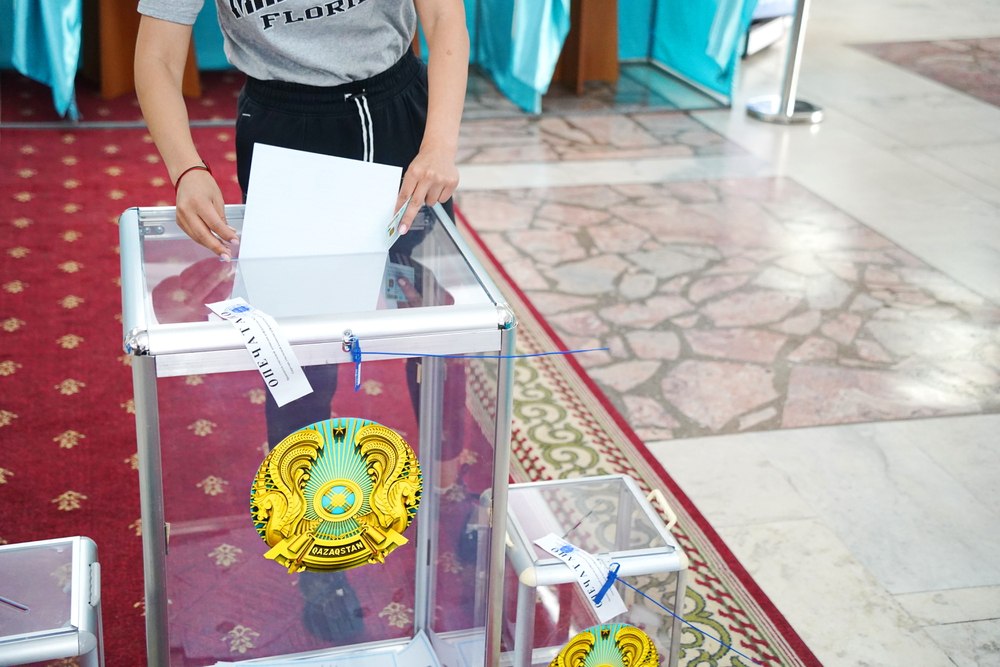
Kazakhstan has announced the final results of the first election to its new unicameral parliament, the Kurultai. Adilet, a party created only a few months ago, won more than 71% of the vote. Four other parties cleared the 5% threshold, while two failed to enter parliament. According to the Central Election Commission, Adilet received 6,528,948 votes, or 71.17% of the vote. Auyl came second with 6.26%, followed by Respublica with 5.56%, Aq Zhol with 5.21%, and the Nationwide Social Democratic Party (OSDP) with 5.11%. The People’s Party of Kazakhstan received 3.11%, while the green Baytaq party won 1.07%. Another 2.51% of voters selected the “against all” option. The new Kurultai has 145 seats, with all deputies elected through party lists. Under the final allocation, Adilet receives 110 seats, Auyl 10, Respublica nine, and Aq Zhol and the OSDP eight each. A total of 9.35 million people voted, putting final turnout at 74.08%, compared with 54.19% in the 2023 parliamentary elections. The regional differences were substantial: official turnout reached 92.16% in the Turkestan region, but just 43.23% in Almaty. Low turnout in Kazakhstan's largest city is not new — Almaty also recorded the country's lowest figure in 2023. In its preliminary assessment, the OSCE Office for Democratic Institutions and Human Rights described the election as technically well prepared and said opening and voting largely followed established procedures. It also cited limited political pluralism, discrepancies between observed voter activity and official turnout figures, and procedural violations during the vote count. The election was the first held under Kazakhstan’s new constitutional system. The new Constitution was approved in a referendum on March 15. It was supported by 87.15% of those who voted, with turnout at 73.12%. The document entered into force on July 1, abolishing the previous Senate-Mazhilis structure and replacing it with the 145-seat Kurultai, elected entirely through party lists. Although Adilet itself is new, the party inherited much of the structure of the country’s former dominant party, Amanat. Adilet was established at a founding congress on May 7 and registered on June 1. It is led by Aibek Dadebay, a former head of the Presidential Administration. In June, Amanat – the country’s largest political party and the successor to the ruling party of the Nursultan Nazarbayev era – voted to merge into Adilet. The merger gave the new organization an extensive regional network and much of Amanat’s party apparatus. Pre-election polling had already shown Adilet with a commanding lead. In early August, a survey by the Institute of Eurasian Integration put its support at 65.1%. For the other parties, the main uncertainty was not who would win the election, but which of them would clear the 5% threshold. The People’s Party accepted the preliminary result. Baytaq initially took a different position, alleging violations and saying it would seek to establish the “real results.” However, on August 24, Baytaq leader Azamatkhan Amirtayev said he had no confirmed evidence that would give him grounds to question the voters’ choice, canceled a planned press conference,...


Kazakhstan Kurultai Election: Can a Third Party Break Through?

With only weeks remaining before Kazakhstan elects its new 145-member Kurultai on August 23, three national surveys point to a commanding victory for Adilet and place Auyl in second. The less certain question is whether Ak Zhol, Respublica, or another smaller party can clear the 5% electoral threshold and join them in the new legislature. Seven political parties have been registered to contest the vote. All 145 seats will be allocated through nationwide party lists, so small changes around the threshold could have a large effect on the composition of Kazakhstan's first Kurultai. The election is the first under Kazakhstan's new constitutional framework, which replaced the former bicameral parliament with a single-chamber Kurultai. The constitutional reform represents the most significant redesign of the country's political institutions in decades and places greater weight on political parties in the legislative process. The available polls differ in timing, method, sample size, and the proportion of undecided voters. Their exact figures are therefore not directly comparable. However, they agree on the broad shape of the race: Adilet leads by a wide margin, Auyl holds second place, and several parties remain close to or below the threshold. The latest Institute of Eurasian Integration survey was conducted through face-to-face interviews with 4,000 respondents in all 17 regions, as well as Astana, Almaty, and Shymkent, from July 16 to 26. Its stated margin of error was no more than 1.54%. That poll put Adilet on 65.1% and Auyl on 5.9%. Ak Zhol stood at 4.7%, marginally ahead of Respublica on 4.6%. The Nationwide Social Democratic Party, or NSDP, received 4.2%, the People's Party of Kazakhstan 4.1%, and the Baytaq Green Party 0.5%. An earlier DATAmetrics poll, commissioned by the Kazakhstan Institute for Strategic Studies, interviewed 8,000 people face-to-face from June 13 to July 2. It gave Adilet 54.2%, Auyl 7.3%, Ak Zhol 4.6%, and Respublica 3.4%. One in five respondents had not chosen a party. A telephone survey by the Kazakhstan Institute of Public Development covered 1,200 respondents from July 8 to 20. It put Adilet on 64.8%, Auyl on 5.4%, Respublica on 4.8%, and Ak Zhol on 4.7%, with 10.9% undecided. Taken together, the surveys do not identify a clear third-place party. They do show that Ak Zhol and Respublica are the most consistent contenders for an additional place in the Kurultai. The latest Institute of Eurasian Integration poll also places the NSDP and the People's Party within striking distance, although the other surveys put both further behind. Adilet's lead is unsurprising. Although the Adilet Party was officially registered only this year, it is not starting from scratch. Amanat, formerly known as Nur Otan, merged into Adilet in June, transferring the organization and political network that dominated Kazakhstan throughout most of former President Nursultan Nazarbayev's rule. The merger also placed the former ruling party inside a new organization led by allies of President Kassym-Jomart Tokayev. It completed a change of political branding while preserving a strong pro-presidential electoral machine. The sharper contest is therefore not for...