


Berlin Archive Reveals Rare Records of Uzbekistan’s Past
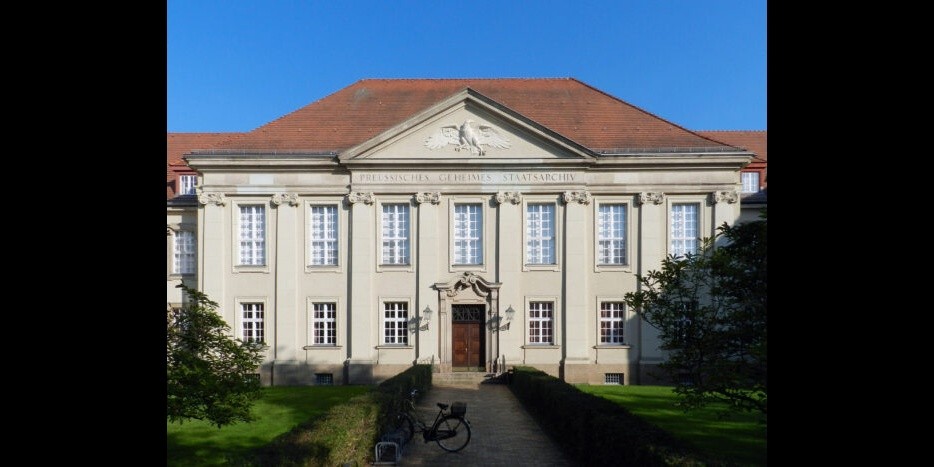
A centuries-old archive in Berlin holds documents on Central Asia from two pivotal periods: the Russian Empire’s expansion into Turkestan in the second half of the 19th century and the first decades of Soviet rule. The materials include diplomatic correspondence and German accounts of the Turkestan-Siberian Railway. Other papers concern Soviet policies toward nomadic communities and a student from Tashkent who lived in Germany in the early 1930s. The materials are held by the Prussian Secret State Archives (Geheimes Staatsarchiv Preußischer Kulturbesitz, GStA PK) in Berlin. Muhayyo Isakova, a senior researcher at the National Archive of Uzbekistan, identified documents concerning present-day Uzbekistan and neighboring territories. Despite its name, GStA PK is a public archive. Its origins date to the 13th century, and it has occupied its purpose-built home in Berlin’s Dahlem district since 1924. One of the earliest groups of documents dates to 1865, when the Russian Empire was expanding into Central Asia. Russian forces captured Tashkent in June of that year. In 1867, the city became the capital of the newly established Turkestan Governor-Generalship. The archive preserves official correspondence involving Karl Hermann von Thile, then an undersecretary in the Prussian Foreign Ministry.. The documents describe political developments in Turkestan and related diplomatic affairs, offering a Prussian perspective on Russia’s expansion into Central Asia. Other materials date from the early Soviet period. German publicist and researcher Georg Cleinow traveled through Central Asia in 1928 and 1929. He visited Tashkent and Bukhara before continuing through Semirechye to Alma-Ata. Cleinow paid particular attention to the Turkestan-Siberian Railway, a major infrastructure project of the early Soviet period. His reports addressed the railway’s geopolitical significance and Soviet policies to settle nomadic communities. They also covered land and water reforms and national-territorial delimitation. Cleinow later examined the railway in his book Roter Imperialismus: Eine Studie über die Verkehrsprobleme der Sowjetunion, published in Berlin by Julius Springer in 1931. Two sections deal directly with the railway, including Die Turksib als soziales Experiment (The Turksib as a Social Experiment). The papers of German Orientalist Carl Heinrich Becker, who was Prussia’s minister of culture, contain correspondence about Vali Kayum Khan, a Tashkent native who came to Germany to study in 1922. One letter, dated March 30, 1933, was written by Becker’s son Walter shortly after his father’s death. It says Kayum Khan had previously received Becker’s support but was left in serious financial difficulty after the Nazis came to power. Walter Becker sought funding for Kayum Khan and explored how he might continue his education outside Germany. The letter mentions an appeal to Stephen Duggan, a founder of the Institute of International Education, for help arranging further study in the United States. Kayum Khan’s activities during World War II make the 1933 letter especially notable: he worked with Nazi Germany and led the United States Turkestan Committee. The correspondence offers a little-known view of Central Asia’s connections with German academic circles in the 1920s and 1930s. Alongside the 19th-century diplomatic reports, Cleinow’s papers show how German officials and researchers viewed the region during two different...
