• KGS/USD = 0.01144 0%
  • KZT/USD = 0.00202 0%
  • TJS/USD = 0.10618 -0.28%
  • UZS/USD = 0.00008 0%
  • TMT/USD = 0.28571 0%
  • KGS/USD = 0.01144 0%
  • KZT/USD = 0.00202 0%
  • TJS/USD = 0.10618 -0.28%
  • UZS/USD = 0.00008 0%
  • TMT/USD = 0.28571 0%
  • KGS/USD = 0.01144 0%
  • KZT/USD = 0.00202 0%
  • TJS/USD = 0.10618 -0.28%
  • UZS/USD = 0.00008 0%
  • TMT/USD = 0.28571 0%
  • KGS/USD = 0.01144 0%
  • KZT/USD = 0.00202 0%
  • TJS/USD = 0.10618 -0.28%
  • UZS/USD = 0.00008 0%
  • TMT/USD = 0.28571 0%
  • KGS/USD = 0.01144 0%
  • KZT/USD = 0.00202 0%
  • TJS/USD = 0.10618 -0.28%
  • UZS/USD = 0.00008 0%
  • TMT/USD = 0.28571 0%
  • KGS/USD = 0.01144 0%
  • KZT/USD = 0.00202 0%
  • TJS/USD = 0.10618 -0.28%
  • UZS/USD = 0.00008 0%
  • TMT/USD = 0.28571 0%
  • KGS/USD = 0.01144 0%
  • KZT/USD = 0.00202 0%
  • TJS/USD = 0.10618 -0.28%
  • UZS/USD = 0.00008 0%
  • TMT/USD = 0.28571 0%
  • KGS/USD = 0.01144 0%
  • KZT/USD = 0.00202 0%
  • TJS/USD = 0.10618 -0.28%
  • UZS/USD = 0.00008 0%
  • TMT/USD = 0.28571 0%
12 February 2026

Viewing results 1 - 6 of 4

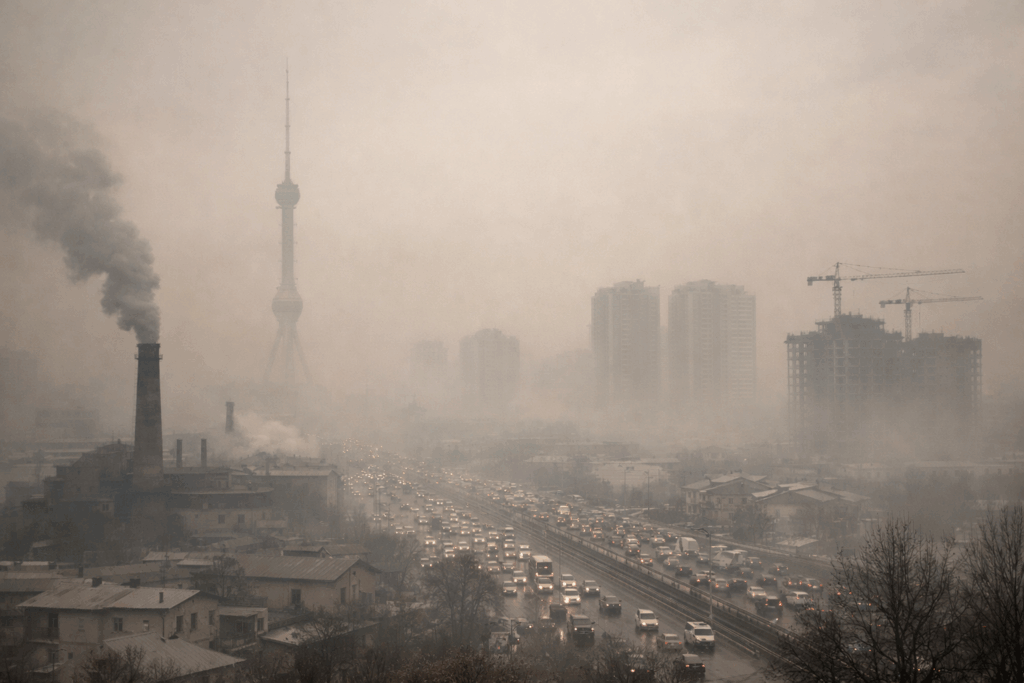
Tashkent Choked by Smog: What 2025 Revealed and How Residents Are Responding

The year 2025 proved especially challenging for air quality in Uzbekistan’s capital, with Tashkent repeatedly ranking among the world’s most polluted cities during peak smog episodes. At times, short-term air quality readings placed it alongside major Asian megacities during severe pollution spikes. These rankings were more than just statistics. Thick smog became a daily reality for residents, disrupting everyday life and intensifying concerns over public health and long-term environmental sustainability. Coal, Cars, and Construction: What’s Fueling the Smog Officials from Uzbekistan’s Ministry of Ecology and independent environmental researchers say Tashkent’s air pollution is primarily caused by human activity. The heaviest blow came from municipal furnaces and boiler houses. Amid ongoing natural gas shortages, many public facilities, including schools, kindergartens, and hospitals, were converted to coal or fuel oil, resulting in a surge of emissions. Uzbekistan’s coal consumption jumped from 3.9 million tons in 2019 to 6.7 million tons in 2023. Emissions from these sources accumulate in the lower atmosphere during the cold season, exacerbating pollution. Vehicle emissions are another major contributor. Tashkent has approximately 193 vehicles per 1,000 residents, roughly double the national average. Many cars run on low-octane AI-80 gasoline, which contains high levels of harmful impurities. While coal use has surged, vehicle emissions remain a serious issue. In 2019, motor transport accounted for the majority of urban air emissions in several districts of the city. Adding to the problem are industrial plants on the city’s outskirts, frequent dust storms during dry seasons, and unregulated urban development. High-rise construction has created wind barriers that disrupt air circulation, while green spaces, Tashkent’s natural air filters, have steadily disappeared. Despite an official moratorium on tree cutting, official and environmental group estimates indicate that around 49,000 trees have been felled since 2019, often by developers who face only minimal penalties. According to Uzbekistan’s Ministry of Ecology, PM2.5 concentrations in Tashkent routinely exceed World Health Organization guidelines. During peak smog episodes in early February 2024, pollutant levels were recorded at up to 22 times the WHO’s recommended annual limits. These fine particles penetrate deep into the lungs, triggering allergies, inflammation, and cardiovascular issues. A 2019 World Bank report cited air pollution as the cause of 89 deaths per 100,000 people in Uzbekistan, the highest rate in Central Asia. Winter smog episodes have intensified since then. Living Under a Haze: Residents Speak Out For many Tashkent residents, smog has become part of everyday life. People commonly report throat and eye irritation, a constant dusty haze, and difficulty breathing. “It’s dusty and hard to breathe, you feel it all the time,” said Victoria Son, 18, a student at Bucheon University. Karina Sagidullina, 19, a videographer and programmer with severe dust allergies, said the polluted air significantly affects her health. “My nose often gets blocked, I sneeze a lot. I have to do wet cleaning at home every day,” she said. Some residents, however, say they are less affected. “So far, I don’t really feel the air pollution. I breathe normally and don’t wear a mask,”...

Attitudes Toward Children with Special Needs in Kazakhstan Are Beginning to Shift

An appalling call by an Almaty-based blogger to "kill autistic people" has reignited public debate over attitudes toward children with special needs in Kazakhstan, revealing deep-rooted prejudices that persist in society despite ongoing reforms. Shocking Comments and a Criminal Case “There are too many autistic people, they need to be treated, and if they cannot be cured, they should be killed or autism hospitals should be opened. Children with autism have no feelings!” wrote Almaty blogger Raihan Zhumamuratova in a now-deleted post on social media. Her remarks sparked outrage online and drew swift condemnation from authorities. Zhumamuratova's post followed a disturbing incident on August 23, when a mother posted on Instagram that her two-year-old son was attacked in a courtyard by a teenager who picked him up, threw him in the air, and then fled while covering his ears. The act was captured on video. Initial reports suggested the 13-year-old boy may have a mental health condition, possibly an autism spectrum disorder, though no official diagnosis has been confirmed. The Auezov District Police Department opened a criminal case, and the teenager’s parents were held accountable for failing to properly fulfill their parental duties. Zhumamuratova's comments were widely condemned. The Autism Kazakhstan association filed a formal complaint, prompting Almaty police to launch an investigation. Minister of Labor and Social Protection Svetlana Zhakupova stated, “I think law enforcement agencies will take the right decisions regarding this blogger. The harshest ones.” “You know, we are building an inclusive society together. We do not tolerate discrimination against people with disabilities,” Zhakupova added. “Children with autism are currently under the special supervision of several government agencies, the Ministry of Education, our Ministry of Labor, and the Ministry of Health. We fully support these children.” A Pattern of Neglect and Violence While Zhumamuratova’s statements have drawn near-universal condemnation, this is not the first time a child has been seriously harmed by a teenager with a psychiatric condition. In February 2025, a teenager attacked a five-year-old with a knife inside an elevator in a residential building in Astana. The assault was also recorded and widely circulated online. The attacker, who is registered at a psychoneurological clinic, was later placed in a psychiatric hospital. His legal guardian was held accountable, according to Children’s Rights Commissioner Dinara Zakieva. Parents of children with special needs frequently report being left to cope alone. Rehabilitation services are limited, oversight is weak, and resources are stretched thin. A Long Road to Inclusion Kazakhstan faces systemic challenges in building an inclusive society. For decades, people with psychiatric or developmental diagnoses were kept out of public view. Traditional nomadic culture stigmatized them, and under the Soviet regime, psychiatric diagnoses often carried punitive implications that brought shame upon families. Many citizens today remain uninformed about developmental disorders like autism. As a result, people with such conditions are often met with fear or hostility. Compounding the issue, disability benefits remain low, making private care and quality rehabilitation inaccessible for most families. As of March 1, 2025, Kazakhstan...