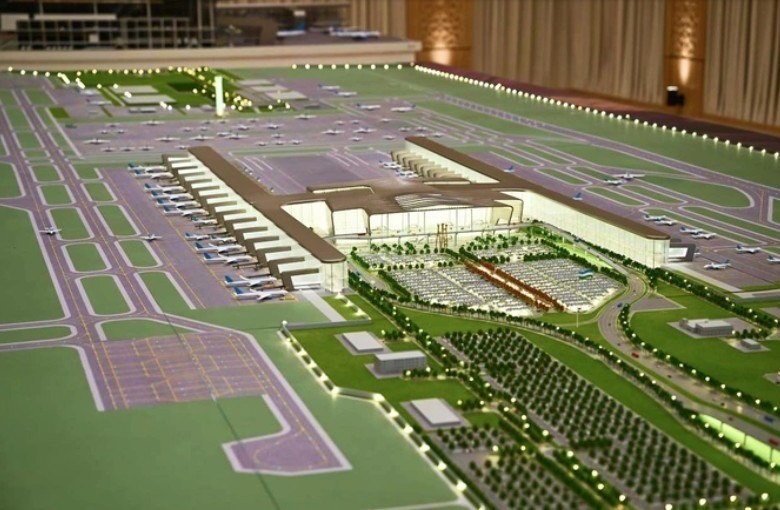
Uzbekistan Signs Contract for New Tashkent Airport, Construction to Run Through 2030
On June 17, 2026, on the sidelines of the 5th Tashkent International Investment Forum, Uzbekistan Airports and a consortium of investors led by Saudi Arabia’s Vision Invest signed a public-private partnership agreement to build and operate a new international airport in the Tashkent region. The project began with a ceremonial groundbreaking in October 2025, attended by President Shavkat Mirziyoyev. The June agreement is a practical next step: the project now has a signed contract, defined investor shares, and an approved construction schedule. The international consortium will handle construction and operation of the airport. Vision Invest holds 45%. Japan’s Sojitz Corporation holds 30%, and South Korea’s Incheon International Airport Corporation holds 15%. The remaining 10% belongs to state-owned Uzbekistan Airports. Under the agreement, the private partner will manage the airport for 35 years, until around 2065. The private investors are responsible for the passenger terminal and forecourt area. The state remains responsible for building and operating the airfield infrastructure, including runways and taxiways. Construction was formally authorized by Presidential Resolution No. 353, dated November 25, 2025. The new airport will be located in the Urtachirchik and Kuyichirchik districts of the Tashkent region, on a 1,310-hectare site. The first phase includes two 4-kilometer runways and a 208,000-square-meter passenger terminal. It also includes 98 aircraft parking stands, a fuel complex, and a modern air traffic control tower. Construction is scheduled from 2026 to 2030, with commissioning planned for late 2030. At full capacity, the airport will be able to handle up to 20 million passengers and process 129,000 tons of cargo per year. It will support up to 30 takeoffs and landings per hour and accommodate 62 aircraft at once. In the longer term, the terminal will be four times larger than Tashkent’s current airport and able to serve up to 46 million passengers a year. It will be supported by more than 40 jet bridges and 160 aircraft stands. The project is driven by passenger growth that the current airport can no longer accommodate. Over the past eight years, passenger traffic in Tashkent has tripled to 9 million a year and is expected to reach 24 million by 2040. The existing airport is designed for just 11 million passengers and sits within city limits, making expansion impossible. The current airport is projected to reach full capacity by 2029, after which it is expected to close once the new facility opens. The new airport will form part of a larger transport hub. The complex will connect directly to the Tashkent-Samarkand toll highway and to routes serving Andijan and Bostanliq. A dedicated high-speed rail station will be built on site, and shuttle services will link Tashkent with the new location. The first phase is estimated at $2.5 billion and is expected to attract about $3 billion in foreign direct investment. The airport has also been presented as the first in Central Asia built according to “green” construction principles. Preparatory work before the signing included environmental and social impact assessments in line with the requirements...