
• KGS/USD = 0.01143 0%
  • KZT/USD = 0.00202 0%
  • TJS/USD = 0.10661 -0.19%
  • UZS/USD = 0.00008 0%
  • TMT/USD = 0.28575 0%
  • KGS/USD = 0.01143 0%
  • KZT/USD = 0.00202 0%
  • TJS/USD = 0.10661 -0.19%
  • UZS/USD = 0.00008 0%
  • TMT/USD = 0.28575 0%
  • KGS/USD = 0.01143 0%
  • KZT/USD = 0.00202 0%
  • TJS/USD = 0.10661 -0.19%
  • UZS/USD = 0.00008 0%
  • TMT/USD = 0.28575 0%
  • KGS/USD = 0.01143 0%
  • KZT/USD = 0.00202 0%
  • TJS/USD = 0.10661 -0.19%
  • UZS/USD = 0.00008 0%
  • TMT/USD = 0.28575 0%
  • KGS/USD = 0.01143 0%
  • KZT/USD = 0.00202 0%
  • TJS/USD = 0.10661 -0.19%
  • UZS/USD = 0.00008 0%
  • TMT/USD = 0.28575 0%
  • KGS/USD = 0.01143 0%
  • KZT/USD = 0.00202 0%
  • TJS/USD = 0.10661 -0.19%
  • UZS/USD = 0.00008 0%
  • TMT/USD = 0.28575 0%
  • KGS/USD = 0.01143 0%
  • KZT/USD = 0.00202 0%
  • TJS/USD = 0.10661 -0.19%
  • UZS/USD = 0.00008 0%
  • TMT/USD = 0.28575 0%
  • KGS/USD = 0.01143 0%
  • KZT/USD = 0.00202 0%
  • TJS/USD = 0.10661 -0.19%
  • UZS/USD = 0.00008 0%
  • TMT/USD = 0.28575 0%
08 February 2026

Viewing results 1 - 6 of 3

Tajikistan Gives Afghan Refugees 15 Days to Leave

Tajikistan has launched a large-scale campaign to detain and deport Afghan refugees, giving them just 15 days to leave the country. The move, reported by Afghanistan’s Khaama Press and confirmed by the UN refugee agency UNHCR, has sparked fear and confusion among thousands of Afghans in Tajikistan, including many with valid residency permits or official asylum documentation. According to Khaama Press, detentions have intensified in recent days, particularly around Vahdat township and Rudaki district near the capital, Dushanbe. Afghan men are reportedly being arrested in large numbers, often directly from their workplaces, with little to no warning or opportunity to contact family members. The deportation order is believed to affect thousands of Afghans, including individuals legally residing in Tajikistan while awaiting resettlement to countries such as Canada. Many are former civil servants, military personnel, or others affiliated with the pre-Taliban Afghan government who fled after the Taliban’s return to power in August 2021. Human rights advocates warn that forced repatriation could expose them to immediate danger UNHCR Condemnation and International Concerns The UN High Commissioner for Refugees has expressed deep concern over Tajikistan’s actions. In January 2025, UNHCR urged Dushanbe to cease deportations after confirming that at least 80 Afghan refugees were forcibly returned in December 2024, despite holding UN-issued refugee documents. UNHCR stated that these deportations violate international protection obligations and risk exposing vulnerable individuals to persecution, detention, or violence in Taliban-controlled Afghanistan. As of late 2024, approximately 9,000 Afghan refugees were officially registered in Tajikistan. With the new 15-day ultimatum and ongoing arrests, many more are now at risk. Refugee advocates report that detentions are being carried out indiscriminately, often without regard for legal status. Part of a Wider Regional Crackdown Tajikistan’s campaign mirrors broader regional trends. In recent months, both Iran and Pakistan have undertaken mass deportations of Afghan nationals. Human rights organizations have documented widespread reports of abuse, intimidation, and even killings of returnees by Taliban forces. Observers warn that options for Afghan refugees are rapidly diminishing. Resettlement programs remain slow, and few countries have opened new asylum pathways. As a result, thousands of displaced Afghans across Central and South Asia face a stark choice: live under constant threat of arrest and expulsion or return to a homeland where persecution may await.

Kandas Resettlement Rises as Kazakhstan Boosts Integration Efforts

Since the beginning of 2025, 3,203 ethnic Kazakhs have returned to their historical homeland and officially received received the status of Kandas. In total, since gaining independence in 1991, more than 1.15 million ethnic Kazakhs have resettled in Kazakhstan for permanent residence. The Times of Central Asia examines who today’s Kandas are and how their integration and resettlement are being managed. Geography of Return According to the Ministry of Labor and Social Protection, nearly half (48.1%) of all Kandas arriving in Kazakhstan in 2025 have come from China. This is followed by ethnic Kazakhs from Uzbekistan (39.5%), Turkmenistan (5.8%), Mongolia (2.5%), Russia (1.9%), and other countries (2.2%). As of April 1, 2025, 60.7% of new arrivals are of working age, 31.1% are minors, and 8.2% are pensioners. Regarding educational background, 17.9% hold higher education degrees, 27.8% have specialized secondary education, 52.9% have general secondary education, and 1.4% have no formal education. Resettlement and Regional Priorities Kandas are being resettled across the country, with labor-deficient regions prioritized. These include Akmola, Abay, Kostanay, Pavlodar, Atyrau, West Kazakhstan, East Kazakhstan, and North Kazakhstan. The quota for 2025 in these regions stands at 2,309 people, with 642 already resettled by early April. Since the start of the year, 147 Kandas have received various forms of state support, and 94 of them have secured permanent employment. State Support and Economic Mobility The government offers a range of support measures, including a one-time relocation subsidy of 70 Monthly Calculated Indexes (MRP), or approximately $527 per family member. Additionally, monthly payments for rent and utilities ranging from 15 to 30 MRPs ($113-$226) are provided for up to one year. To enhance economic mobility, the Kandas can receive up to $8,600 per family, covering up to 50% of housing costs, for home purchases, construction, or mortgage down payments. Homes bought with these funds cannot be sold for five years, nor can they be transferred among close relatives, to prevent misuse. Since 2025, all services related to quotas and support have been moved online. According to Vice Minister of Labor and Social Protection of the Population, Yertaev Askarbek Ertaev, this transition aims to minimize corruption and strengthen oversight of compliance with program conditions. A new tracking system within the “Labor Market” information platform monitors movements of displaced persons. Unauthorized departure from the designated resettlement region requires repayment of financial aid through a pre-trial process. Adaptation and integration centers were launched in 2024 in Pavlodar, East Kazakhstan, Akmola, and Abay. In 2025, Kostanay and North Kazakhstan joined this list. Full support is now available via the mobile app “FSM Social” (Fund for Social Payments), covering everything from adaptation to employment services. Among recent innovations is a simplified procedure for verifying Kazakh ethnic identity. To date, 13 applications have been reviewed, 9 approved and 4 denied. Program Development and Future Outlook In 2024, around 9,500 resettlement quotas were allocated, with 2,477 used by Kandas and 4,500 by internal migrants. The Ministry plans to increase the annual quota by 500 people moving...

Kyrgyzstan to Create New Village for Citizens Resettled from the Barak Exclave

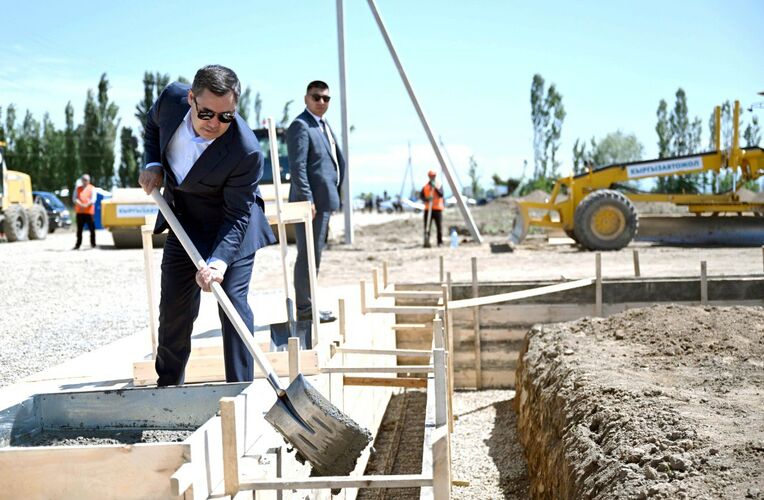
On May 6, during a visit to the southern Osh region, Kyrgyzstan’s President Sadyr Japarov launched the construction of a new village for Kyrgyz citizens resettled from the Barak exclave. Speaking at the ceremony, the head of state emphasized the historical significance of the initiative, explaining that since the village of Barak was an exclave located in Uzbekistan, its residents had spent many years in partial isolation and experienced difficulties in traveling between to and from the Kyrgyz mainland. Back in November 2022, an agreement ‘On the delimitation of certain sections of the state border between the Kyrgyz Republic and the Republic of Uzbekistan’ was signed in Bishkek. According to the document, Uzbekistan gave a portion of its land to Kyrgyzstan in exchange for the Barak exclave. The Kyrgyz government completed its plan to resettle Barak exclave residents just last month. The new village, to be known as ‘Jany-Barak’ or ‘New Barak’ and spanning 38 hectares, will comprise 101 new houses, due for completion by 31 August,. In addition, plots will be allocated for the construction of residential buildings for 164 citizens. Plans for the social infrastructure, includes a school, sports facilities, and a medical center.
