
• KZT/USD = 0.00219
  • TJS/USD = 0.10810
  • UZS/USD = 0.00009
  • TMT/USD = 0.29760
  • KZT/USD = 0.00219
  • TJS/USD = 0.10810
  • UZS/USD = 0.00009
  • TMT/USD = 0.29760
  • KZT/USD = 0.00219
  • TJS/USD = 0.10810
  • UZS/USD = 0.00009
  • TMT/USD = 0.29760
  • KZT/USD = 0.00219
  • TJS/USD = 0.10810
  • UZS/USD = 0.00009
  • TMT/USD = 0.29760
  • KZT/USD = 0.00219
  • TJS/USD = 0.10810
  • UZS/USD = 0.00009
  • TMT/USD = 0.29760
  • KZT/USD = 0.00219
  • TJS/USD = 0.10810
  • UZS/USD = 0.00009
  • TMT/USD = 0.29760
  • KZT/USD = 0.00219
  • TJS/USD = 0.10810
  • UZS/USD = 0.00009
  • TMT/USD = 0.29760
  • KZT/USD = 0.00219
  • TJS/USD = 0.10810
  • UZS/USD = 0.00009
  • TMT/USD = 0.29760
02 September 2026

Viewing results 1 - 6 of 2

Berlin Archive Reveals Rare Records of Uzbekistan’s Past

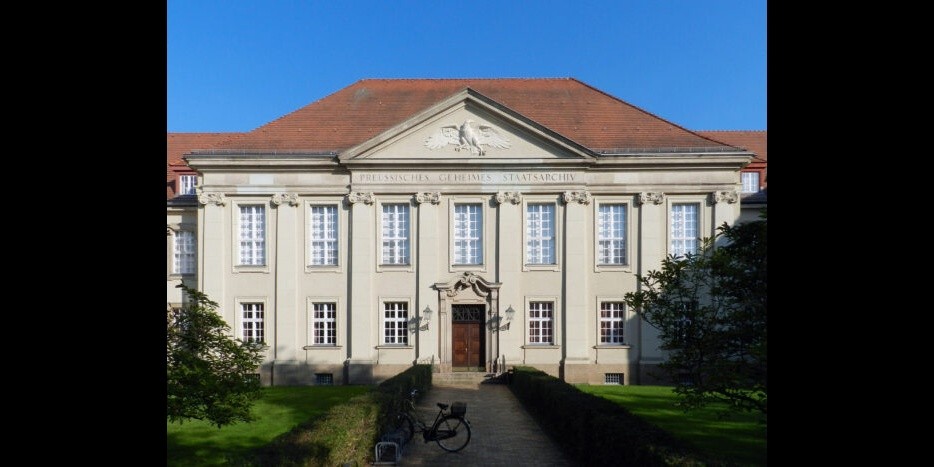
A centuries-old archive in Berlin holds documents on Central Asia from two pivotal periods: the Russian Empire’s expansion into Turkestan in the second half of the 19th century and the first decades of Soviet rule. The materials include diplomatic correspondence and German accounts of the Turkestan-Siberian Railway. Other papers concern Soviet policies toward nomadic communities and a student from Tashkent who lived in Germany in the early 1930s. The materials are held by the Prussian Secret State Archives (Geheimes Staatsarchiv Preußischer Kulturbesitz, GStA PK) in Berlin. Muhayyo Isakova, a senior researcher at the National Archive of Uzbekistan, identified documents concerning present-day Uzbekistan and neighboring territories. Despite its name, GStA PK is a public archive. Its origins date to the 13th century, and it has occupied its purpose-built home in Berlin’s Dahlem district since 1924. One of the earliest groups of documents dates to 1865, when the Russian Empire was expanding into Central Asia. Russian forces captured Tashkent in June of that year. In 1867, the city became the capital of the newly established Turkestan Governor-Generalship. The archive preserves official correspondence involving Karl Hermann von Thile, then an undersecretary in the Prussian Foreign Ministry.. The documents describe political developments in Turkestan and related diplomatic affairs, offering a Prussian perspective on Russia’s expansion into Central Asia. Other materials date from the early Soviet period. German publicist and researcher Georg Cleinow traveled through Central Asia in 1928 and 1929. He visited Tashkent and Bukhara before continuing through Semirechye to Alma-Ata. Cleinow paid particular attention to the Turkestan-Siberian Railway, a major infrastructure project of the early Soviet period. His reports addressed the railway’s geopolitical significance and Soviet policies to settle nomadic communities. They also covered land and water reforms and national-territorial delimitation. Cleinow later examined the railway in his book Roter Imperialismus: Eine Studie über die Verkehrsprobleme der Sowjetunion, published in Berlin by Julius Springer in 1931. Two sections deal directly with the railway, including Die Turksib als soziales Experiment (The Turksib as a Social Experiment). The papers of German Orientalist Carl Heinrich Becker, who was Prussia’s minister of culture, contain correspondence about Vali Kayum Khan, a Tashkent native who came to Germany to study in 1922. One letter, dated March 30, 1933, was written by Becker’s son Walter shortly after his father’s death. It says Kayum Khan had previously received Becker’s support but was left in serious financial difficulty after the Nazis came to power. Walter Becker sought funding for Kayum Khan and explored how he might continue his education outside Germany. The letter mentions an appeal to Stephen Duggan, a founder of the Institute of International Education, for help arranging further study in the United States. Kayum Khan’s activities during World War II make the 1933 letter especially notable: he worked with Nazi Germany and led the United States Turkestan Committee. The correspondence offers a little-known view of Central Asia’s connections with German academic circles in the 1920s and 1930s. Alongside the 19th-century diplomatic reports, Cleinow’s papers show how German officials and researchers viewed the region during two different...

Shoqan Walikhanov: Kazakh Scholar Recognized in the West

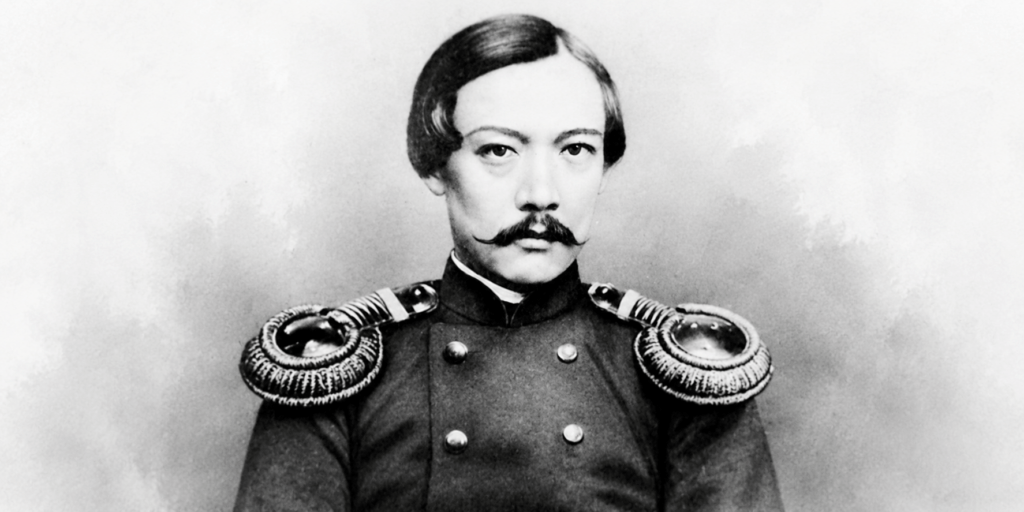
Shoqan Walikhanov gained recognition far beyond the Kazakh steppe, earning admiration in Russian and European intellectual circles. Although his life was brief, he left a lasting impact on Oriental studies, ethnography, geography, history, and folklore research. Western academics especially valued his expedition to Kashgar and his detailed studies of Central Asia. Even today, many scholars writing about the region continue to rely on Walikhanov’s observations and publications. One example of this influence appears in A Century of Russian Rule in Central Asia, a scholarly volume edited by Edward Allworth and published in the United States in 1967. In the book, researchers frequently cite Walikhanov’s articles and reports on Central Asia, recognizing them as important historical sources. Russian Oriental scholars famously compared Walikhanov to “a fleeting meteor” whose brilliance appeared only briefly. The respected orientalist Nikolai Veselovsky also wrote about the high expectations scholars had for his future. Walikhanov’s studies first became known in Europe through the Russian Geographical Society. His works, including Sketches of Dzungaria, Journey to Altyshahr, and Notes on the Kyrgyz, introduced Western readers to the history, customs, and traditions of Central Asian peoples. By 1865, Walikhanov’s reputation had already reached the English-speaking world. That year, The Russians in Central Asia was translated into English and published in London by John and Robert Michell. The book examined the Russian Empire’s expansion into Central Asia, the Syr Darya military frontier, and political relations with the khanates of Khiva, Bukhara, and Kokand. It included Walikhanov’s accounts from his 1858 and 1859 expedition to Kashgar and Dzungaria, identifying him as “Capt. Valikhanof,” a Russian-based transliteration of his name. His writings offered Western audiences rare insights into the geography, political climate, ethnography, and daily life of Xinjiang and neighboring territories. The publication also featured studies by Russian travelers such as Mikhail Venyukov. The authors described the incorporation of the Kazakh steppe into the Russian Empire, the unstable political situation in the Central Asian khanates, and the international rivalry associated with the “Great Game.” [caption id="attachment_48496" align="aligncenter" width="300"] Decree of Emperor Alexander II on awarding Chokan Valikhanov the Fourth Class Order of Saint Vladimir for his journey to Kashgar, 1860. Photo credit: shoqan.kz[/caption] [caption id="attachment_48497" align="aligncenter" width="300"] Clothing of Kashgar Women. Drawn by Chokan Valikhanov, 1858.Photo credit: shoqan.kz[/caption] Modern historians still consider the book one of the most valuable nineteenth-century sources on Russian colonial expansion in Central Asia. At the time, Walikhanov’s observations on Kashgar were regarded as some of the most reliable information available to European scholars about a region that remained largely inaccessible. Western academics admired Walikhanov not only for his scholarship, but also for his role as a bridge between Eastern and Western cultures. English-language studies often describe him as “the first European-educated Kazakh intellectual.” His growing reputation in the English-speaking academic world has also been examined in later research. In the article Chokan Valikhanov and the English-speaking World, British researcher Nick Fielding explains how Walikhanov’s writings attracted the attention of nineteenth-century British scholars. According to Fielding, members of the...