• KGS/USD = 0.01144 0%
  • KZT/USD = 0.00202 0%
  • TJS/USD = 0.10431 0%
  • UZS/USD = 0.00008 0%
  • TMT/USD = 0.28490 0%
  • KGS/USD = 0.01144 0%
  • KZT/USD = 0.00202 0%
  • TJS/USD = 0.10431 0%
  • UZS/USD = 0.00008 0%
  • TMT/USD = 0.28490 0%
  • KGS/USD = 0.01144 0%
  • KZT/USD = 0.00202 0%
  • TJS/USD = 0.10431 0%
  • UZS/USD = 0.00008 0%
  • TMT/USD = 0.28490 0%
  • KGS/USD = 0.01144 0%
  • KZT/USD = 0.00202 0%
  • TJS/USD = 0.10431 0%
  • UZS/USD = 0.00008 0%
  • TMT/USD = 0.28490 0%
  • KGS/USD = 0.01144 0%
  • KZT/USD = 0.00202 0%
  • TJS/USD = 0.10431 0%
  • UZS/USD = 0.00008 0%
  • TMT/USD = 0.28490 0%
  • KGS/USD = 0.01144 0%
  • KZT/USD = 0.00202 0%
  • TJS/USD = 0.10431 0%
  • UZS/USD = 0.00008 0%
  • TMT/USD = 0.28490 0%
  • KGS/USD = 0.01144 0%
  • KZT/USD = 0.00202 0%
  • TJS/USD = 0.10431 0%
  • UZS/USD = 0.00008 0%
  • TMT/USD = 0.28490 0%
  • KGS/USD = 0.01144 0%
  • KZT/USD = 0.00202 0%
  • TJS/USD = 0.10431 0%
  • UZS/USD = 0.00008 0%
  • TMT/USD = 0.28490 0%

Viewing results 1 - 6 of 6

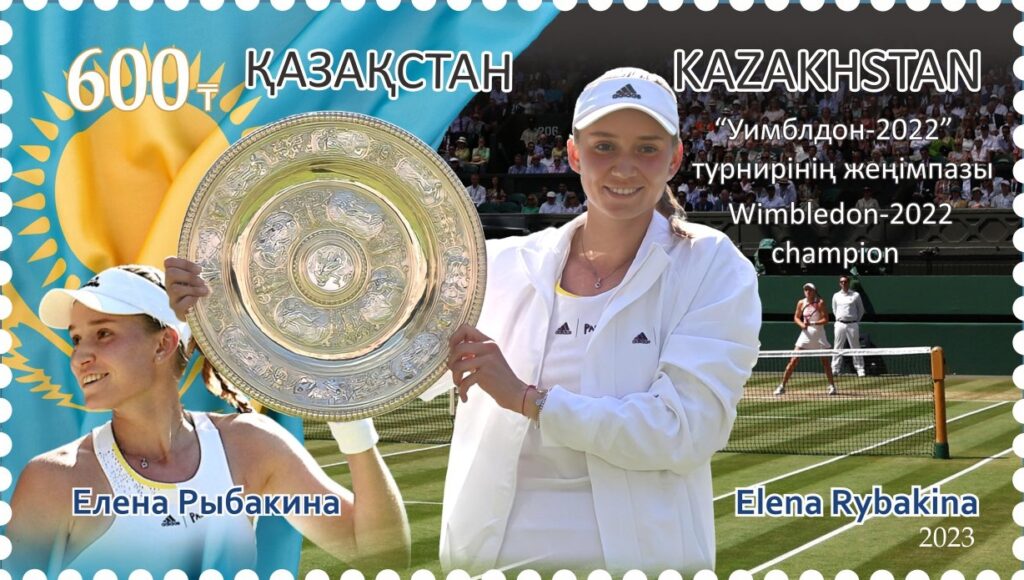
Elena Rybakina Makes History as First Kazakh to Reach WTA Finals Semifinals

Elena Rybakina, Kazakhstan’s top-ranked tennis player and world number six, has made history by reaching the semifinals of the WTA Finals. She is the first player from Kazakhstan and the wider Central Asian region to advance to the playoffs of the prestigious year-end tournament. The WTA Finals, held annually since 1971, feature the top eight players based on points accumulated throughout the season rather than the current WTA rankings. In 2025, Rybakina secured her place in Riyadh ahead of world number ten, Russia’s Ekaterina Alexandrova. This is Rybakina’s third consecutive appearance at the Finals. After failing to progress beyond the group stage in 2023 and 2024, she achieved a breakthrough this year by finishing first in her group. Her round-robin opponents included world number two Iga Swiatek (Poland), world number four Amanda Anisimova (United States), and world number seven Madison Keys (U.S.). Rybakina began with a commanding 6–3, 6–1 victory over Anisimova, then mounted a comeback against Swiatek, overturning a 3–6 first-set loss to take the next two sets 6–1, 6–0. The consecutive wins secured her a place in the semifinals and the top position in the group with one match remaining. In the final group match, Keys withdrew due to injury and was replaced by Alexandrova, who had traveled to Riyadh as an alternate. Rybakina maintained her dominance, defeating the Russian 6–4, 6–4. At 25, the Moscow-born Rybakina, who represents Kazakhstan, has earned her place in the nation’s tennis history as the first player to reach the WTA Finals playoffs. Anisimova, who stunned Swiatek 6–7 (3), 6–4, 6–2, finished second in the group and will also advance. In the parallel group, semifinal qualification will be decided on November 6. World number one Aryna Sabalenka (Belarus) leads and is set to face world number three Coco Gauff (U.S.), while Jessica Pegula (U.S.), currently in second place, will play Jasmine Paolini (Italy). Rybakina will face the runner-up from that group in the semifinal on November 7. The final is scheduled for November 8. As previously reported by The Times of Central Asia, Rybakina’s strong 2025 season included titles at two WTA tournaments and a semifinal appearance at the Tokyo event in October, which secured her place at the Finals.

Tennis Revolution in Kazakhstan: How Systemic Investment Is Creating Champions

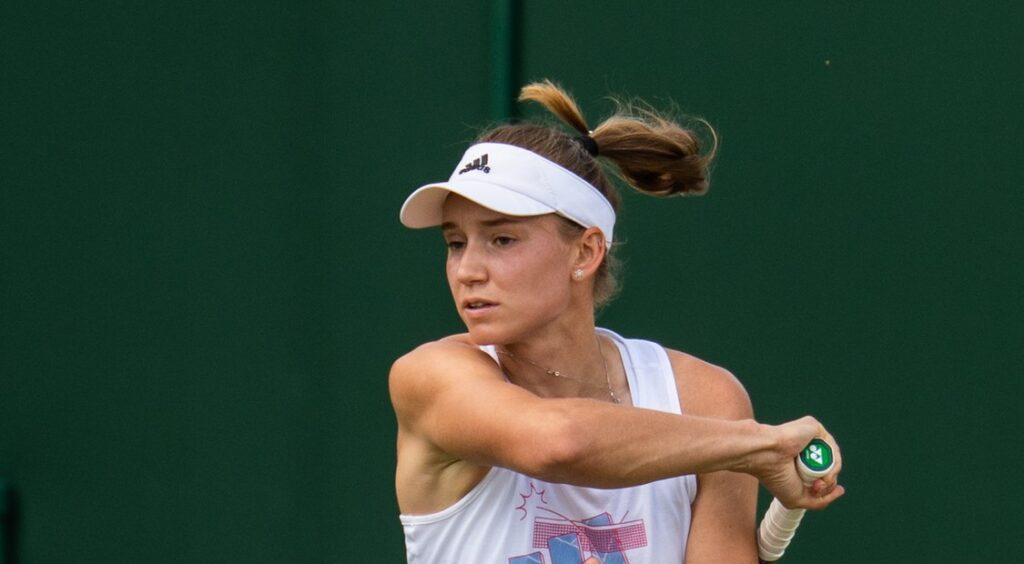
Over the past decade, Kazakhstan has evolved from a promising tennis nation into a formidable contender on the global stage. Elena Rybakina’s Wimbledon triumph, Alexander Bublik’s steady rise, and a new wave of top-ranked juniors are no coincidence; they are the product of a long-term, meticulously executed strategy. In an interview with The Times of Central Asia, Yuriy Polskiy, President of the Asian Tennis Federation and Vice President of the Kazakhstan Tennis Federation (KTF), explains how strategic investment, public-private partnerships, and a grassroots approach have fundamentally reshaped the country's tennis landscape. TCA: Kazakhstani tennis players have recently made headlines at top international tournaments. How would you assess Kazakhstan’s current standing on the global tennis map? Are the successes of Elena Rybakina and Alexander Bublik, as well as the emergence of top juniors, the result of systemic work or just coincidence? Polskiy: Luck plays a role in any athlete’s career, but it's fleeting. Kazakhstan’s results, among both professionals and juniors, are consistent, which points to a system that delivers. Over the past decade, we’ve seen numerous players ranked in the world’s top 30: Shvedova, Voskoboeva, Kukushkin, Golubev, Korolev, Nedovyesov, and more recently, Diyas, Putintseva, Danilina, Bublik, and, of course, Rybakina. Together, they’ve secured four Grand Slam titles, reached multiple singles and doubles finals, and won WTA 1000, 500, and ATP/WTA 250 tournaments. Among the juniors, talents like Dastanbek Tashbulatov, Amir Omarkhanov, and Sonya Zhienbayeva have ranked in the ITF Top 5 and Top 20. Our Under-14 and Under-18 national teams have reached the world’s top four and consistently defeated traditional powerhouses such as Australia, France, Italy, and Argentina. These results underscore the strength of Kazakhstan’s national coaching program and the Federation’s long-term vision. In 2024, Kazakhstan had six players in the ITF junior Top 100, including three in the Top 50. Seven more under-14s were ranked in the Tennis Europe Top 100, more than Italy, currently the leader in that category. Notably, all 13 of these top-ranked juniors were born and raised in Kazakhstan, highlighting the success of a nationwide, structured development model that blends public support with private initiative. TCA: What is the Federation’s strategic outlook for the next five to ten years? How extensive is the infrastructure, and are there plans to expand into smaller cities? Polskiy: Since 2007, when businessman and philanthropist Bulat Utemuratov became the KTF president, Kazakhstan has built 38 major tennis centers, each with at least six courts, totaling 364 hard and clay courts nationwide. Over the past 17 years, more than $150 million has been invested in infrastructure. Hundreds of coaches have been trained, particularly for early childhood programs. The number of certified ITF coaches has nearly doubled in five years, now surpassing 400. Infrastructure growth has significantly reduced training costs: hourly court rental has dropped from $50 in 2007 to just $10 today. Facilities now exist in 16 of the 18 regional capitals and smaller cities like Lisakovsk. Major complexes in Astana, Almaty, Shymkent, Karaganda, Aktobe, and Ust-Kamenogorsk each include six indoor and...

Rybakina’s 2024 Season Ends with Win over World No. 1

Kazakh tennis player Elena Rybakina has ended her 2024 season on a high note, beating world No. 1 Aryna Sabalenka at the WTA finals in Riyadh, Saudi Arabia, even though she wasn’t able to advance to the semifinals of the yearend event. Moscow-born Rybakina, who is ranked fifth in the world, defeated the Belarusian star 6-4, 3-6, 6-1 in the elite tournament’s Purple Group on Wednesday after losing her first two matches to Jasmine Paolini of Italy and Zheng Qinwen of China. "I think today I served really well, and especially in the third set," Rybakina said, according to the WTA. It was her second win over Sabalenka this season. "But of course, overall, I know that I'm not at my best, and if I would have maybe more weeks and some other matches, but with all the circumstances, I'm really happy overall how I played this this tournament," said Rybakina, who struggled with physical issues in the second half of the season after a strong start. This year, Rybakina also split with coach Stefano Vukov, with whom she had considerable success, including the 2022 Wimbledon title, despite concerns among commentators about his intense, critical style. Next year, she plans to work with Goran Ivanisevic, the former coach of Novak Djokovic. "I'm really looking forward to this partnership," Rybakina said. "I think he's a great champion and he has so much experience.”

Tennis World No. 4 Rybakina Wins Third Tournament of Year in Stuttgart

Kazakhstan’s Elena Rybakina is leading in 2024 tennis titles - three so far - after a comfortable victory over Marta Kostyuk in the Stuttgart final on Sunday. Rybakina, who has also won titles in Brisbane and Abu Dhabi this year, has now won a tour-leading 26 matches this season. That’s one more than world No. 1, Iga Swiatek of Poland. Kazakh President Kassym-Jomart Tokayev congratulated Rybakina on his Instagram page. “The first racket of Kazakhstan has won three titles this season. This is a great success,” Tokayev said. “I wish our Elena new sporting achievements.” Rybakina, 24, was born in Moscow and secured citizenship in Kazakhstan in 2017 after the tennis federation there offered generous support for her career. Rybakina won Wimbledon in 2022 and was runner-up at the Australian Open last year. Ranked No. 4 in the world, Rybakina was in command throughout her 6-2, 6-2 win over No. 27, Kostyuk of Ukraine. "I always believe in myself, of course, but it not only depends on me," Rybakina said. "There are a lot of great players, tough opponents. But I know if I feel fresh, if I'm physically ready, healthy, I'm playing my game, of course I have all the chances to win a Grand Slam on any surface.”