
• KGS/USD = 0.01144 0%
  • KZT/USD = 0.00211 0%
  • TJS/USD = 0.10515 0.48%
  • UZS/USD = 0.00008 0%
  • TMT/USD = 0.28530 0%
  • KGS/USD = 0.01144 0%
  • KZT/USD = 0.00211 0%
  • TJS/USD = 0.10515 0.48%
  • UZS/USD = 0.00008 0%
  • TMT/USD = 0.28530 0%
  • KGS/USD = 0.01144 0%
  • KZT/USD = 0.00211 0%
  • TJS/USD = 0.10515 0.48%
  • UZS/USD = 0.00008 0%
  • TMT/USD = 0.28530 0%
  • KGS/USD = 0.01144 0%
  • KZT/USD = 0.00211 0%
  • TJS/USD = 0.10515 0.48%
  • UZS/USD = 0.00008 0%
  • TMT/USD = 0.28530 0%
  • KGS/USD = 0.01144 0%
  • KZT/USD = 0.00211 0%
  • TJS/USD = 0.10515 0.48%
  • UZS/USD = 0.00008 0%
  • TMT/USD = 0.28530 0%
  • KGS/USD = 0.01144 0%
  • KZT/USD = 0.00211 0%
  • TJS/USD = 0.10515 0.48%
  • UZS/USD = 0.00008 0%
  • TMT/USD = 0.28530 0%
  • KGS/USD = 0.01144 0%
  • KZT/USD = 0.00211 0%
  • TJS/USD = 0.10515 0.48%
  • UZS/USD = 0.00008 0%
  • TMT/USD = 0.28530 0%
  • KGS/USD = 0.01144 0%
  • KZT/USD = 0.00211 0%
  • TJS/USD = 0.10515 0.48%
  • UZS/USD = 0.00008 0%
  • TMT/USD = 0.28530 0%

Viewing results 1 - 6 of 8

Kyrgyzstan to Introduce One-Year Temporary Licenses for New Drivers

Kyrgyzstan plans to introduce a one-year temporary driver’s license for driving school graduates in an effort to ensure that new motorists develop sustainable skills for safe and responsible behavior on the road, according to a draft resolution of the Cabinet of Ministers of Kyrgyzstan currently undergoing public discussion. The training period at driving schools in Kyrgyzstan has recently been extended from 2.5 months to 10 months. Under the proposed resolution, students demonstrating excellent academic performance would be eligible to take exams after four months of training and receive a temporary driver’s license valid for one year and restricted to use within the country. According to the draft’s explanatory note, a temporary license would allow new drivers to assess their practical skills under real road conditions. If, during the one-year period, they do not commit serious traffic violations or cause traffic accidents, they would be issued a permanent driver’s license. If a driver holding a temporary license commits serious traffic violations or is found responsible for an accident within one year, the temporary license would be annulled, and the driver would be required to return to driving school to complete the remaining six months of the standard training program. The initiative is intended to improve discipline among new drivers and help reduce road accidents. The proposed measure is part of a broader set of reforms aimed at strengthening driver education and lowering accident rates. In a related move, Kyrgyz authorities have suspended all private driving schools until August 30, 2026. During this period, driver training will be limited to state-run institutions. The length of training has also been extended from 2.5 months to 10 months. Officials say the reforms are designed to eliminate corruption and ensure that drivers are properly prepared before receiving licenses. Additionally, Kyrgyzstan has introduced stricter traffic enforcement measures aimed at curbing repeat violations and improving road safety. Under the new rules, drivers who commit three serious traffic violations within a 12-month period are required to retake the traffic rules examination. The reform follows concerning national road safety data. In 2025 alone, Kyrgyzstan recorded 8,456 traffic accidents, resulting in 900 deaths and 12,169 injuries. Over the past decade, more than 75,000 accidents have claimed over 9,000 lives.

Kazakhstan Calls on Partners to Ensure Safe Transportation of Caspian Oil

Kazakhstan’s Ministry of Foreign Affairs has expressed deep concern over recent drone attacks on oil tankers en route to the Caspian Pipeline Consortium’s (CPC) marine terminal in the Black Sea. During emergency consultations with ambassadors from several European countries, as well as discussions with the U.S. and other foreign partners, Kazakh diplomats urged the adoption of effective measures to safeguard hydrocarbon transport routes, including maritime corridors, in full compliance with international law. The Foreign Ministry emphasized that Kazakhstan is not a party to any armed conflicts and plays a crucial role in supporting global and European energy security by ensuring uninterrupted oil supplies in accordance with its international obligations. It was noted that all the targeted tankers were operating legally, with the required permits and standard identification systems. According to the ministry, the rising number of such incidents signals a growing threat to the integrity of international energy infrastructure. Kazakhstan called for deeper cooperation with partner countries to develop joint mechanisms aimed at preventing future attacks. Earlier, the Ministry of Energy stated that export volumes had not been directly affected: some of the vessels were empty, and others remained seaworthy. However, the fact that these attacks occurred near one of Kazakhstan’s key export hubs has increased concerns among market participants about the reliability of supply chains. Reuters, citing unnamed sources, reported that up to three tankers may have been hit. Among the affected vessels were ships operated by the U.S. energy giant Chevron and others flying Greek flags, raising the stakes in what is becoming a significant geopolitical issue. Kazakh MP Aidos Sarym remarked that ensuring the security of the CPC, where Russia is a major shareholder, should be a shared responsibility. "I believe Chevron is one of the largest shareholders. We also know Ukraine relies heavily on U.S. support. Chevron is not a minor player globally. I think the U.S. and our other partners must jointly urge Ukraine to reconsider its targeting priorities," Sarym said. Amid these developments, Bloomberg reported that Kazakhstan’s oil exports via the CPC could fall by as much as 45% in January due to ongoing disruptions at the terminal.

By End of Year, Kyrgyz Authorities Want to Insure All Houses in the Country

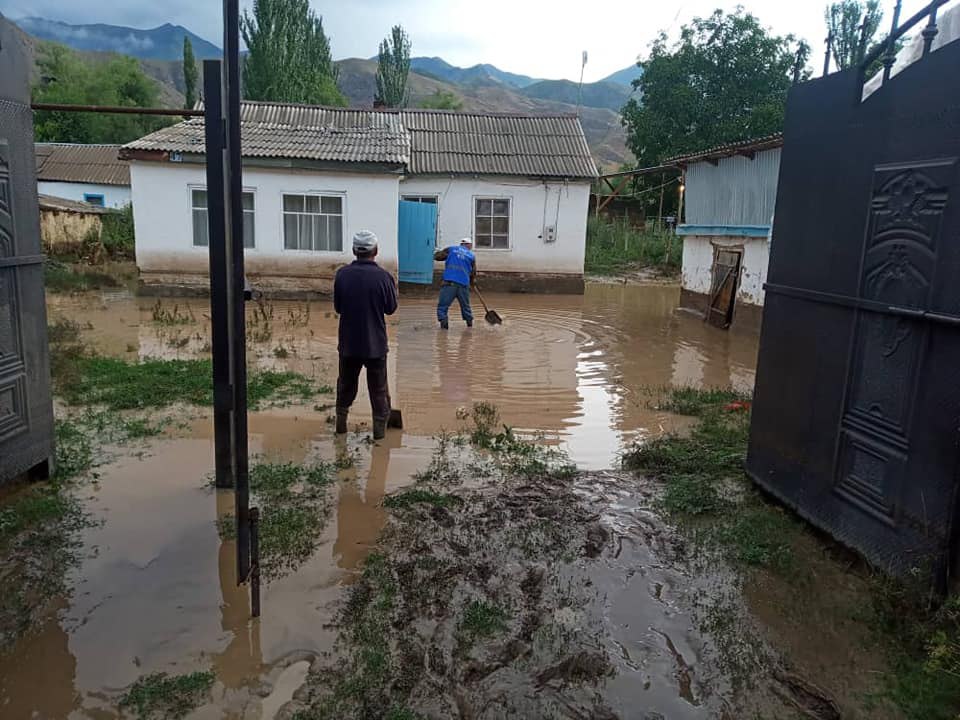
The Chairman of the Kyrgyzstan Cabinet of Ministers, Akylbek Japarov, instructed specialized government agencies to ensure the safety of all houses in the country, especially those in mudflow-prone areas. At the meeting devoted to natural disaster risk management, Japarov assigned specialized government agencies to ensure the safety of all houses in Kyrgyzstan. Thus, according to the head of the Cabinet of Ministers, the authorities will provide financial protection to citizens in case of natural disasters. This year, powerful mudslides flooded the south of Kyrgyzstan and the Issyk-Kul region. Over 5,000 households, dozens of social facilities, and hundreds of kilometers of roads were damaged. “Insurance will provide financial protection for citizens in such situations and minimize the consequences for families who lost their homes. Insurance will be an important tool to help people recover faster from natural disasters and reduce the burden on the state budget,” Japarov said. The head of the Cabinet emphasized that due to global warming, the number of natural disasters will continue to grow. Compulsory home insurance will ensure protection for citizens. It should be noted that the law on compulsory real estate insurance came into force in Kyrgyzstan on August 26, 2024. According to the law, residents must insure their real estate against fire and natural disasters. The State Insurance Organization (SIO) explained to The Times of Central Asia that legislative changes would be implemented gradually. The law on compulsory home insurance was first adopted in 2016, but the authorities postponed its implementation. There is no system of fines for lack of such insurance, at least not yet. “It is not profitable for private firms to engage in home insurance, as the rate is only 0.12%. That is, the cost of insurance is KGS 600 ($8), while payouts can be multi-million: KGS 500,000 ($6,000) for a village and KGS 1 mln ($12,000) for a city. Today in Kyrgyzstan, 143 thousand residences are insured,” the SIO noted.

Lessons in Self-Defense for Kindergarten Kazakhs

From September 1, Kazakhstan will introduce “Personal Safety” lessons to the curricula of its kindergartens, schools, and colleges. Developed by Kazakhstan's Ministry of Education, the program of 130 training sessions aims to teach children the basics of self-defense and develop a responsible attitude towards their own and others' safety. According to Nasymzhan Ospanova, Chair of the Committee for the Protection of Children's Rights, the lessons are tempered according to the children's age and developmental level to help motivate and support participants. Conducted in batches of weekly ten-minute classes, repeated three times a year, the training courses will include practical tips, games, interactive teaching methods, demonstrations, and videos, making the material accessible and exciting for children of all ages. It is worth noting that over the past three years, the number of children who have committed criminal offenses has increased by 20.3%. In 2023 alone, 1,823 juveniles were convicted. In most cases, crimes are committed by teenagers 16 - 17 years old (80.4%), with about 93.6% of juvenile offenders being boys. Statistics confirm that crime is higher among those with little education and those living in difficult situations. Thus, the share of those who neither study and nor work is 51.9%, the share of those who study in colleges is 26.9%, and in schools, gymnasiums, and lyceums, 20.6%.