Uzbekistan’s $6.1 Billion Sustainable Aviation Fuel Project Enters Design Phase
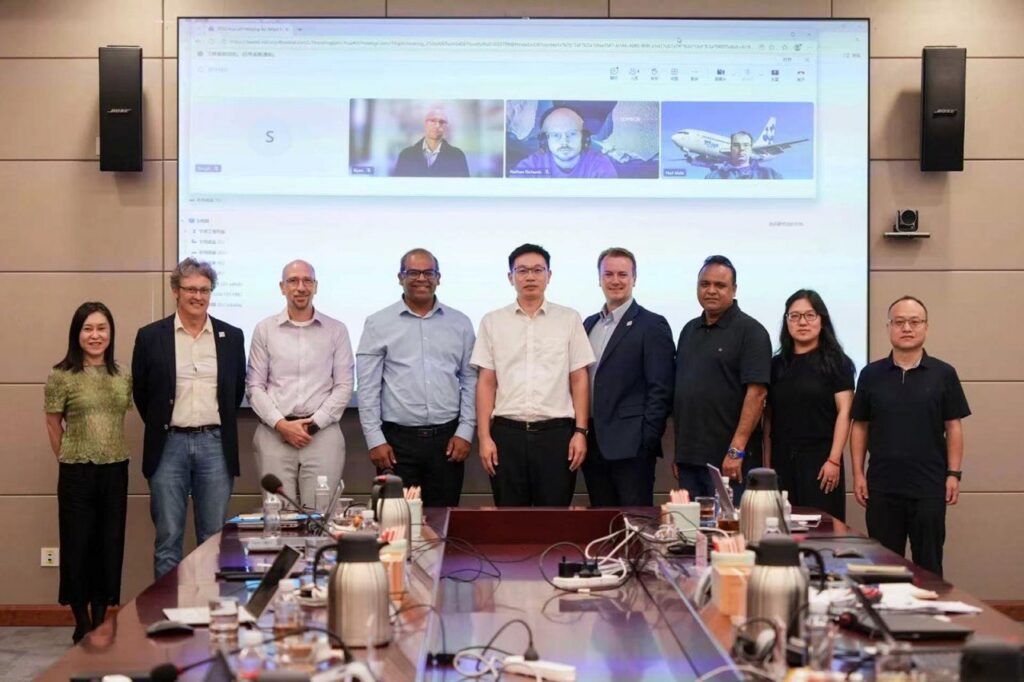
A $6.1 billion sustainable aviation fuel (SAF) complex planned for Uzbekistan’s western Khorezm region has entered the engineering design stage. Developer Allied Biofuels expects to decide whether to proceed with construction in the first quarter of 2027. Established in Uzbekistan in 2025, the company convened a September 18 meeting in Ningbo, China, with its main engineering and technology partners, Sinopec Engineering Group, Denmark’s Topsoe, South Africa’s Sasol, and U.S.-based Plug Power. The meeting covered the integration of their technologies, plant design, cost estimates, and the construction timetable. Allied Biofuels expects to complete this stage before making a final investment decision (FID). An FID is the point at which a developer commits capital and proceeds with construction. Until then, the $6.1 billion remains the project’s estimated cost rather than funding already secured. Sinopec is responsible for front-end engineering design, systems integration, detailed engineering, and cost development. Allied Biofuels and Sinopec signed the engineering contract at the Tashkent International Investment Forum in June. The agreement is structured to become an engineering, procurement, and construction contract if the complex goes ahead. Topsoe and Sasol are providing technologies for electro-synthetic sustainable aviation fuel (e-SAF), which is made using renewable hydrogen and captured carbon. Plug Power is expected to supply up to 2.4 GW of electrolyzer systems for hydrogen production. The complex would require an unusually large amount of renewable power, with plans calling for 4.45 GW of renewable generation and 1,600 MWh of battery storage. The developers intend to combine electricity and hydrogen production, biomass processing, and fuel production at a single site. At full capacity, Allied Biofuels expects the complex to produce around 160,000 tons of SAF, 257,000 tons of e-SAF, and 5,000 tons of renewable diesel annually. The development comes as Europe mandates greater use of SAF. Since 2025, aviation fuel suppliers in the European Union have been required to ensure that SAF accounts for at least 2% of the fuel supplied at covered EU airports. That year, EU airports received 1.1 million tons of SAF, almost six times the amount supplied a year earlier. In 2030, the overall share is set to rise to 6%, including a minimum 1.2% for synthetic aviation fuels. E-SAF remains difficult to produce at commercial scale. Around 50 synthetic aviation fuel projects in Europe are still awaiting final investment decisions, according to the European Commission. Germany, Austria, and Luxembourg are preparing a pilot auction scheme backed by more than €2.1 billion to help bring them to market. Allied Biofuels is already developing routes to deliver fuel from the planned complex in Uzbekistan to foreign markets, an important consideration for the landlocked country.