

• KGS/USD = 0.01144 0%
  • KZT/USD = 0.00215 0%
  • TJS/USD = 0.10696 0.09%
  • UZS/USD = 0.00008 0%
  • TMT/USD = 0.28490 0%
  • KGS/USD = 0.01144 0%
  • KZT/USD = 0.00215 0%
  • TJS/USD = 0.10696 0.09%
  • UZS/USD = 0.00008 0%
  • TMT/USD = 0.28490 0%
  • KGS/USD = 0.01144 0%
  • KZT/USD = 0.00215 0%
  • TJS/USD = 0.10696 0.09%
  • UZS/USD = 0.00008 0%
  • TMT/USD = 0.28490 0%
  • KGS/USD = 0.01144 0%
  • KZT/USD = 0.00215 0%
  • TJS/USD = 0.10696 0.09%
  • UZS/USD = 0.00008 0%
  • TMT/USD = 0.28490 0%
  • KGS/USD = 0.01144 0%
  • KZT/USD = 0.00215 0%
  • TJS/USD = 0.10696 0.09%
  • UZS/USD = 0.00008 0%
  • TMT/USD = 0.28490 0%
  • KGS/USD = 0.01144 0%
  • KZT/USD = 0.00215 0%
  • TJS/USD = 0.10696 0.09%
  • UZS/USD = 0.00008 0%
  • TMT/USD = 0.28490 0%
  • KGS/USD = 0.01144 0%
  • KZT/USD = 0.00215 0%
  • TJS/USD = 0.10696 0.09%
  • UZS/USD = 0.00008 0%
  • TMT/USD = 0.28490 0%
  • KGS/USD = 0.01144 0%
  • KZT/USD = 0.00215 0%
  • TJS/USD = 0.10696 0.09%
  • UZS/USD = 0.00008 0%
  • TMT/USD = 0.28490 0%

Viewing results 1 - 6 of 9

Kazakhstan’s SMEs Face Severe Labor Shortage

Small and medium-sized enterprises (SMEs) in Kazakhstan have become one of the country’s main sources of employment, but are facing a severe labor shortage, according to a joint report by Mastercard and KPMG. The report identifies workforce shortages as one of the most pressing challenges for SMEs, with nearly half of businesses reporting acute staffing deficits. The main reasons cited are the limited supply of qualified specialists and their high cost. According to the report, SME executives say, “It is difficult to find qualified employees, especially production managers: candidates do not meet requirements, and staff are not motivated to develop, despite high salaries and good working conditions. Scaling up the business requires increasing the number of skilled employees, which is constrained by limited financial resources and labor shortages.” At the same time, 90% of surveyed business leaders say they face high salary expectations from potential employees, which smaller firms struggle to meet. Around 70% of respondents also acknowledge that SMEs are widely perceived as less prestigious places to work. Labor productivity in micro and small businesses remains more than twice as low as in medium and large enterprises. In 2025, a worker in a small business generated an average of about $10,100, compared with $34,300 in medium-sized firms, and the gap continues to widen. Limited access to financing and the high cost of borrowing also remain major constraints for SMEs. Additional factors hindering SME development include an unstable tax and regulatory environment, as well as broader macroeconomic volatility. Despite these challenges, SMEs are a key source of employment in Kazakhstan. Over the past five years, employment in the sector has grown from 40% to 50% of the workforce. Today, around 4.7 million people out of 9.3 million employed nationwide work in SMEs, meaning roughly one in two workers is employed in this segment. According to the report, SME employment has been growing at an average annual rate of 6%, while employment in other sectors has declined by about 3% per year. “The concentration of employment in SMEs makes the labor market vulnerable to tax and regulatory changes: negative shocks in the sector could directly translate into rising unemployment,” the report notes. As previously reported by The Times of Central Asia, SMEs currently account for about 40% of Kazakhstan’s GDP, a figure that remains below benchmark countries such as Turkey (41%), the United States (44%), and Uzbekistan (52%).

How a Family-Run Mini-Factory in Almaty Ships Chocolate to Belgium and Switzerland

Nurlan and Zhaniya Orynbayev are Kazakhstani chocolatiers known for creating distinctive desserts inspired by national traditions. Their creations include sweet yurts, chocolate mountain landscapes, a chocolate version of the Kazakhstan Hotel filled with zhent (a traditional dessert made from roasted millet, butter, and honey), chocolate with kurt, and other culinary experiments. Nurlan is also a musician and a member of the Kazakhstani hip-hop group Dayinball. In an interview with The Times of Central Asia, the couple spoke about how the chocolate version of one of Almaty’s main landmarks was created, what sweets Kazakh consumers prefer, how to choose high-quality kurt, and how the global cocoa bean shortage has affected their business. TCA: Nurlan, you are sometimes called the “Kazakh Willy Wonka.” It seems you were among the first chocolatiers in Kazakhstan. How do you feel about that? Nurlan: In fact, my wife Zhaniya was the one who started our chocolate business. She was the first to learn confectionery techniques and how to work with chocolate, and then she taught me. I simply began posting videos of the process on social media, and they became popular. Now the brand is often associated with me, but the real mastermind behind the project is Zhaniya. She develops all the ideas and recipes. Our coffee shops, our confectionery line, the brand image, and at least 60% of our products are thanks to her. TCA: So is Zhaniya the driving force behind your chocolate mini-factory? Nurlan: You could say that. She has a deep understanding not only of confectionery but of gastronomy in general. She can taste a dish and almost break it down into its components, what has been added and which ingredients work well together. I did not have that kind of intuition. I had never worked with food or desserts before. But gradually I became more involved and began to understand the process better. TCA: Zhaniya, you are said to have come up with the chocolate shaped like the Kazakhstan Hotel. Tell us about it. Zhaniya: Yes, that was my idea. It is a chocolate structure weighing about 130 grams, made in the shape of the famous hotel. We produce it in both milk and dark chocolate. We experimented with fillings for a long time, but eventually settled on zhent, a traditional Kazakh dessert made from roasted and ground millet with butter and sugar. Customers really like it. TCA: You used to make this dessert only for Nauryz, but now you produce it year-round? Zhaniya: Yes, and it happened almost by accident. Once, a restaurant critic connected with the World’s Best Restaurants ranking visited us. We treated her to various chocolates, but she liked the chocolate with zhent the most. She wanted to buy more, but we had run out. We did not want to disappoint her, so we urgently decided to make a new batch and began searching for good talkan, one of the ingredients in zhent. We found it and quickly prepared everything. The process was quite chaotic. Our daughter...

Kazakhstan Projects Strong GDP Growth as Economy Nears 300 Billion Dollars in 2025

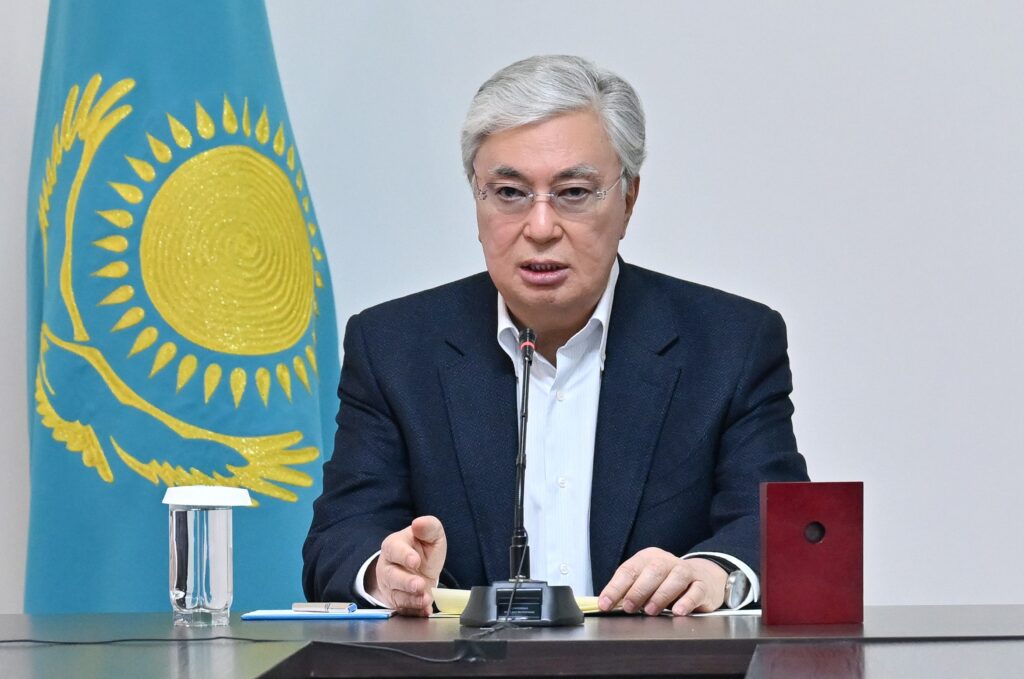
Kazakhstan’s economy is entering a new phase of growth. By the end of 2025, the country’s gross domestic product is projected to exceed $300 billion for the first time, President Kassym-Jomart Tokayev announced at a national award ceremony for the Altyn Sapa, Paryz, and Best Product of Kazakhstan prizes. Over the past decade, Kazakhstan’s GDP has shown consistent growth in absolute terms, with the exception of the pandemic year of 2020, when the economy contracted to $171.1 billion. Since then, the country has reached new historical highs each year, from $197.1 billion in 2021 to $288.41 billion in 2024. In 2025, growth is expected to reach a record level.The president noted that, over the past five years, growth in the real sector has become noticeably more balanced. Gross value added in the manufacturing industry increased by 25 percent, outpacing growth in the extractive sector. “Economic growth is expected to exceed 6% this year,” Tokayev said. “Moreover, GDP is projected to exceed $300 billion for the first time” The president highlighted that, over the past five years, growth in the real sector has become noticeably more balanced. Gross value added in the manufacturing industry increased by 25%, outpacing the growth of the extractive sector. Investments in fixed capital grew by 70% over the same period, and labor productivity rose by 40%. As a result, non-resource exports doubled, the number of exporters tripled, and the geography of supply expanded to 140 countries. According to Tokayev, small and medium-sized enterprises (SMEs) now account for 40% of GDP and remain one of the most dynamic segments of the economy. “Over the past five years, the number of SMEs has increased by 1.5 times, and their output by 2.5 times. Today, 4.5 million people work in the business sector, almost half of the country’s employed population,” the president said. Tokayev also placed particular emphasis on the finalization of certain provisions in the new Tax Code, which is set to take effect in 2026. The president acknowledged that he had received a large number of appeals from entrepreneurs and instructed the government to carefully review the most problematic provisions. “It is important to understand that the sustainable development of entrepreneurship is based on the fulfillment of mutual obligations: the state creates the climate, and businesses pay taxes. The government must find a reasonable balance, there is no other option,” he stated. The president also called for continued development of the country’s digital business ecosystem to enhance transparency and reduce bureaucratic hurdles. Kazakhstan plans to significantly increase investment in its economy over the next five years, with the goal of nearly tripling its volume by 2029.
