• KGS/USD = 0.01144 0%
  • KZT/USD = 0.00193 -0%
  • TJS/USD = 0.10838 -0.09%
  • UZS/USD = 0.00008 0%
  • TMT/USD = 0.28490 0%
  • KGS/USD = 0.01144 0%
  • KZT/USD = 0.00193 -0%
  • TJS/USD = 0.10838 -0.09%
  • UZS/USD = 0.00008 0%
  • TMT/USD = 0.28490 0%
  • KGS/USD = 0.01144 0%
  • KZT/USD = 0.00193 -0%
  • TJS/USD = 0.10838 -0.09%
  • UZS/USD = 0.00008 0%
  • TMT/USD = 0.28490 0%
  • KGS/USD = 0.01144 0%
  • KZT/USD = 0.00193 -0%
  • TJS/USD = 0.10838 -0.09%
  • UZS/USD = 0.00008 0%
  • TMT/USD = 0.28490 0%
  • KGS/USD = 0.01144 0%
  • KZT/USD = 0.00193 -0%
  • TJS/USD = 0.10838 -0.09%
  • UZS/USD = 0.00008 0%
  • TMT/USD = 0.28490 0%
  • KGS/USD = 0.01144 0%
  • KZT/USD = 0.00193 -0%
  • TJS/USD = 0.10838 -0.09%
  • UZS/USD = 0.00008 0%
  • TMT/USD = 0.28490 0%
  • KGS/USD = 0.01144 0%
  • KZT/USD = 0.00193 -0%
  • TJS/USD = 0.10838 -0.09%
  • UZS/USD = 0.00008 0%
  • TMT/USD = 0.28490 0%
  • KGS/USD = 0.01144 0%
  • KZT/USD = 0.00193 -0%
  • TJS/USD = 0.10838 -0.09%
  • UZS/USD = 0.00008 0%
  • TMT/USD = 0.28490 0%
10 December 2025

Viewing results 1 - 6 of 31

Kyrgyz Entrepreneurs Urged to Legalize Income

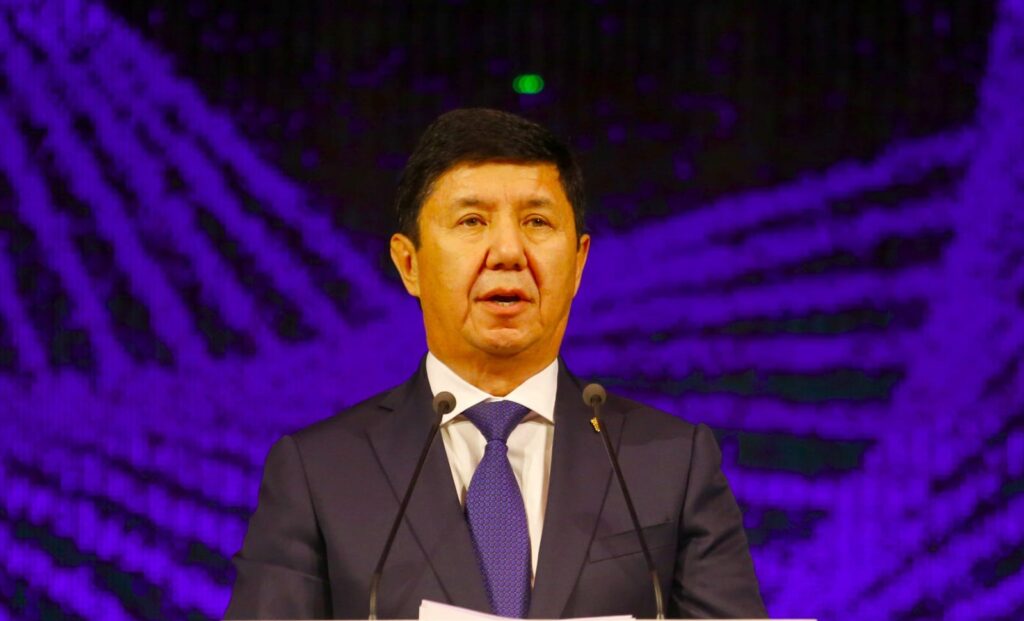
Kyrgyz entrepreneurs have been reminded to legalize their assets as the period for voluntary declaration of income and property nears its end on December 31, 2024. From January 2025, authorities are set to launch extensive inspections of businesses, prompting Temir Sariev, head of the Chamber of Commerce and Industry (CCI) of Kyrgyzstan, to call on business owners to act promptly. The law on voluntary legalization and amnesty of assets, introduced in 2023, offers citizens a chance to declare their assets with state guarantees of protection against criminal prosecution. By participating in the program, individuals and businesses can secure the preservation of their declared assets. As previously reported by The Times of Central Asia, in an effort to accelerate this process, President Sadyr Japarov set a public example in early 2024 by legalizing a multi-story building in Bishkek valued at $20 million. Temir Sariev emphasized that legalizing assets will improve economic transparency, protect citizens’ social and economic rights, and enhance Kyrgyzstan’s attractiveness to investors. “An obvious benefit of asset legalization is the reduction of the shadow economy,” Sariev noted. According to the Ministry of Economy and Commerce, the shadow economy accounted for approximately 20% of GDP in 2023, although unofficial estimates suggest it could be twice as high. International examples indicate that asset and income legalization reduces the size of the informal sector, increases transparency, fosters competition, and attracts new investments. While the potential advantages include increased tax revenues and improved public infrastructure, Sariev acknowledged the challenges for businesses transitioning out of the shadow economy. Small and medium-sized enterprises (SMEs) accustomed to operating informally may face difficulties adjusting to legal frameworks and potentially higher tax burdens. To address these challenges, Sariev highlighted the need for new accounting systems, staff training, and significant government investment in modernizing tax administration. This summer, the Kyrgyz government introduced changes to the taxation system, replacing voluntary patents - used by hundreds of thousands of businesses and individuals - with a mandatory payment system based on cash register accounting. The shift aims to increase transparency and accountability in the private sector. The Chamber of Commerce and Industry continues to encourage businesses to take advantage of the current voluntary declaration period to ensure smoother compliance with the evolving economic landscape.

Small Businesses Employ Over Half a Million People in Kyrgyzstan

Small and medium-sized enterprises (SMEs) play a vital role in Kyrgyzstan's economy, employing 585,000 people and contributing significantly to various sectors, according to the National Statistical Committee (NSC). As of 2024, Kyrgyzstan has 18,139 registered small businesses paying taxes. SMEs are particularly active in agriculture and manufacturing, with private entrepreneurs producing 65% of the country’s agricultural output and 26% of its industrial goods. Additionally, much of the hotel and restaurant industry is owned and operated by medium-sized private businesses. Most of these enterprises are concentrated in the Bishkek and Chui regions, where 80% of the country’s small and medium-sized businesses operate. The Kyrgyz government has taken steps to encourage entrepreneurs to operate transparently and contribute to the formal economy. In the summer of 2024, the voluntary patent system was abolished and replaced with a requirement for businesses to use cash registers. To incentivize compliance, businesses with an annual turnover of up to KGS 15 million ($170,000) are exempt from taxes if they purchase cash registers, submit reports to the State Tax Service, and pay insurance and pension contributions. For businesses with a turnover between KGS 15 million and KGS 30 million ($340,000), a reduced tax rate of 0.5% on turnover is applied. Small and medium-sized businesses are not only a backbone of Kyrgyzstan’s economy but also a key source of job creation. Government initiatives to formalize SME activity and simplify taxation are expected to further bolster the sector’s growth and contribution to the national economy.

Why Kazakhstan Wants to Change Subsoil User Taxation

Kazakhstan is considering a significant change in the taxation of subsoil users, with Minister of Industry and Construction Kanat Sharlapayev proposing the introduction of royalties to replace the current mineral extraction tax (MET) for licenses issued from January 1, 2026. According to Sharlapayev, this shift would attract more investors to Kazakhstan and encourage the domestic processing of raw materials. Why Investors Are Dissatisfied with MET The MET, introduced in 2008, is levied on subsoil users for every type of mineral, hydrocarbon, underground water, and therapeutic mud extracted in Kazakhstan. Each resource is taxed at a separate rate, calculated based on the volume of extracted raw materials rather than their actual sale or revenue. This has caused dissatisfaction among both local and foreign subsoil users. Over the years, discussions have intensified about replacing MET with royalties, which would calculate taxes based on the volume of products sold or profits earned. Sharlapayev stated during a recent government meeting that experts from the World Bank have recommended this change to make Kazakhstan’s mining sector more attractive to investors. “Globally, the most popular taxation model in the mining and metallurgical sector is based on the volume of products sold or profits earned. Kazakhstan, however, uses the mineral extraction tax. Introducing royalties tied to the sales value of minerals would be more transparent and familiar to international mining players,” Sharlapayev explained. Sharlapayev also emphasized that replacing MET with royalties would incentivize domestic production by imposing lower taxes on minerals processed within Kazakhstan compared to those exported without processing. He urged Prime Minister Olzhas Bektenov to instruct the Ministry of Finance and the Ministry of National Economy to include royalty provisions in the new Tax Code, expected to take effect in 2026. However, these changes would only apply to licenses issued from January 1, 2026. Concerns Over the Transition The Ministry of Finance has expressed reservations about the proposed shift, citing potential revenue losses. In September, Zhanybek Nurzhanov, Deputy Chairman of the State Revenue Committee, warned that transitioning to royalties could cost the state budget hundreds of billions of tenge. “We can switch to royalties only if there are no losses for the budget. If we simply introduce royalties and reduce business payments, it raises a serious question—how do we offset nearly half a trillion tenge in lost tax revenue?” Nurzhanov said. Additionally, Nurzhanov pointed out that determining the true value of exported raw materials would require the establishment of specialized laboratories, imposing financial burdens on both businesses and the state. This, coupled with the complexities of administering royalties, could deter subsoil users. Kazakh economist Galymzhan Aitkazin echoed these concerns, noting that MET’s fixed rates provide predictability for both businesses and the government, while royalties—tied to revenue or market prices—introduce variability. “The simplicity of flat MET rates allows companies to plan effectively and helps the government forecast revenues. By contrast, royalties linked to revenue or market prices could lead to payment variability, complicating financial planning for both parties,” Aitkazin explained. He also emphasized that MET’s straightforward...

Kazakhstan Abandons Universal Income Declaration Plan

Kazakhstan Scraps Universal Tax Declarations Amid Public Concerns In a surprising move, the Kazakh government has proposed canceling the universal tax declaration system set to take effect in 2025. The decision, aimed at alleviating public anxiety amid worsening economic conditions, will exempt over 90% of the population from filing declarations. Experts argue that this adjustment is necessary and practical, as the reform would otherwise add unnecessary strain on taxpayers without significantly benefiting state revenues. Public Backlash and Policy Reassessment The Universal Declaration initiative was intended to include approximately 8 million additional citizens in 2025, encompassing private sector employees, pensioners, and students. However, widespread public concern about the burden on taxpayers and tax authorities prompted a reevaluation. Finance Minister Madi Takiyev announced the exemption on November 19, citing the country's advanced digital infrastructure, which already tracks key financial data. Prime Minister Olzhas Bektenov echoed these sentiments, directing the Ministries of Finance, National Economy, and Justice to draft legislative amendments within three days. He emphasized that the reform had “caused concern of the population, which was brought to the attention of the head of state.”  He added that a widespread income declaration is unnecessary because the databases of state agencies in Kazakhstan are "highly digitized." Streamlined Tax Obligations The revised approach retains declaration requirements for specific groups, including: Citizens with assets abroad. Individuals making significant purchases (exceeding 74 million KZT, or approximately $149,000, in 2024). Those receiving income are subject to independent taxation. Voluntary declarations will remain an option for all citizens. A Phased Reform The universal declaration system began in 2021 and was implemented in stages. Initially, it targeted government officials and their spouses. The requirement extended to public sector employees and the quasi-public sector in subsequent phases. By 2024, business leaders, entrepreneurs, and their spouses were included. The final stage, which aimed to include the broader population, faced criticism for being outdated in the digital era. President Kassym-Jomart Tokayev acknowledged this, stating, “It is planned that about 8 million more people will submit declarations next year. However, we should consider that the concept of universal income declaration was adopted 14 years ago. During this time, the country has made significant progress in digitalization and fintech. Databases of various government agencies have been integrated. Financial and tax control has been strengthened. Given these large-scale changes, the question arises as to whether it is advisable for citizens falling under the fourth and final stage to submit declarations. The government needs to work out a solution to this.” Expert Analysis Political scientist Gaziz Abishev highlighted the effectiveness of the reform's earlier stages, which targeted those most likely to influence public funds or earn significant income. “The first three stages have already included bureaucrats, civil servants, quasi-public sector employees, and businesspeople. Everyone who manages public funds or earns a considerable income within Kazakhstan’s economy has already been required to report and will continue to submit declarations,” Abishev explained. The fourth stage, set to include around 8 million additional citizens, drew criticism for its lack...

Kyrgyzstan’s High Technology Park Confirms Indefinite Preferential Tax Regime

Kyrgyzstan’s President Sadyr Japarov has signed amendments to the Law "On the High Technology Park of the Kyrgyz Republic," extending the Park’s preferential tax regime indefinitely. Established in 2011, the High Technology Park was designed to foster IT businesses by drastically reducing or eliminating tax burdens for companies exporting digital goods and services. Previously, the High Technology Park offered tax exemptions for export-oriented IT companies for a 15-year period, set to expire in 2026. Under the new amendments, this regime is now permanent. Currently, resident companies of the Park benefit from exemptions on sales tax, profit tax, and value-added tax (VAT). Employees of these companies enjoy a reduced income tax rate of 5%, while the social insurance tax is 12% of their average monthly wage. The amendments also grant the Park's supervisory board the authority to independently elect its chairperson, a change expected to enhance the Board's efficiency. This move significantly boosts the Park's appeal to both domestic and international IT businesses. Kyrgyzstan’s IT sector is among the country’s fastest-growing industries. In 2021, Kyrgyzstan established the Ministry of Digital Development, tasked with advancing e-government initiatives and expanding the range of government services available online.

Levies on Uzbek Drivers in Afghanistan Reduced

According to the Ministry of Transport in Uzbekistan, negotiations with Afghanistan have reduced the levies collected from Uzbek drivers in Afghanistan by 5,000 Afghanis (about $80). A levy of 12,000 Afghanis (about $180) was previously charged to cross the Amudarya bridge. Since September 28, this amount has been set at 7,000 Afghani (about $100). The fee for entering Afghanistan with a cargo vehicle, which was 5,000 Afghanis (about $75), has decreased to 3,500 Afghanis (about $55). According to the announcement, the Ministry of Transport continues to create favorable conditions for cargo transportation through the Trans-Afghan multimodal transport corridor, and to optimize the number of levies. This transport corridor accelerates and simplifies the increase and processing of transit cargo through Uzbekistan, Afghanistan, and Pakistan. In recent years, the volume of transit cargo through Afghanistan has increased by over 30%, reaching almost 1 million tons per year. Following a transit trade agreement between Uzbekistan and Pakistan in 2021, cargo volumes have increased significantly, and in 2022, cargo transportation between the two countries through Afghanistan increased 2.5-fold. This year, Uzbekistan plans to transport more than 1 million tons of cargo through Afghanistan to Pakistan.