Viewing results 1 - 6 of 2
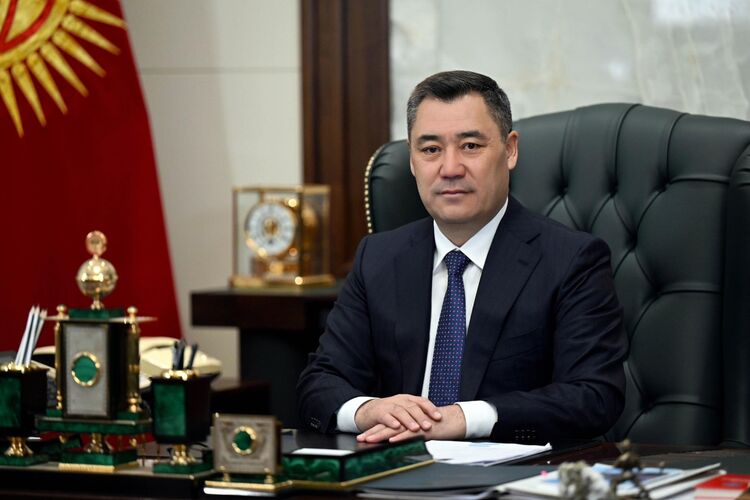
President Sadyr Japarov has called on citizens of Kyrgyzstan to invest in government securities, describing them as one of the country’s most reliable investment instruments because they are backed by the state. In a statement on his Facebook page, Japarov announced what he described as “an important initiative that will allow every citizen to improve their financial situation while contributing to the development of Kyrgyzstan.” The Cabinet of Ministers has made government securities available to the public with an annual interest rate of 17%, according to Japarov. The securities can be purchased through a mobile app, he said. Invested funds will be repaid in full after two years, with interest payments made every three months. Japarov said returns on government securities would exceed those offered by most bank deposits. Deposit rates at commercial banks in Kyrgyzstan generally range from around 10% to 14% per year for deposits in the national currency, depending on the bank and product. Some microfinance organizations offer higher rates. Two types of government securities are available through the Kyrgyz Stock Exchange: state treasury bills and state treasury bonds. The National Bank of the Kyrgyz Republic also publishes auction results for government securities, with recent state treasury bond yields ranging from 12.86% to 16%, depending on maturity. Government securities are issued to finance national projects, cover budget deficits, and refinance maturing government debt.
Kyrgyzstan is experiencing a gradual increase in domestic public debt, driven by growing demand for government securities. According to the National Bank, the volume of domestic debt has risen by approximately $34 million over the past ten days following the placement of government treasury bonds. Trading data show that the total volume of government securities in circulation increased from $4.24 billion on March 13 to $4.27 billion by March 23. Although the increase remains moderate in absolute terms, the pace of growth suggests renewed activity in the domestic debt market. Long-term instruments are currently the most popular among investors. Over the ten-day period, placements of five-year government bonds amounted to roughly $23 million. Demand for ten-year securities has also remained stable. Their total volume rose from $631 million to $642 million during the same period, indicating investors’ willingness to lock in yields over longer horizons. Interest in government bonds is largely supported by relatively high returns. Yields on ten-year securities currently stand at around 16% per annum, while five-year bonds offer slightly more than 15%. These rates are close to average corporate bond yields, estimated at approximately 18%. Against this backdrop, government securities are widely viewed as a more reliable investment instrument with competitive returns. In contrast, short-term bonds attract significantly lower demand. Yields on one-year government securities and other short-term instruments remain at about 5–6%, making them less appealing to investors. Nevertheless, demand for these bonds remains stable, albeit limited. Analysts note that the expansion of domestic borrowing has coincided with increased participation by citizens in the financial market. Since the early 2020s, financial authorities have gradually raised yields on government securities to attract funding for the state budget and encourage retail investment. At the same time, the National Bank and the Ministry of Finance have introduced financial literacy initiatives aimed at broadening public engagement with investment instruments.