
• KGS/USD = 0.01144 0%
  • KZT/USD = 0.00200 0%
  • TJS/USD = 0.10549 -0.28%
  • UZS/USD = 0.00008 0%
  • TMT/USD = 0.28490 -0.28%
  • KGS/USD = 0.01144 0%
  • KZT/USD = 0.00200 0%
  • TJS/USD = 0.10549 -0.28%
  • UZS/USD = 0.00008 0%
  • TMT/USD = 0.28490 -0.28%
  • KGS/USD = 0.01144 0%
  • KZT/USD = 0.00200 0%
  • TJS/USD = 0.10549 -0.28%
  • UZS/USD = 0.00008 0%
  • TMT/USD = 0.28490 -0.28%
  • KGS/USD = 0.01144 0%
  • KZT/USD = 0.00200 0%
  • TJS/USD = 0.10549 -0.28%
  • UZS/USD = 0.00008 0%
  • TMT/USD = 0.28490 -0.28%
  • KGS/USD = 0.01144 0%
  • KZT/USD = 0.00200 0%
  • TJS/USD = 0.10549 -0.28%
  • UZS/USD = 0.00008 0%
  • TMT/USD = 0.28490 -0.28%
  • KGS/USD = 0.01144 0%
  • KZT/USD = 0.00200 0%
  • TJS/USD = 0.10549 -0.28%
  • UZS/USD = 0.00008 0%
  • TMT/USD = 0.28490 -0.28%
  • KGS/USD = 0.01144 0%
  • KZT/USD = 0.00200 0%
  • TJS/USD = 0.10549 -0.28%
  • UZS/USD = 0.00008 0%
  • TMT/USD = 0.28490 -0.28%
  • KGS/USD = 0.01144 0%
  • KZT/USD = 0.00200 0%
  • TJS/USD = 0.10549 -0.28%
  • UZS/USD = 0.00008 0%
  • TMT/USD = 0.28490 -0.28%
24 February 2026

Viewing results 1 - 6 of 3

Trilateral Summit in Turkmenistan Focuses on Transport, Energy, and Trade

On August 22, a trilateral summit was held in Turkmenistan’s Avaza National Tourist Zone, bringing together Uzbekistan President Shavkat Mirziyoyev, Chairman of the Halk Maslahaty of Turkmenistan Gurbanguly Berdimuhamedov, and Azerbaijan President Ilham Aliyev. The leaders focused on strengthening cooperation in trade, the economy, transport, energy, and humanitarian affairs, while also emphasizing the development of political, cultural, and multilateral ties. Transport and Transit Mirziyoyev presented several initiatives aimed at expanding regional transport routes and maximizing the region’s transit potential. He highlighted the strategic importance of integrating existing and new corridors to better connect China with South Asia, the Middle East, and Europe. Construction of the China-Uzbekistan railway is underway, and a memorandum has been signed with Pakistan and Afghanistan to establish the Trans-Afghan Corridor. According to Mirziyoyev, these projects could significantly enhance infrastructure utilization across Azerbaijan, Turkmenistan, and Uzbekistan. The development of the Middle Corridor and the Zangezur Corridor was also discussed. The leaders agreed to collaborate on increasing the capacity of regional transport hubs, constructing modern logistics infrastructure at the ports of Turkmenbashi and Baku, implementing a unified tariff policy, and digitizing freight systems. Uzbekistan expressed its willingness to reduce tariffs on a reciprocal basis to facilitate improved access to global markets for regional businesses. Energy Cooperation Energy cooperation was another key focus. The participants emphasized the need to expand collaboration in energy exports and to explore new supply routes. A proposed project to export “green” energy to Europe was described as promising. Additionally, in the hydrocarbon sector, the leaders proposed deeper cooperation in geological exploration and offshore field development in the Caspian Sea. “Joint efforts in the fields of transport, transit, and logistics will be of great importance not only for our countries but also for the wider region,” said President Aliyev, stressing the strategic nature of trilateral cooperation. Aliyev also noted that Azerbaijan’s state oil company SOCAR has begun developing an oil field in Uzbekistan, with results expected in the coming years. Trade and Industry According to summit participants, mutual trade volume between Uzbekistan, Turkmenistan, and Azerbaijan has doubled in recent years, with industrial goods making up 40% of this trade. Talks included preparations for a Comprehensive Action Plan aimed at developing trade and logistics chains, establishing wholesale distribution centers, unifying phytosanitary standards, introducing digital product labeling, and launching joint online platforms. The leaders also underscored the importance of regional engagement and called for increased organization of trade fairs and business forums under the auspices of national chambers of commerce and industry. Summit Outcomes The summit concluded with the endorsement of a new trilateral program for cultural and tourism exchanges, aimed at boosting regional tourism and promoting shared cultural heritage. A joint presidential statement was issued, alongside memoranda of cooperation in the fields of transport and logistics, shipbuilding, and aviation. Additionally, an agreement was signed on cooperation between national commodity and raw material exchanges. To ensure implementation, President Mirziyoyev proposed the development of a roadmap and the institutionalization of regular ministerial meetings focused on key cooperation areas.
A New Chapter of Peace and Cooperation in Central Asia: The Kyrgyz-Tajik Border Agreement

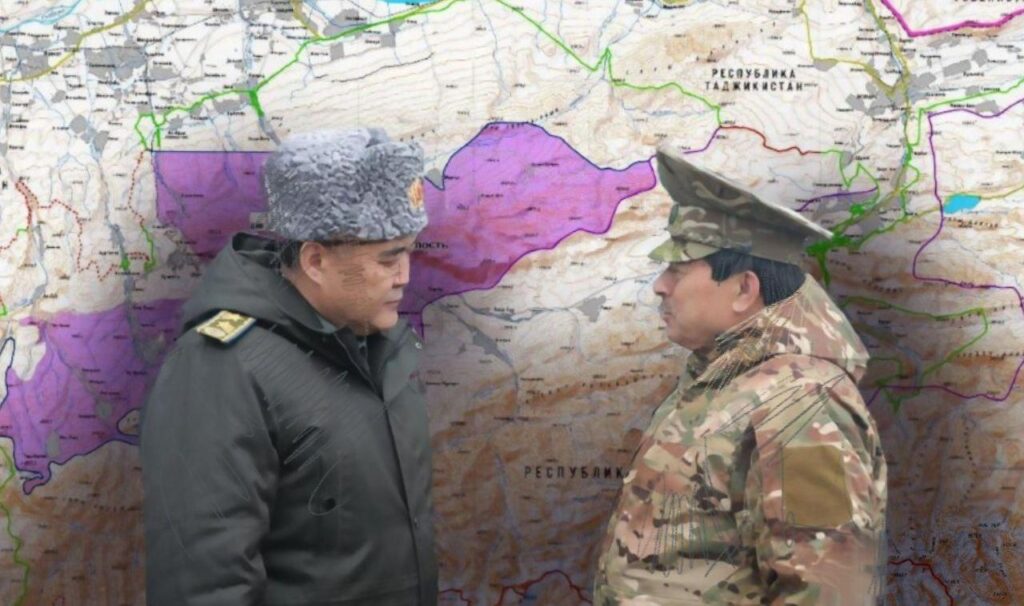
On March 13, 2025, a historic milestone was achieved with the signing of the Kyrgyz-Tajik border agreement. This long-anticipated treaty, signed by Kyrgyzstan's President Sadyr Japarov and Tajikistan’s President Emomali Rahmon, resolved a long-running dispute over the 984-kilometer boundary between the two nations. Clashes in 2021 and 2022 left scores dead, hundreds wounded, and thousands displaced. The resolution marked not only the end of an enduring source of regional tension but also the beginning of a prospective era of peace and collaboration. The significance of this agreement is substantial and far-reaching. For decades, the unresolved Kyrgyz-Tajik border remained a flashpoint for clashes, occasionally escalating into violence between communities living in border regions such as Batken. The new treaty now promises a peaceful future, with both leaders showing their commitment to long-term regional stability. A Diplomatic Achievement The path to this agreement was anything but straightforward, with Kyrgyz President Japarov characterizing the land exchanges involved in the treaty as a “tough but necessary decision.” During Nauryz celebrations in Osh, Japarov praised the expert teams who worked for four years to reach a settlement that balanced the interests of both sides. Japarov emphasized the benefits of the treaty for border-area communities, specifically in Batken, where tensions have been acute. The “lives of our citizens in border areas of the Batken region will be peaceful from now on,” he stated, promising new homes for residents displaced during past conflicts. The treaty aims to bring not only peace but also economic development, as secure frontiers pave the way for cross-border trade and infrastructure investment. For Tajikistan's President Rahmon, the agreement not only resolved a geopolitical challenge but reinforced the shared value of cooperation in the region. His message during Nauryz to President Japarov symbolized the optimism underpinning their new relationship. “I am confident that our countries, relying on the high universal values of this ancient holiday, will continue their joint efforts to enrich the content of their multifaceted relations,” Rahmon wrote. Messages of Support on a Symbol of Renewal The signing of the treaty aligned closely with Nauryz, the ancient festival that symbolizes renewal, prosperity, and unity across Central Asia. World leaders also viewed the timing as auspicious, with U.S. President Donald Trump extending his congratulations to President Rahmon in a message of goodwill on the occasion of Nauryz. “This is a major achievement that will bring great economic benefits and security to both countries," Trump wrote, highlighting the agreement's potential to stabilize the region. Trump also reaffirmed America's support for Tajikistan’s sovereignty, underscoring the importance of ongoing cooperation. His words echoed a broad international sentiment celebrating the Kyrgyz-Tajik agreement as a step toward enhanced regional partnerships. Regional Cooperation on the Rise The Kyrgyz-Tajik border agreement forms part of a broader trend of strengthening ties among Central Asian nations. Recently, Kyrgyzstan resolved a similar border issue with Uzbekistan, setting a precedent for peaceful dispute resolution. Now, Japarov has suggested taking the next step by creating a visa-free travel regime and even a unified regional...

Creation of Kazakhstan–Azerbaijan “Supreme Interstate Council” Marks New Era of Cooperation

Diplomatic relations between Kazakhstan and Azerbaijan have developed dynamically since they were first established in August 1992, and have increased over the past 20 years, and grown especially since 2017. Over the last decade, the number of high-level visits in both directions have been rising to the point where they are now regular occurrences at an inter-ministerial level. That said, President Kassym-Jomart Tokayev’s state visit to Baku on March 11–12 represents yet another new phase in the two countries’ strategic partnership with a focus on trade, economic investment, and international cooperation. This new era is marked by the creation of their bilateral Supreme Interstate Council (SIC), a qualitatively recent development that will institutionalize and drive cooperation in new ways. (Readers should note here that the connotation of “Supreme” in this case signifies “high-level” rather than “having sovereign or autonomous power”. This is exactly the difference, respectively, between the Russian-language adjectives vysshii - literally “high-level” or “highest” - and verkhovnyi - the USSR’s Supreme Soviet, its highest legislative body, was verkhovnyi. This is a matter of choice of terms for translation. “Supreme” has been adopted following the usage of the countries concerned in their English-language public discourse, but it should not be misunderstood.) Although the Kazakhstan–Azerbaijan SIC has only just held its first meeting and is not yet fully institutionalized, it would seem from diplomatic indications that its activity is likely to resemble that of the Strategic Partnership Council (SPC) between Turkey and Azerbaijan. This latter forum was created in 2019 to subsume the two countries’ bilateral Strategic Cooperation Council, which was founded in 2010. Cooperation organized by this bilateral SPC broadly covers four issue areas: military-political and security issues, military and military-technical cooperation, humanitarian issues, and economic cooperation. These areas are listed in order of priority, meaning that the SPC and the SIC’s first focus is on cooperation related to military and security issue areas, plus other relevant issues that these may indicate. Nevertheless, cooperation in the humanitarian and economic spheres, which has been ongoing for some time, is sometimes folded into these top-priority areas within the existing consultative structures. The agreements signed at the November 2021 presidential summit between Kazakhstan and Uzbekistan had foreseen the formation of a bilateral SIC between them as well. Now that both these parties have ratified their Treaty of Allied Relations, also signed at that time, this SIC’s first meeting is scheduled for August of this year. Following the pattern of what is known about the SIC with Azerbaijan, it will be formally chaired by the two heads of state and organized by their respective foreign ministries. The speakers of their parliaments’ lower houses and representatives of security councils may join in the work as necessary. Thus, security and foreign-policy issues will be the main concern in the first instance. Nevertheless, like the SIC between Kazakhstan and Azerbaijan, the one between Kazakhstan and Uzbekistan is likely in the medium term to develop organizationally along the lines of the Turkish-Azerbaijani Strategic Cooperation Council, eventual transformation...
