


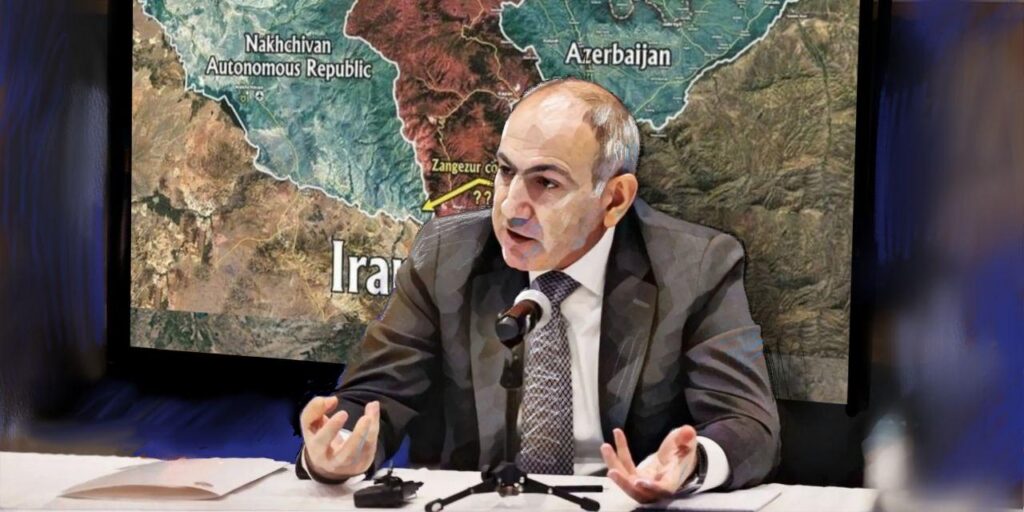
Why Central Asia Cares About the Middle Corridor–South Caucasus TRIPP Route
Armenia’s Prime Minister Nikol Pashinyan spoke to the European Parliament in Strasbourg on March 11 and said he has no intention of delaying TRIPP, the newly proposed South Caucasus route through southern Armenia to be integrated into the existing Middle Corridor. He described the project as being “in the crystallization stage,” said that the Armenia–U.S. implementation framework (signed on 13 January) was already in place, and added that the two countries will “[i]n the near future ... sign the relevant agreements, and the practical implementation of the project will begin.” While mentioning that developments in Iran and the wider Middle East could shade an otherwise positive regional picture, Pashinyan explicitly did not connect that to any actual delay in the corridor project. This accords with the view of the EU itself, which treats the Middle Corridor and its South Caucasus segment, as does the World Bank, as an increasingly necessary connection between Central Asia and Europe through the South Caucasus and Turkey. Pashinyan’s statement should thereby reassure not just European governments but also the investors and shippers that want and need the route. From Declaration to Implementation Pashinyan tied TRIPP to the Washington Declaration of August 8, especially to its provisions on reopening communications and establishing a U.S.-supported framework for unimpeded connectivity between mainland Azerbaijan and Nakhchivan through Armenian territory. The Washington meeting produced a joint declaration by Armenia and Azerbaijan and the text of the initialed peace agreement, while also making clear that signing and ratification still lay ahead. In Strasbourg, according to Pashinyan's own words, the Washington Declaration “essentially established peace” between Armenia and Azerbaijan. He also gave pertinent indicators. Pashinyan stated there had been eight months of complete peace on the border and that 2025 was the first full calendar year since independence without casualties or injuries from Armenian–Azerbaijani shooting. He also said that in November 2025, for the first time since independence, a train (carrying wheat from Kazakhstan) reached Armenia through Azerbaijan and Georgia after Azerbaijan lifted restrictions on that rail route. Azerbaijan has since sent fuel and other commodities through Georgia to Armenia. Such transits have now become a regular occurrence. Since 2020, Armenia has turned toward Central Asia as part of its effort to reduce dependence on Russia. Kazakhstan has become the clearest practical partner in that effort as this turn has accentuated in recent months. During Pashinyan’s 21 November 2025 visit to Astana, the two sides upgraded relations to a strategic partnership and signed 15 intergovernmental and interagency documents, including a trade and economic roadmap for 2026–2030 that projects cooperation in agriculture, digitalization, healthcare, industry, science and education, and peaceful uses of atomic energy. While the cooperation with Kazakhstan is a continuation of previous trends, the sharpest diplomatic change is with Uzbekistan. After Pashinyan’s 12 July 2023 telephone call with President Shavkat Mirziyoyev, stressing the need to convene the first intergovernmental commission to move practical projects forward, that commission met in Tashkent on 3–4 August 2023, with a modest but real result in...
