• KZT/USD = 0.00223
  • TJS/USD = 0.10860
  • UZS/USD = 0.00008
  • TMT/USD = 0.29850
  • KZT/USD = 0.00223
  • TJS/USD = 0.10860
  • UZS/USD = 0.00008
  • TMT/USD = 0.29850
  • KZT/USD = 0.00223
  • TJS/USD = 0.10860
  • UZS/USD = 0.00008
  • TMT/USD = 0.29850
  • KZT/USD = 0.00223
  • TJS/USD = 0.10860
  • UZS/USD = 0.00008
  • TMT/USD = 0.29850
  • KZT/USD = 0.00223
  • TJS/USD = 0.10860
  • UZS/USD = 0.00008
  • TMT/USD = 0.29850
  • KZT/USD = 0.00223
  • TJS/USD = 0.10860
  • UZS/USD = 0.00008
  • TMT/USD = 0.29850
  • KZT/USD = 0.00223
  • TJS/USD = 0.10860
  • UZS/USD = 0.00008
  • TMT/USD = 0.29850
  • KZT/USD = 0.00223
  • TJS/USD = 0.10860
  • UZS/USD = 0.00008
  • TMT/USD = 0.29850
12 November 2026

Viewing results 1 - 6 of 11

Kairat Almaty Hold Atalanta to Draw as Kazakh Club’s European Rise Continues

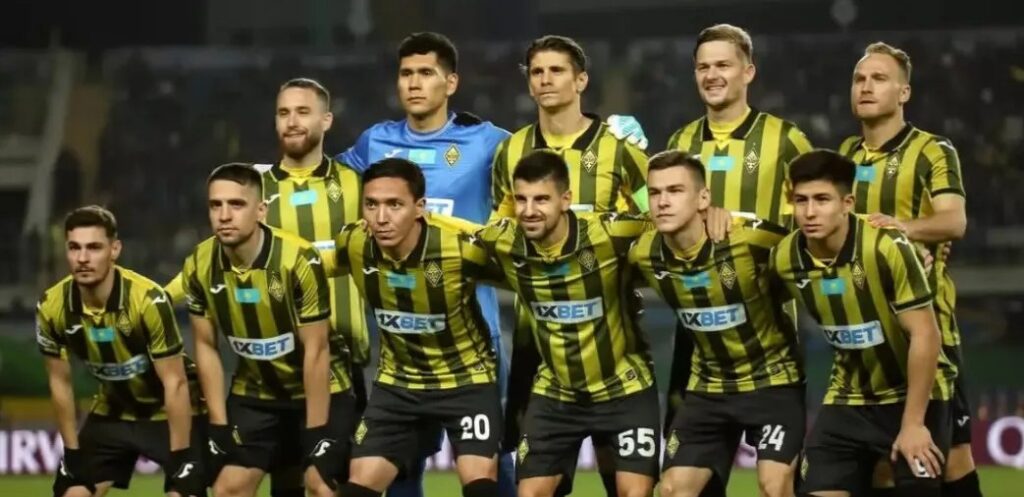
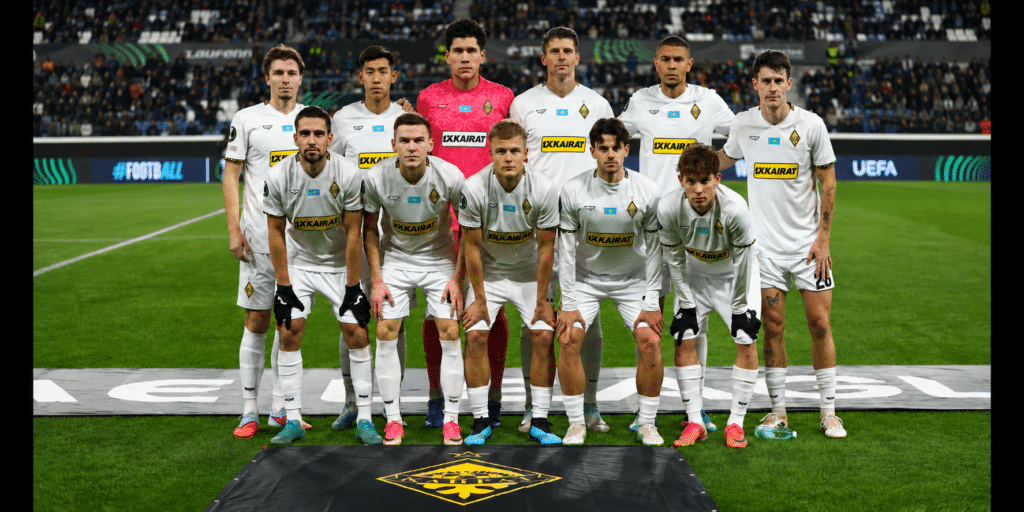
Kairat Almaty secured one of their most impressive European results on November 5, holding Italian side Atalanta to a 1-1 draw in Bergamo in the UEFA Conference League. The Kazakh visitors came close to a famous victory after taking the lead early in the second half. Atalanta, winners of the Europa League in 2024, needed a late equalizer to avoid defeat on home soil. Founded in 1907, Atalanta have risen from a provincial Italian club to become a European force, defeating Liverpool and Bayer Leverkusen on their way to winning the 2024 Europa League. Spanish forward Marc Gual put Kairat ahead in the 53rd minute, finishing an attack created by Brazilian teammate Edmilson. The goal stunned the hosts, who had entered the match as overwhelming favorites. Atalanta pressed for an equalizer, but goalkeeper Temirlan Anarbekov produced several important saves. The 22-year-old had already denied Jonathan Rowe during the first half and continued to frustrate the Italian side after the interval. Kairat held their advantage until the 82nd minute, when substitute Nikola Krstović scored from a crowded penalty area. The match ended level, giving the visitors a valuable point against considerably wealthier opposition. The result was particularly welcome after Kairat's difficult start to this season's European campaign. They drew 1-1 away to Latvia's Riga before suffering a 5-1 home defeat against Greek side Panathinaikos. It also came during a period of upheaval at the club. Rafael Urazbakhtin resigned as head coach on October 26 after Kairat failed to retain their domestic title. Interim manager Zhora Arutyunyan, previously in charge of the club's reserve team, took over. Kairat finished second in Kazakhstan's 2026 Premier League, three points behind champions Ordabasy Shymkent. They had previously won consecutive national titles in 2024 and 2025. From Soviet Football to the Champions League Founded in 1954, Kairat have a distinctive place in Kazakhstan's sporting history. They were the country's only representatives in the Soviet top flight, regularly facing some of the Soviet Union's strongest clubs. However, the collapse of the Soviet Union brought years of uncertainty. Kairat struggled during parts of the independence era and even split into rival clubs. Their modern revival began under businessman Kairat Boranbaev, who took over the club's presidency in 2012. He invested heavily in training facilities and youth development rather than relying exclusively on imported players. Speaking to The Times of Central Asia in September 2025, Boranbaev described the transformation as the result of more than a decade of planning. The club established a network of academies across Almaty, creating opportunities for local children to progress into professional football. One of its most successful graduates is Dastan Satpayev, who joined Chelsea in August 2026 after establishing himself as one of Kazakhstan's most promising young players. He is spending this season on loan at Burnley. Kairat's biggest breakthrough came in August 2025, when they defeated Celtic in a Champions League qualifying playoff. After two goalless matches, the contest went to penalties. Anarbekov saved three spot kicks as Kairat won the shootout...
Kazakhstan Joins Race to Host UEFA Futsal Euro 2030

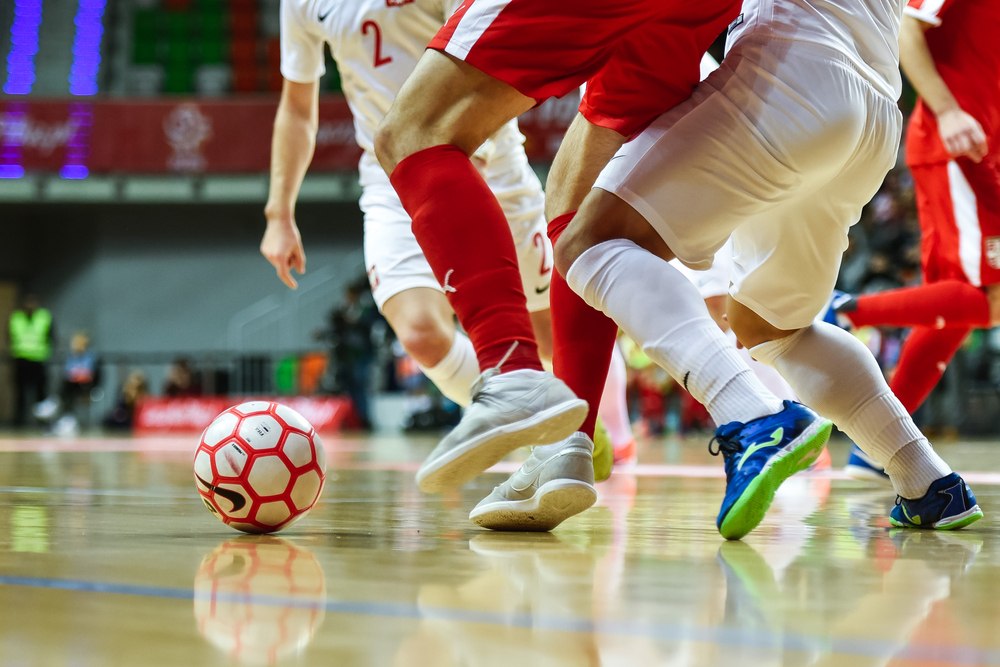
Kazakhstan is among a record seven countries to have expressed interest in hosting UEFA Futsal Euro 2030. If UEFA selects Kazakhstan, it would mark the first time the senior European futsal championship has been held in Central Asia. The host will be selected in September 2027. Futsal is a five-a-side form of indoor football played on a hard court with a smaller, less bouncy ball. According to UEFA, the other prospective hosts are Croatia, Finland, France, Georgia, Poland, and Spain. Final bid dossiers must be submitted by June 8, 2027. UEFA also allows the tournament to be co-hosted by multiple countries. Kazakhstan joined UEFA in 2002, switching from the Asian Football Confederation. Among the current prospective hosts, only Spain and Croatia have previously staged the senior UEFA Futsal Euro. Kazakhstan has experience organizing international futsal competitions. Almaty hosted the final stage of UEFA's premier club futsal competition in 2011, 2017, and 2019. In 2027, Astana is scheduled to host the UEFA European Under-19 Futsal Championship. Kazakhstan's national futsal team won bronze at Euro 2016 in Serbia and reached the semifinals again in 2018. Central Asia has already hosted futsal's biggest global tournament: the 2024 FIFA Futsal World Cup took place in Uzbekistan.

Astana to Host Central Asia’s First UEFA Super Cup

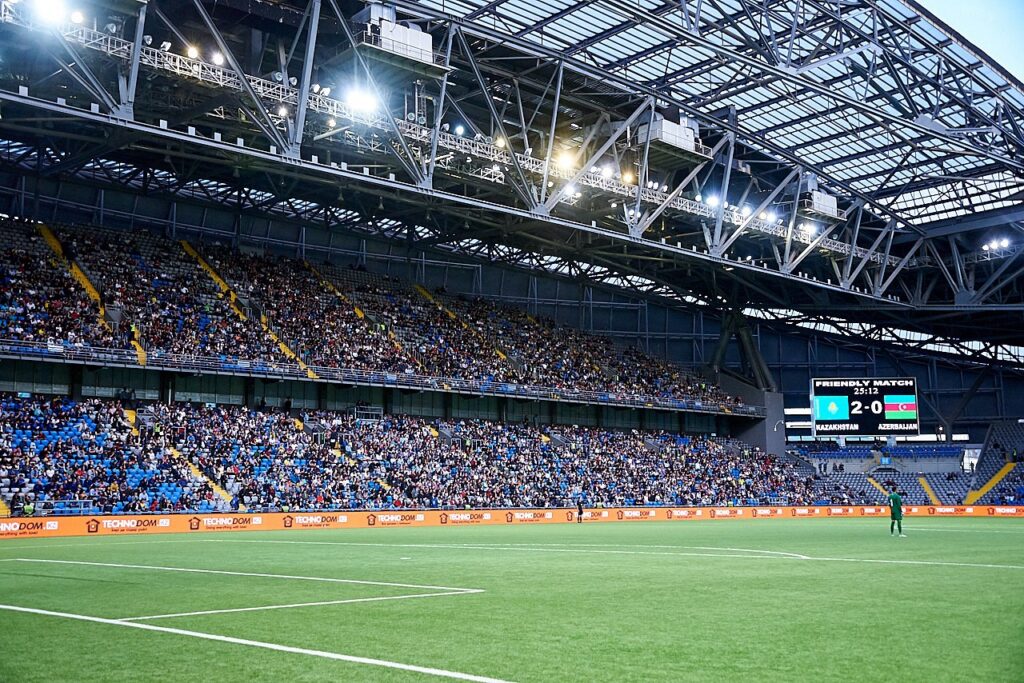
Astana will host the 2028 Union of European Football Associations (UEFA) Super Cup, the first such match to be held in Kazakhstan or anywhere in Central Asia. To stage one of the major fixtures of the European club season, Astana Arena will have to replace its recently installed artificial turf with natural grass and undergo further upgrades. UEFA’s Executive Committee, the governing body of European soccer, selected Astana at a meeting in Thessaloniki on September 15. The match will bring together the winners of the 2027/28 Champions League and Europa League. The Super Cup is played as a single match between the holders of UEFA’s two leading men’s club trophies. In 2027, it will be staged at the Johan Cruijff Arena in Amsterdam. A year later, the trophy will be contested in Central Asia for the first time. For Kazakhstan, the decision follows several years of work on hosting a major UEFA fixture. In the bidding process launched in 2025, the country sought to host the Conference League finals, the third tier of UEFA men’s club competition, in 2028 and 2029. Those finals ultimately went to Turin and Budapest, respectively, while UEFA separately awarded Astana the 2028 Super Cup. Kazakhstan Football Federation (KFF) General Secretary Scott Munn said the federation had been working on the project for several years. Astana Arena has a capacity of around 30,000 and holds UEFA Category 4 status, the organization’s highest stadium classification. Kazakhstan’s national team regularly plays there, and in the 2015/16 season FC Astana hosted its Champions League group-stage opponents at the stadium. Kieran Maguire, a soccer finance expert and lecturer at the University of Liverpool Management School, sees Kazakhstan’s experience in hosting international matches as one of the strengths of its bid. UEFA’s familiarity with the stadium and the federation’s experience organizing European fixtures would reduce operational risks, but Maguire said the bid’s quality was ultimately decisive. A major renovation of the stadium was completed only recently. The arena closed for repairs in 2024, with work covering the roof and its retractable mechanism, engineering and fire-safety systems, screens, media systems, and ticketing infrastructure. The old pitch was also replaced with new heated artificial turf, which received UEFA certification in December 2024. Kazakh media reported that around KZT 15 billion, or about $28 million, was allocated for the renovation. In January 2025, the Astana City Maslikhat, the capital’s elected representative body, reported that the renovation had been completed in line with UEFA recommendations. Ayan Alzhanov, head of the KFF’s International Relations Department, said UEFA specialists will conduct another inspection of the arena and determine what additional work is required. “Astana Arena has UEFA Category 4 status. Our national team has played many official matches here, and Champions League games have been held here. So UEFA knows our stadium," Alzhanov said. The cost of preparing for the Super Cup has not yet been announced. It is also unclear whether the natural-grass pitch will remain after the match. Another challenge is distance. Astana is considerably...

Researchers Name Abdukodir Khusanov Fastest Center Back in Champions League

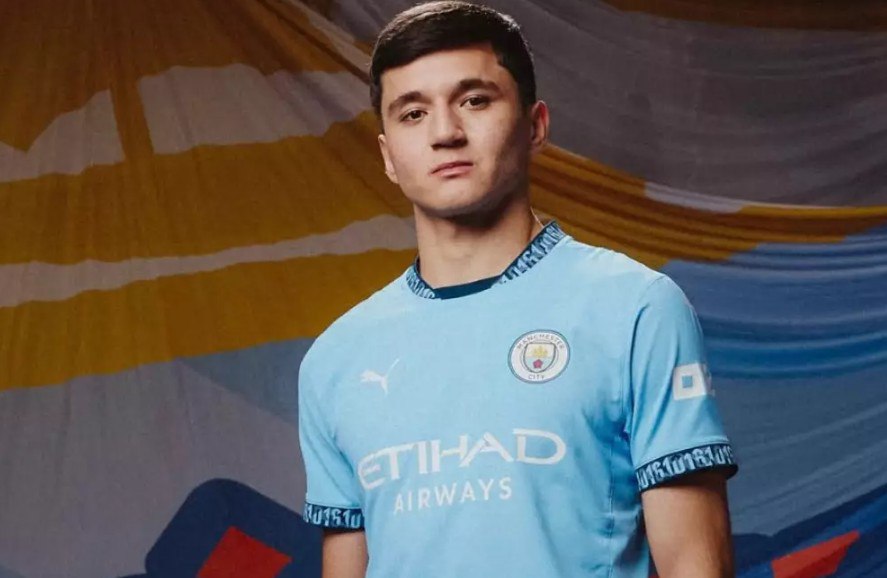
Uzbekistan national team defender Abdukodir Khusanov has been ranked the fastest central defender currently competing in the UEFA Champions League, according to new data released by the CIES Football Observatory. The Switzerland-based research group published its latest Weekly Post featuring exclusive Gradient data on running speeds among players whose clubs remain in the competition. The report analyzed maximum speeds and distance covered across different speed categories for five positional groups. Khusanov, who plays for Manchester City, recorded a top speed of 35.8 kilometers per hour, placing him first among center backs. He finished ahead of Tottenham Hotspur defender Micky van de Ven in the same category. The CIES report also highlighted the fastest players in other positions. Among full-backs, Achraf Hakimi and Nuno Mendes led the rankings, while Archie Gray topped the central midfield category. Anthony Gordon was the fastest among wide midfielders and wingers, and Kylian Mbappé led among center forwards. The data further examined how players distributed their movement across different speed ranges. Among the 100 players analyzed, Mbappé, Victor Osimhen, and Luis Suárez covered the highest proportion of distance at walking pace, defined as below 7 kilometers per hour. In contrast, central midfielders Häkon Evjen, João Simões, and Lucas Bergvall recorded the lowest share of walking distance. Earlier this month, the 21-year-old Khusanov was named Manchester City’s Player of the Month for January after winning a fan vote by a wide margin. The club praised his composure and tactical discipline, noting that his decision-making under pressure stood out during seven appearances across competitions.

Kazakhstan vs. Uzbekistan: A Footballing Derby with an Uncertain Outcome

The Uzbekistan national football team has qualified for the 2026 World Cup, which will take place across three North American countries: the U.S., Canada, and Mexico. Meanwhile, one of Kazakhstan’s leading clubs, FC Kairat Almaty, continues to gain experience competing in the UEFA Champions League. Football in Central Asia has become a mirror of the region’s growing economic and political ambitions, with Uzbekistan and Kazakhstan at the forefront. Their rivalry, which dates back to the Soviet era, has adapted to this new chapter. Kazakhstan and the Road to Europe Matches between Almaty's Kairat and Tashkent's Pakhtakor were once marquee events during the Soviet era, filling stadiums and energizing fans across the republics. Following the collapse of the USSR, however, the footballing paths of these two historical rivals began to diverge. Initially, both Kazakhstan and Uzbekistan joined the Asian Football Confederation (AFC), which includes countries from across Asia and parts of the Pacific, including former Oceania Football Confederation members such as Australia and Guam. Kazakhstan became a full member of the AFC in 1992, followed by Uzbekistan in 1994. However, Kazakhstan soon grew disillusioned with the level of competition within the AFC and began to explore other avenues. Its early attempts to join UEFA were rebuffed in the mid-1990s. Rakhat Aliyev, then head of the Football Union of Kazakhstan and son-in-law of former President Nursultan Nazarbayev, later described the process as being dismissed “without really getting to the heart of the matter.” Despite this, both Kazakhstan and Uzbekistan quickly showed they were a cut above most AFC members at the time. Kazakhstan won the inaugural Central Asian Cup in 1992, while Uzbekistan claimed gold at the 1994 Asian Games in Hiroshima, defeating China 4-2 in the final. Eventually, Kazakhstan succeeded in joining UEFA. Spearheaded by Aliyev, the Football Union of Kazakhstan (FSC) lobbied hard for admission, culminating in meetings with FIFA and UEFA presidents Lennart Johansson and Joseph Blatter in Moscow in late 2000 and early 2001. The AFC issued a statement on May 10, 2001, allowing Kazakhstan to make its own decision, and five days later Johansson confirmed that UEFA would welcome Kazakhstan as its 52nd member. "Joining UEFA has given all of us who work in football a powerful boost," Aliyev said at the time. "We will strive to use this momentum to raise the level of our national football." Uzbekistan and the Central Asian Football Association Unlike Kazakhstan, Uzbekistan chose to remain in the AFC, where it has steadily risen in prominence. In 2014, it became a founding member of the Central Asian Football Association (CAFA), a regional sub-group within the AFC. Officially operational since 2015, CAFA also includes Afghanistan, Iran, Kyrgyzstan, Tajikistan, and Turkmenistan. The organization is currently chaired by Rustam Emomali, son of Tajik President Emomali Rahmon. Uzbekistan is ranked second in the CAFA, behind Iran, and has consistently reached the quarterfinals of the AFC Asian Cup in 2004, 2007, 2015, and 2023. Much of this success is due to sustained investment in youth development, training...

Future Chelsea Player Satpaev Seals Second Consecutive Title for Kairat

Almaty's Kairat Football Club has secured its second consecutive Kazakhstan Premier League (KPL) championship. The decisive goal in the final match was scored by Kazakhstan national team striker Dastan Satpaev, currently on contract with London’s Chelsea. Last year, Kairat won the national championship for the fourth time in its history. This summer, the club qualified for the UEFA Champions’ League group stage for the first time, intensifying pressure on the team as it competed simultaneously in both domestic and European tournaments. Entering the final round, Kairat held a narrow two-point lead over its closest challenger, FC Astana. Fittingly, the season concluded with a high-stakes home match against the capital’s team. The match took place on Sunday, October 26. Despite Kairat’s territorial dominance, Astana struck first, 38-year-old midfielder Marin Tomasov scored in the 15th minute with a well-placed shot from the penalty area. The visitors threatened further, but Kairat goalkeeper Temirlan Anarbekov delivered several crucial saves to keep the deficit at one. In the second half, Satpaev, who will join Chelsea after he turns 18, scored the equalizer, making it 1-1. The draw was enough to keep Kairat ahead in the standings, two points clear of Astana, and clinch the club’s fifth national title. Tomasov nearly scored a second goal during stoppage time, but his shot struck the crossbar. With this result, Kairat became only the seventh club in KPL history to successfully defend its title. The league’s record for consecutive championships belongs to Astana, who won six straight from 2014 to 2019. Aktobe followed with a three-peat (2007–2009), while Yelimay (1994-1995), Zhenis (2000-2001), Irtysh (2002-2003), and Shakhtar Karagandy (2011-2012) each managed two. Between 2020 and 2024, no team had retained the championship, until now. “There were certainly difficulties during the season, primarily the struggle on several fronts,” said Kairat head coach Rafael Urazbakhtin after the match. He noted that frequent squad rotation, a demanding schedule, and long-distance travel forced the coaching staff to carefully manage the squad’s physical condition. “Over time, the team adapted to the rhythm of two or three matches a week. Endurance and teamwork became key factors,” he added. Kairat’s attention now shifts back to the Champions League, where the club sits in last place in its group with one point from three matches. The next fixture is on November 5 in Milan against second-placed Inter. As previously reported by The Times of Central Asia, Kairat’s Champions League breakthrough was made possible in part by Anarbekov’s standout performance in a penalty shootout victory over Scotland’s Celtic.