


What 20 Animal Teeth Reveal About Medieval Herding Along Uzbekistan’s Silk Road
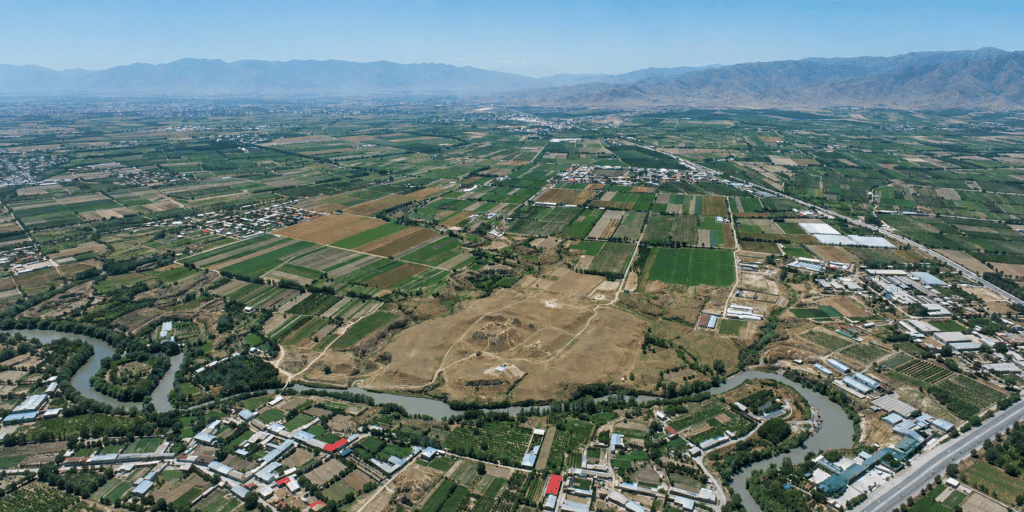
Most histories of the Silk Roads follow merchants and precious cargo, while the daily work of herders rarely enters the record. At Kafir Kala, a fortified settlement about 7.5 miles southeast of ancient Samarkand in present-day Uzbekistan, researchers examined 20 excavated molars for chemical traces of what livestock ate and where they fed. The analysis suggests that several sheep may have grazed in foothills to the south during summer and eaten millet or wild grasses in winter, while goats appear to have stayed closer to the settlement. Before Arab forces conquered Samarkand in 712, Kafir Kala’s citadel had an administrative role. After a major fire around that time and a brief abandonment, residents converted earlier structures into homes with hearths and domed ovens. The molars came from this later occupation, dating from the early eighth to the 12th century. Excavations recovered 6,009 animal remains from the citadel’s pre-Islamic and Islamic layers, nearly 80% of them from sheep or goats. The analysis was published in June in the journal Archaeological and Anthropological Sciences. The work formed part of the Uzbek-Italian Archaeological Project, a long-standing collaboration between the University of Bologna and the Samarkand Institute of Archaeology, co-directed by Simone Mantellini and Samaretdin Suyunov. Proteins preserved in the teeth allowed the researchers to identify 12 as sheep and four as goats; three could be classified only as ruminants, and one could not be identified. They then analyzed chemical changes in enamel that had formed over about a year. Elena Armaroli, one of the paper’s authors, is a postdoctoral researcher at the University of the Basque Country and an adjunct researcher at the University of Modena and Reggio Emilia. “Sheep showed greater variability, probably reflecting access to a wider range of food and water sources, including open water,” she told The Times of Central Asia. Armaroli interpreted the pattern as possible transhumance, the seasonal movement of livestock between pastures. Many pasture plants are C3 plants, while millet and some wild grasses are C4 plants. The names refer to two ways plants use carbon dioxide to make food: the first molecule produced has three carbon atoms in one case, four in the other. The two kinds of plants leave different carbon traces in the teeth of animals that eat them. Some sheep’s teeth suggest summer grazing in the Karatyube foothills south of Kafir Kala and a different diet in winter. Oxygen values helped the researchers place the change in season. Not every sheep fit the pattern. The goats’ results were more consistent with a year-round diet of local plants and little movement away from Kafir Kala. Armaroli offered one possible reason for moving sheep. “Sheep, although generally more selective in their diet, are considered more adaptable and may be better able to exploit whatever food and water resources are available when grazing conditions are limited.” “The use of different herding strategies may have been related to the different roles that sheep and goats played in the local economy and to the different products they...
