
• KGS/USD = 0.01144 0%
  • KZT/USD = 0.00212 0%
  • TJS/USD = 0.10720 0%
  • UZS/USD = 0.00008 0%
  • TMT/USD = 0.28490 0%
  • KGS/USD = 0.01144 0%
  • KZT/USD = 0.00212 0%
  • TJS/USD = 0.10720 0%
  • UZS/USD = 0.00008 0%
  • TMT/USD = 0.28490 0%
  • KGS/USD = 0.01144 0%
  • KZT/USD = 0.00212 0%
  • TJS/USD = 0.10720 0%
  • UZS/USD = 0.00008 0%
  • TMT/USD = 0.28490 0%
  • KGS/USD = 0.01144 0%
  • KZT/USD = 0.00212 0%
  • TJS/USD = 0.10720 0%
  • UZS/USD = 0.00008 0%
  • TMT/USD = 0.28490 0%
  • KGS/USD = 0.01144 0%
  • KZT/USD = 0.00212 0%
  • TJS/USD = 0.10720 0%
  • UZS/USD = 0.00008 0%
  • TMT/USD = 0.28490 0%
  • KGS/USD = 0.01144 0%
  • KZT/USD = 0.00212 0%
  • TJS/USD = 0.10720 0%
  • UZS/USD = 0.00008 0%
  • TMT/USD = 0.28490 0%
  • KGS/USD = 0.01144 0%
  • KZT/USD = 0.00212 0%
  • TJS/USD = 0.10720 0%
  • UZS/USD = 0.00008 0%
  • TMT/USD = 0.28490 0%
  • KGS/USD = 0.01144 0%
  • KZT/USD = 0.00212 0%
  • TJS/USD = 0.10720 0%
  • UZS/USD = 0.00008 0%
  • TMT/USD = 0.28490 0%

Viewing results 1 - 6 of 6

Killing of Uzbek Migrant Woman in Istanbul Sparks Protests in Turkey

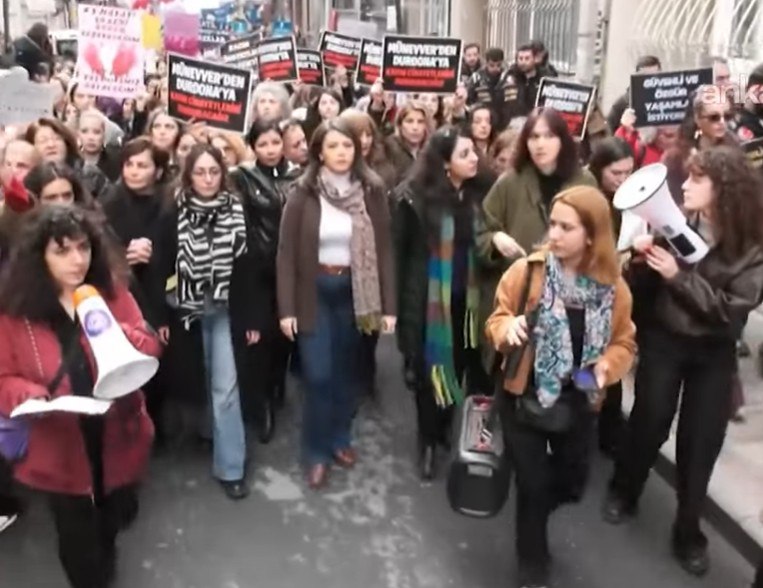
The killing of an Uzbek migrant woman in central Istanbul has sparked protests in Istanbul and Ankara, and reignited debate over violence against women, the safety of migrants, and the effectiveness of state protection mechanisms. The body of a 36-year-old Uzbek national was discovered on January 24 in a waste container in Istanbul’s Şişli district, one of the city’s busiest areas. According to Turkish media reports, the body was found by a person collecting recyclable materials, who immediately alerted the authorities. Police later confirmed that the victim had been wrapped in bedding material and that parts of her body were missing at the time of discovery. Initial searches failed to locate all of her remains. Turkey’s Interior Ministry and law enforcement agencies launched an immediate investigation. Surveillance footage reviewed by investigators showed two individuals leaving a suspicious suitcase near another container in the area. Turkish media outlets, including WELG and Cumhuriyet, reported that three men have been detained in connection with the crime, two of whom are citizens of Uzbekistan. Two suspects were apprehended at Istanbul Airport while allegedly attempting to flee the country. One suspect reportedly confessed during police questioning. However, the investigation remains ongoing, and judicial proceedings have not yet concluded. The victim was identified as Durdona H., an Uzbek citizen. This information was confirmed by the Consulate General of Uzbekistan in Istanbul, which issued an official statement expressing deep sorrow. Identification was made in coordination with Turkish law enforcement, forensic experts, and prosecutors. “The investigation into this case is under the close supervision of the Consulate General,” the statement read. Uzbek diplomats have contacted the victim’s family and are providing consular and legal assistance. The consulate also extended its condolences and stated that further updates would be shared through official channels. The killing provoked immediate public outrage. Large numbers of women took to the streets in Istanbul and Ankara to protest what they described as systemic violence against women, particularly migrant women. Feminist groups and women’s rights organizations organized a march in Şişli, starting near Osmanbey metro station and ending on the street where the body was found. Protesters carried banners and chanted slogans, stressing that the killing was not an isolated case but part of a broader pattern of gender-based violence. Demonstrators also highlighted the heightened vulnerability of migrant women and called for stronger protection and prevention mechanisms. Police briefly intervened in the protests, warning against the use of certain slogans deemed unlawful, according to Turkish media. Nevertheless, demonstrations proceeded peacefully, with participants demanding accountability and transparency. Similar protests took place in Ankara on the same day. Women’s organizations gathered near the Human Rights Monument on Yüksel Street, echoing calls for systemic reform. Activists argued that violence against women is not an individual problem but a structural one. Turkish women’s rights groups, including the We Will Stop Femicide Platform and the Federation of Turkish Women’s Associations, issued statements in response. They criticized the inadequate enforcement of protection orders and what they described as a culture of...


Tajik Schoolboy Killed in Moscow Area Sparks Central Asian Outrage

The fatal stabbing of a 10-year-old Tajik boy at a school in the Moscow area has sparked widespread condemnation across Central Asia. Russia’s Foreign Ministry extended “deep condolences” to Tajikistan following the killing. Ministry spokesperson Maria Zakharova said Moscow offered immediate assistance to the Tajik Embassy in Russia after the incident was reported by the press on December 16. She confirmed that the embassy sent a diplomatic note requesting an objective investigation. Official requests were subsequently forwarded to Russia’s Investigative Committee and the Interior Ministry to clarify the circumstances and support the Tajik side. The attack occurred at Uspensky School, where a 15-year-old ninth-grade student, identified as Timofey Kulyamov, allegedly stabbed and killed the victim, Qobiljon Aliyev. Witnesses reported that the suspect asked the child about his nationality before launching the fatal attack. On the day of the incident, he was reportedly wearing a shirt bearing the phrase “No lives matter.” Qobiljon’s family moved to Russia from the Hisor region of Tajikistan four years ago. His father passed away three years prior, and his mother has been working as a cleaner at the same school to support her three children. Journalists, civil society leaders, and public figures in Tajikistan and Uzbekistan condemned the killing, linking it to rising hostility toward Central Asian migrants in Russia. Tajik political analyst Muhammad Shamsuddinov took to social media to denounce what he described as systemic discrimination. “Who killed Qobiljon? The system,” he wrote. Shamsuddinov accused Russian public discourse and policies of fueling an environment of xenophobia, referencing remarks by State Duma members, law enforcement actions, and state-run media coverage. “Qobiljon was killed by Mironov’s constant statements. By Bastrykin’s speeches. By the State Duma’s draft laws. By Russian state television. By nationalist Telegram channels. By the constant and very public raids against migrants. By hours-long detentions at airports,” he wrote. He also criticized the Russian Embassy in Tajikistan for its silence, noting that while it continued to post routine updates and commemorative messages, it had not acknowledged the boy’s death. “As a society, where is the sympathy? The condolences? Nothing,” he wrote. Sherzodkhon Kudratkhuja, Chairman of the Supervisory Board of the Uzbekistan National Media Association and Rector of the University of Journalism and Mass Communications, also voiced his outrage. “No mother should ever go through this. None,” he said, after reportedly watching a video of the incident. He called the murder of a child based on national identity “impossible to describe in words.” Kudratkhuja urged Russia to introduce formal education on national tolerance in its schools and criticized the normalization of ethnic slurs among adults. “Children learn from adults, and this is the mirror of today’s society,” he said. He emphasized the need to foster values of tolerance, adding that all people “descended from Adam and Eve and are equal in dignity.”