Kyrgyzstan Calls for Compensation Mechanisms to Maintain Regional Water Infrastructure
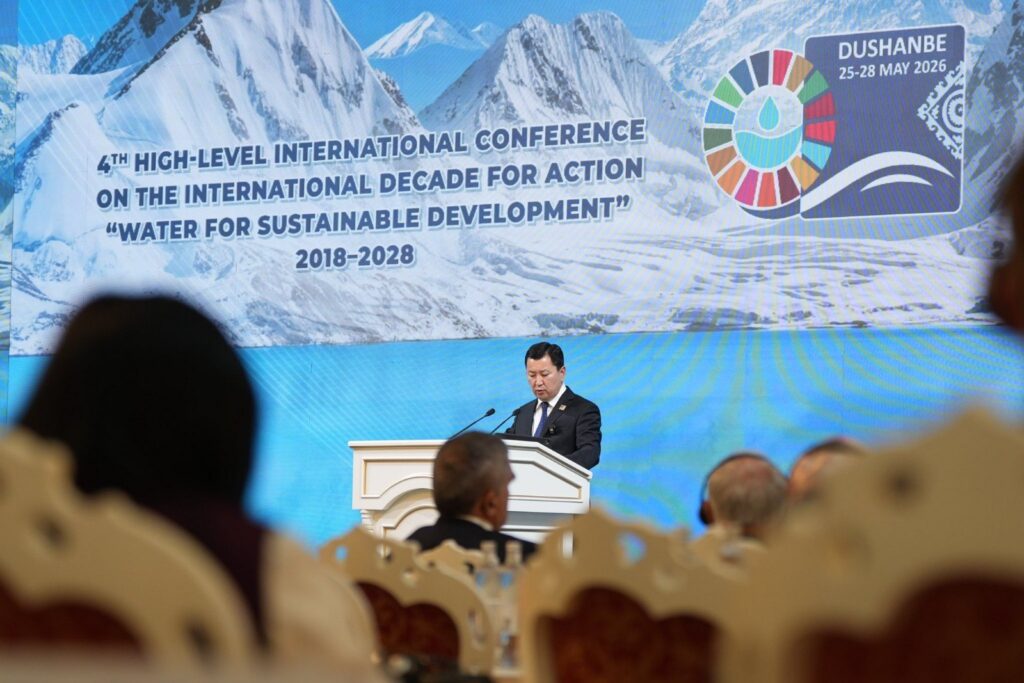
Kyrgyzstan is calling for compensation mechanisms with neighboring countries to help finance the maintenance of water infrastructure and glacier preservation. Officials warn that shrinking glaciers and declining precipitation already pose serious risks for Central Asia. The issue was raised by Erlist Akunbekov, Kyrgyzstan’s deputy chairman of the Cabinet of Ministers and minister of water resources, agriculture, and processing industry, during the opening of the Fourth High-Level International Conference on the International Decade for Action “Water for Sustainable Development,” 2018-2028, in Dushanbe on May 26. Akunbekov described the melting of glaciers as a regional challenge, not solely a national problem. “Without glaciers, there will be no water in the rivers, and without water in the rivers, there will be no life in the valleys,” he said. He presented Kyrgyzstan as a critical upstream supplier, saying it is the only country in Central Asia whose water resources are formed entirely within its own territory. On that basis, he called for mutually beneficial and equitable compensation mechanisms in the water and energy sectors. Kyrgyzstan uses only around 30% of its available water resources, while the majority is consumed downstream by neighboring countries, Akunbekov said. At the same time, the country bears substantial costs for maintaining reservoirs, hydraulic infrastructure, and glacier ecosystems that benefit the entire region. “However, we must frankly admit that today our country is not receiving adequate compensation for these efforts,” Akunbekov said. For decades, Kyrgyzstan has also incurred indirect economic losses because land has been used for reservoirs and infrastructure serving regional water needs, he said. “Maintaining hydraulic facilities and preserving glaciers in the mountains of Kyrgyzstan requires enormous expenditures,” he said. Akunbekov added that Kyrgyzstan allocated approximately $80 million to the water sector last year and around $259 million over the past five years. Despite those investments, the resources of a single country are insufficient to fully modernize the aging water infrastructure inherited from the Soviet era. “We need additional consolidated financing to build an effective and modern water management system for all countries in the region,” Akunbekov said, adding that the time has come to introduce compensation mechanisms that would allow upstream countries to maintain water infrastructure for the benefit of all Central Asia. Kyrgyzstan remains one of the principal sources of irrigation water for downstream Kazakhstan and Uzbekistan. Akunbekov also drew attention to environmental risks facing Lake Issyk-Kul, one of Kyrgyzstan’s most important natural landmarks and a a biosphere territory of regional significance. He noted that over the past decade, the number of rivers flowing into the lake has declined from 100 to 30. As previously reported by The Times of Central Asia, Kyrgyzstan has also proposed that international donors and development partners jointly develop and implement a comprehensive program to preserve Lake Issyk-Kul and address climate-related risks affecting the wider region.