

• KGS/USD = 0.01144 0%
  • KZT/USD = 0.00212 0%
  • TJS/USD = 0.10456 0.19%
  • UZS/USD = 0.00008 0%
  • TMT/USD = 0.28490 0%
  • KGS/USD = 0.01144 0%
  • KZT/USD = 0.00212 0%
  • TJS/USD = 0.10456 0.19%
  • UZS/USD = 0.00008 0%
  • TMT/USD = 0.28490 0%
  • KGS/USD = 0.01144 0%
  • KZT/USD = 0.00212 0%
  • TJS/USD = 0.10456 0.19%
  • UZS/USD = 0.00008 0%
  • TMT/USD = 0.28490 0%
  • KGS/USD = 0.01144 0%
  • KZT/USD = 0.00212 0%
  • TJS/USD = 0.10456 0.19%
  • UZS/USD = 0.00008 0%
  • TMT/USD = 0.28490 0%
  • KGS/USD = 0.01144 0%
  • KZT/USD = 0.00212 0%
  • TJS/USD = 0.10456 0.19%
  • UZS/USD = 0.00008 0%
  • TMT/USD = 0.28490 0%
  • KGS/USD = 0.01144 0%
  • KZT/USD = 0.00212 0%
  • TJS/USD = 0.10456 0.19%
  • UZS/USD = 0.00008 0%
  • TMT/USD = 0.28490 0%
  • KGS/USD = 0.01144 0%
  • KZT/USD = 0.00212 0%
  • TJS/USD = 0.10456 0.19%
  • UZS/USD = 0.00008 0%
  • TMT/USD = 0.28490 0%
  • KGS/USD = 0.01144 0%
  • KZT/USD = 0.00212 0%
  • TJS/USD = 0.10456 0.19%
  • UZS/USD = 0.00008 0%
  • TMT/USD = 0.28490 0%

Viewing results 1 - 6 of 8

Repeated Drone Incidents Expose Airspace Risks on Russia–Central Asia Frontier

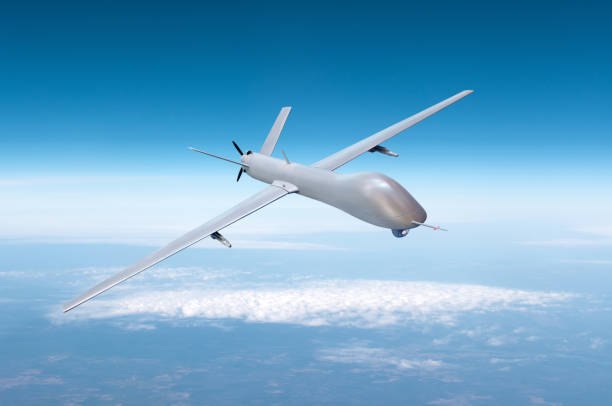
A new drone-related incident in western Kazakhstan has reinforced a pattern that is becoming harder to dismiss. Police in West Kazakhstan Region confirmed that an object resembling an unmanned aerial vehicle was found in the Akzhayik district near the village of Karaulytobe. Images circulating locally appeared to show a largely intact fixed-wing drone. No casualties or damage were reported. “The object was discovered outside a populated area. All circumstances of the incident are being investigated,” the department said. Reports and images of the object initially circulated on messaging apps before being confirmed by regional authorities. This latest discovery fits a sequence of similar incidents across the same region over the past year. As previously reported by The Times of Central Asia, on March 18, 2025, a drone about three meters long was found near Atameken village in Taskala district, around 60 kilometers from the district center. That case followed another discovery on February 18, 2025, in the Bokeyorda district, where a smaller unidentified object was recovered in a remote area. Within days, further debris was found near the Russian border in Zhanibek district, marking the third such case in a single month. The pattern continued later in the year. On October 23, 2025, a drone of unknown origin exploded near Kyzyltal village in the Burlin district. Residents reported an explosion that damaged rooftops and left a crater near the village, although no casualties were recorded. Authorities opened a criminal case, with the military prosecutor’s office involved alongside police and emergency services. Similar findings have appeared beyond the West Kazakhstan Region. On June 19, 2025, fragments resembling a UAV were found in Mangistau Region near the Bolashak border station. The debris was located in an uninhabited area, and no damage was reported. Taken together, these incidents form a clear geographic cluster along Kazakhstan’s western frontier. Most occurred near the Russian border and in sparsely populated areas. The objects were typically discovered after impact, with no confirmed flight paths or official attribution. Investigations into earlier cases have linked several incidents to areas used for Russian military testing. Western Kazakhstan includes zones connected to long-standing Russian defense activity under bilateral agreements, and parts of the region remain associated with testing operations. This context explains the cautious official response. None of the incidents have been described as attacks, and none have been attributed to a foreign state. At the same time, the repeated discoveries point to a growing exposure that goes beyond routine testing. The wider regional environment has shifted rapidly. The war in Ukraine has driven a sharp expansion in drone use across Eurasia. Both Russia and Ukraine deploy long-range UAVs for reconnaissance and strikes, often over extended distances. Drone activity has already affected infrastructure linked to Kazakhstan’s economy. On February 17, 2025, a drone attack targeted the Caspian Pipeline Consortium’s Kropotkinskaya pumping station in Russia’s Krasnodar region, part of a key export route for Kazakh oil. Further attacks on offshore loading facilities and terminals continued later in the year, with additional incidents...

Explosion of Unknown Drone Reported in Western Kazakhstan

Debris believed to be from an unmanned aerial vehicle (UAV) has been discovered in the Burlin district of West Kazakhstan region. Preliminary information indicates that the explosion occurred early in the morning near the village of Kyzyltal. According to Uralskaya Nedelya, representatives from the district akimat (local government), emergency services, and local police are currently investigating the scene. The military prosecutor’s office has also been dispatched and has opened a criminal case. “This morning, a drone of unknown origin exploded near Kyzyltal village in the Burlin district. The roofs of houses in the village were nearly blown off,” eyewitnesses told local media. The incident coincides with an air threat alert declared in Russia’s neighboring Orenburg region, where authorities reported a potential UAV incursion. The “Kover” plan, a protocol enacted during airspace threats, was implemented at the airports in Orenburg and Orsk. Police in West Kazakhstan confirmed the incident and stated that a full investigation is underway. “The police department, in cooperation with authorized agencies, is conducting an investigation into the discovery of what appears to be UAV debris in the Burlin district. All circumstances are being reviewed,” the department’s press service said. Kazakhstan’s Ministry of Defense also responded, noting that no casualties or material damage had been reported. “In cooperation with relevant state bodies, verification efforts are underway to determine the circumstances and origin of the object. The Ministry of Defense of the Republic of Kazakhstan has implemented additional measures to enhance airspace control and prevent unauthorized aerial border crossings. Consultations are ongoing with foreign partners who may potentially be linked to the UAV,” the ministry said in a statement. This incident follows a similar discovery on June 19, when suspected UAV fragments were found in the Karakiyan district of the Mangistau region, near the Bolashak border station. As The Times of Central Asia previously reported, in March 2025 there were three drone-related events in West Kazakhstan in one month, raising concerns about airspace security near the country's border with Russia.

Mysterious Drones on Kazakhstan’s Border with Russia: Third Drone Found in a Month

A third unidentified drone has been discovered in Kazakhstan’s West Kazakhstan region near the Russian border, heightening security concerns and prompting official investigations. Law enforcement and relevant agencies are currently inspecting the latest find. New Fragments in Zhanibek District The most recent wreckage, believed to be part of an unmanned aerial vehicle (UAV), was found in Zhanibek district. According to a statement from the West Kazakhstan Region Police Department, the debris was located in a remote, uninhabited area. “The West Kazakhstan Region Police Department, together with authorized services, is conducting verification activities regarding the discovery of objects resembling fragments of an unmanned aerial vehicle,” the department stated. Authorities are working to determine the circumstances surrounding the incident, including the drone's origin and potential flight path. Third Case in a Month This is the third such incident in the region within the span of a month. As previously reported by The Times of Central Asia, on March 18, residents of Atameken village, approximately 60 kilometers north of Taskala, reported the crash of a drone approximately three meters in length. A similar incident occurred on February 18 in the village of Uyaly, Bokeyordinsky district, where authorities recovered an unidentified flying object measuring 120 centimeters in length. In both previous cases, police and emergency services responded to secure and analyze the sites. Assumptions and Unofficial Theories While there has been no official identification of the drones, some regional media outlets suggest a possible match between one of the recovered UAVs and the French-made "Crecerelle" reconnaissance drone, produced by Sagem. The lack of confirmation has done little to quell speculation, particularly amid rising concerns about the drones’ potential connection to the war in Ukraine. In Russia's neighboring Saratov region, Ukrainian UAVs have repeatedly targeted strategic infrastructure, including airfields and fuel depots. This geographic proximity raises questions about whether Kazakhstan is inadvertently becoming a transit zone, or even a crash zone, for drones involved in that conflict. Local officials and residents alike are increasingly uneasy about the repeated discoveries. Investigations remain ongoing, with experts aiming to identify the drones’ origins and assess any security risks. Law enforcement agencies have refrained from commenting on possible links between the drone crashes and the military conflict in Ukraine until further evidence is gathered.

Another Drone Crashes in West Kazakhstan

Another drone has crashed in Kazakhstan’s West Kazakhstan region. Local residents discovered the object near the village of Atameken, approximately 60 km north of the district center of Taskala.  On March 18, the police department in Taskala District received a report about an unidentified object, believed to be a drone, found in a remote area. The device measured approximately three meters in length. Police officers, representatives of the district akimat (council), and emergency services were dispatched to the scene. The West Kazakhstan Region Police Department confirmed the discovery of an object resembling an unmanned aerial vehicle (UAV).  “The object fell in a remote area, away from populated settlements, and was found intact, with no visible damage. All circumstances surrounding the incident are being investigated,” the agency stated. This marks the second case of a drone crash in the region within a month. On February 18, a similar object, measuring 120 cm in length, was discovered in the village of Uyaly in Bokeyorda District. At that time, police and emergency responders also arrived at the scene to investigate. According to analysts, the drone that crashed on February 18 bears similarities to the Crecerelle, a reconnaissance UAV developed by the French defense company Sagem. However, authorities have not yet confirmed this information. The incidents have raised concerns due to the region’s proximity to the Kapustin Yar military training ground, which is leased by the Russian Ministry of Defense. Located in Bokeyorda District, the facility occupies nearly half of the district’s territory. Meanwhile, in neighboring Russia’s Saratov region, Ukrainian drones have repeatedly targeted military facilities, including airfields and fuel storage sites. On February 17, seven drones carrying explosives and metal shrapnel attacked the Kropotkinskaya oil pumping station, a facility operated by the Caspian Pipeline Consortium (CPC).  The recent drone crashes in West Kazakhstan region have heightened security concerns among residents and the authorities. Investigations are ongoing to determine the origin of the drones and any potential links to military activity in the region. [caption id="attachment_29909" align="aligncenter" width="1280"] Image: Colonel GSh Telegram channel[/caption] Posting images of its tail number, the has reported that the drone was a  Russian Geran-2 (Shahed-136) kamikaze drone. > > This story has been updated to reflect breaking developments.
