• KGS/USD = 0.01144 0%
  • KZT/USD = 0.00201 0%
  • TJS/USD = 0.10503 -0.19%
  • UZS/USD = 0.00008 0%
  • TMT/USD = 0.28571 0%
  • KGS/USD = 0.01144 0%
  • KZT/USD = 0.00201 0%
  • TJS/USD = 0.10503 -0.19%
  • UZS/USD = 0.00008 0%
  • TMT/USD = 0.28571 0%
  • KGS/USD = 0.01144 0%
  • KZT/USD = 0.00201 0%
  • TJS/USD = 0.10503 -0.19%
  • UZS/USD = 0.00008 0%
  • TMT/USD = 0.28571 0%
  • KGS/USD = 0.01144 0%
  • KZT/USD = 0.00201 0%
  • TJS/USD = 0.10503 -0.19%
  • UZS/USD = 0.00008 0%
  • TMT/USD = 0.28571 0%
  • KGS/USD = 0.01144 0%
  • KZT/USD = 0.00201 0%
  • TJS/USD = 0.10503 -0.19%
  • UZS/USD = 0.00008 0%
  • TMT/USD = 0.28571 0%
  • KGS/USD = 0.01144 0%
  • KZT/USD = 0.00201 0%
  • TJS/USD = 0.10503 -0.19%
  • UZS/USD = 0.00008 0%
  • TMT/USD = 0.28571 0%
  • KGS/USD = 0.01144 0%
  • KZT/USD = 0.00201 0%
  • TJS/USD = 0.10503 -0.19%
  • UZS/USD = 0.00008 0%
  • TMT/USD = 0.28571 0%
  • KGS/USD = 0.01144 0%
  • KZT/USD = 0.00201 0%
  • TJS/USD = 0.10503 -0.19%
  • UZS/USD = 0.00008 0%
  • TMT/USD = 0.28571 0%

Viewing results 1 - 6 of 15

How Much is Berdymuhamedov’s 8 March “Gift” to Turkmen Women Actually Worth?

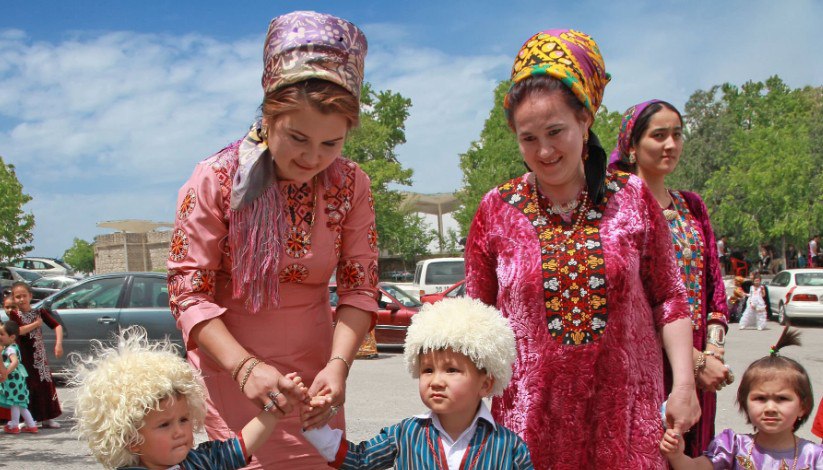
Turkmenistan’s President Serdar Berdymuhamedov has ordered that female residents of the country receive 60 manats each in honor of March 8, International Women’s Day. At the current market exchange rate of 19.5 manats to the U.S. dollar, this amounts to approximately $3. Officially, the decision is described as recognition of “the great contribution of women in bringing about changes for the prosperity of the country, in raising a healthy and enthusiastic generation devoted to the Motherland, in order to continue the noble traditions of our ancestors in honoring our beloved mothers and dear sisters in the era of the rebirth of a new era of a powerful state.” Payments are scheduled to be distributed between March 2 and March 6. Eligible recipients include women employed in enterprises and organizations regardless of ownership, pensioners and recipients of state benefits, graduate and doctoral students, clinical residents on leave from work, students of the Academy of Public Administration with a term of study of at least two years, as well as schoolgirls, university students, and kindergarten pupils. Turkmen women have received the equivalent of about $3 for the holiday for seven consecutive years. However, since 2019, the cost of food and consumer goods in the country has risen significantly. The official exchange rate of the Turkmen manat has remained fixed at 3.5 manats per dollar since 2015. By that rate, 60 manats would equal approximately $17. However, the widely used parallel market rate currently stands at about 19.5 manats per dollar, reducing the real value of the payment to roughly $3. As a result, the actual purchasing power of the “gift” is significantly lower than the figure implied by calculations based on the official exchange rate. In September 2025, one elder publicly called for an end to increasing such payments, stating that “the social and living conditions of the country’s population have reached a high level.”
Women in Space: Kazakhstan Completes First All-Female SANA-1 Experiment

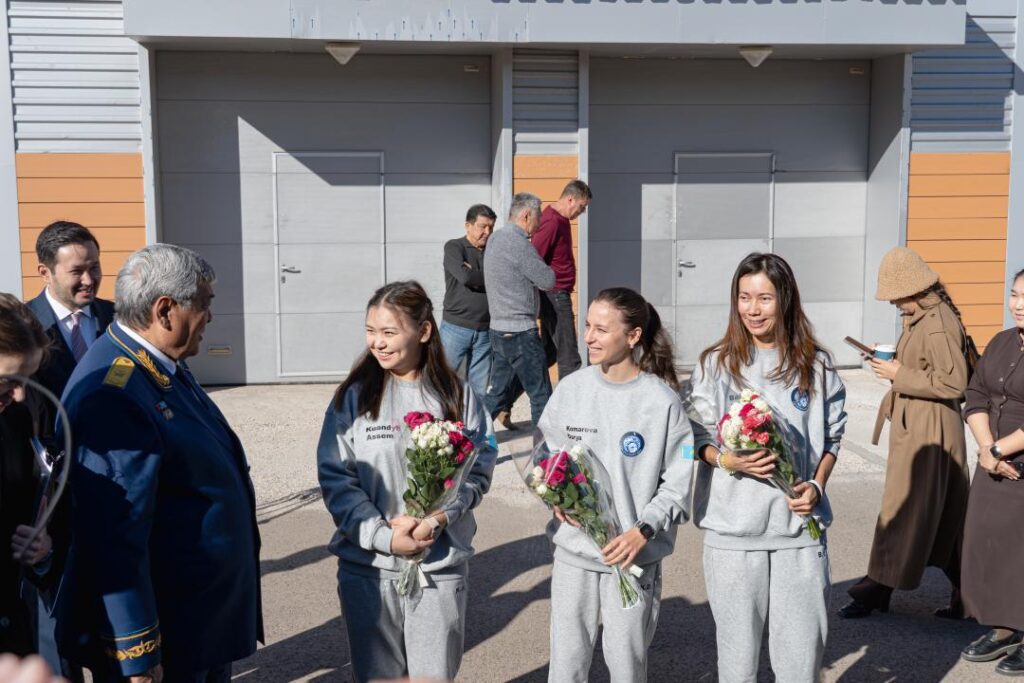
Kazakhstan has successfully completed its first space research experiment involving an all-female crew. Conducted over ten days in a specialized ground-based module simulating a spacecraft, the SANA-1 project marks a milestone in the country’s space program and underscores the expanding role of women in science and technology. Kazakhstan’s First Female Crew In Astana, the results of the SANA-1 scientific experiment, which focused on studying psychophysiological responses to isolation, were officially presented. It is the first time in Kazakhstan’s space research history that a mission was carried out exclusively by female engineers and scientists. According to the project’s scientific director, Alina Gutoreva, the aim was to study “the cognitive, physiological, and emotional adaptation of humans in a confined space.” “The crew underwent medical, physiological, and psychological assessments, conducted cognitive and behavioral studies, and tested the capsule’s engineering systems,” Gutoreva explained. The experiment was timed to coincide with World Space Week (October 4-10), the 2025 theme of which was “Living in Space.” What the Researchers Studied The SANA-1 team examined the psychological and physiological effects of isolation, monotony, and stress on human behavior and team dynamics. The data collected is expected to inform the development of stress-resilience training and psychophysiological monitoring systems for future cosmonauts. The results will feed into Kazakhstan’s national cosmonaut training program and will be presented at global platforms, including Space Days Kazakhstan and meetings of the UN Committee on the Peaceful Uses of Outer Space (COPUOS). Researchers emphasized that female leadership, emotional intelligence, and empathy were critical factors in the crew’s resilience and performance. These findings are expected to contribute to future criteria for selecting and training participants in long-duration space missions, including to the Moon and Mars. The closing ceremony of the experiment took place on October 10, exactly 34 years after Tokhtar Aubakirov, Kazakhstan’s first cosmonaut, completed his spaceflight. Speaking at the event, Air Force Major General Aubakirov stressed the psychological demands of space missions. “The most important thing in space is belief in your own strength and responsibility to the team. Without this, it is impossible to complete any mission,” Aubakirov said. Earlier this month, Danna Karagousova became the first Kazakh woman to travel to space, participating in a suborbital flight aboard Blue Origin’s New Shepard spacecraft. The rocket launched from a site in Texas, reaching an altitude of approximately 100 kilometers, the Kármán line, widely recognized as the boundary of space. The flight lasted around 10-12 minutes.

Uzbek Politician Calls for Passport Photo Rule Change Amid Headscarf Debate

Alisher Qodirov, leader of Uzbekistan’s Milliy Tiklanish (National Revival) Democratic Party, has called for an end to the practice of requiring women to remove headscarves when taking passport photographs. In a statement on his Telegram channel, Qodirov affirmed that Uzbekistan’s status as a secular state is beyond question but argued that secularism should not infringe on personal freedoms. Prosperity Without Discrimination “A secular state, governed by laws adopted by a popularly elected parliament and approved by a popularly elected president, allows citizens to live as they choose, as long as they do not violate the law,” Qodirov said. “Our priority is to ensure that citizens of all nationalities and beliefs can strive for prosperity without discrimination. Everyone is equal, and no one should be demeaned.” Drawing analogies, Qodirov said that just as one citizen may choose to drink beer and another may choose not to, without having to explain themselves, women should be free to cover their hair if it aligns with their beliefs. “Advertising alcohol is prohibited by law, but if a political force wins a parliamentary majority, it could change the law, making alcohol a ‘national value’ or same-sex marriage a free choice. You grant that right,” he added. Qodirov emphasized that all social development must rest on values. Referring to pop star Jennifer Lopez’s recent concert in Tashkent, he said: “If Jennifer Lopez wants to perform at a private, ticketed concert, as long as she doesn’t distribute drugs or promote anti-state ideas, that’s her choice. Showing her body is her decision; watching it is the decision of those who bought tickets. That’s secularism.” By the same logic, he continued, “A woman who chooses to wear a headscarf is protected by law. We accepted public nudity as secularism; we must also accept the right to cover up. Just as we don’t tell Lopez how to dress, we shouldn’t dictate how religious women wear their headscarves nor should we force women, who have lived by their faith for years, to remove them for passport photos. Identification requirements demand an open face, not uncovered hair. Let’s extend the same tolerance to devout women as we do to Lopez.” He concluded that secularism means equality for both believers and non-believers, “not the strong lecturing the weak about life.” Mixed Reactions to Lopez Concert Lopez’s August 7 performance at Tashkent’s Bunyodkor Stadium, part of her “Up All Night – Live in 2025” world tour, drew mixed reactions online. Some praised her discipline and appearance, while others criticized her revealing outfits. Psychogenetics specialist Maryam Mahmudova told her Instagram followers that Lopez’s appearance reflected years of disciplined self-care. “At 56, she maintains her figure thanks to discipline. We, on the other hand, often feel worn out before 40, with no goals or passion. We have no right to judge anyone, instead, we should learn discipline from her, because discipline is a form of self-love,” she said. Neurologist Bahtigul Holmurodova, who followed the concert via social media, commented: “Yesterday, JLo once again showed all Uzbeks what...

Over 100 Female Suicides Reported in Tajikistan in First Half of 2025

In the first six months of 2025, 102 women and 30 girls died by suicide in Tajikistan, according to figures announced by Bunafsha Fayziddinzoda, head of the Committee on Women and Family Affairs. Disturbing Trends While the overall number of female suicides declined by eight cases compared to the same period in 2024, the number among girls rose by six. The Committee has been conducting large-scale preventive efforts. As part of its outreach, 430,264 families were visited in a “door-to-door” campaign, accompanied by 3,847 “district-to-district” and “village-to-village” meetings and 795 school-based awareness events. Gender-Based Violence: Not Just a Women’s Issue From January to June 2025, authorities recorded 2,121 cases of violence, 277 more than in the same period last year. Women accounted for 1,763 of these cases, up by 256, while cases involving men fell to 251, a decline of 86. Fayziddinzoda cited the primary causes of domestic violence as spousal conflict, jealousy, third-party interference, and mental or physical illness. Economic and sexual violence were also reported. She added that in many cases, violence against men is perpetrated by in-laws, including a wife’s brothers, fathers, and uncles. In July, the Committee launched hotline 1313. It received 58 calls in its first month, nine of them from men. According to Azimova, male callers reported abuse by wives, daughters-in-law, and in some cases, their own mothers. Children and Marriage Official data showed that 30,356 marriages were registered in the first half of 2025, a slight increase of 78 from the same period in 2024. However, 4,117 marriages were dissolved, affecting 3,632 children. While divorces decreased by 291 cases, 230 court-sanctioned marriages involving minors were also registered, 100 fewer than last year. Nonetheless, 26 early marriages involving underage girls were reported. Those responsible have been prosecuted under Articles 168 and 169 of the Criminal Code. Penalties include fines of up to 150,000 somoni ($15,700), corrective labor, or up to five years of restricted liberty. Education Access and Structural Challenges Obstacles to compulsory secondary education also increased: 271 cases were recorded, 59 more than in the previous year. Those found guilty, usually parents or guardians, face prosecution under Article 164 of the Criminal Code, with penalties of up to $9,500 in fines, compulsory labor, or up to two years of imprisonment. Compulsory education in Tajikistan now includes grades 10 and 11, a move implemented in 2024 to combat early marriage, particularly in rural regions where girls were often removed from school after grade 9. Azimova stressed that violence is not confined to socially disadvantaged families. “Today, there are people who are seen as model citizens, even hajis, who unfortunately behave unacceptably toward their wives and children, unbeknownst to those around them,” she said. The Committee reiterated that violence and crime cut across all segments of society and must be addressed universally.

Abortion in Kazakhstan: Legal but Still Taboo

Abortion is legal in Kazakhstan, but social stigma makes the decision difficult for many women. They often face pressure from doctors, a lack of understanding from their families, and feelings of guilt reinforced by societal attitudes. What is the reality of reproductive rights in the country, and why does the topic remain so sensitive? Conversations at the Doctor’s Office Under Kazakhstani law, women have the right to terminate a pregnancy at their discretion until the twelfth week. After that, abortion is only allowed on medical or social grounds. In practice, however, women frequently encounter judgment - even from medical professionals. A group of women who shared their experiences with The Times of Central Asia. To protect their identities, the names of interviewees have been changed. "When I went to a public clinic for an abortion, the doctor asked: ‘Does your husband know? Do your parents know? Are you sure? You’ll never be able to give birth again!’" Aigul, 26, told TCA. "I felt like I was committing a crime. Instead of simply doing their job, the nurses were discussing my choices. It was unsettling. At a time like that, doctors should be more careful with their words." Such attitudes persist even in private clinics, where patients pay for the procedure. "The doctor asked me, ‘What if your mother hadn’t given birth to you?’ I felt so uncomfortable. I cried after the procedure - not because of the pain, but because of the shame they made me feel," said 25-year-old Asel. Shame and Family Pressure Abortion remains a taboo subject in many Kazakhstani families. Young women facing an unplanned pregnancy often fear telling their relatives, expecting judgment and pressure. "I knew that if my mother found out, she would scream and accuse me of sin. So, I secretly took the money and went to a private clinic. I wasn’t scared of the procedure itself - I was scared that if I got caught, they would force me to give birth," said 29-year-old Aidana. The stigma is particularly strong in traditional families, where abortion is considered unacceptable. Some women find themselves with no say in the decision. "A friend of mine got pregnant at a young age. Her parents were strictly against abortion — they said it was shameful. I don’t even know what happened to her because they moved away immediately to avoid gossip," said 24-year-old Dilara. Even those who have never had an abortion feel ashamed. Many girls grow up being told that abortion is not just a medical procedure, but a disgrace. "All my life, I heard that abortion was something horrible, and my friends said the same. We thought it was a crime, but years later, I finally realized that it’s a choice," 21-year-old Kamila shared with TCA. Alternatives and Contraception: How Accessible Are They? A major factor contributing to the demand for abortion is the limited access to contraception and the lack of sex education. Schools in Kazakhstan do not offer mandatory sex education, leading to widespread...

Letting Women Lead: Bridging the Finance Gap for Women-Led Businesses

Opinion by Hela Cheikhrouhou, IFC Regional Vice President, Middle East, Central Asia, Türkiye, Afghanistan, and Pakistan I get to meet many courageous women in my work for IFC in Southwest and Central Asia. [1] I’ve witnessed the seemingly insurmountable challenges they encounter every day. I’ve seen the unyielding resolve of rural women in Tattha, Pakistan in the face of climate change-induced severe floods, and the stunting of their children due to a lack of potable water. I’ve heard the heartening stories of female leaders shattering the glass ceiling in Kuwait. I’ve had passionate discussions with women entrepreneurs who are struggling to secure financing in a region where very few formal enterprises are majority owned by women. In Kazakhstan, that proportion is just 23.8 percent. In Jordan, it’s 8.1, in Lebanon, 4.7. Closing the economic gender gap is even more urgent due to the region’s poor performance in the World Bank's Women, Business and Law 2023 score: Nearly half its countries ranked lowest on the index. Their struggles remain largely invisible to the world. But, with entrenched economic challenges and escalating fragility and conflict, we can no longer afford to avert our eyes from the issues faced by half of the global population. The numbers reveal a disturbing gender disparity. In 2022, female labor force participation in the Middle East, Central Asia, Afghanistan, Pakistan, and Türkiye (MCT) stood at 26 percent of women at working age, compared to 75 percent for men. This isn’t just a matter of equity—failing to bridge economic gender gaps in these countries casts a dark shadow on the region's annual GDP. The valiant voices I've encountered have shone a light on the key challenges preventing women from thriving in, or even entering the work force: the lack of flexible working arrangements, robust measures to combat harassment, safe transportation, affordable childcare, and better access to a quality education. Showcasing female role models would also help inspire girls and young women to pursue a career. In the entrepreneurial landscape, the uneven playing field makes survival and growth an uphill battle for women-led businesses. The dearth of funding directed towards women entrepreneurs is another key obstacle—a mere 7 percent of private equity and venture capital in emerging markets is invested in women-founded startups. Many factors contribute to women’s limited access to startup capital. One reason is this staggering statistic: only about 15% of all VC 'cheque-writers' are women. This glaring absence of a female perspective in the venture capital space invites unconscious biases. A lack of collateral, due to limitations on women’s access to asset ownership, further exacerbates women entrepreneurs' lack of access to funding. But the challenges go far beyond finance. Social and cultural norms act as significant barriers to women's entrepreneurship. For example, cultural expectations see childcare responsibilities placed mainly on women—preventing them from excelling in the entrepreneurship space. Yet hidden behind these challenges are outsized opportunities. The potential benefits of financing women-led businesses are substantial for both banks and investors. Research consistently shows that a gender-balanced portfolio...