
• KGS/USD = 0.01144 0%
  • KZT/USD = 0.00202 0%
  • TJS/USD = 0.10464 -0.1%
  • UZS/USD = 0.00008 0%
  • TMT/USD = 0.28490 -0.28%
  • KGS/USD = 0.01144 0%
  • KZT/USD = 0.00202 0%
  • TJS/USD = 0.10464 -0.1%
  • UZS/USD = 0.00008 0%
  • TMT/USD = 0.28490 -0.28%
  • KGS/USD = 0.01144 0%
  • KZT/USD = 0.00202 0%
  • TJS/USD = 0.10464 -0.1%
  • UZS/USD = 0.00008 0%
  • TMT/USD = 0.28490 -0.28%
  • KGS/USD = 0.01144 0%
  • KZT/USD = 0.00202 0%
  • TJS/USD = 0.10464 -0.1%
  • UZS/USD = 0.00008 0%
  • TMT/USD = 0.28490 -0.28%
  • KGS/USD = 0.01144 0%
  • KZT/USD = 0.00202 0%
  • TJS/USD = 0.10464 -0.1%
  • UZS/USD = 0.00008 0%
  • TMT/USD = 0.28490 -0.28%
  • KGS/USD = 0.01144 0%
  • KZT/USD = 0.00202 0%
  • TJS/USD = 0.10464 -0.1%
  • UZS/USD = 0.00008 0%
  • TMT/USD = 0.28490 -0.28%
  • KGS/USD = 0.01144 0%
  • KZT/USD = 0.00202 0%
  • TJS/USD = 0.10464 -0.1%
  • UZS/USD = 0.00008 0%
  • TMT/USD = 0.28490 -0.28%
  • KGS/USD = 0.01144 0%
  • KZT/USD = 0.00202 0%
  • TJS/USD = 0.10464 -0.1%
  • UZS/USD = 0.00008 0%
  • TMT/USD = 0.28490 -0.28%

Viewing results 1 - 6 of 6

AI Could Boost Productivity of Kazakhstan’s Workforce, Study Finds

AI is poised to significantly enhance workforce productivity in Kazakhstan without triggering mass job losses, according to the initial findings of a joint study by the Ministry of Science and Higher Education and the international analytical agency Quacquarelli Symonds (QS). The results were presented at a government meeting on January 6. Minister of Science and Higher Education Sayasat Nurbek emphasized that AI should be seen not as a threat to employment but as a tool to augment human labor and improve efficiency. “About 70% of Kazakhstan’s workforce has medium or high potential for productivity growth through the use of artificial intelligence. In 53% of occupations, automation of specific job functions is possible. In most cases, this doesn’t mean job elimination but rather changes in job content and evolving skill requirements,” Nurbek said. In response to the findings, the ministry is developing a phased action plan to modernize Kazakhstan’s higher education system. Starting in 2025, AI-related skills are being integrated into all educational programs. Currently, 95 universities across the country have already introduced AI disciplines into their curricula. Nurbek also announced the forthcoming establishment of an Artificial Intelligence University, in line with a directive from President Kassym-Jomart Tokayev. The new institution will focus on training specialists in interdisciplinary fields aligned with industry demand and will conduct applied research. It will operate as part of the Alem.ai ecosystem and collaborate with leading global universities and tech companies. Tokayev has declared the transformation of Kazakhstan into a digital nation within three years as a national goal. In his New Year’s address, he designated 2026 as the Year of Digitalization and Artificial Intelligence Development. Speaking to Turkistan newspaper on January 5, he underscored Kazakhstan’s strategic commitment to the widespread adoption of AI across the economy and public life. According to Tokayev, Kazakhstan has a strong foundation, built on progress in digital public services, fintech, and several key economic sectors. Two national supercomputers, Alem.Cloud and Al-Farabium, have already been launched. In 2025, Kazakhstan’s IT service exports reached approximately $1 billion. “The advent of artificial intelligence has created a dividing line between countries that will make it into the future and those that will be left behind. That is why I have declared digital technologies and artificial intelligence a priority for Kazakhstan’s development,” Tokayev said.

U.S. Logistics Companies Look to Kyrgyzstan for Talent and Digital Solutions

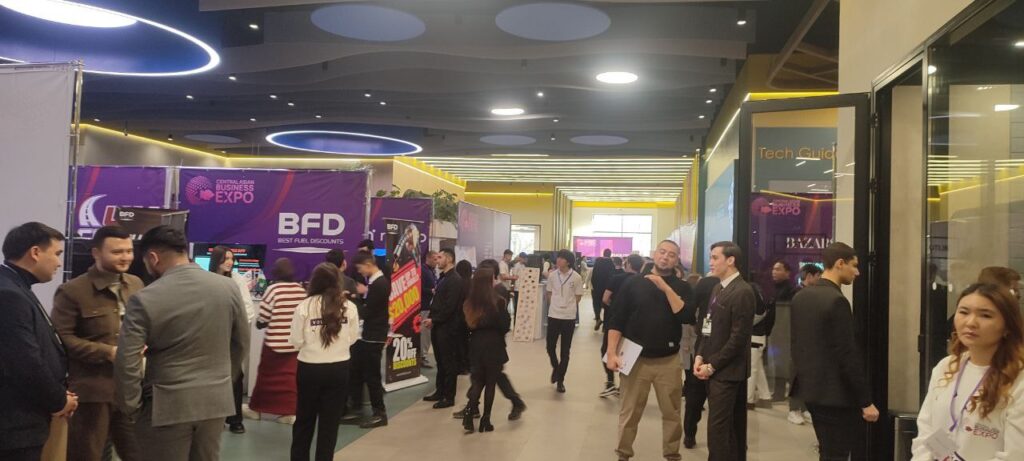
Kyrgyzstan recently hosted CABXPO-2025, an international business and logistics forum that highlighted the country’s growing role as a point of interaction between Central Asia and global logistics markets. Held with the participation of the High-Tech Park, the forum brought together more than 500 companies from across the region. The Park, operational for over a decade, has become a key pillar of Kyrgyzstan’s expanding digital economy. One of the most notable aspects of CABXPO-2025 was the presence of senior executives and owners from major American freight companies. Their visit to Bishkek provided a platform for exchanging industry expertise, recruiting talent, exploring digital logistics solutions, and attracting Kyrgyz dispatchers to work with the United States freight market. According to Chubak Temirov, Deputy Director of the High-Tech Park, the forum stood out for its inclusion of investors from Silicon Valley, who expressed interest in identifying promising IT startups in Kyrgyzstan and other Central Asian countries. Nevertheless, a large portion of attendees represented transport and logistics businesses, particularly those operating in the U.S. market. Temirov noted that long-haul truck driving remains one of the most in-demand professions among Kyrgyz labor migrants heading to the U.S. and Europe. In recent years, several Kyrgyz nationals have successfully established their own transport companies in the U.S., managing fleets of hundreds of trucks. These examples of social mobility have become an important source of motivation for younger generations. [caption id="attachment_41411" align="alignnone" width="300"] @TCA[/caption] At the expo, several American companies with Kyrgyz roots were actively recruiting. Many base their dispatch operations in Bishkek or Osh while managing freight movements across the U.S. Forum participants were able to enroll in two-month dispatcher training programs, with company representatives offering employment upon completion. Aidar Abitov, a representative of a U.S.-based freight carrier, told The Times of Central Asia that his company operates more than 600 trucks and continues to expand. While the physical transportation takes place in the U.S., the company’s dispatch and technical support operations are located in Bishkek. Employees undergo training in areas such as cargo booking, transport coordination, and working with brokers, becoming official members of the U.S. company without leaving Kyrgyzstan. English proficiency remains a key requirement. The company’s medium-term goal is to support a fleet of 1,000 trucks. The forum also drew attention to IT innovations from Kyrgyzstan and Uzbekistan. A team from Tashkent showcased real-time software for monitoring cargo and vehicle fleets. The system tracks truck locations, vehicle condition, and driver behavior, including signs of fatigue or drowsiness. According to the developers, their solutions are already in use by thousands of logistics companies in the U.S., managing tens of thousands of trucks. One of the developers, Azimjon Akhmadjonov, told The Times of Central Asia that participating in CABXPO was primarily an opportunity to exchange ideas and build professional networks. He highlighted the role of such events in connecting Kyrgyz and Uzbek professionals working in the United States and in helping form a cross-border community of experts. The Kyrgyz government has positioned forums such as CABXPO as...