Viewing results 1 - 6 of 2
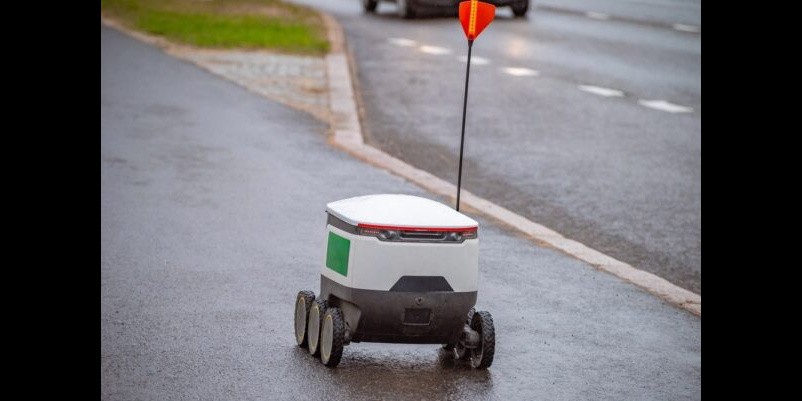
Astana has begun testing robot couriers for grocery deliveries in selected areas of the capital, allowing some residents to receive orders from Yandex Lavka without a human courier. Under the pilot project, customers within the service zone can select robot delivery when ordering through the Yandex Go app. The small autonomous vehicles travel along pavements before stopping outside the customer’s address, where the storage compartment can be opened using the app. The project is being run by Yandex Qazaqstan with the Astana city administration, the city police department and the municipal technology company Astana Innovations, according to an announcement by the Astana authorities. The robots use cameras and other sensors to identify pedestrians and obstacles, and travel at around 6 kilometers per hour. Initial street testing began on July 15, before the service was opened to regular Yandex Lavka customers later in the month. In a statement issued by the Astana city administration, Gizat Amirgali, chairman of Astana Innovations, said the trial would be used to assess the safety and reliability of autonomous deliveries in ordinary urban conditions, as well as customer responses to the service. Yandex has operated robot couriers in Russian cities for several years and is expanding their use. In March, the company said its robots had completed more than one million deliveries and traveled over two million kilometers in Russia, although the Astana project remains a small and geographically limited trial. The launch comes as Kazakhstan experiments with several forms of automated delivery and transport. A separate drone-delivery pilot, planned for Almaty, is intended to test the transport of food, medicines and everyday goods over short urban routes.
Kazakhstan plans to launch a pilot project for driverless taxis in the second half of 2026, accelerating the country’s push toward autonomous transport technologies and the digitalization of urban mobility. Preparations for the project were announced by Kazakhstan’s Ministry of Artificial Intelligence and Digital Development. According to the ministry, Yandex Qazaqstan and inDrive have already begun preparing the necessary infrastructure under government coordination. The project includes the construction of specialized garages, the import and configuration of autonomous vehicles, and the adaptation of software to Kazakhstan’s traffic regulations and local road conditions. “The project is being implemented through a ‘regulatory sandbox’ mechanism, which will allow technological solutions to be tested in controlled conditions and help form the necessary legislative framework,” the ministry said in a statement. Officials noted that Kazakhstan currently lacks a comprehensive regulatory framework governing autonomous transport, including standards related to safety, navigation, and traffic management. As a result, driverless vehicles will initially operate under continuous supervision by human operators, and the project will move forward only after testing is completed and infrastructure readiness is confirmed. Almaty is expected to become the primary city for the introduction of the service, although routes and traffic schemes for autonomous taxis are still being designed. Earlier, the administration of Astana also signed memorandums with Yandex Qazaqstan and inDrive regarding the launch of driverless taxi services in the capital in 2026. At the same time, Kazakhstan’s Ministry of Transport is developing separate regulations for the use of autonomous cargo trucks on inter-city highways. Kazakh authorities say they are drawing on international experience in deploying autonomous transport technologies. The ministry noted that Tesla is currently testing robotaxi services in Texas, while Waymo already operates commercial autonomous ride services in several U.S. cities. In China, similar projects are being developed by Baidu and Pony.ai.