
• KZT/USD = 0.00223
  • TJS/USD = 0.10860
  • UZS/USD = 0.00008
  • TMT/USD = 0.29850
  • KZT/USD = 0.00223
  • TJS/USD = 0.10860
  • UZS/USD = 0.00008
  • TMT/USD = 0.29850
  • KZT/USD = 0.00223
  • TJS/USD = 0.10860
  • UZS/USD = 0.00008
  • TMT/USD = 0.29850
  • KZT/USD = 0.00223
  • TJS/USD = 0.10860
  • UZS/USD = 0.00008
  • TMT/USD = 0.29850
  • KZT/USD = 0.00223
  • TJS/USD = 0.10860
  • UZS/USD = 0.00008
  • TMT/USD = 0.29850
  • KZT/USD = 0.00223
  • TJS/USD = 0.10860
  • UZS/USD = 0.00008
  • TMT/USD = 0.29850
  • KZT/USD = 0.00223
  • TJS/USD = 0.10860
  • UZS/USD = 0.00008
  • TMT/USD = 0.29850
  • KZT/USD = 0.00223
  • TJS/USD = 0.10860
  • UZS/USD = 0.00008
  • TMT/USD = 0.29850
07 November 2026

Viewing results 1 - 6 of 2

Yandex Go Outage Boosts Rival Taxi Services in Uzbekistan

The ripple effects of this month's Yandex Go outage are still being felt across Uzbekistan's taxi market. Rival ride-hailing services have reported a surge in bookings, while a senior government official has raised the prospect of further competition, revealing that a Chinese company plans to launch its own taxi app with a fleet of 5,000 vehicles. Uzbekistan's First Deputy Minister of Transport Mamanbiy Omarov disclosed the unnamed investor's plans in an October 16 interview with Spot, although further details were scant. On October 11, Yandex Go users in Uzbekistan experienced disruptions when trying to book rides. The app also operated intermittently in Kazakhstan and Kyrgyzstan. The outages coincided with a series of drone strikes targeting Yandex data centers in Russia. Between October 8 and 11, attacks affected company facilities in the Ryazan and Kaluga regions, followed by a strike in Vladimir. Server disruptions also hit delivery and other digital services used by people across Central Asia. Yandex Go accounted for approximately 85% of receipts issued through taxi aggregators in Uzbekistan in 2024, according to figures from the country's Tax Committee. Between October 11 and 13, orders through Uklon rose to two to three times normal levels, while MyTaxi, which operates only in Tashkent, reported 15 times its usual volume, according to Spot. MyTaxi said its own servers are located in Uzbekistan and outlined plans to retain the new passengers attracted during the disruption. It remains unknown where the Chinese operator's servers will be located or which companies will provide its technical infrastructure. These details would help establish how dependent the service might be on infrastructure outside Uzbekistan. Chinese automakers already operate in Uzbekistan, while companies from China are involved in developing the country's transport infrastructure. The proposed fleet could give the new operator a significant presence, particularly if it concentrates on Tashkent. However, Chinese companies have not always succeeded in challenging Yandex's position in Central Asia. Ride-hailing giant DiDi entered neighboring Kazakhstan in 2021 but withdrew in March 2022, less than a year after launching. The company cited changing market conditions and other challenges, although it did not explain its decision in detail.
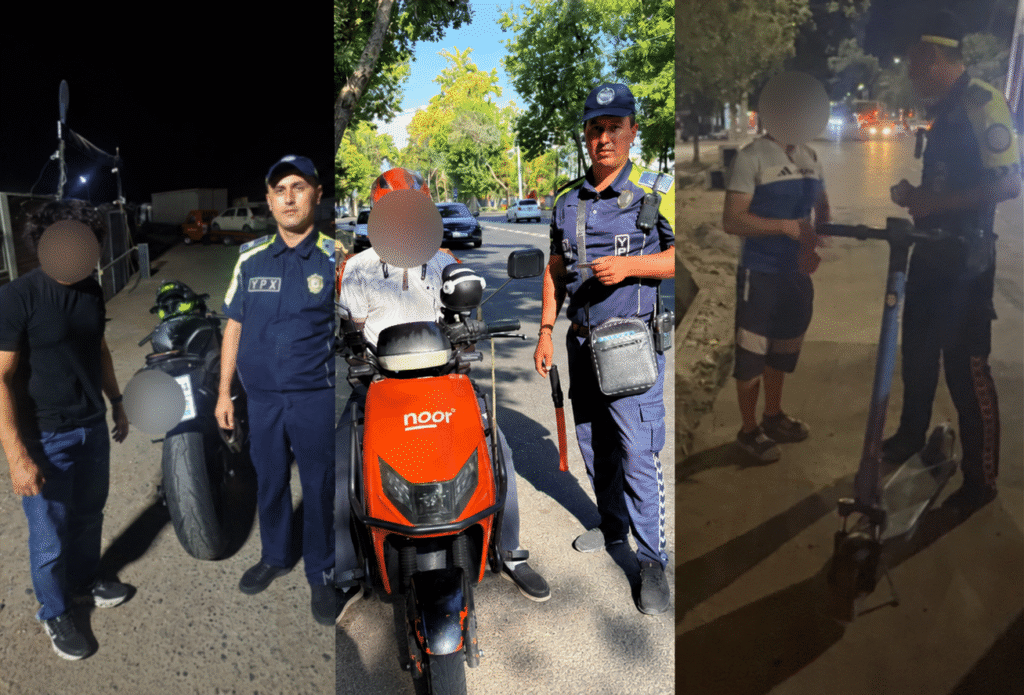

Uzbekistan Delivery Drivers Under Police Scrutiny: Why Tashkent Lacks Space for Mopeds

A delivery courier in Tashkent says police confiscated the electric bicycle he used to deliver orders after demanding a driver's license, leaving him unable to work. In an early October video appeal, the man said his bicycle could not exceed 25 kilometers per hour and that he did not ride on roads used by cars. Economist Otabek Bakirov published the video amid increasingly frequent police inspections of moped and scooter riders, including delivery workers. Police have justified the inspections by pointing to traffic accidents. Figures released in early October put the number of accidents involving mopeds and scooters in Uzbekistan this year at 563, leaving 89 people dead and another 488 injured. But how well are Tashkent's streets equipped to accommodate the vehicles used by thousands of delivery workers every day? Thousands of Violations and New Regulations According to the Road Traffic Safety Service of Uzbekistan's Ministry of Internal Affairs, inspectors recorded 4,312 violations involving moped and scooter riders in 2026, about 14 times the number recorded throughout 2025. The agency attributes accidents partly to riders lacking driver's licenses and having insufficient knowledge of traffic rules. However, the sharp increase in recorded violations also coincides with new requirements for riders and more frequent police inspections. In early October, Tashkent police publicly explained another incident involving a motorized two-wheeler. On the night of October 2, inspectors stopped a man on Amir Temur Street because, according to their account, his vehicle was obstructing traffic. It had a homemade attachment that restricted visibility, while the rider's clothing lacked reflective elements. He also did not have the required documents. Since October 2025, Uzbekistan has required mopeds and scooters to be registered. In January 2026, the country introduced a simplified A1 driver's license subcategory for mopeds and certain other low-powered vehicles. This can be obtained by passing theoretical and practical exams, without compulsory driving-school training. Drivers who hold Uzbekistan's national licenses in categories A, B, C, or D do not need a separate A1 license. A vehicle's legal classification depends on its technical specifications. For example, ordinary electric kick scooters are classified as personal mobility devices and do not require a license. Couriers and Delivery Services In 2025, the People's Democratic Party of Uzbekistan estimated that there were approximately 130,000 couriers across the country making deliveries on bicycles, mopeds, and scooters. For students, people from other regions, and those without steady employment, delivery work can offer a way to earn money quickly. However, couriers often have to cover vehicle expenses, documentation costs, and fines themselves. Amid the police inspections, Sardor Kadyrov, vice president of Yandex Uzbekistan, presented his own figures. According to his estimates, couriers have received fines totaling nearly 4.7 billion soums, approximately $390,000, since the beginning of 2026. Missing documents accounted for only about 8% of the violations he cited, which covered motorcycle, scooter, and moped riders. Kadyrov also claimed that mopeds were involved in fewer than 6% of all recorded traffic accidents. His figures cover mopeds alone, while the Road Traffic Safety...