Viewing results 1897 - 1902 of 2976
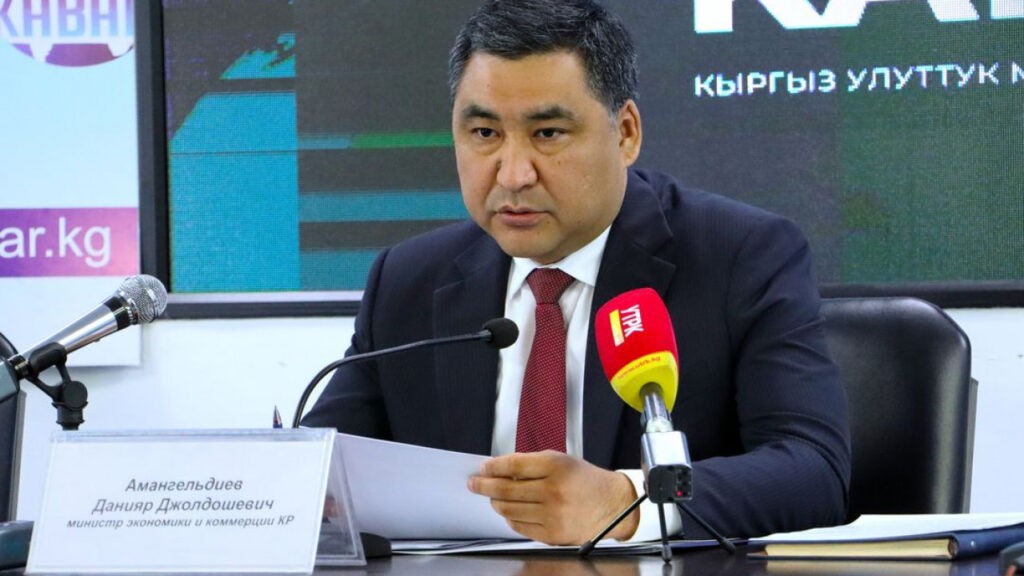
At a press conference on April 11, Minister of Economy and Commerce of the Kyrgyz Republic Daniyar Amangeldiev reported that amounting to $2.255 billion in January- February, Kyrgyzstan’s foreign trade turnover had increased by a 28.3% compared to the previous year. Kyrgyzstan’s exports increased by 18.4% to $307.5 million and imports rose by 30%, to $1.947 billion. At the beginning of the year, Kyrgyzstan’s trade with fellow members of the Eurasian Economic Union (EAEU) — Armenia, Belarus, Kazakhstan, and Russia — amounted to $482.7 million, illustrating a fall of 17.9% compared to the same period in 2023. Most of the country’s trade with the EAEU was with Russia (69.4%) and Kazakhstan (28.2%). Compared to January-February 2023, Kyrgyzstan’s trade with other countries grew 1.5-fold and reached $1.8 billion.
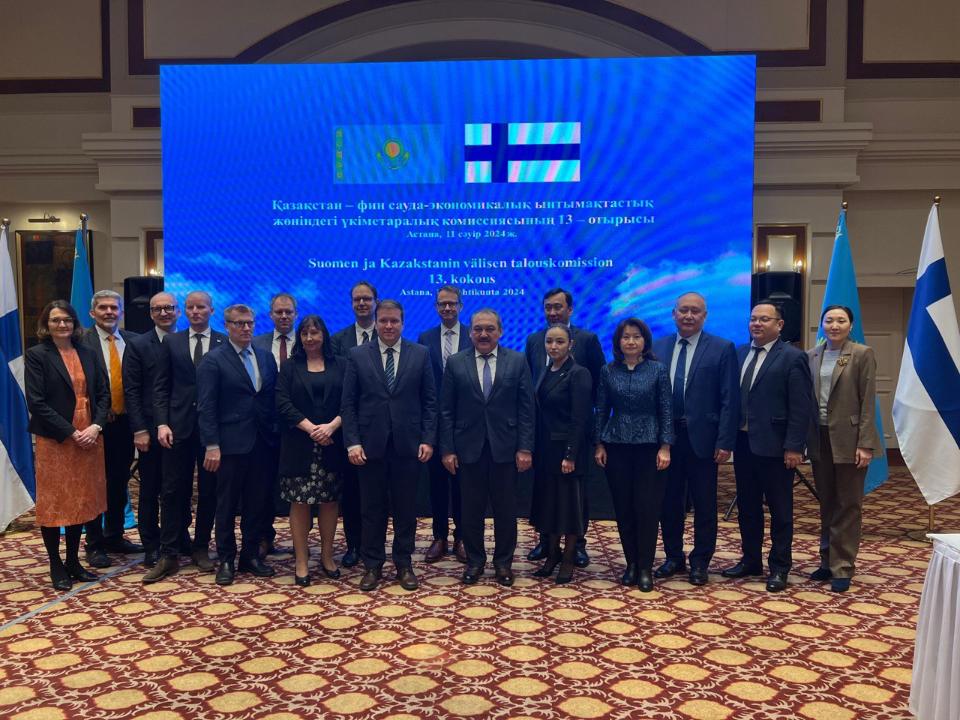
KTZ Express JSC (a subsidiary of Kazakhstan’s national railways company Kazakhstan Temir Zholy) and Finnish Nurminen Logistics Services Oy, have signed a Memorandum of Cooperation for container transportation from China to Finland along the Trans-Caspian International Transport Route (TITR) through the Kazakhstan. At a meeting of the Kazakh-Finnish intergovernmental commission on April 11 in Astana, Deputy Minister of Transport of Kazakhstan Maksat Kaliakparov emphasized the strategic importance of cooperation and development of transit opportunities between the two countries regarding trade between China and Southeast Asian countries and the European Union: “Kazakhstan is the main link in the TITR, or the Middle Corridor, and has already shown potential as an alternative to East – West routes. This is evidenced by an 86% increase in cargo transhipment through the seaports of Aktau and Kuryk, the volume of which rose to 2.8 million tons. The TITR is a ‘green-light’ corridor. Today, the cargo transit time has been reduced from 23 to 14-18 days, including 5 days in Kazakhstan. In 2023, the volume of cargo transportation along the TITR increased by 65%.” To illustrate the potential for cargo transportation between Kazakhstan and the EU, Kaliakparov reported a steady rise in the transportation of cargo through Kazakhstan along the China-Finland-China route. Compared to the previous year, in 2023, the volume of cargo transported by rail increased by 25% (4.3 million tons), and by road, by 14% (7.3 million tons).
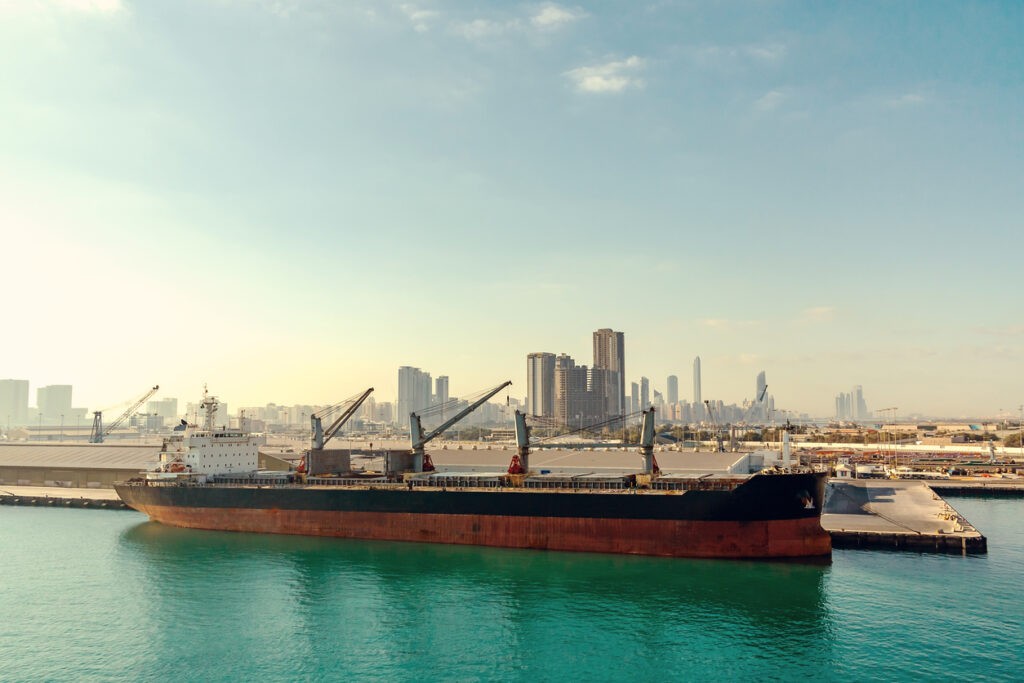
The Association of Kazakhstan Freight Railway Carriers is reporting that an Emirati company, AD Ports, is planning to build a new port and economic zone. The area that the company has identified for the zone is located to the south of the Iraqi city of Basra; if the project goes ahead, it will be an alternative to Egypt's Suez Canal in transcontinental freight shipping. "AD Ports (an Abu Dhabi-based port and logistics operator) has signed a preliminary agreement with the state-owned company managing Iraqi ports to establish a joint venture," commented the Kazakh freight association. According to them, AD's plan, centering on the new port called Grand Faw, is to create a corridor for Asian-European trade, bypassing the Egyptian city of Suez. The Grand Faw Port is set to become one of the largest in the Middle East, with terminals for handling containerized, bulk and liquid cargo. The corridor is expected to be ready by 2038. In Kazakhstani it is believed that the project is promising, but extremely costly. "We should not forget that all land logistics corridors are more costly than sea corridors. That's why Kazakhstan has such problems with logistics -- it has no access to the sea. Even if the Suez Canal is closed and the Panama Canal shoals [becomes shallow], sea transport will be more profitable. Yes, alternatives are needed. However, I would not count heavily on the new project," economist Andrei Chebotarev told The Times of Central Asia. Chebotarev referenced Kazakhstan's plan to build the North-South transport corridor. A new logistics route alternative to Suez would be a good addition; however, so far the UAE hasn't included Kazakhstan in its plans. Due to the recent attacks by Yemen's Houthi rebels on vessels in the Red Sea, the volume of maritime traffic through the Suez Canal has decreased, which in turn has increased demand for freight transport via multimodal routes.
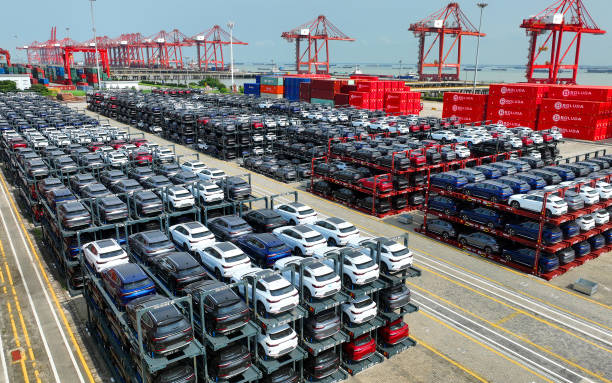
According to China’s customs statistics, in January-February 2024, Kyrgyzstan imported cars from China worth $510.3 million. Rising from 43rd place in 2023, Kyrgyzstan was ranked the world’s 6th largest buyer of Chinese cars at the beginning of this year. Only 5 countries exceeded Kyrgyzstan’s expenditure on Chinese cars in the same period: Russia, $1.5 billion; Belgium, $1.1 billion; UK, $1 billion; Mexico, $660 million; and Brazil, $590 million. As reported by Kyrgyzstan’s National Statistics Committee, in 2023 Kyrgyzstan imported 79,131 cars worth around $1.2 billion from China, an almost 45-fold increase compared to the 1,773 cars imported in 2022. One of the key reasons for the recent steep rise in Kyrgyzstan’s importation of Chinese cars is the war in Ukraine. As a result of Western sanctions, China has fast become Russia’s main supplier of new cars, a large percentage of which are re-exported to the country by Central Asia, especially Kyrgyzstan.
The World Bank has announced funding of $30 million to help boost the productivity and climate resilience of Kyrgyzstan’s dairy and horticulture agri-food clusters. The project will be complemented by a $5 million grant from the Global Agriculture and Food Security Program. “Recognizing agriculture as a cornerstone of the Kyrgyz Republic's economy, the World Bank prioritizes the sector alongside energy and water in its new 2024-2028 Country Partnership Framework. The new project marks the beginning of a series of initiatives designed to support the Cabinet of Ministers' vision for a modernized, competitive, and climate-resilient agricultural sector," reported Tatiana Proskuryakova, World Bank Regional Director for Central Asia. Running until 2029, the initiative will help producers, processors, and other value chain participants to improve the quality and volume of their produce, access to markets through investment loans, training and capacity building, seed system enhancement, breeding, and information management. It will also focus on enhancing climate adaptation and mitigation through the promotion of climate-smart technologies as well as the employment of digital technology for accessing market information. The project will directly support 8,000 beneficiaries including individual farmers and producers, producer groups, small and medium processors, and other value chain participants in the agri-food clusters of dairy and horticulture. Indirect beneficiaries, numbering 20,000, will comprise farming communities and households of loan and training recipients, in addition to members of broader rural communities who will be afforded better jobs and opportunities to generate income.
Due to government controls, Kazakhstan currently charges the lowest prices for motor fuel compared to other members of the Eurasian Economic Union, including Armenia, Belarus, Kyrgyzstan, and Russia. To maintain the balance of fuel for the domestic market, as well as minimize the risks of ‘gray’ fuel exports, the Ministry of Energy of Kazakhstan has prepared a draft to increase prices for AI-92 and AI-93 gasoline and diesel fuel to be levied in accordance with the origin of vehicles. The proposed new price for AI-92 and AI-93 gasoline in Kazakhstan is 245 tenge per litre. However, for drivers holding licenses and vehicle registration certificates issued in Kazakhstan, the price will remain unchanged, at 205 tenge per litre, if no more than 300 litres are bought per day. Likewise, the price of diesel will remain at 295 tenge per litre for locals but raised to 315 tenge per litre for non-residents of Kazakhstan. In a statement issued on 11 April, the Ministry of Energy gave assurance that the country currently has sufficient motor fuel to satisfy the domestic market. Now published, the draft is open for public discussion.