• KGS/USD = 0.01144 0%
  • KZT/USD = 0.00204 0%
  • TJS/USD = 0.10439 0%
  • UZS/USD = 0.00008 0%
  • TMT/USD = 0.28490 0%
  • KGS/USD = 0.01144 0%
  • KZT/USD = 0.00204 0%
  • TJS/USD = 0.10439 0%
  • UZS/USD = 0.00008 0%
  • TMT/USD = 0.28490 0%
  • KGS/USD = 0.01144 0%
  • KZT/USD = 0.00204 0%
  • TJS/USD = 0.10439 0%
  • UZS/USD = 0.00008 0%
  • TMT/USD = 0.28490 0%
  • KGS/USD = 0.01144 0%
  • KZT/USD = 0.00204 0%
  • TJS/USD = 0.10439 0%
  • UZS/USD = 0.00008 0%
  • TMT/USD = 0.28490 0%
  • KGS/USD = 0.01144 0%
  • KZT/USD = 0.00204 0%
  • TJS/USD = 0.10439 0%
  • UZS/USD = 0.00008 0%
  • TMT/USD = 0.28490 0%
  • KGS/USD = 0.01144 0%
  • KZT/USD = 0.00204 0%
  • TJS/USD = 0.10439 0%
  • UZS/USD = 0.00008 0%
  • TMT/USD = 0.28490 0%
  • KGS/USD = 0.01144 0%
  • KZT/USD = 0.00204 0%
  • TJS/USD = 0.10439 0%
  • UZS/USD = 0.00008 0%
  • TMT/USD = 0.28490 0%
  • KGS/USD = 0.01144 0%
  • KZT/USD = 0.00204 0%
  • TJS/USD = 0.10439 0%
  • UZS/USD = 0.00008 0%
  • TMT/USD = 0.28490 0%

Viewing results 1963 - 1968 of 2976

Central Asian Energy Trading May Soon Include Iran

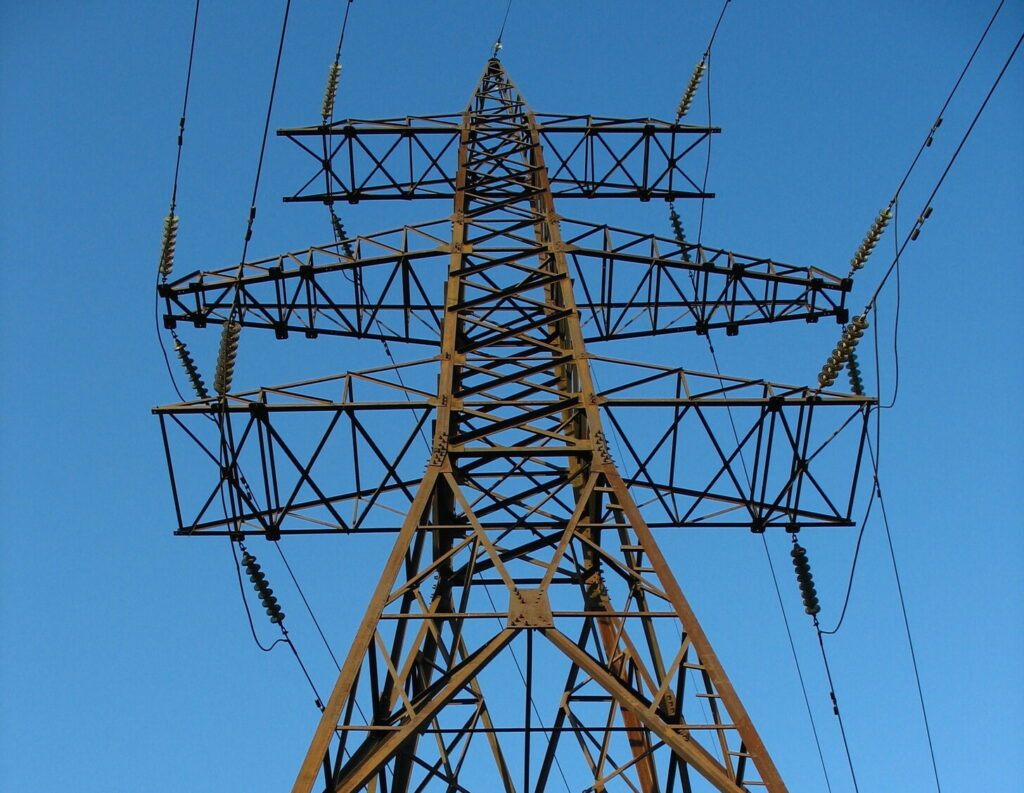
According to the Iran.ru news agency, Iranian Minister of Energy Ali-Akbar Mehrabian has said that his country is open to trading electricity with Turkmenistan, Tajikistan and Uzbekistan. Iran currently exchanges electricity with the majority of its neighbors, according to Mehrabian, who made the statement in Tehran during a meeting with Uzbek Minister of Energy Zhorabek Mirzamakhmudov on March 4. Mehrabian paid particular attention to the growth of cooperation between Iran, Turkmenistan, Uzbekistan and Tajikistan in the area of electricity markets and trading. As part of the Unified Energy System of Central Asia (UESCA), which was established during the Soviet era, the energy systems of Kyrgyzstan, Kazakhstan, and Uzbekistan currently operate separately. Turkmenistan exited the system in 2003, which was a direct result of Uzbekistan’s refusal to allow electricity from Turkmenistan to transit across Uzbek grid infrastructure. Tajikistan was automatically disqualified from the UESCA when Uzbekistan unilaterally withdrew following a significant accident in Tajikistan’s energy system in November 2009 -- a catastrophe that also led Kazakhstan to accuse Tajikistan in that same month of stealing power from the grid. In 2018, the regional system was rebooted with the return of Uzbekistan to UESCA. In 2019 Tajikistan began work to rejoin the unified energy grid ring of Central Asia, with financial assistance from the Asian Development Bank. Tajikistan’s Ministry of Energy declared last summer that the country would like to become a member of the regional system by the end of 2023, but little progress has been made up to the present. One positive sign of note is that since 2018, Tajikistan has been supplying electricity to some districts of Uzbekistan's Surkhandarya region -- because those districts aren't connected to the Uzbek central power distribution grid.

Kazakhstan Increases Furniture Exports

According to a report by the Kazakh Ministry of Industry and Construction, in 2023, Kazakhstan exported furniture valued at $13.7 million; an increase of 31% since the previous year. The prime market for Kazakh furniture is found in former Soviet countries and in 2023, to meet demand, domestic enterprises produced goods worth a total of 82.6 billion tenge; 28% more than in 2022. The most popular product was kitchen furniture, with an increase in volume of 50.4%, followed by wooden office furniture with an increase in volume of 5.4%. In comparison to 2022, the importation of furniture last year dropped by 5.3%; an indication of Kazakhs’ increasing preference for locally made products. In 2023, the industry generated a total of $537.4 million and invested of 17 billion tenge in production. With statistics showing a 3.9-fold increase compared to 2022, the future of Kazakhstan’s furniture manufacturers looks comfortable.

Uzbekistan-China Trade on the Rise

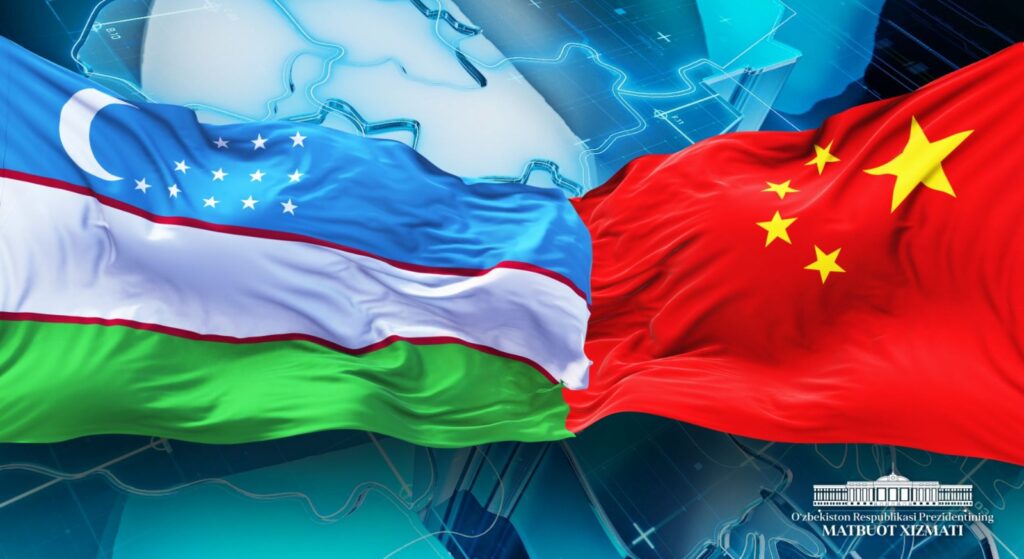
Uzbekistan and China are poised to increase bilateral trade to $20 billion a year. The statement, quoted by the news portal Novosti Uzbekistana (nuz.uz) was given by given by Obid Khakimov, director of Uzbekistan’s Center for Economic Research and Reforms (CERR) at the conference ‘Uzbekistan and China: promoting mutually beneficial cooperation for the benefit of the two countries’ peoples.’ In 2023, China ranked top amongst Uzbekistan's partners in trade, with a share of 22%. Over the past 7 years, Uzbekistan’s trade turnover with China has increased almost threefold from $4.8 billion to $13.7 billion; exports have risen from $2 billion to $2.5 billion, and imports from $2.7 billion to $11.3 billion. The analysis by the CERR illustrates Uzbekistan’s potential to increase its exports to China by substituting products currently sourced in large volumes from third world countries. In the main, these comprise fruit, vegetables and other foods, textiles, copper, and chemicals. Uzbekistan is especially interested in collaborative projects with China for the deep processing of locally mined strategic raw materials, and the implementation of socially important programs based on partnerships between public and private sectors. The early construction of the China-Kyrgyzstan-Uzbekistan railway, which by cutting the distance travelled by 900km, will reduce the delivery time of cargo by 7-8 days, is another area of key importance to Uzbekistan. According to Uzbekistan’s Statistics Agency, in 2023, China’s contribution of 25.6% was the largest of the total sum of foreign investments and loans in Uzbekistan. In comparison, the contribution from Russia was 13.4%; Saudi Arabia, 7.9%; Turkey, 6.4%; the United Arab Emirates, 5.8%, and Germany, 4.3%.

Kazakh-European Proposal for CRM and Green Hydrogen Strategy

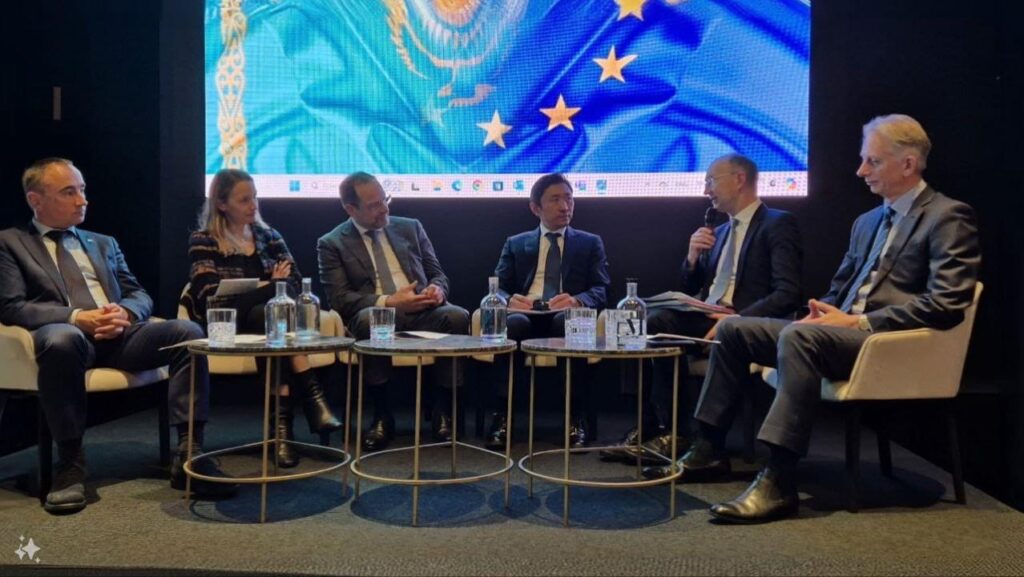
Some 60 high-ranking officials from the European Union and representatives of the EU business community attended a meeting on March 5th organized by the Kazakh Embassy in Belgium. A high-level event, its key focus was Kazakh-European cooperation on critical raw materials (CRM), green hydrogen and batteries. In November 2022, Kazakhstan and the European Union signed a Memorandum of Understanding on sustainable raw materials, batteries, and renewable hydrogen value chains, and adopted a Roadmap for its implementation in 2023. At the meeting on March 5th, Bolat Akchulakov, energy advisor to the president of Kazakhstan, emphasized the importance of the Kazakhstan-EU Memorandum of Understanding for strategic partnership in achieving common objectives of green transition. Luc Devigne, deputy managing director for Eastern Europe and Central Asia of the European External Action Service (EEAS), praised the development of the Kazakhstan-EU relationship as a “success story of cooperation.” Referencing the EU’s readiness to further strengthen this partnership, he stated that it would ensure both the sustainability of supply chains and the achievement of common goals regarding climate change. As part of the event, Kazakhstan’s national company Kazakh Invest presented a report on CRM at its Brussels office. Kazakhstan produces 19 of the 34 critical raw materials listed by the European Union. Kazakh manufacturers currently supply the EU with beryllium, tantalum, and titanium but have the potential to further exploit the country's cache of other raw materials. By establishing plants to process reserves of nickel, cobalt, manganese, and lithium, Kazakh enterprises will be able to produce batteries, essential for electric vehicles.

China to Send Container Trains From Jiangsu Through Kazakhstan

According to an agreement between transportation companies KTZ Express and Jiangsu International Rail Freight Express, container transport trains will commence from the Chinese province of Jiangsu through Kazakhstan. The state railway company Kazakhstan Temir Zholy's (KTZ) press services reports that the document was signed in the Chinese city of Nanjing between KTZ and Jiangsu province's largest state-owned commercial group SOHO Holdings Group. The agreement between KTZ Express and Jiangsu International Rail Freight Express focuses on strategic cooperation. The companies have agreed to jointly organize and dispatch container trains through Kazakhstan, specifically along the Trans-Caspian International Transport Route (TCITR). KTZ already agreed earlier in 2024 to organize and transit 3,500 container trains from Xi'an, Jiangsu, Beijing, Zhengzhou and Chongqing through Kazakhstan. Earlier this year, Yuxinou and KTZ organized a joint TCITR service from Nanjing to Apsheron in Azerbaijan. The average transit time is no more than 18 days. Jiangsu is home to 85 million people. The province ranks second in China in terms of economic development. Its 2023 gross domestic product (GDP) was $1.8 trillion, and province accounts for 15% of the country's total industry.

Germany Asks Kazakhstan to Double Oil Supplies Via Pipeline

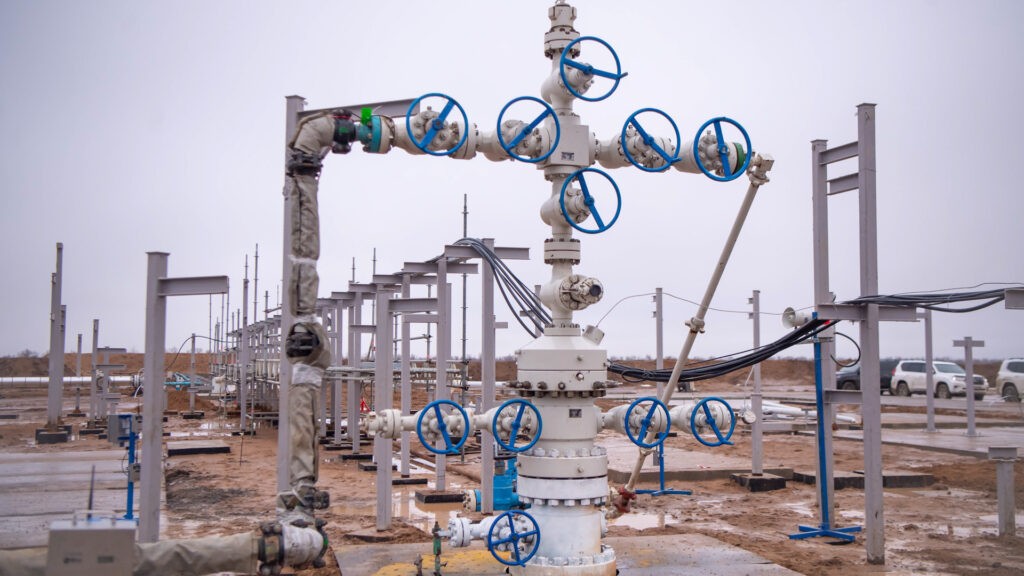
German companies want to receive more oil from Kazakhstan through the Druzhba (Friendship) pipeline. The discussion focuses on increasing supplies almost twofold, according to Kazakhstan's Minister of Energy Almasadam Satkaliyev. According to him, Kazakhstan has already received a request from the German side to increase supplies to two million tons per year. "We have already started preliminary consultations with our colleagues on the implementation of this transit this year," said Satkaliyev. Earlier, state pipeline operator KazTransOil reported that, according to last year's results, 993,000 tons of crude were delivered through the Druzhba pipeline. This year, flow volumes are planned to increase to 1.2 million. At the same time, Germany is still asking for an increase in oil-product export volumes. Until recently, the majority of oil exported from Kazakhstan to Germany was delivered by sea. Vessels were loaded with fuel at the Caspian Pipeline Consortium (CPC) terminal near Novorossiysk. The tankers were then sent to Trieste, Italy, where there is a terminal for receiving crude oil into the Transalpine (TAL) pipeline, from where the black gold is shipped to Germany. Every day, about 1.3-1.4 million barrels of oil per day flow through the CPC. DE International Kasachstan reports that Kazakhstan supplied Germany with 10% more oil in 2022 year-on-year, supplying it with 8.3 million tons of crude. The European Union (EU) has not imposed restrictions on the supply of Russian oil through the Druzhba pipeline, but the German side itself refused to import fuel from Russia early last year. Currently, Russian oil received through the Druzhba pipeline is delivered only in the southern direction to Hungary, Slovakia, and the Czech Republic. As the Times of Central Asia reported earlier this week, Kazakhstan has extended its voluntary reduction in overall oil production by 82,000 barrels per day until the end of June 2024.