• KGS/USD = 0.01144 0%
  • KZT/USD = 0.00204 0%
  • TJS/USD = 0.10439 0%
  • UZS/USD = 0.00008 0%
  • TMT/USD = 0.28490 0%
  • KGS/USD = 0.01144 0%
  • KZT/USD = 0.00204 0%
  • TJS/USD = 0.10439 0%
  • UZS/USD = 0.00008 0%
  • TMT/USD = 0.28490 0%
  • KGS/USD = 0.01144 0%
  • KZT/USD = 0.00204 0%
  • TJS/USD = 0.10439 0%
  • UZS/USD = 0.00008 0%
  • TMT/USD = 0.28490 0%
  • KGS/USD = 0.01144 0%
  • KZT/USD = 0.00204 0%
  • TJS/USD = 0.10439 0%
  • UZS/USD = 0.00008 0%
  • TMT/USD = 0.28490 0%
  • KGS/USD = 0.01144 0%
  • KZT/USD = 0.00204 0%
  • TJS/USD = 0.10439 0%
  • UZS/USD = 0.00008 0%
  • TMT/USD = 0.28490 0%
  • KGS/USD = 0.01144 0%
  • KZT/USD = 0.00204 0%
  • TJS/USD = 0.10439 0%
  • UZS/USD = 0.00008 0%
  • TMT/USD = 0.28490 0%
  • KGS/USD = 0.01144 0%
  • KZT/USD = 0.00204 0%
  • TJS/USD = 0.10439 0%
  • UZS/USD = 0.00008 0%
  • TMT/USD = 0.28490 0%
  • KGS/USD = 0.01144 0%
  • KZT/USD = 0.00204 0%
  • TJS/USD = 0.10439 0%
  • UZS/USD = 0.00008 0%
  • TMT/USD = 0.28490 0%

Viewing results 1975 - 1980 of 2976

Kazakhstan Opens Al-Farabi Innovation Hub in Riyadh

A joint project between Kazakhstan and Saudi Arabia, the Al-Farabi Innovation Hub has newly opened in Riyadh. As reported on March 5th by the Kazakh Ministry of Digital Development, Innovation and Aerospace Industry, the role of the Hub is to attract talented entrepreneurs and innovative start-ups from Kazakhstan to Saudi Arabia and support their relocation and growth in the region by providing seed investment from the Tumar Venture Fund as well as incubation and acceleration programs. “Kazakhstan already has experience in growing start-ups,” explained Kazakh minister Bagdat Musin. “Five years ago, we launched the Astana Hub, which has become one of the leading technology parks in Central Asia. We have also engaged global partners such as Google, Draper University, StartX, Microsoft, and the World Bank, to provide access to the best cutting-edge solutions. I believe that the opening of the Hub will allow Kazakhstan and Saudi Arabia to strengthen ties and make a qualitative contribution to economic development.” The Hub’s General Director Aslan Sultanov went on to state, “The Al-Farabi Innovation Hub will complement the infrastructure of the venture industry in Kazakhstan, giving start-ups from Central Asia and the Caucasus the opportunity to expand into Middle East and North Africa (MENA) markets, which comprise almost 493 million people.” The new Hub follows the launch on March 1st, of the Qaz Steppe Innovation Hub in Dubai to promote Kazakh IT services to international markets.

Kazakhstan and Russia to Harness Transit Potential

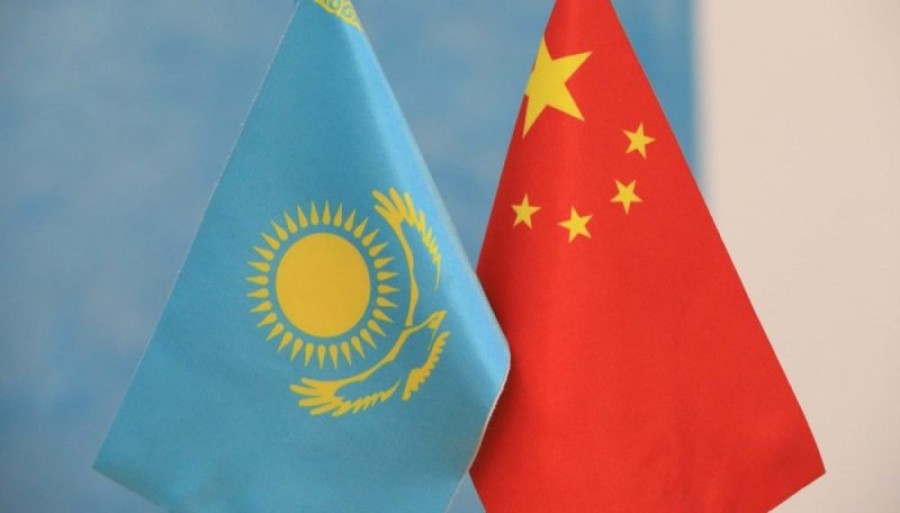
Kazakhstan’s Prime Minister Olzhas Bektenov travelled to Moscow to attend a meeting on March 4th with the Prime Minister of the Russian Federation, Mikhail Mishustin. High on the agenda, was the North-South international transport corridor and in particular, the section of railway interlinking Russia, Kazakhstan, Turkmenistan, and Iran. Russia and Kazakhstan are connected by the longest land border in the world spanning over 7,500 km. Noting that “the most important transit routes in Eurasia run through our countries", the Russian prime minister highlighted the huge potential for cooperation in transport and logistics. Late in February, Kazakhstan’s Deputy Minister of Transport, Maksat Kaliakparov reported on plans by the railway administrations of Kazakhstan, Russia, and Turkmenistan to launch a joint venture to improve services and reduce cargo delivery time along the North–South Transport Corridor. In 2023 the volume of cargo transported via this route amounted to 2.1 million tons; an increase of 4% compared to 2022. By 2027, the transport potential of the entire corridor rise to between 6 - 10 million tons per year. Mr Bektenov furthermore stated that Kazakh and Russian business entities are currently implementing 135 projects worth $26.5 billion. To maintain progress and facilitate transit between the two countries, the Kazakh prime minister stressed the need to speed up work on checkpoints on the Kazakh-Russian border. According to plans, 29 of the 30 checkpoints are due to be modernized by 2027.

China Poised to Increase Imports of Agricultural Produce from Kazakhstan

In recent years, Kazakhstan has seen a steady growth in China’s demand for its organic and environmentally friendly agricultural produce. As reported at a meeting on March 4th between Kazakhstan’s Minister of Agriculture, Aidarbek Saparov and Chinese Ambassador to Kazakhstan Zhang Xiao, in 2023, exports almost doubled to $1.01 billion. The Kazakh Ministry of Agriculture relayed the ambassador’s assurance that the importation of meat, grain, and other agricultural products from Kazakhstan is set to continue. The minister stated that Kazakhstan has the potential to increase its export of grain to China to two million tons per annum and asked the ambassador for assistance in accelerating the signing of bilateral agreements on the export of a wider range of agricultural products including chilled meat, poultry, offal, beet pulp, and potatoes. Saparov also requested assistance in accrediting new Kazakh enterprises to export livestock produce to China. In early February China lifted restrictions, imposed since 2005, on the import of poultry Kazakhstan. A ban on the import of meat, resulting from concerns over foot-and-mouth disease and in place since 2022, was similarly overturned. The lifting of the restrictions allows exports of frozen beef and pork from the south-eastern regions of Kazakhstan to resume.

Turkmenistan and Afghanistan Discuss Collaborative Projects

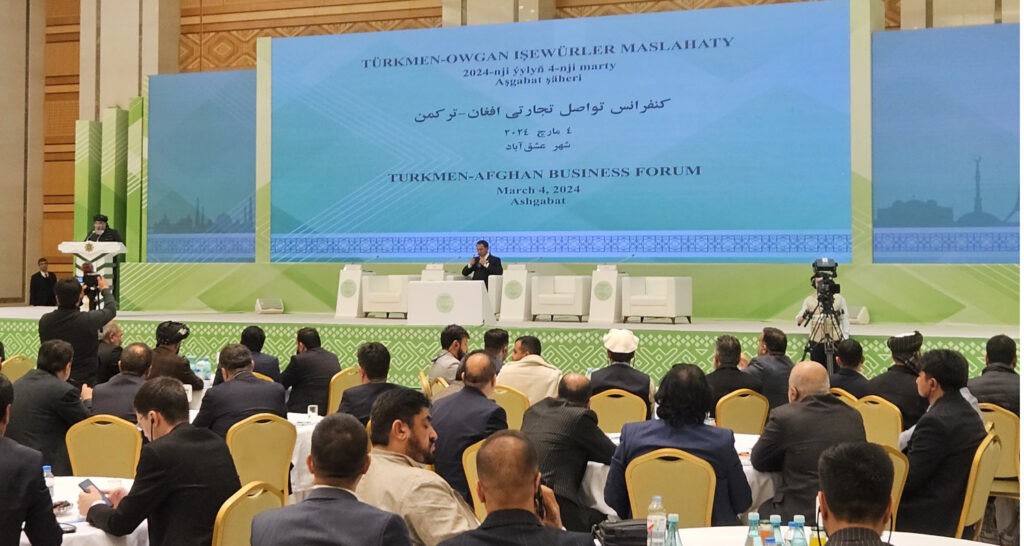
On March 4th, a large Afghan delegation led by Nooruddin Azizi, Minister of Industry and Trade of Afghanistan, participated in a Turkmen-Afghan business forum and exhibition of Afghan goods in Ashgabat. Issues discussed included Turkmen-Afghan partnerships in trade, industry, agriculture, transport, communications, and electricity supply. Also on the agenda were oil and gas which alongside textiles, comprise Turkmenistan’s main exports to Afghanistan. As reported by the Turkmen Foreign Ministry, special attention was paid to the construction of the Turkmenistan-Afghanistan-Pakistan-India (TAPI) gas pipeline and the Turkmenistan-Afghanistan-Pakistan (TAP) high-voltage power transmission line. The group also focused on the establishment of transport routes and in particular, railways from Turkmenistan to Afghanistan. Azizi emphasized the desire of the Afghan business sector to further increase trade with Turkmenistan, develop Afghanistan’s infrastructure, and exploit the transit potential of both countries. Afghan TOLOnews, quoting Mergen Gurdov, head of the Chamber of Commerce and Industry of Turkmenistan, reported that in 2023, trade between Turkmenistan and Afghanistan generated $457 million and this January alone, $46 million. The agro-industrial sector was cited as a promising field for Turkmen-Afghan cooperation, with the Turkmen Foreign Ministry raising the issue of transboundary water resources. Turkmenistan insists that the use of water involves cooperation with neighboring countries, conducted in accordance with international law, and based on principles of mutual respect and in the spirit of traditional good neighborliness. Afghan Minister Azizi pledged that regarding the use of transboundary water resources and construction of water facilities to further the prosperity of his people, Kabul will honour principles of mutual consent and respect for neighboring countries, especially Turkmenistan, with whom Afghanistan has long maintained an amicable relationship. The issue came to the fore last month following Afghanistan’s announcement that construction has begun on the second phase of the Qosh Tepa Canal; a project prioritized by the Taliban- led government since early 2022. By diverting water from the Amu Darya River, the canal will convert 550,000 hectares of desert into farmland in northern Afghanistan, but could also have an adverse effect on agriculture in downstream Uzbekistan and Turkmenistan.

Kazakhstan to Extend Voluntary Oil-Production Cut at 82,000 Barrels Per Day

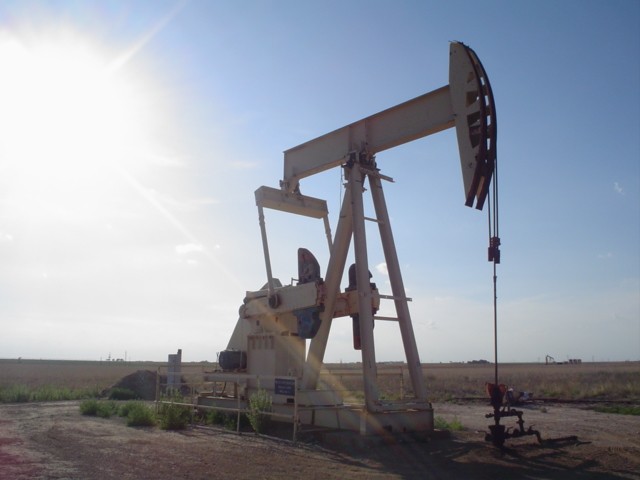
Kazakhstan has decided to extend the voluntary reduction in oil production through the end of the second quarter of 2024 to preserve the supply-demand balance and ensure the sustainability of oil markets, according to a statement from representatives of the Kazakh Ministry of Energy. Under this prolonged initiative, oil production in Kazakhstan will amount to 1.468 million barrels per day (bpd) until the end of June 2024. Subsequently, these volumes will be returned in order to maintain market stability. Previously, Kazakhstan had already agreed to a similar initiative: in April last year, it undertook a voluntary reduction in oil production by 78,000 bpd. The extension of additional voluntary oil production cuts was also announced by almost all OPEC+ member countries. The output restrictions, which came into effect on January 1 and amount to about 2 million barrels per day, will remain in effect until the end of June. Saudi Arabia announced a further extension to its voluntary oil production cut of one million barrels per day which was initiated last July. By June 2024 of the restriction period, Saudi Arabia's oil production will be at its lowest level since 2011 - 9 million barrels per day. Russia also announced the prolongation of additional oil production cuts. In the second half of the year, Russia intends to limit its production and exports by a total of 471,000 barrels per month. In April, Russia will reduce production by 350,000 barrels and exports by 121,000 barrels; in May by 400,000 barrels and 71,000 barrels, respectively; and in June only production will be reduced by 471,000 barrels for the month. The voluntary extension of output restrictions was also supported by other member states, namely the UAE, which reduced daily oil production by 163,000 barrels. Kuwait will hold its oil production lower by 135,000 barrels per day; Algeria reduced oil production by 51,000 barrels per day, and Oman by 42,000. According to the Iraqi News Agency, Iraq will withhold production to the tune of 220,000 bpd in the first half of 2024, and targets a production rate at the end of June 2024 at four million bpd. In January of this year, the country's oil production, according to OPEC data, amounted to 4.194 million bpd.

Foreign IT Companies Earned Over $50 Million in Uzbekistan Last Year

Foreign IT companies who pay tax in Uzbekistan almost doubled their profits last year. That's according to statistical data published by the Uzbek State Tax Committee. In 2023 their total profit amounted to $50.8m. There are currently 57 foreign firms providing internet and IT services in the country. In 2023 alone the list grew by 17 -- including the Singaporean company TikTok PTE LTD. TikTok has been blocked in Uzbekistan since July 2021 for violating the law on personal data, which requires that data servers must be located in Uzbekistan. Compared to 2022, the taxes paid by foreign IT companies to the Uzbek budget increased by 56.2%. The lion's share of payments falls on tech giants such as Facebook parent company Meta ($2.114m), Google ($1.6m), Apple ($1m) and Amazon ($176,000). Booking.com, Netflix, Xsolla, Zoom, Yandex and Adobe Systems make up the top ten. Foreign companies providing internet services in Uzbekistan have paid taxes in the country since 2020. Blogger and co-founder of the business publication Spot.uz Temurmalik Elmuradov notes that recently in Uzbekistan "the digital market is growing, and people's consumer habits are changing. There are more people willing to pay for movies and TV series rather than search for them on free online [movie sites]." In February, president Shavkat Mirziyoyev received a presentation on key strategic reforms for 2024, according to which over the past 10 years the volume of services in the telecom sector has grown 6.5 times -- and the coverage of the population with mobile internet has risen to 98%. As part of the reforms, among other things, there is a plan to give bandwidth providers direct access to the international internet channel. That means that an independent regulator of telecommunications should appear in the country by September 1. As of today, almost all Uzbek internet providers get access through the International Packet Switching Center of Uzbektelecom.