• KGS/USD = 0.01144 0%
  • KZT/USD = 0.00217 0%
  • TJS/USD = 0.10456 0%
  • UZS/USD = 0.00008 0%
  • TMT/USD = 0.28571 0%
  • KGS/USD = 0.01144 0%
  • KZT/USD = 0.00217 0%
  • TJS/USD = 0.10456 0%
  • UZS/USD = 0.00008 0%
  • TMT/USD = 0.28571 0%
  • KGS/USD = 0.01144 0%
  • KZT/USD = 0.00217 0%
  • TJS/USD = 0.10456 0%
  • UZS/USD = 0.00008 0%
  • TMT/USD = 0.28571 0%
  • KGS/USD = 0.01144 0%
  • KZT/USD = 0.00217 0%
  • TJS/USD = 0.10456 0%
  • UZS/USD = 0.00008 0%
  • TMT/USD = 0.28571 0%
  • KGS/USD = 0.01144 0%
  • KZT/USD = 0.00217 0%
  • TJS/USD = 0.10456 0%
  • UZS/USD = 0.00008 0%
  • TMT/USD = 0.28571 0%
  • KGS/USD = 0.01144 0%
  • KZT/USD = 0.00217 0%
  • TJS/USD = 0.10456 0%
  • UZS/USD = 0.00008 0%
  • TMT/USD = 0.28571 0%
  • KGS/USD = 0.01144 0%
  • KZT/USD = 0.00217 0%
  • TJS/USD = 0.10456 0%
  • UZS/USD = 0.00008 0%
  • TMT/USD = 0.28571 0%
  • KGS/USD = 0.01144 0%
  • KZT/USD = 0.00217 0%
  • TJS/USD = 0.10456 0%
  • UZS/USD = 0.00008 0%
  • TMT/USD = 0.28571 0%

Viewing results 2101 - 2106 of 3223

Digital Almaty Forum To Be Held In February

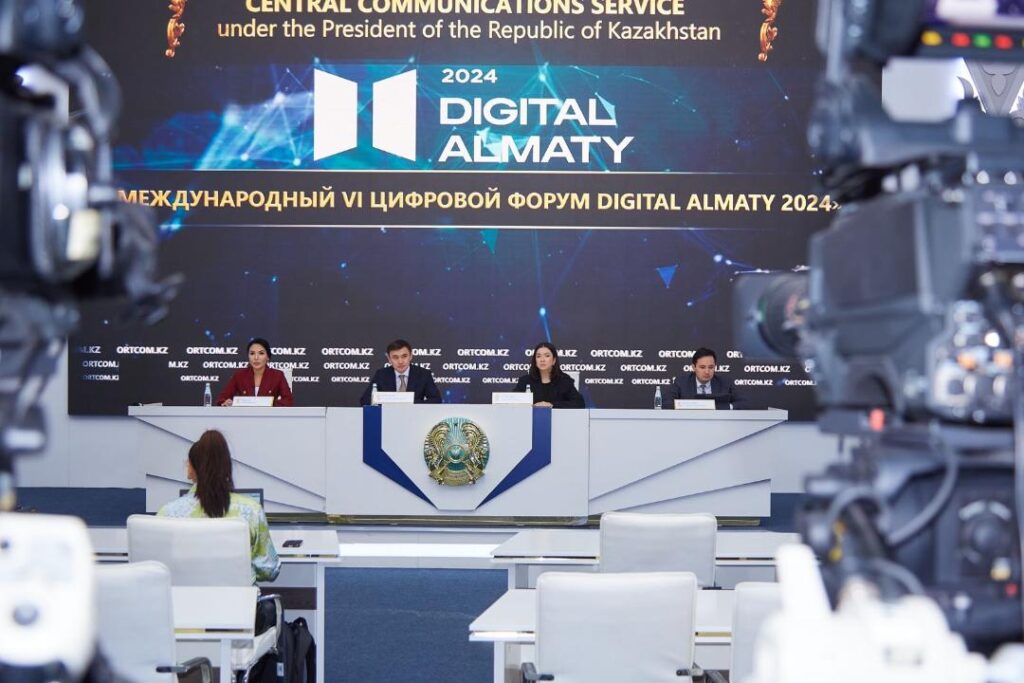
From February 1st to 3rd Kazakhstan’s business capital, Almaty, will host the Digital Almaty 2024 forum, entitled "Industry X: The Digital Development of the Future".  Now in its sixth year, the forum will bring together government officials from Shanghai Cooperation Organization (SCO) and Eurasian Economic Union (EEU) countries, leading experts, and entrepreneurs from around the world, said the Kazakh Ministry of Digital Development, Innovation, and Aerospace Industry, one of the forum’s organizers.   Ersultan Ermanov, director of the ministry’s Department for Development of the Information Technology Industry, said that international technology parks from Belarus, China, India, Iran, Kyrgyzstan, Russia, and Uzbekistan will participate in the Digital Almaty forum. “The participation of their delegations will help lay the foundation for future fruitful cooperation, discuss current trends in the field of digital technologies, as well as the possibilities of their application to solve social, economic and environmental problems. Such events have a very positive impact on the country’s image,” Mr Ermanov said. The forum will also include an exhibition of Kazakhstan’s largest subsoil users, technology parks, and technology companies, which will share experience and information about projects in the IT ecosystem. More than 30,000 people are expected to attend the three-day digital event. As part of the forum, an Industry 4.0 Startup Battle is planned for February 3rd — a large-scale battle for the title of the best industrial startup, with a total prize fund of $150,000. This year, startups will compete for the title of "Best Startups in Industry 4.0" in the areas of Digital Oil Field, ESG, and Smart Mining. The organizers of Digital Almaty 2024 are the Ministry of Digital Development, Innovation, and Aerospace of Kazakhstan, the Ministry of Foreign Affairs of Kazakhstan, Akimat (municipality) of Almaty, and Tech Garden.
Kazakhstan Needs Better Agricultural Technology

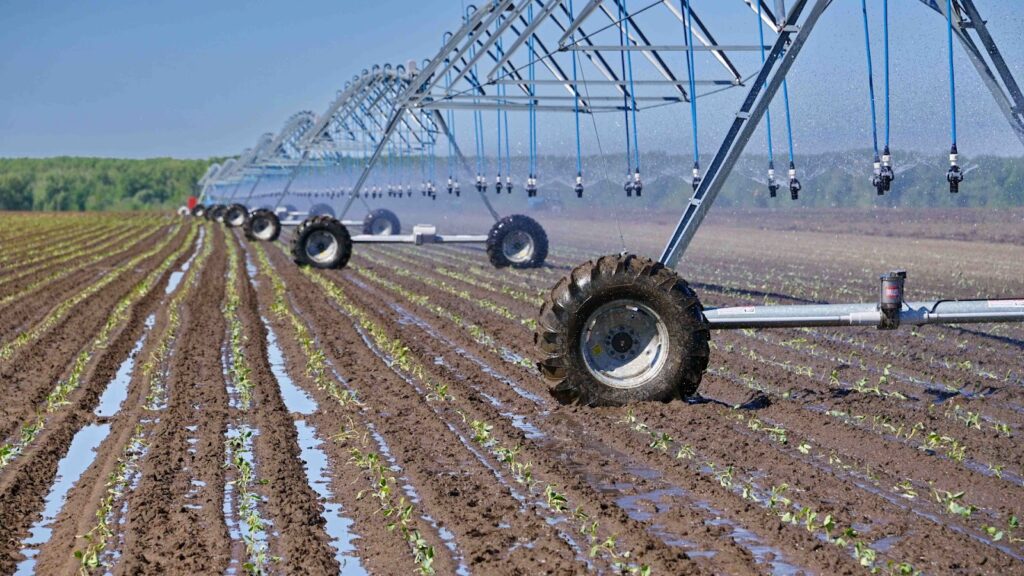
Over the past five years Kazakhstan has introduced water-saving technologies on a greater part of its agricultural land. Since 2019 this area has been expanded by 33%, from 210,000 hectares to 312,000 hectares in 2023, deputy minister of agriculture Amangaliy Berdalin said at a government meeting on January 22nd.  He added that this year 1.58 million hectares of irrigated land are being cultivated in Kazakhstan. Of these, 1.1 million hectares, or 74% of the land, are surface irrigated (using canals and ditches), 97,900 hectares are flooded rice fields, 227,300 hectares (14.3%) use modern irrigation equipment, and 97,900 hectares (6.2%) use drip irrigation. However, at the same meeting the deputy minister of water resources and irrigation, Nurlan Aldamzharov, commented that the share of water consumption by agriculture today only accounts for 65% of the total water intake in Kazakhstan, and irrigation is impeded by large water losses, especially in the country’s dry southern regions. “In 2023, out of 1.8 million hectares of irrigated land, water-saving technologies were used on as little as 17% (312,000 hectares), which is extremely unacceptable in the current realities,” the deputy minister emphasized.

Uzbekistan, AIIB Sign Three-Year Investment Program

As part of his state visit to China, on January 24th Uzbekistan president Shavkat Mirziyoyev visited the headquarters of the Asian Infrastructure Investment Bank (AIIB) in Beijing and held talks with the bank's president, Jin Liqun. The sides announced that cooperation between Uzbekistan and AIIB has reached unprecedented levels in recent years, with the portfolio of joint projects exceeding $3 billion. In 2023 alone the bank’s investments in Uzbek projects reached $1 billion, financing energy, water supply, reconstruction of roads and railway, and business development. Mr Mirziyoyev advocated increasing financing for projects involving strategic raw materials, and the implementation of socially important programs on the principles of public-private partnership, his press service reported. During the meeting, Mr Liqun reaffirmed his bank’s strategic commitment to supporting Uzbekistan's sustainable growth. The two leaders signed a three-year investment program, with the goal of further supporting Uzbekistan’s development in multiple sectors across the country, AIIB said.  In 2023, AIIB announced that it would hold its 2024 Annual Meeting in Samarkand, Uzbekistan, on September 25th-26th, marking the first time AIIB would hold its flagship event in Central Asia.  AIIB is a multilateral development bank which began operations in Beijing in January 2016 and has since grown to 109 approved members worldwide.

EU Drives Increased Demand For Kazakh Coal

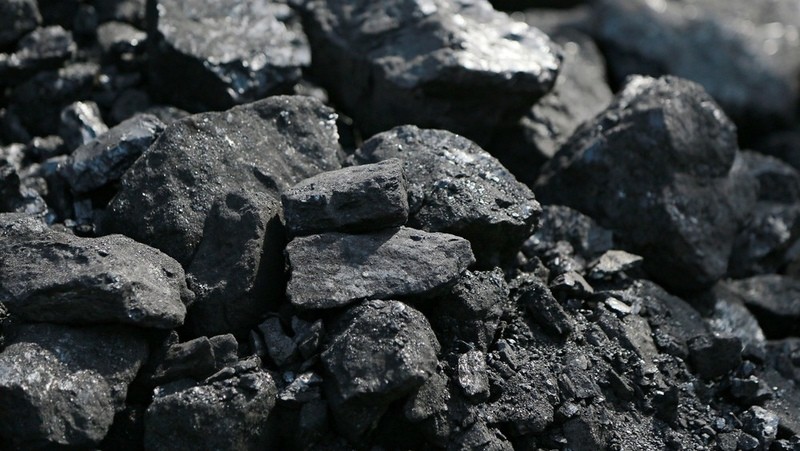
Kazakhstan will increase its production of coal in the period 2023-2029, the Kazakh Ministry of Industry and Construction has said, adding that the country exports around 28% of the total volume of coal it mines.  In order to meet the demands of energy-producing and industrial enterprises, the ministry says it is working to increase coal production, as well as the country’s coal export potential. According to the National Bureau of Statistics of Kazakhstan, exports of hard coal and lignite have increased 6.5-fold, mainly due to the growing demand for Kazakh coal from the countries of the European Union. The embargo on Russian coal exports to European countries, introduced in the EU from August 2022, has created a good opportunity for Kazakhstan to significantly increase its coal exports to Europe. 

“At a Crossroads” – Atlantic Council Addresses Rare Earth Elements in Central Asia

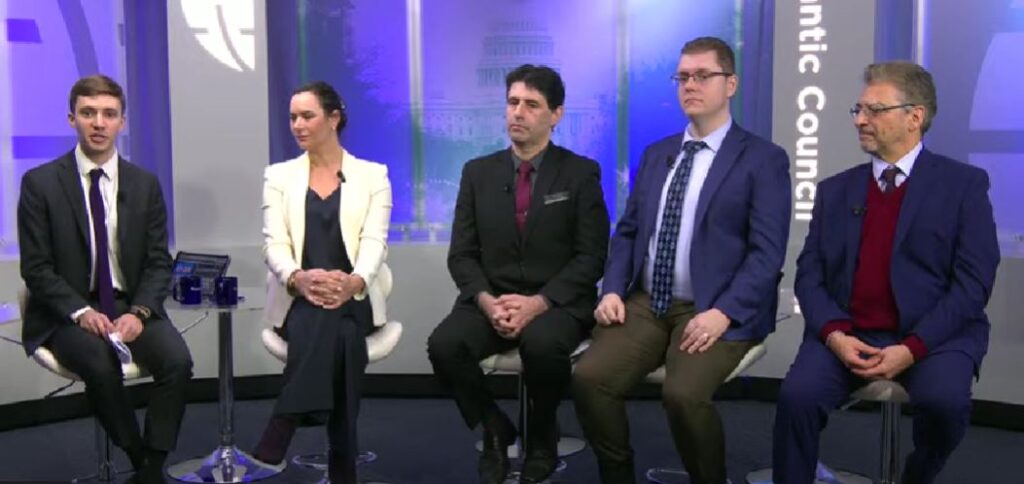
On January 23rd, the Atlantic Council’s Eurasia Center and the International Tax and Investment Center gathered together the authors of the report, “Leveraging Central Asia’s Rare Earth Elements for Economic Growth.” The report highlights the potential of Central Asia, which has remained underappreciated in terms of its rare earth elements (REE) resources, despite its increasing geopolitical significance. China currently dominates the global mining and refining of REEs, giving it a near-monopoly status. The report argues that this scenario calls for an urgent need to diversify global supply chains and suggests that Western investment could play a pivotal role in exploring and mining Central Asia's REEs, thereby contributing to the diversification of supply chains. Furthermore, such investment could have far-reaching implications for the region itself, bolstering regional integration and sovereignty, spurring economic growth, and enhancing economic freedom throughout Central Asia. Opening the discussion, Ariel Cohen, a Nonresident Senior Fellow at the Eurasia Center of the Atlantic Council, highlighted the critical geopolitical location of Central Asia, stating that REEs “may be the next big thing in Central Asia at the engine of economic growth.” Cohen praised the “visionary multi-vector policy pioneered” in Kazakhstan by President Tokayev, and characterized Kazakhstan’s relationship with Russia as “very fraught,” and defined by “multi-generational trauma. Nuclear energy is zero emission energy,” he said, but for the U.S. to capitalize on opportunities for mining REEs in Kazakhstan, “we need to do more and better.” The President of Second Floor Strategies, a public policy consulting company, Wilder Alejandro Sánchez emphasized that Kazakhstan and Uzbekistan are the most “forward-looking” nations in Central Asia in regard to REEs, whilst mining in Kyrgyzstan remains stuck in a “legal limbo,” and Tajikistan currently lacks the necessary critical infrastructure. Nether the less, he stated, REEs could become a driving factor behind regional “cooperation and integration.” Wesley Hill, an International Program Manager at the Energy, Growth, and Security Program of the International Tax and Investment Center, spoke about the international relations components of REEs. “In the same way we competed and continued to compete for other energy resources, most especially crude oil, we will be competing for REEs,” he stated. “It's happening already, this geopolitical clash [which is] primarily driven by competition between the United States and China. After the publication of this report, Beijing cut off all exports of rare earth element refining technologies to the United States. Central Asia is very much at a crossroads,” he stated. Addressing this geopolitical conflict with China over REEs, Ambassador John Herbst, a Senior Director at the Eurasia Center of the Atlantic Council, stated that Central Asia is a “critical region… rich in rare earth minerals [whilst] China is our principal adversary. They are not a friend of the United States.” Finally, Suriya Evans-Pritchard Jayanti, a Nonresident Senior Fellow at the Eurasia Center of the Atlantic Council, characterized REEs as an “extremely important development opportunity” for Central Asia, particularly given “geostrategic energy realignment after the Russian invasion of Ukraine. I think it's a geostrategic realignment opportunity for...

Excise tax increase provokes a rise in alcohol prices

Alcohol prices in Turkmenistan have changed twice this month: at the beginning of the year they doubled, and by the end of the month they almost returned to the previous level. The order to reduce prices, as reported in the Chronicles of Turkmenistan, came from the Ministry of Trade and Foreign Economic Relations. Thus, Turkmen wines went up in price from $2-2.86 per bottle to $2.86 - $4.29. Cognac went up from $8.59-14.31 to $10-17.17, vodka - from $8.59-10 to $17.17, expensive brands of vodka in liter bottles - from $28.62 to $42.94, beer - from $4.29-5.72 to $8.59-11.45. At the same time, the quality of alcoholic beverages produced in the country leaves much to be desired - consumers note that most of the wines are produced not from grapes, but from Chinese powder. The increase in alcohol prices was due to another increase in excise taxes from January 1, 2024. Excise tax on beer increased from 30% to 34.5%, on wines and spirits, depending on the degree - from 39%, 61% and 77% to 44.85%, 70.15% and 88.55% respectively, the publication notes. New excise tax rates are also introduced in neighboring Uzbekistan. Thus, the excise tax on domestically produced ethyl alcohol will double to $1.21 per liter. At the beginning of 2023, it increased fivefold. Excise on some types of alcoholic beverages will increase by 5% later - from July 1. However, tariffs for imported alcohol are again reduced by about 5%. Now the minimum wholesale and retail prices for alcoholic beverages in Uzbekistan vary within the following limits: wines - $1.17 -1.33 per 1 liter of finished product, cognac, $4.65 - 5.35, vodka and other alcoholic products (except beer) $3.48. For comparison, in Kazakhstan from October 1, 2023, the minimum retail price of vodka, strong liquor and vodka products was $4.69 per liter, cognac and brandy $6.95 per liter. This Central Asian country, according to WHO, has the highest alcohol consumption compared to its neighbors. Kyrgyzstan ranks second, Turkmenistan third, followed by Tajikistan and Uzbekistan. Nevertheless, all countries in the region, except Tajikistan, have seen a decline in per capita alcohol consumption. For example, in Kazakhstan in 2010 it was 9.3 liters, and in 2016 this figure decreased to 7.7 liters. In Kyrgyzstan, during this time, total alcohol consumption decreased from 10.2 liters to 6.2 liters per capita. Similarly, in Uzbekistan, alcohol consumption fell from 3.2 liters to 2.7 liters. The same situation in Turkmenistan - alcohol consumption fell from 6 liters to 5.4 liters per capita. Only in Tajikistan is the opposite situation observed. People there began to consume more alcohol - 3.3 liters against 2.4 liters. Recall that all Central Asian countries have a ban on advertising of alcoholic beverages, and a number of measures are taken to reduce the consumption of alcohol by the population. For example, in Kazakhstan, Uzbekistan, Tajikistan and Turkmenistan the minimum legal age to buy alcohol is 21; only in Kyrgyzstan can it be bought from the age of 18.