Viewing results 3313 - 3318 of 4092
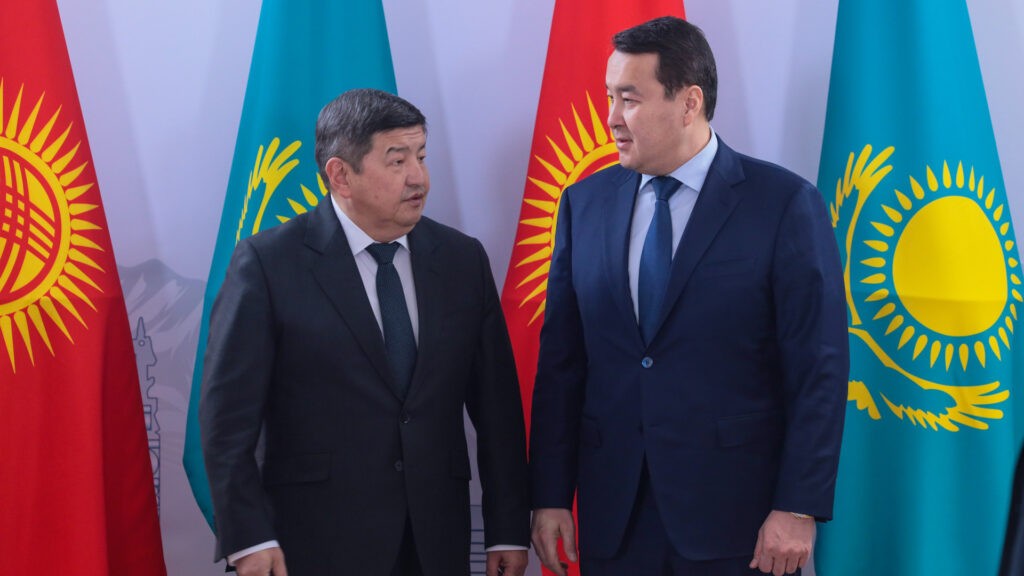
Kazakhstan and Kyrgyzstan will be working together to open an additional checkpoint for goods vehicles on their countries’ border. They are also set to further their cooperation in the water and energy sectors. These agreements were reached at a meeting between the Kazakh prime minister, Alikhan Smailov, and the chairman of Kyrgyzstan’s cabinet of ministers Akylbek Japarov in Almaty on February 1st. Kyrgyzstan has complained for years about long lines at the Kazakh border for its cargo trucks bringing goods to Russia through Kazakhstan. The most recent big traffic jam occurred on the Kyrgyz side of the border in August 2023, when more than 600 trucks were stuck at the crossing. These delays were caused by Kazakh authorities carrying out enhanced checks on trucks entering the country from Kyrgyzstan, ostensibly to combat illegal border activity. However, the situation caused speculation that the jams were a result of a dispute over irrigation water resources between Kazakhstan and Kyrgyzstan. Irrigation water remains an issue in Kazakh-Kyrgyz relations. Last summer the southern regions of Kazakhstan experienced a severe shortage of water for their fields, while upstream Kyrgyzstan also lacked water and couldn’t supply enough of it to its northern neighbor. Kazakhstan, especially its dry southern regions, is dependent on water coming from Kyrgyzstan. At the meeting on February 1st Mr Smailov also spoke about the growing trade between the two countries, with bilateral trade growing by 12% and reaching $1.3bn between January and November 2023.
In an effort to expand the use of renewable energy in Kyrgyzstan, on February 1st the country's deputy minister for economy and commerce, Sanzhar Bolotov, met with some members of the International Finance Corporation (IFC) to discuss cooperation, particularly in the field of geothermal energy. Mr Bolotov proposed launching geothermal pilot projects in Kyrgyzstan. Geothermal energy is a type of renewable energy taken from the Earth’s core. It comes from heat generated when the planet was originally formed, and the radioactive decay of materials. The IFC representatives agreed to consider geothermal energy pilots in Kyrgyzstan. They mentioned that the transition to geothermal energy is happening successfully in the USA, Indonesia, Turkey, and Poland. Geothermal energy use would help reduce greenhouse gas emissions, and help Kyrgyzstan to meet its climate change mitigation goals.
A factory that will produce components for drip irrigation systems is to open in the town of Konaev, Almaty region. The plant is a joint project between Kazakh and Chinese investors, and is expected to make components for up to 500 hectares of fields per week. A similar plant is also planned for the other southern city of Taraz. Drip irrigation in Kazakhstan is currently used on only 84,000 hectares of agricultural land, but the government is aiming to increase this figure to 312,000 hectares. To encourage farmers to use water-saving technologies, the government is increasing subsidies for building irrigation systems, and buying drip and sprinkler irrigation equipment, from 50% to 80% of their costs respectively.
A new airport is being planned in Uzbekistan's Tashkent region, which will be financed by Chinese investors. The planned airport will be the first in Central Asia built entirely with private financing and owned by private individuals. Last week at the Uzbek-Chinese business forum in Shenzhen, delegations from Uzbekistan and China signed numerous business and investment contracts. Among them, the contract to build an airfield in the Ahangaran district in the Tashkent region attracted special interest. The project is expected to use capital sourced solely from an unnamed Chinese investor company. Construction is expected to start in the second half of this year. In addition to the airport, seven more projects, worth $56m, are being planned with Chinese investors for the Akkurgan district, including facilities for producing knitwear, fabrics, synthetic mattresses, footwear, and building materials.
A documentary film entitled "Dreamers", released by BWG Production in Uzbekistan, has won the award for "Best Historical Film of December" at the World Film Festival in Cannes, France. This win opens the door for the movie to compete for the festival's prized "Film of the Year" title. Ruslan Saliev, the film's director, hailed the success as extraordinary for Uzbek film. He was confident that Dreamers, which explores the nation's historical suffering, would strike a chord with viewers around the world. Saliev emphasized the value of these festivals in showcasing the nation’s cultural legacy abroad. He also hoped for the chance to represent Uzbekistan at more international film festivals. "The use of reconstructions and art installations as a modern artistic interpretation in the documentary film Dreamers [should] be considered a positive experience," explained Uzbek film critic Mohinur Ahmetjonova. "Of course, this approach doesn't always fully reveal the [true] reality, but it gives an effective result in creating a general representation. But when it comes to covering the historical truth, it is noticeable that there is an attempt to avoid the bloody past and to present the atrocities that happened in a [softer light]. It's no coincidence that the approach of trying to describe the achievements of the period has caused several objections by historians and film experts." "The fact that the filmmakers tried to combine large-scale events in one film gives the impression that they were a little distracted from the original goal... in general, in this period when new views on history are being formed, it's natural that there are different opposing opinions about the film," Ahmetjonova added. Dreamers won the prize over the English film The Shamrock Spitfire, which tells the story of an Irish military pilot during WWII.
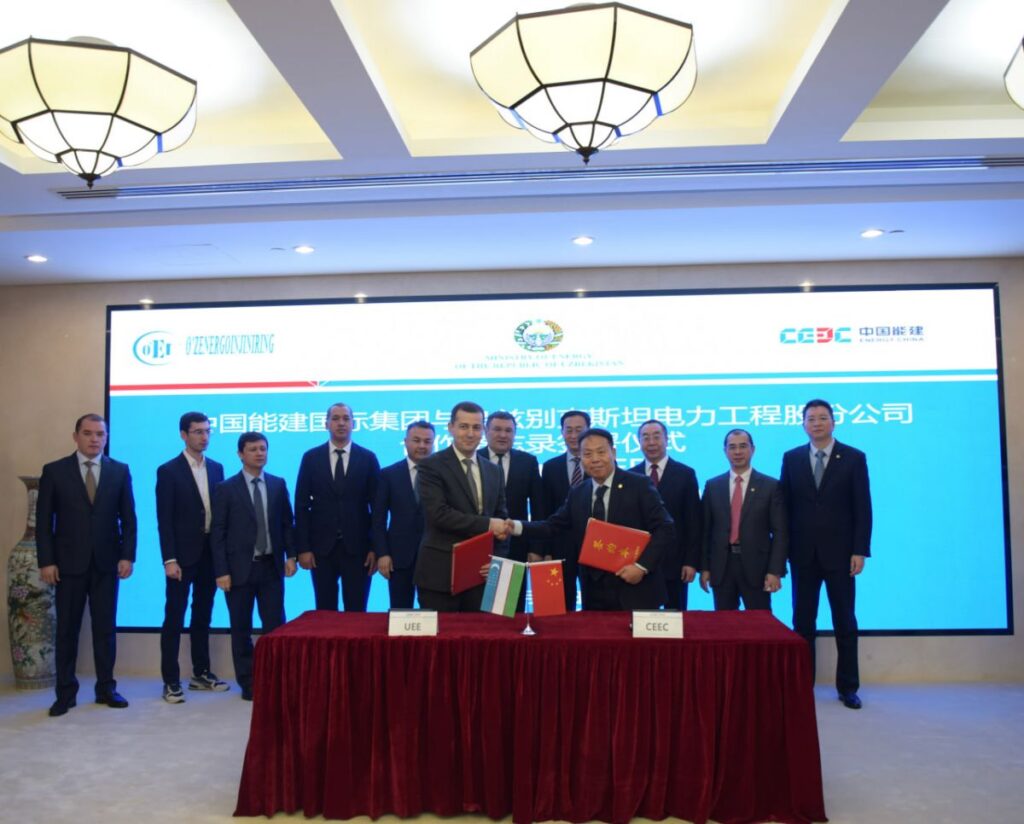
The development of renewable energy is a priority for Uzbekistan, with the country aiming for a quarter of its energy to come from renewable sources by 2030. To meet this target the Ministry of Energy has spoken of the need to attract more international companies to work in the sector, and to train better qualified professionals. With this in mind, JSC Uzenergoengineering — the country’s largest electric power design institute — has recently signed two agreements with Chinese partners. The first agreement is with the China Electric Power Planning and Engineering Institute (EPPEI) on the creation of a joint venture in Uzbekistan. The new venture will develop short- and long-term plans for the Uzbek power industry, conduct technical and economic studies, provide consultation services to local enterprises, and train personnel. The second agreement was signed with Energy China International, a subsidiary of China Energy Engineering Group Corporation Limited, one of the world’s largest energy companies. The parties agreed to set up a new institute in Uzbekistan with a preliminary investment of $30m. This institute will train high-level professionals, and introduce new technologies into the country’s electric power industry.