• KGS/USD = 0.01144 0%
  • KZT/USD = 0.00204 0%
  • TJS/USD = 0.10394 -0.38%
  • UZS/USD = 0.00008 0%
  • TMT/USD = 0.28571 0%
  • KGS/USD = 0.01144 0%
  • KZT/USD = 0.00204 0%
  • TJS/USD = 0.10394 -0.38%
  • UZS/USD = 0.00008 0%
  • TMT/USD = 0.28571 0%
  • KGS/USD = 0.01144 0%
  • KZT/USD = 0.00204 0%
  • TJS/USD = 0.10394 -0.38%
  • UZS/USD = 0.00008 0%
  • TMT/USD = 0.28571 0%
  • KGS/USD = 0.01144 0%
  • KZT/USD = 0.00204 0%
  • TJS/USD = 0.10394 -0.38%
  • UZS/USD = 0.00008 0%
  • TMT/USD = 0.28571 0%
  • KGS/USD = 0.01144 0%
  • KZT/USD = 0.00204 0%
  • TJS/USD = 0.10394 -0.38%
  • UZS/USD = 0.00008 0%
  • TMT/USD = 0.28571 0%
  • KGS/USD = 0.01144 0%
  • KZT/USD = 0.00204 0%
  • TJS/USD = 0.10394 -0.38%
  • UZS/USD = 0.00008 0%
  • TMT/USD = 0.28571 0%
  • KGS/USD = 0.01144 0%
  • KZT/USD = 0.00204 0%
  • TJS/USD = 0.10394 -0.38%
  • UZS/USD = 0.00008 0%
  • TMT/USD = 0.28571 0%
  • KGS/USD = 0.01144 0%
  • KZT/USD = 0.00204 0%
  • TJS/USD = 0.10394 -0.38%
  • UZS/USD = 0.00008 0%
  • TMT/USD = 0.28571 0%

Viewing results 3811 - 3816 of 5314

ADB and Kompanion Bank to Boost Financing of Women-Led and Small Businesses in Kyrgyzstan

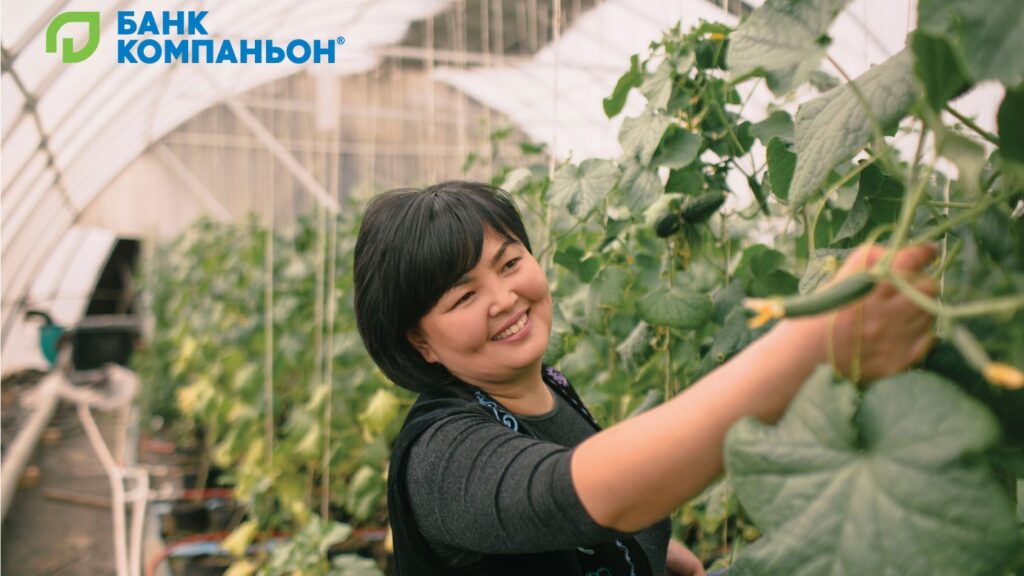
As reported in a news release on its website, on December 28th the Asian Development Bank (ADB) and Kompanion Bank Closed Joint Stock Company on December 28th signed off a loan of up to $5 million in local currency financing to boost micro, small, and medium-sized enterprises (MSMEs) in Kyrgyzstan, especially those owned or led by women. Established in 2004, Kompanion Bank is one of the large commercial banks in the Kyrgyz Republic and dominates the MSME market through its wide network with 93 branches across the country. More than half of Kompanion’s portfolio is with micro and small enterprises. “Women account for about a third of entrepreneurs in the Kyrgyz Republic, but they nevertheless face significant challenges in accessing financial services and credit,” said ADB Director General for Private Sector Operations, Suzanne Gaboury. “This partnership with Kompanion Bank will help bridge the financing gap for women-led small businesses, as well as provide a strong case for the sustainability of local currency lending to these companies.” To strengthen development impact and address finance and bankability constraints, transactions incorporate a credit guarantee from the Asian Development Fund’s (ADF) Private Sector Window facility (PSW) of up to $2.3 million. ADB will also provide technical assistance to Kompanion Bank to enhance its digital capabilities and operational efficiency. “We are happy to be a partner with ADB in this initiative to support micro and small entrepreneurs in the Kyrgyz Republic. We believe that our experience in the MSME market will allow us to make a significant impact on the local economy, and we look forward to working closely with ADB for the benefit of our clients and the community,” said Kompanion Bank CEO, Margarita Cherikbaeva. ADB will also help Kompanion Bank to develop a gender action plan to promote gender equality and women’s empowerment in its business activities. Key activities will include increasing the number of women borrowers and delivering training on improved agricultural practices and digital and financial literacy for female clients.
Gazprom Eyes Central Asia Amid European Sanctions

Facing a shortfall in European gas exports due to Western sanctions, Gazprom anticipates it will sell 34 billion cubic meters of unexported gas to Central Asia, according to recent reports. "In light of the ongoing changes in the global energy market, Gazprom remains committed to ensuring a reliable gas supply to Russian consumers and bolstering export capabilities. A key focus for the company in this regard has been fostering collaboration with Kazakhstan, Uzbekistan, and Kyrgyzstan," Gazprom stated in a press release. The company confirmed a drop in gas exports to Europe of 34 billion cubic meters in the first eleven months of 2023, marking levels not seen since 1996. An earlier announcement by the Ministry of Energy of Uzbekistan unveiled a 15-year gas purchase agreement with Gazprom, extending the deal to include Kazakhstan, which involves a new pipeline construction. In October, reports indicated the commencement of Russian gas deliveries to Uzbekistan through Kazakhstan. However, the specifics of this arrangement have not been disclosed to date. Alexey Miller, Gazprom's chief, outlined plans to expand the Central Asia gas pipeline system in November, highlighting memoranda signed with Uzbekistan, Kazakhstan, and Kyrgyzstan, and expressing optimism that the project will rejuvenate this pipeline network. During the Soviet era, gas from the region was transported to Russia via the Central Asia–Center gas pipeline. After the USSR's dissolution, the pipeline ceased operations and deteriorated, requiring substantial refurbishment to enable gas supplies from Russia to Central Asia. Miller noted the completion of the initial repair stage of the Central Asia-Center gas pipeline, facilitating gas delivery to Uzbekistan via Kazakhstan. Earlier this year, Tashkent inked a two-year gas supply contract with Gazprom amounting to approximately 2.8 billion cubic meters annually. Despite these developments, details regarding the pricing of the purchased gas remain undisclosed. Which according to Uzbekistan's Energy Minister, Zhurabek Mirzamakhmudov, is “in alignment with national interests and market dynamics.”

Raids Target Illegal Medicine Sales in Remote Turkmen Villages

Law enforcement agencies in the Mary Velayat district have initiated crackdowns on citizens engaging in the unauthorized sales of medicines,Radio Azatlyk has reported. While these actions target what authorities deem to be illegal, individuals conducting the trades in remote areas argue that they're simply filling a crucial gap in essential healthcare access. Sellers in remote villages assert that they offer commonly used medications like analgin and paracetamol, which, to their understanding, don't require a doctor's prescription. These traders claim to have procured these medicines from city pharmacies and to simply be reselling them at a slight markup in areas lacking facilities. "Our village lacks pharmacies. Ambulance services have substantial delays, sometimes failing to arrive. People turn to us for antipyretics when they're stricken with a fever at night. We offer a service that pharmacies don't provide. We aren't breaking any laws," emphasized one villager engaged in medicine sales. Another trader echoed this sentiment, stating, "We're simply providing a service to our community." Moreover, these merchants assert that they inform local district police officers about their activities, believing this communication suffices as adherence to the regulations. However, plainclothes police officers have been actively involved in operations targeting this unauthorized trade. During these raids, authorities confiscate medicines and detain the traders, issuing substantial fines. The scenario underscores a wider issue of inadequate medical facilities and pharmacy access in rural areas. Rural residents complain about delayed and inadequate ambulance services, exacerbating their struggle to access essential medical aid. Shortages of crucial medicines in both rural and urban pharmacies have been recurrent issues in Turkmenistan. Inconsistent availability of medications was reported earlier this year, highlighting a systemic challenge. Additionally, instances of medical professionals capitalizing on pharmaceutical shortages for extra profits surfaced in December of the previous year. Trading medicines in Turkmenistan requires the possession of a valid license, and according to local legislation, sales should be conducted exclusively by individuals with a secondary or higher pharmaceutical education. This tension between unauthorized sales and healthcare gaps in remote regions presents a complex challenge in need of resolution.

EU’s €20M Project to Diversify Internet Resources in Kazakhstan with Satellite Communications

The European Union (EU) is set to contribute to the diversification of internet resources in Kazakhstan, as announced by Johannes Baur, the Head of the Cooperation Department of the EU Representative Office in Kazakhstan. This initiative is part of the EU's broader commitment to bolstering digital infrastructure and connectivity in Central Asia. "In Kazakhstan, internet traffic now comes from Russia and China," Baur said during a meeting organized by the Eurasian Foundation for Central Asia. He further explained the EU's proposition: "Our project wants to offer Kazakhstan the opportunity to use European satellite communications, a product of the European company, SES. For example, while Starlink satellites orbit the Earth in a low orbit, SES satellites orbit in a medium orbit. Satellites in medium orbit can cover the whole of Kazakhstan, which is an advantage. We can even cover the whole of Central Asia." This ambitious project has received approval from the European Commission and is set to be showcased at the Central Asia - European Union summit scheduled for 2024. Baur disclosed the initial funding earmarked for the project, stating, "First of all, the European Union will allocate 20 million euros, but this is the amount allocated to the whole of Central Asia. I think most of these funds will be directed to Kazakhstan, Kyrgyzstan and Uzbekistan. The specific details are still unknown, but it will be a large loan from the European Investment Bank." This initiative aligns with the EU's ongoing efforts to diversify its supply chains and strengthen its relations with strategic partners like Kazakhstan. Moreover, it is expected to contribute significantly to the development of a secure and sustainable supply of digital resources across Central Asia.

Tajikistan and Kyrgyzstan Agree on Another Border Section

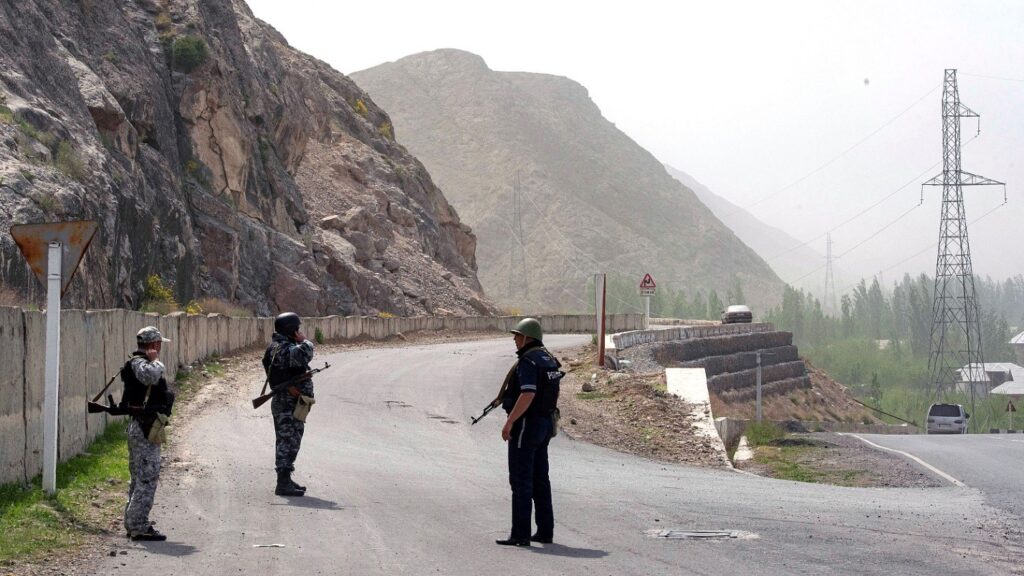
Delegations from Tajikistan and Kyrgyzstan have conducted more work on the definition and designation of the state border, agreeing on the divination of another 11.88 km at a meeting in Buston held between the 17th and 23rd of December. The two parties also agreed to continue determining the remaining sections oat the next meeting to be held in Kyrgyzstan. A long-standing source of conflict between the two nations, it is emblematic of the problem that even the length of the border - sometimes cited as being 975-kilomtres long, and at others times 972-kilomteres - is rarely agreed upon. In January 2023, Tajikistan’s President Rahmon stated that 614-kilometres have been agreed upon, backtracking on a previously stated figure of 664. With its scant natural resources and dwindling water supplies, the border between Kyrgyzstan and Tajikistan has been the scene of numerous skirmishes for many years. In 2014, all borders between Kyrgyzstan and Tajikistan were closed indefinitely to Kyrgyz and Tajik citizens following clashes over a bypass road in disputed territory; mortars were fired and both armies suffered casualties. In 2021 and 2022, troubles flared up again. Several hundred kilometers of the border have not yet been defined. This situation developed after the collapse of the USSR, leaving the parties unable to agree on dozens of disputed areas. The non-delimited territories become a conflict zone between the local population, and the border guards of the two countries became involved. The last major conflict occurred on September 16th 2022, as a result of which hundreds of people were killed and injured on both sides, and massive damage was caused to the infrastructure in Sughd and Batken. The Presidents of Tajikistan and Kyrgyzstan, Emomali Rahmon and Sadyr Japarov, have repeatedly discussed delimitation of the border. The situation in the disputed areas is also closely monitored by the Collective Security Treaty Organization (CSTO). In recent years, the authorities of the two countries have been actively negotiating to resolve this issue. Meetings have been held alternately on the territory of the two republics. Currently, more than 90%, or about 885 km of the border has been mutually recognized by States.

EEU Leaders Seek to Strengthen Position of Economic Bloc

A meeting of the Supreme Eurasian Economic Council was held in St Petersburg on December 25th. The meeting was attended by leaders of the Eurasian Economic Union (EEU) member countries - the Prime Minister of Armenia, Nikol Pashinyan, President of Belarus, Alexander Lukashenko, President of Kazakhstan, Kassym-Jomart Tokayev, President of Kyrgyzstan, Sadyr Japarov, and President of Russia, Vladimir Putin. Opening the meeting, Russian President Putin said that the Eurasian Economic Union will soon be ten years old, and over this period, the mutual trade between its member countries has almost doubled and the aggregate GDP of the EEU countries has grown from US$1.6 trillion to US$2.5 trillion. “We have created deep common markets for goods, services, capital, and workforce, which are operating in line with agreed-upon rules. The main point is that the Eurasian Union has become an authoritative international integration association with an efficient structure and a good foundation,” he said. Putin added that the work on aligning integration processes within the EEU and China's Belt and Road Initiative is also yielding results. The Council’s meeting adopted the declaration “Eurasian Economic Path,” which is aligned with China’s Belt and Road Initiative.