• KGS/USD = 0.01144 0%
  • KZT/USD = 0.00216 0%
  • TJS/USD = 0.10659 0%
  • UZS/USD = 0.00008 0%
  • TMT/USD = 0.28530 0%
  • KGS/USD = 0.01144 0%
  • KZT/USD = 0.00216 0%
  • TJS/USD = 0.10659 0%
  • UZS/USD = 0.00008 0%
  • TMT/USD = 0.28530 0%
  • KGS/USD = 0.01144 0%
  • KZT/USD = 0.00216 0%
  • TJS/USD = 0.10659 0%
  • UZS/USD = 0.00008 0%
  • TMT/USD = 0.28530 0%
  • KGS/USD = 0.01144 0%
  • KZT/USD = 0.00216 0%
  • TJS/USD = 0.10659 0%
  • UZS/USD = 0.00008 0%
  • TMT/USD = 0.28530 0%
  • KGS/USD = 0.01144 0%
  • KZT/USD = 0.00216 0%
  • TJS/USD = 0.10659 0%
  • UZS/USD = 0.00008 0%
  • TMT/USD = 0.28530 0%
  • KGS/USD = 0.01144 0%
  • KZT/USD = 0.00216 0%
  • TJS/USD = 0.10659 0%
  • UZS/USD = 0.00008 0%
  • TMT/USD = 0.28530 0%
  • KGS/USD = 0.01144 0%
  • KZT/USD = 0.00216 0%
  • TJS/USD = 0.10659 0%
  • UZS/USD = 0.00008 0%
  • TMT/USD = 0.28530 0%
  • KGS/USD = 0.01144 0%
  • KZT/USD = 0.00216 0%
  • TJS/USD = 0.10659 0%
  • UZS/USD = 0.00008 0%
  • TMT/USD = 0.28530 0%

Viewing results 3979 - 3984 of 5828

Akim of Mangystau Calls for Calm after Mass Swan Die-out

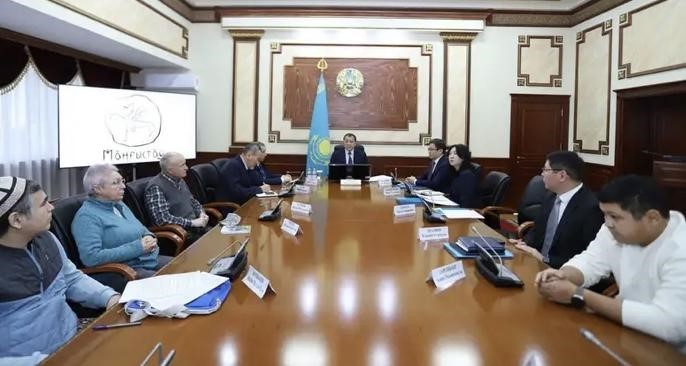
On January 18th, the Akim of Mangystau (head of the regional government), Nurlan Nogaev met with environmental activists from Mangystau and ornithologists from Almaty. The main topic of discussion was the pressing issue of the mass die-out of swans on Lake Karakol, as reported by the press service of the Akimat. According to the latest data, as of January 18th the number of dead swans in Mangystau has reached 1,018 birds, 41 of which were found on the seashore in the Karakiyan district, and the rest on the lake itself. According to the biological scientist and ornithologist, Victoria Kovshar, despite the fact that the peak of bird flu has already passed, this figure will only continue to grow. "Bird flu is a phenomenon widespread all over the world. Instances of this disease are regularly recorded on the Caspian Sea, as was the case two years ago when black-footed boobies and Caspian terns died en masse. At the time, it was assumed that the cause was related to oil emissions, but a government commission found that bird flu was to blame. “The virus usually targets certain species of birds, for example, in 2015 there was a bird flu that affected the dalmatian pelican without affecting the pink pelican, which nests with it in the same colonies and is directly related. It follows that the death of swans on Lake Karakol is not a unique case. We can see that mostly young individuals which were unprepared for the winter have died here. This is a natural process that is not subject to manual intervention. Saving swans now is comparable to if you were to confront an avalanche with your bare hands. It is important to prevent the infection of poultry such as ducks and geese, and it should be noted that the virus can remain active in the carcasses of dead birds for a prolonged period of time. However, given the extremely low temperatures on the lake currently, this would not be the case.”[/vc_column_text][vc_single_image image="13639" img_size="full" el_class="scond-image" parallax_scroll="no" woodmart_inline="no"][vc_column_text woodmart_inline="no" text_larger="no"]According to the head of the regional territorial inspection of the Committee for Veterinary Control and Supervision of the Ministry of Agriculture, Temirbek Nurtazin, veterinary services are regularly monitoring the epizootic situation among poultry, and as of now no cases have been found among poultry in private farms. Speaking after his briefing, the head of the region, Nurlan Nogaev said he is concerned about the significant number of swan deaths, but urged against an overly emotional reaction. "I thank the experts, Victoria Kovshar and Fedor Karpov, for their active participation in the search for the real cause of swan deaths on Lake Karakol,” Nogaev said. “The situation around this issue is of public interest, and I also express my gratitude to the eco-activists involved in solving the problem. A team of scientists is expected to arrive in the coming months to study the biodiversity of this unique body of water. It is important that experts, including ornithologists, are involved in gathering information.”...


USAID Provides $1.4 Million to Strengthen Central Asia’s Power Sector

On January 10th, the United States Agency for International Development (USAID) handed over $1.4 million of modern energy sector management equipment and software to the Coordinating Dispatch Center (CDC) Energia in Tashkent. This cutting-edge technology will allow CDC Energia’s dispatchers to display relevant information for maintaining the region’s energy regime, the U.S. Embassy in Uzbekistan reported. This investment will enhance Central Asia’s ability to manage and monitor electricity flows to ensure the stability of the power grid and foster increased opportunities for the regional trade in electricity. It will also modernize the work of CDC Energia as a regional Systems Operator, which faces an increasing number of challenges in connection with the intensive integration of renewable energy sources and the introduction of the electricity and capacity market in Central Asia. The Deputy Minister of Energy of Uzbekistan, Akmal Jumanazarov, U.S. Ambassador to Uzbekistan, Jonathan Henick, USAID/Uzbekistan Mission Director, David Hoffman, and the Head of CDC Energia, Khamidilla Shamsiev attended the ceremony. Ambassador Henick emphasized Uzbekistan’s prominent role in the region’s energy sector, stating that “Uzbekistan plays a vital role in the region due to its central geographical location, abundant energy resources, and key infrastructure. As Central Asia’s power system expands and becomes more complex, innovative solutions are imperative for energy sector development planning. Together, we are creating the foundation for a sustainable future to address the complex challenges of energy transition.” This delivery of modern equipment was possible through USAID’s flagship regional energy project, Power Central Asia. With a total budget of $39 million over a five-year period, the project aims to improve the performance of the energy sector, expedite clean energy development, and enhance energy security and resiliency through greater regional connectivity and expanded cross-border electricity trade. Through this project alone, USAID has leveraged $2.2 billion in clean energy investments and facilitated the installation of 2,241 megawatts of clean energy capacity across Central Asia to date. The equipment’s installation is a significant step to achieving a more resilient and efficient energy landscape in Uzbekistan and the broader region, aligning with the high-level priorities outlined in the joint decree by the presidents of the U.S. and all five Central Asian nations. In a joint statement, the parties made it known that “Through C5+1 programs such as USAID Power Central Asia, the United States and Central Asian states will unlock the economic benefits of regional clean energy trade and a clean economy future.”

ADB and Kompanion Bank to Boost Financing of Women-Led and Small Businesses in Kyrgyzstan

As reported in a news release on its website, on December 28th the Asian Development Bank (ADB) and Kompanion Bank Closed Joint Stock Company on December 28th signed off a loan of up to $5 million in local currency financing to boost micro, small, and medium-sized enterprises (MSMEs) in Kyrgyzstan, especially those owned or led by women. Established in 2004, Kompanion Bank is one of the large commercial banks in the Kyrgyz Republic and dominates the MSME market through its wide network with 93 branches across the country. More than half of Kompanion’s portfolio is with micro and small enterprises. “Women account for about a third of entrepreneurs in the Kyrgyz Republic, but they nevertheless face significant challenges in accessing financial services and credit,” said ADB Director General for Private Sector Operations, Suzanne Gaboury. “This partnership with Kompanion Bank will help bridge the financing gap for women-led small businesses, as well as provide a strong case for the sustainability of local currency lending to these companies.” To strengthen development impact and address finance and bankability constraints, transactions incorporate a credit guarantee from the Asian Development Fund’s (ADF) Private Sector Window facility (PSW) of up to $2.3 million. ADB will also provide technical assistance to Kompanion Bank to enhance its digital capabilities and operational efficiency. “We are happy to be a partner with ADB in this initiative to support micro and small entrepreneurs in the Kyrgyz Republic. We believe that our experience in the MSME market will allow us to make a significant impact on the local economy, and we look forward to working closely with ADB for the benefit of our clients and the community,” said Kompanion Bank CEO, Margarita Cherikbaeva. ADB will also help Kompanion Bank to develop a gender action plan to promote gender equality and women’s empowerment in its business activities. Key activities will include increasing the number of women borrowers and delivering training on improved agricultural practices and digital and financial literacy for female clients.

Gazprom Eyes Central Asia Amid European Sanctions

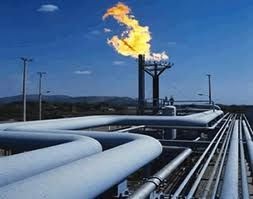
Facing a shortfall in European gas exports due to Western sanctions, Gazprom anticipates it will sell 34 billion cubic meters of unexported gas to Central Asia, according to recent reports. "In light of the ongoing changes in the global energy market, Gazprom remains committed to ensuring a reliable gas supply to Russian consumers and bolstering export capabilities. A key focus for the company in this regard has been fostering collaboration with Kazakhstan, Uzbekistan, and Kyrgyzstan," Gazprom stated in a press release. The company confirmed a drop in gas exports to Europe of 34 billion cubic meters in the first eleven months of 2023, marking levels not seen since 1996. An earlier announcement by the Ministry of Energy of Uzbekistan unveiled a 15-year gas purchase agreement with Gazprom, extending the deal to include Kazakhstan, which involves a new pipeline construction. In October, reports indicated the commencement of Russian gas deliveries to Uzbekistan through Kazakhstan. However, the specifics of this arrangement have not been disclosed to date. Alexey Miller, Gazprom's chief, outlined plans to expand the Central Asia gas pipeline system in November, highlighting memoranda signed with Uzbekistan, Kazakhstan, and Kyrgyzstan, and expressing optimism that the project will rejuvenate this pipeline network. During the Soviet era, gas from the region was transported to Russia via the Central Asia–Center gas pipeline. After the USSR's dissolution, the pipeline ceased operations and deteriorated, requiring substantial refurbishment to enable gas supplies from Russia to Central Asia. Miller noted the completion of the initial repair stage of the Central Asia-Center gas pipeline, facilitating gas delivery to Uzbekistan via Kazakhstan. Earlier this year, Tashkent inked a two-year gas supply contract with Gazprom amounting to approximately 2.8 billion cubic meters annually. Despite these developments, details regarding the pricing of the purchased gas remain undisclosed. Which according to Uzbekistan's Energy Minister, Zhurabek Mirzamakhmudov, is “in alignment with national interests and market dynamics.”

Raids Target Illegal Medicine Sales in Remote Turkmen Villages

Law enforcement agencies in the Mary Velayat district have initiated crackdowns on citizens engaging in the unauthorized sales of medicines,Radio Azatlyk has reported. While these actions target what authorities deem to be illegal, individuals conducting the trades in remote areas argue that they're simply filling a crucial gap in essential healthcare access. Sellers in remote villages assert that they offer commonly used medications like analgin and paracetamol, which, to their understanding, don't require a doctor's prescription. These traders claim to have procured these medicines from city pharmacies and to simply be reselling them at a slight markup in areas lacking facilities. "Our village lacks pharmacies. Ambulance services have substantial delays, sometimes failing to arrive. People turn to us for antipyretics when they're stricken with a fever at night. We offer a service that pharmacies don't provide. We aren't breaking any laws," emphasized one villager engaged in medicine sales. Another trader echoed this sentiment, stating, "We're simply providing a service to our community." Moreover, these merchants assert that they inform local district police officers about their activities, believing this communication suffices as adherence to the regulations. However, plainclothes police officers have been actively involved in operations targeting this unauthorized trade. During these raids, authorities confiscate medicines and detain the traders, issuing substantial fines. The scenario underscores a wider issue of inadequate medical facilities and pharmacy access in rural areas. Rural residents complain about delayed and inadequate ambulance services, exacerbating their struggle to access essential medical aid. Shortages of crucial medicines in both rural and urban pharmacies have been recurrent issues in Turkmenistan. Inconsistent availability of medications was reported earlier this year, highlighting a systemic challenge. Additionally, instances of medical professionals capitalizing on pharmaceutical shortages for extra profits surfaced in December of the previous year. Trading medicines in Turkmenistan requires the possession of a valid license, and according to local legislation, sales should be conducted exclusively by individuals with a secondary or higher pharmaceutical education. This tension between unauthorized sales and healthcare gaps in remote regions presents a complex challenge in need of resolution.

EU’s €20M Project to Diversify Internet Resources in Kazakhstan with Satellite Communications

The European Union (EU) is set to contribute to the diversification of internet resources in Kazakhstan, as announced by Johannes Baur, the Head of the Cooperation Department of the EU Representative Office in Kazakhstan. This initiative is part of the EU's broader commitment to bolstering digital infrastructure and connectivity in Central Asia. "In Kazakhstan, internet traffic now comes from Russia and China," Baur said during a meeting organized by the Eurasian Foundation for Central Asia. He further explained the EU's proposition: "Our project wants to offer Kazakhstan the opportunity to use European satellite communications, a product of the European company, SES. For example, while Starlink satellites orbit the Earth in a low orbit, SES satellites orbit in a medium orbit. Satellites in medium orbit can cover the whole of Kazakhstan, which is an advantage. We can even cover the whole of Central Asia." This ambitious project has received approval from the European Commission and is set to be showcased at the Central Asia - European Union summit scheduled for 2024. Baur disclosed the initial funding earmarked for the project, stating, "First of all, the European Union will allocate 20 million euros, but this is the amount allocated to the whole of Central Asia. I think most of these funds will be directed to Kazakhstan, Kyrgyzstan and Uzbekistan. The specific details are still unknown, but it will be a large loan from the European Investment Bank." This initiative aligns with the EU's ongoing efforts to diversify its supply chains and strengthen its relations with strategic partners like Kazakhstan. Moreover, it is expected to contribute significantly to the development of a secure and sustainable supply of digital resources across Central Asia.