• KGS/USD = 0.01144 0%
  • KZT/USD = 0.00201 0%
  • TJS/USD = 0.10433 0%
  • UZS/USD = 0.00008 0%
  • TMT/USD = 0.28571 0%
  • KGS/USD = 0.01144 0%
  • KZT/USD = 0.00201 0%
  • TJS/USD = 0.10433 0%
  • UZS/USD = 0.00008 0%
  • TMT/USD = 0.28571 0%
  • KGS/USD = 0.01144 0%
  • KZT/USD = 0.00201 0%
  • TJS/USD = 0.10433 0%
  • UZS/USD = 0.00008 0%
  • TMT/USD = 0.28571 0%
  • KGS/USD = 0.01144 0%
  • KZT/USD = 0.00201 0%
  • TJS/USD = 0.10433 0%
  • UZS/USD = 0.00008 0%
  • TMT/USD = 0.28571 0%
  • KGS/USD = 0.01144 0%
  • KZT/USD = 0.00201 0%
  • TJS/USD = 0.10433 0%
  • UZS/USD = 0.00008 0%
  • TMT/USD = 0.28571 0%
  • KGS/USD = 0.01144 0%
  • KZT/USD = 0.00201 0%
  • TJS/USD = 0.10433 0%
  • UZS/USD = 0.00008 0%
  • TMT/USD = 0.28571 0%
  • KGS/USD = 0.01144 0%
  • KZT/USD = 0.00201 0%
  • TJS/USD = 0.10433 0%
  • UZS/USD = 0.00008 0%
  • TMT/USD = 0.28571 0%
  • KGS/USD = 0.01144 0%
  • KZT/USD = 0.00201 0%
  • TJS/USD = 0.10433 0%
  • UZS/USD = 0.00008 0%
  • TMT/USD = 0.28571 0%

Viewing results 13 - 18 of 49

Drone Attack on Caspian Pipeline Consortium Station: Implications for Kazakhstan

On February 17, the Caspian Pipeline Consortium (CPC) reported a drone attack on the Kropotkinskaya oil pumping station in Russia's Krasnodar region.  According to an official CPC statement, the attack involved seven drones armed with explosives and metal shrapnel. The strikes occurred at intervals, which, according to experts, suggests an intent not only to disable the facility but also to endanger personnel. Despite this, no casualties were reported. Quick action by CPC employees prevented an oil spill, though the station was taken out of operation. A commission led by CPC General Director Nikolay Gorban arrived at the site to assess the damage and determine a timeline for repairs. Currently, oil transportation along the Tengiz-Novorossiysk pipeline is operating at reduced capacity, bypassing the Kropotkinskaya station. CPC’s international shareholders, including companies from the United States and Europe, have been informed of the attack and its consequences. Temur Umarov, a researcher at the Carnegie Center for Russian and Eurasian Studies in Berlin, commented on the incident via his Telegram channel, noting that Ukraine had previously avoided targeting CPC infrastructure in Russia to avoid harming Kazakhstan and its Western partners, such as Chevron, Shell, ExxonMobil, and Eni. However, he said this latest attack underscores Kazakhstan's vulnerability, as the country relies on the CPC pipeline for 80% of its oil exports. "Whatever the consequences and reactions to this episode, it reminds Kazakhstan once again of its deep dependence on the CPC pipeline; through it, Astana can be pressured both by Russia and, as we now see, by others," Umarov wrote. The Kropotkinskaya station is the largest CPC oil pumping facility in Russia, located in Krasnodar Krai. However, according to the TCA, no Kazakh oil passes through this station. This is not the first time drones, presumably Ukrainian, have targeted infrastructure related to Kazakh oil exports via Russian territory. In December 2023, drones struck a loading point of the Druzhba pipeline in Russia’s Bryansk region, a key route for Kazakh oil exports to Europe. 

U.S. Urges Tajikistan to Enforce Sanctions on Russian Firms Amid Ongoing Compliance Review

The Tajik government has received an official letter from the United States requesting compliance with sanctions against several Russian companies operating in the country, Chairman of the State Committee on Investment and State Property Management Sulton Rakhimzoda announced at a press conference on February 11. According to Rakhimzoda, the U.S. has requested clarification on what measures Tajik authorities plan to take regarding the sanctions. “This is a sensitive topic, and it is currently under consideration,” he stated. He added that sanctions against Russian companies are not a new phenomenon and that businesses affected by the restrictions should already have mechanisms in place to adapt. “It is clear that sanctions impact companies to varying degrees. However, as far as I know, they have already developed strategies to operate under these conditions. These issues are also being discussed in negotiations with the government,” Rakhimzoda said. He noted that the Investment Committee does not oversee this sector directly, but that the relevant government agencies are handling the matter. Following the start of the conflict in Ukraine, the U.S. and the European Union imposed strict sanctions on several Russian enterprises. In January 2025, the U.S. Department of the Treasury sanctioned Gazpromneft Tajikistan along with its parent company, Gazprom Neft. Tajik authorities have stated that the sanctions will not affect oil product imports into the country. However, experts warn that the restrictions could eventually impact other companies cooperating with Gazpromneft Tajikistan.

Uzbekistan to Receive Advanced ANKA Drones from Turkish Defense Company TUSAŞ

Uzbekistan will soon receive ANKA drones from Turkish defense company TUSAŞ, according to the SavunmaSanayiST portal. Deliveries are expected to begin in the coming days, though Uzbekistan has not disclosed details regarding the number of drones, their cost, or the terms of the agreement. Originally developed by Turkish Aerospace Industries (TAI) for the Turkish Armed Forces in the early 2000s, ANKA drones were initially designed for surveillance and reconnaissance. Over time, they have been upgraded with advanced radar systems, precision weaponry, and satellite communication capabilities. The first model, Anka-A, was introduced in 2010, with the Turkish Air Force signing its first contract for the drones in 2013. Subsequent improvements have equipped the drones with a national mission computer, an advanced flight control system, synthetic aperture radar, and a friend-or-foe identification system. TAI currently offers the Anka-B and Anka-S models, while the Anka-I variant was specifically developed for Turkey’s National Intelligence Organization for signals intelligence. As of March 2021, ANKA drones had accumulated over 90,000 flight hours. Uzbekistan has been steadily modernizing its defense forces. Last year, U.S. News ranked Uzbekistan 19th globally in military strength, the highest ranking among Central Asian countries. The acquisition of ANKA drones is expected to further enhance Uzbekistan’s surveillance and defense capabilities, reinforcing its position as a regional military power.

Uzbekistan Moves to Penalize Financing of Mass Disturbances

Uzbekistan’s Parliament, the Oliy Majlis, is taking decisive steps to address the organization and financing of public disturbances. On December 11, the Legislative Chamber approved a draft law amending Article 244 of the Criminal Code. Passed in its first reading, the amendments aim to strengthen the country’s legal framework for tackling mass disturbances. During a parliamentary session on December 24, the draft law advanced further, reaching its third reading and gaining adoption. The updated Article 244 introduces several significant changes: A new third section establishes specific liability for individuals undergoing training with the intent to participate in mass disturbances. A fourth section introduces fines for financing such activities. A fifth section provides an exemption from criminal liability for individuals who voluntarily report to law enforcement after undergoing such training. These amendments are designed to deter organized disturbances while promoting cooperation with authorities.

Kyrgyz Security Chief Declares Crackdown on Organized Crime a Success

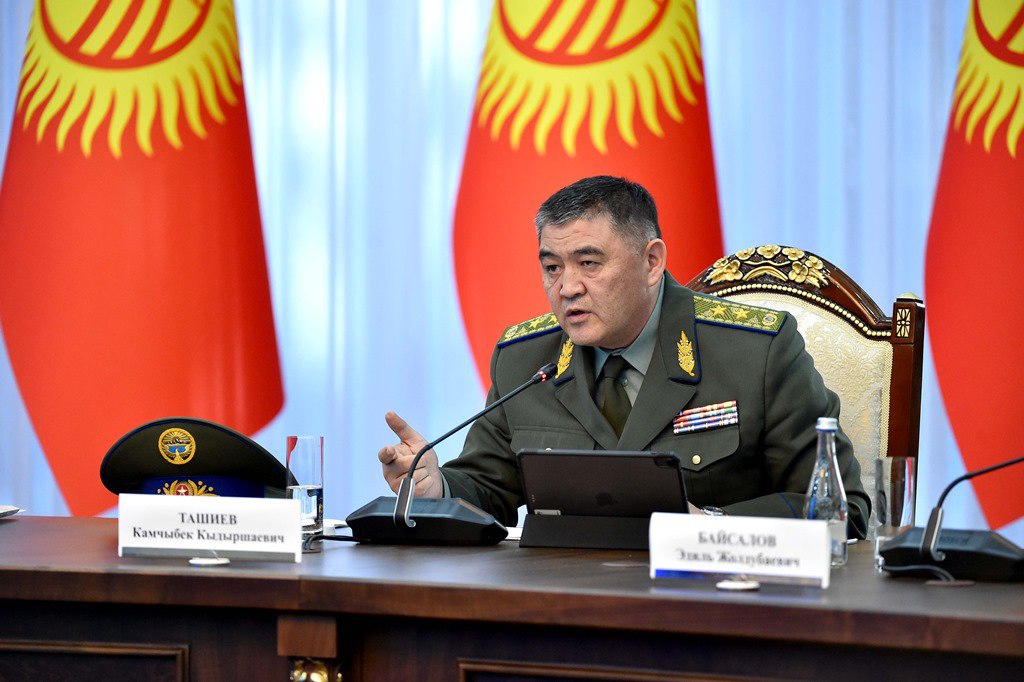
Kamchybek Tashiyev, the head of Kyrgyzstan’s State Committee for National Security (SCNS), declared that organized criminal groups (OCGs) have almost been eradicated nationally. Speaking at a press conference in Bishkek, Tashiyev highlighted significant achievements in the fight against organized crime. According to Tashiyev, property valued at 50 billion Kyrgyzstani som (KGS) has been recovered for the state budget as part of ongoing anti-crime efforts. Among the confiscated assets are those belonging to prominent figures in the criminal underworld, such as Kamchy Kolbayev, Kadyr Dosonov, Chyngyz Jumagulov, and Erkin Mambetaliyev. “A lot of property has been seized. Several boarding houses and sports complexes have already been sold,” Tashiyev stated. He also added that organized criminal groups have lost their influence and resources, asserting that Kyrgyz citizens can now work without fear. Kyrgyzstan’s government has intensified its campaign against organized crime. Key figures, including notorious crime boss Kamchy Kolbayev, have been detained or eliminated. Following these measures, several criminal leaders have publicly renounced their past and pledged to comply with the law. The Kyrgyz Interior Ministry has drafted the law “On the Prevention of Organized Crime” to establish a legal framework for combatting OCGs. This proposed legislation outlines preventive measures such as official warnings and financial audits for individuals suspected of criminal activity. While applauding the government’s efforts, some experts warn of potential negative consequences. Political scientist Aida Alymbayeva stressed that anti-crime initiatives must strictly adhere to legal procedures to avoid infringing on citizens' rights. Similarly, Doctor of Economics Asylbek Ayupov added that property seizures and arrests could impact tax revenues and harm Kyrgyzstan’s investment climate.

Justice for Veterans: U.S. Acknowledges Cancer Cases Tied to Service at Uzbekistan’s K2 Base

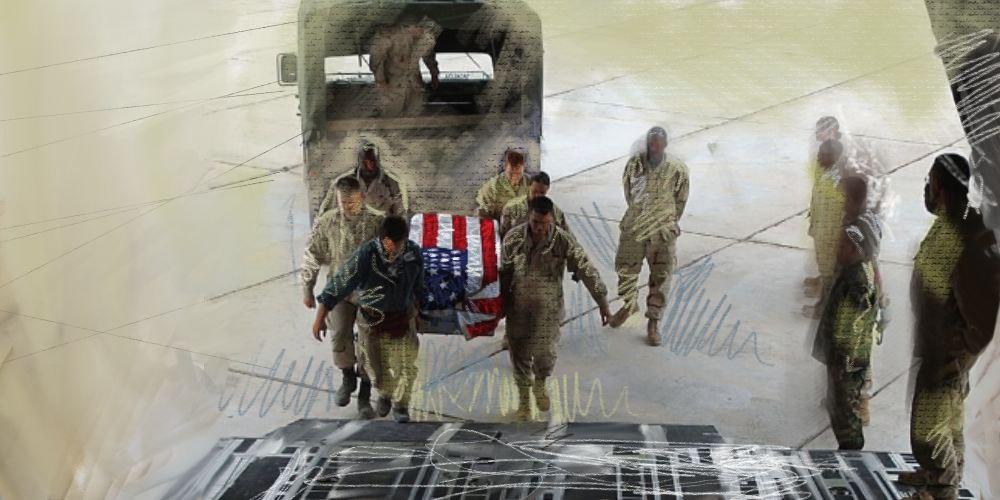
Thousands of American veterans who served at Uzbekistan’s K2 airbase have reported rare cancers and diseases - but only now, more than two decades later, is the U.S. government taking steps to address their dire situation. The U.S. Department of Veterans Affairs (VA) has announced plans to include bladder, urinary tract, and genitourinary cancers as conditions presumed to be linked to service at Uzbekistan’s Karshi-Khanabad airbase, known as K2. In 2001, the U.S. military moved into K2, a former Soviet airbase, to support a series of operations named “Enduring Freedom” which were purportedly aimed at tackling terrorism and Al-Qaeda in the wake of 9/11. However, in addition to the threat of terrorism, the troops faced another danger: the toxic environment. Reports from the base describe exposure to chemicals and radioactive materials. Soldiers recalled an underground “black bubble,” glowing lakes, and a chemical odor lingering in the air. [caption id="attachment_26149" align="aligncenter" width="634"] Image: Stronghold Freedom Foundation[/caption] The Karshi-Khanabad airbase was heavily used by the Soviet military during its operations in Afghanistan from 1979 to 1989, when it served as a site for producing, storing, and testing various weapons, including chemical weapons. The base also stored fuel, solvents, and other harmful substances. Additionally, it became a dumping ground for toxic waste, asbestos, enriched uranium, and other hazardous materials. Spills of these substances were frequent, leaving lasting environmental damage. Before the U.S. occupied K2, the destruction of Soviet-era missiles left some soil contaminated with low-level radioactive depleted uranium. The destruction of Soviet missiles was part of disarmament obligations under the 1987 Intermediate-Range Nuclear Forces (INF) Treaty. A 2001 survey found traces that could be harmful if inhaled, and a 2002 assessment confirmed small amounts of uranium, identified as non-U.S. depleted uranium, outside Camp Stronghold Freedom’s perimeter. The affected area was covered with clean soil, fenced off, and marked as off-limits in November 2001. Furthermore, approximately 392 chemical compounds were found at the K2 Air Base. Thousands of military personnel who served in K2 suffered from severe illnesses, including rare forms of cancer, associated with their time at the base. However, over the years, the U.S. government and the VA have delayed recognition of the link between service in K2 and these health issues, leaving many veterans without adequate support. [caption id="attachment_26150" align="aligncenter" width="1140"] Image: Stronghold Freedom Foundation[/caption] According to the Stronghold Freedom Foundation, K2 veterans are 500% more likely to get cancer than other veterans - 75% of U.S. service members deployed to Uzbekistan alone have developed at least one type of K2-related illness. On November 11, President Joe Biden announced an expansion of the PACT Act (Promise to Address Comprehensive Toxics Act), a law he signed in August 2022 to improve healthcare for veterans exposed to toxins. President Biden stated that the act has already helped over a million veterans and their families access benefits. Under new efforts, the VA will add bladder cancer, ureter cancer, multiple myeloma, and certain types of leukemia to the list of presumptive conditions. This expansion applies...