• KGS/USD = 0.01144 0%
  • KZT/USD = 0.00201 0%
  • TJS/USD = 0.10433 0%
  • UZS/USD = 0.00008 0%
  • TMT/USD = 0.28571 0%
  • KGS/USD = 0.01144 0%
  • KZT/USD = 0.00201 0%
  • TJS/USD = 0.10433 0%
  • UZS/USD = 0.00008 0%
  • TMT/USD = 0.28571 0%
  • KGS/USD = 0.01144 0%
  • KZT/USD = 0.00201 0%
  • TJS/USD = 0.10433 0%
  • UZS/USD = 0.00008 0%
  • TMT/USD = 0.28571 0%
  • KGS/USD = 0.01144 0%
  • KZT/USD = 0.00201 0%
  • TJS/USD = 0.10433 0%
  • UZS/USD = 0.00008 0%
  • TMT/USD = 0.28571 0%
  • KGS/USD = 0.01144 0%
  • KZT/USD = 0.00201 0%
  • TJS/USD = 0.10433 0%
  • UZS/USD = 0.00008 0%
  • TMT/USD = 0.28571 0%
  • KGS/USD = 0.01144 0%
  • KZT/USD = 0.00201 0%
  • TJS/USD = 0.10433 0%
  • UZS/USD = 0.00008 0%
  • TMT/USD = 0.28571 0%
  • KGS/USD = 0.01144 0%
  • KZT/USD = 0.00201 0%
  • TJS/USD = 0.10433 0%
  • UZS/USD = 0.00008 0%
  • TMT/USD = 0.28571 0%
  • KGS/USD = 0.01144 0%
  • KZT/USD = 0.00201 0%
  • TJS/USD = 0.10433 0%
  • UZS/USD = 0.00008 0%
  • TMT/USD = 0.28571 0%

Viewing results 451 - 456 of 828

Kazakhstan Refuses to Finance an Artificial Rain Project over the Aral Sea

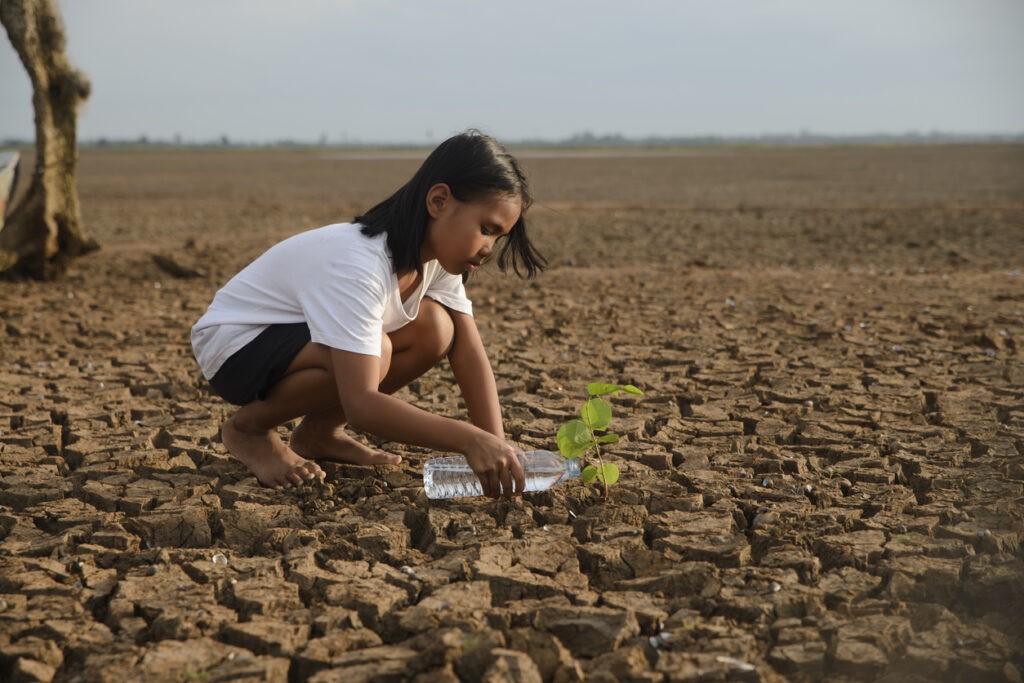
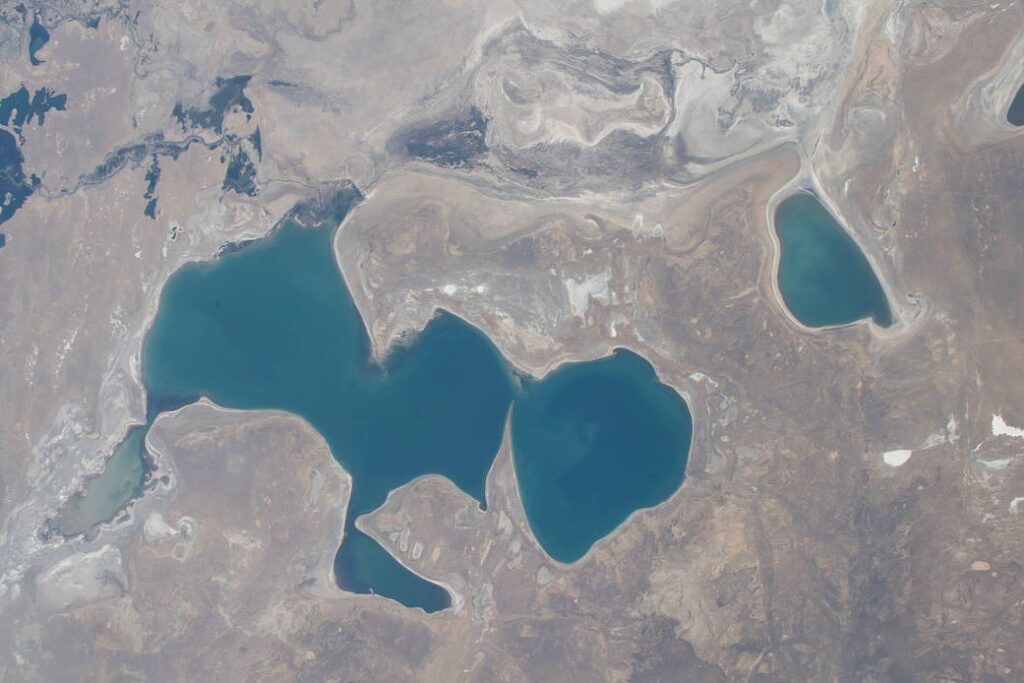
Kazakhstan's Ministry of Agriculture has decided not to support a project by inventor Altay Ainabek aimed at bringing artificial rain over the Aral Sea to revive it. At a recent government briefing, the deputy minister for agriculture, Azat Sultanov, answered journalists' questions about public interest in the project. Sultanov said that the decision not to fund the project is related to environmental and legal issues. Firstly, artificially inducing precipitation could negatively affect the ecosystems and natural resources of the region where the experiment will be conducted, leading to unintended consequences and environmental harm. In addition, according to Sultanov, the legality and legitimacy of using such technologies is questionable. The agriculture ministry does not yet have a scientific conclusion and does not have sufficient experience in this area. These factors make it impossible to finance such projects from the state budget. The deputy minister added: “We have researched the law many times. Specialists from abroad have already come to us with questions. You probably know that in Mangistau and West Kazakhstan regions 2-3 years ago, there were problems with water. Then, it was suggested to cause precipitation to make it rain. However, there are several aspects to this problem. On the one hand, there are environmental issues; it's nature. Even though it rained in one place, it can cause harm in another.” In 2021, artificially inducing rain was tested for the first time in Mangistau. The sprinkler system works using Clear Sky Manager technology. However, a little later, it became known that the installations affected the amount of rainfall. Abnormal rains led to floods and river overflows in the traditionally arid region, so the experiment was halted.

ADB to Support Climate-Friendly Business Environment in Tajikistan

The Asian Development Bank (ADB) says it has approved a $50 million policy-based grant for a program that will help the government of Tajikistan foster a climate-responsive business environment and support small and medium-sized enterprises (SMEs) in the country. The program aims to transform Tajikistan's business environment through digitization, reforms to increase exports, improvement of infrastructure governance, fiscal transparency, and support for climate-friendly SMEs. Underscoring ADB's commitment to supporting Tajikistan in its transition to a green economy, ADB Director General for Central and West Asia Yevgeniy Zhukov commented, “By promoting climate-responsive investments and improving the overall business environment, we aim to stimulate economic growth, create green jobs, and enhance the country's resilience to climate change." The program will support reforms subsidizing climate-friendly SMEs, and prioritizing funding for female entrepreneurs. It advances digitization and e-commerce through the Agency for Innovation and Digitization and the approval of the E-Commerce program. The program will also support enhanced public investment management through assessments to recommend improvements and prioritize climate-focused projects. Fiscal transparency will improve the Ministry of Finance’s capacity to publish government finance statistics. The program will also promote international trade and investment by streamlining trade documentation processes and updating regulatory frameworks for issuing local and green bonds.

Uzbekistan Sends Almost 4 Billion Cubic Meters of Irrigation Water to Kazakhstan

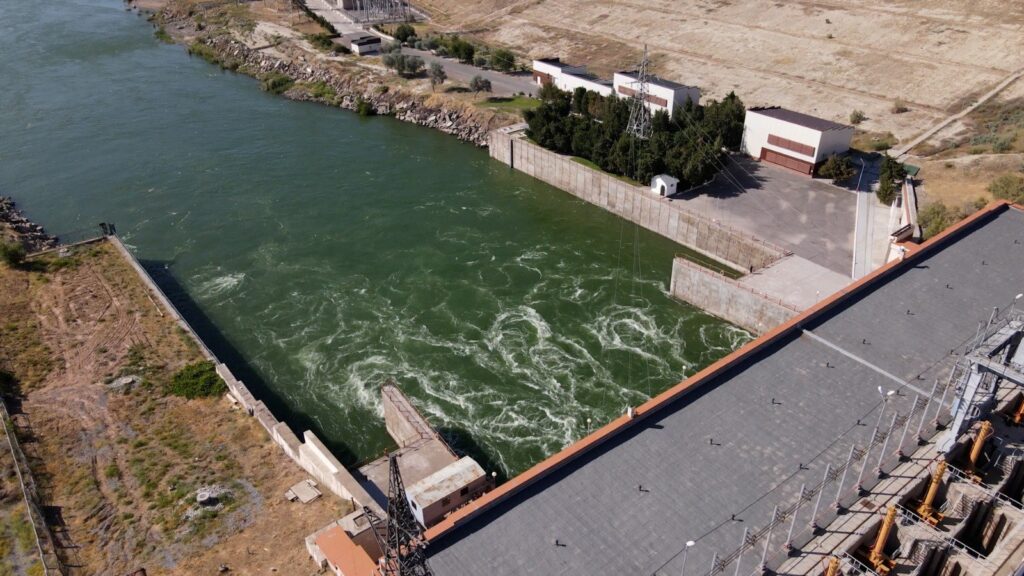
Kazakhstan’s Ministry of Water Resources and Irrigation has announced that since the beginning of this year’s irrigation season on April 1, Uzbekistan has sent 3.9 billion cubic meters of water to Kazakhstan via the Syrdarya River. Earlier, the ministry came to an agreement with Uzbekistan that 3.7 billion cubic meters of water would be sent to Kazakhstan via the Syrdarya River over six months. It is expected that before the end of the irrigation season, Uzbekistan will send Kazakhstan an additional one billion cubic meters of water. This water is intended for farmers in the southern regions of Kazakhstan. Water from Uzbekistan is accumulated in the Shardara reservoir, which currently contains 2.6 billion cubic meters, 689 million cubic meters more than a year ago. A total of 3.6 billion cubic meters of water has been sent from the Shardara reservoir to the lower reaches of the Syrdarya River, 950 million cubic meters more than last year. More than 700 million cubic meters of that water was sent to the Kyzylkum canal and more than 400 million cubic meters to the North Aral Sea.

Facing Pressures, Koytendag Nature Refuge in Turkmenistan Aims for UNESCO Status

Limestone canyons and grassy plateaus. Vultures, lynx and  markhor, a wild goat known for its corkscrew-style horns. Pistachio trees and juniper forests. The fossilized footprints of dinosaurs and a cave that runs three kilometers into the ground.  The Koytendag State Nature Reserve and surrounding areas in eastern Turkmenistan are a stunning refuge of biodiversity next to Uzbekistan and near Afghanistan. The ecosystem includes river valley plains as well as Ayrybaba, Turkmenistan’s highest mountain at 3,137 meters. Some 50,000 people live in the area. Conservationists are assessing whether the region, which faces pressures such as agricultural encroachment, illegal hunting and unregulated tourism, can become a UNESCO natural world heritage site. [caption id="attachment_20918" align="aligncenter" width="551"] Researchers at the mouth of Koytendag’s Kaptarkhana cave (Image: CLLC)[/caption] There are efforts to reframe the bid for UNESCO status as a “transnational nomination” that pairs Koytendag with Uzbekistan’s adjoining Surkhan State Nature Reserve and could reduce barriers to the movement of wildlife between the two areas. The Koytendag reserve encompasses about 27,000 hectares and the total area of the proposed heritage space in Turkmenistan is 122,000 hectares, according to UNESCO. The U.N. agency says Koytendag is somewhat similar to other mountainous reserves in Central Asia - Chatkal in Uzbekistan, Aksu-Dzhabagly in Kazakhstan and Sary-Chelek in Kyrgyzstan – “but unlike them has a number of highly distinctive geological features.” Turkmenistan’s “system of protected areas,” which includes mountain, desert and marine ecosystems, covers 4.38% of the country, or just over 2,150,000 hectares, the Ministry of Environmental Protection said. Turkmen officials have been working with international conservation groups to protect and restore biodiversity. Conservation X Labs, or CXL, has outfitted some Turkmen rangers with new field uniforms, including those at Koytendag reserve, according to Tatjana Rosen, director of Central Asia Programs for the U.S.-based group.  [caption id="attachment_20920" align="aligncenter" width="533"] Panoramic view of the Koytendag reserve (Image: CLLC)[/caption] Rosen also said CXL and another group, the Center for Large Landscape Conservation, hired an international expert in SMART conservation technology and bought rugged Blackview phones where the SMART software is downloaded. Koytendag rangers have the devices and can use the technology to collect, analyze and report data from the field. Integrating the technology at the national level is ongoing.     Another international donor active at Koytendag is the Critical Ecosystem Partnership Fund, which has funded the conservation of pistachio orchards, the improvement of water supply, the education of local communities about the environment and other projects.   Last year, national and international conservationists conducted a weeklong field mission in Koytendag, surveying flora and fauna and also talking to local communities. At one point, the team chatted with shepherds tending their flocks about sustainable use of pastures and other employment options.    “Overall, it was noted that jobs are scarce in the villages and the demand for shepherding continues to increase,” the Center for Large Landscape Conservation said in a report on the trip.  A meeting of conservationists followed soon after in Ashgabat, Turkmenistan’s capital.  Speleologists have been interested in Koytendag's elaborate cave...

Tigers to Return to Kazakhstan

The Ministry of Ecology of Kazakhstan and the World Wide Fund for Nature (WWF International) are set to reintroduce tigers to the republic by settling the animals in a new reserve. Following an agreement signed by the two parties in mid-July, the Ministry of Ecology stated: "This memorandum is a continuation of successful and fruitful cooperation, which has already led to significant achievements in the restoration of biodiversity and infrastructure of the Ile-Balkhash Nature Reserve. The tiger's return to Kazakhstan is an ecologically important project and a symbol of our efforts to restore the natural heritage." The project has been many years in the making. In 2021, President Kassym-Jomart Tokayev discussed reintroducing tigers to Kazakhstan with Russian President Vladimir Putin. Referencing the fact that the last Turanian tigers were spotted in Kazakhstan in the 1930s, he explained: "These are steppe tigers. In ancient times, they were sabre-toothed, so now we are developing an international project to restore the population of these tigers." The long-awaited tigers will arrive this autumn and as reported by the Ministry of Ecology, two tigers, a male and a female, will be delivered from the Netherlands at the expense of the Dutch side in September. In addition to these animals, in 2023, environmentalists announced plans to release a group of Amur tigers from Russia within five years, following an agreement signed by Russia and Kazakhstan at the Eastern Economic Forum (EEF) in 2022. It was assumed that the first generation of the population would consist of Amur tigers, including those from Primorye. Turanian, otherwise known as Transcaucasian tigers, which used to live in Central Asia, northern Iran, and the Caucasus, are genetically close to Amur tigers but slightly smaller. The intention to recreate the tiger population in the country was first declared at an international forum dedicated to preserving tigers in 2010.  Kazakhstan announced its readiness to embrace the initiative and since then, has been rigorous in its preparations. In September 2017, a memorandum was signed between the World Wildlife Fund (WWF) and the government of Kazakhstan on implementing the program  and in 2018, the Ile-Balkhash State Nature Reserve was established, where work to restore the ecosystem is in full swing. The tiger reintroduction program is planned to span over 35 years and comprises three phases: habitat preparation, predator release, and monitoring the growth of the tiger population. In the Ile-Balkhash reserve, boundaries have been established, communication systems have been set up, and comprehensive territory protection measures have been implemented. "The reserve territory is a natural complex that includes a variety of natural ecosystems from semi-desert, floodplain, and saxaul forests to wetlands. Such a favorable geographical location and rich forage create favorable conditions for the breeding of wild animals and a large number of birds. Biodiversity of the reserve includes about 40 species of mammals, 284 species of birds, and more than 420 species of plants, many of which are included in the Red Book of Kazakhstan," the Ministry of Ecology explained. Since 2019, the reintroduction...

World Bank to Provide Additional Support for Kambarata-1 Hydropower Project in Kyrgyzstan

The World Bank announced on July 11 that its Board of Executive Directors has approved $13.6 million in additional financing for the Kambarata-1 Hydropower Plant (HPP) Project in Kyrgyzstan. This additional funding will supplement the ongoing $5 million Technical Assistance Fund. The World Bank is aiming to support the government of the Kyrgyz Republic in preparing the Kambarata-1 HPP project in an environmentally, technically, financially, and commercially sustainable manner. Hugh Riddell, World Bank’s Country Manager for the Kyrgyz Republic, commented: “The World Bank is assisting the Kyrgyz Republic in developing its vast clean energy potential, which would be key to realizing the country’s and region’s bold initiatives on clean energy transition and enhanced regional cooperation on energy and water. World Bank support will help the government of the Kyrgyz Republic to comprehensively prepare the Kambarata-1 HPP Project in a sustainable and bankable way.” The ongoing Technical Assistance for the Kambarata-1 Hydropower Plant Project has made significant progress since its approval in the fall of 2023. The project feasibility update has commenced, and environmental and social reports are being prepared. In addition, a Donor Coordination Committee was established during the International Energy Investment Forum held in Vienna in June 2024. This additional financing is needed to ensure comprehensive and in-depth implementation of several critical activities, including establishing panels of experts on dam safety, environmental, and social concerns. The funding will also help in designing a benefit-sharing plan, structuring the project’s financing plan and commercial framework, and establishing a company to run the dam upon its completion. The additional financing is to be provided on highly concessional terms and comprises $11 million of credit at zero percent interest, with repayments eased over 50 years and a 10-year grace period. In addition to this credit, there is a $2.6 million grant from the Central Asia Water and Energy Program (CAWEP), which requires no repayment. The CAWEP is a multi-donor partnership between the World Bank, the European Union, Switzerland, and the United Kingdom, which is aimed at strengthening regional cooperation on water and energy security in Central Asia, which is facing  a climate emergency. The Donor Coordination Committee for the construction of Kambarata-1 HPP was established at the Kyrgyz Republic International Energy Investment Forum, which was held in Vienna on June 10. The Committee comprises major international financial institutions and development partners, including the World Bank, the OPEC Fund, the Asian Development Bank, the Asian Infrastructure Investment Bank, the Islamic Development Bank, and the European Bank for Reconstruction and Development. Speaking at the Vienna forum, Chairman of the Cabinet of Ministers of the Kyrgyz Republic Akylbek Japarov said that the Kambarata-1 HPP project has broad economic, environmental, and social benefits and prospects for both Kyrgyzstan and the rest of Central Asia. The project will provide Kyrgyzstan and Central Asia with clean energy at the lowest possible cost. The Kambarata-1 HPP will be situated in the upper reaches of the Naryn River in Kyrgyzstan. Its installed capacity will be 1,860 megawatts, and its average annual...