• KGS/USD = 0.01144 0%
  • KZT/USD = 0.00212 0%
  • TJS/USD = 0.10456 0.19%
  • UZS/USD = 0.00008 0%
  • TMT/USD = 0.28490 0%
  • KGS/USD = 0.01144 0%
  • KZT/USD = 0.00212 0%
  • TJS/USD = 0.10456 0.19%
  • UZS/USD = 0.00008 0%
  • TMT/USD = 0.28490 0%
  • KGS/USD = 0.01144 0%
  • KZT/USD = 0.00212 0%
  • TJS/USD = 0.10456 0.19%
  • UZS/USD = 0.00008 0%
  • TMT/USD = 0.28490 0%
  • KGS/USD = 0.01144 0%
  • KZT/USD = 0.00212 0%
  • TJS/USD = 0.10456 0.19%
  • UZS/USD = 0.00008 0%
  • TMT/USD = 0.28490 0%
  • KGS/USD = 0.01144 0%
  • KZT/USD = 0.00212 0%
  • TJS/USD = 0.10456 0.19%
  • UZS/USD = 0.00008 0%
  • TMT/USD = 0.28490 0%
  • KGS/USD = 0.01144 0%
  • KZT/USD = 0.00212 0%
  • TJS/USD = 0.10456 0.19%
  • UZS/USD = 0.00008 0%
  • TMT/USD = 0.28490 0%
  • KGS/USD = 0.01144 0%
  • KZT/USD = 0.00212 0%
  • TJS/USD = 0.10456 0.19%
  • UZS/USD = 0.00008 0%
  • TMT/USD = 0.28490 0%
  • KGS/USD = 0.01144 0%
  • KZT/USD = 0.00212 0%
  • TJS/USD = 0.10456 0.19%
  • UZS/USD = 0.00008 0%
  • TMT/USD = 0.28490 0%

Viewing results 2107 - 2112 of 3334

By 2035, the Capacity of Hydroelectric Power Plants in Central Asia Will Increase by 8,900MW

By 2028-2029, Central Asia will face a permanent and persistent water scarcity, with a deficit estimated to be between 5-12 cubic kilometers annually. At the same time, the demand for electricity in Central Asia is expected to increase significantly over the next ten years, Nikolai Podguzov, Chairman of the Eurasian Development Bank (EDB) Management Board said this week at the World Hydropower Congress in Bali. "In the Central Asian region, hydropower plays a key role not only in generating electricity, but also in regulating river runoff for irrigation purposes,” Podguzov stated. “In this regard, the countries of the region are interested in the multipurpose use of their water resources, and wish to attract investment to develop water resources potential". According to Podguzov, the construction of new hydroelectric power plants with reservoirs and the modernization of already functioning HPPs will both serve to reduce the impact of climate change and ensure the steady economic and social development of the region, which is highly reliant on affordable, environmentally-friendly energy and a sustainable irrigation supply. "According to our estimates, Central Asia is one of the few regions in the world where the hydropower potential has been developed by less than 25%”, Podguzov said. “Currently, there are more than 80 hydroelectric power plants operating in the region, with a total installed capacity of about 14,000 MW. In the period up to 2035, it is planned to increase the capacity of local hydroelectric power plants by 8,900 MW through the modernization of already functioning HPPs and the construction of new ones. The largest new projects being implemented include the construction of the 1,860 MW Kambarata HPP-1 in the Kyrgyz Republic, and the 3,600 MW Rogun HPP in Tajikistan”.

EDB Proposes Ten Steps to Preserve Irrigated Land Potential and Support Water Conservation in Central Asia

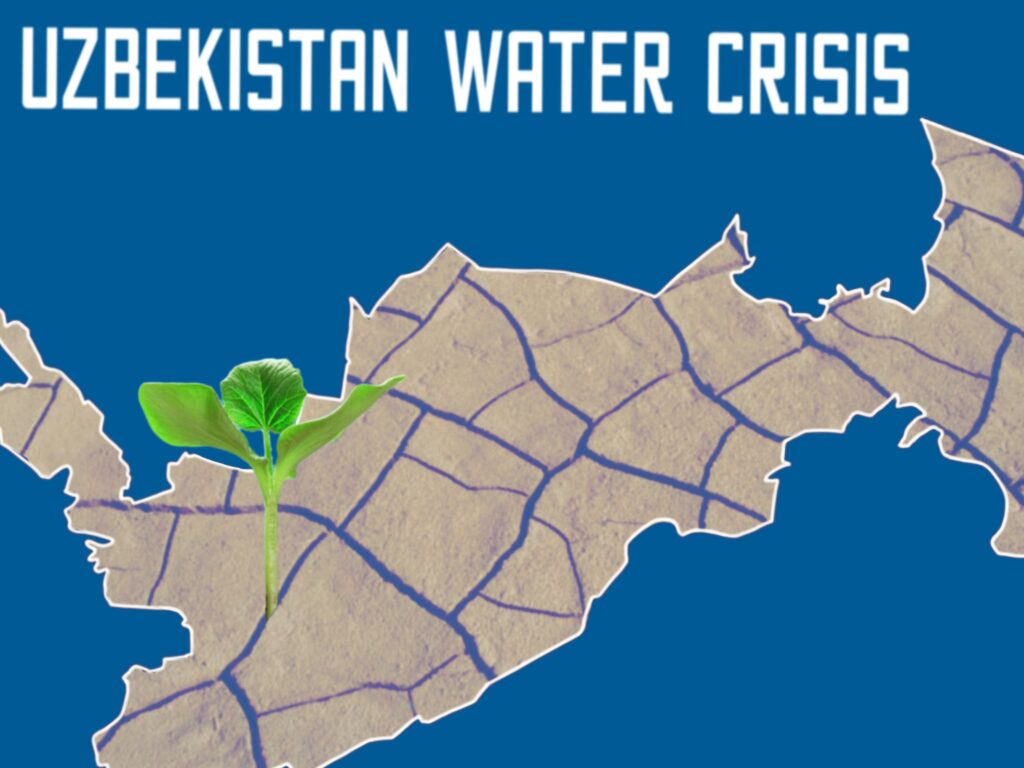
As outlined in a press release on the EDB website, in the summer of 2023, Central Asia was faced once again with water shortages, which have a significant impact on agriculture. The sector relies on irrigation, which consumes up to 80% of available water, and has a poor track record with regard to the efficient use of water resources. The irrigation infrastructure is over 50 years old. More than half of all irrigated land has become salinized, and 40% of water is lost through irrigation canals. A new Eurasian Development Bank (EDB) study entitled “Efficient Irrigation and Water Conservation in Central Asia” outlines ten practical steps for preserving irrigated land potential and promoting water conservation. The list includes four recommendations for adoption at a regional level and six at a national level. The measures are designed to save enough water each year to support sustainable development. Implementing the measures will require collaboration between governments, farmers and multilateral development institutions. The need for urgent action is intensified by the anticipated reduction in the flow of the Amu Darya River. Water deficit is a key structural constraint to socio-economic development in Central Asia. This region is among the most vulnerable to climate change, with temperatures rising at a faster rate than the global average. Periods of drought and low water are becoming more frequent, and the hydrological patterns of rivers and groundwater supplies are undergoing change. Glacier areas have been diminishing rapidly, with a 30% decrease over the last 50 years. Climate change is leading to reduced river flows at a time when the region’s demand for water is growing rapidly. The primary solution to the water deficit lies in improving irrigation practices. Agriculture in Central Asia is the largest consumer of water, with irrigation accounting for 100.4 km3 of the total 127.3 km3 (80%) of water used in the region in 2020. Historically, irrigation has played a vital role in developing agriculture and ensuring food security in the region. Central Asia boasts 10.1 million hectares of irrigated land, representing approximately 2.9% of the world’s total. This irrigated land generates nearly 66% of the region’s gross agricultural output in terms of value. However, Central Asia’s irrigation infrastructure is highly degraded and technically inadequate. It lacks the equipment needed for metering and distributing water for irrigation and controlling its use in the field. The average age of the irrigation infrastructure is over 50 years. Up to half of irrigated land is salinized. Water use in agriculture is inefficient, with 40% of water lost in the irrigation canal system. A commitment to conserving water appears to be the only solution to protecting the potential of irrigated land and food security in Central Asia. This shift in approach is imperative not only because of climate change and escalating water demand, but also to mitigate the anticipated decrease in the flow of the Amu Darya River from Afghanistan. By 2028, the combined effects of climate change, low-water periods and the commissioning of the Kosh-Tepa Canal in...

Kazakhstan and Uzbekistan to Bring Mutual Trade to $10 Billion

On November 9th, Alikhan Smailov, the Prime Minister of Kazakhstan, made an official visit to Tashkent, Uzbekistan, for the 16th summit of the Economic Cooperation Organization. Prior to the event, he met with the President of Uzbekistan, Shavkat Mirziyoyev. During their meeting, Smailov extended warm greetings from the President of Kazakhstan, Kassym-Jomart Tokayev, and highlighted the strong strategic partnership between the two nations, based on trust and mutual understanding3. Smailov pointed out that "Uzbekistan is one of the largest trade partners of Kazakhstan. Our countries account for about 70% of all trade in Central Asia. At the end of last year, trade turnover increased by 30%, and for the first time reached the milestone of $5 billion. We are actively working to bring mutual trade to $10 billion”. Mirziyoyev reciprocated the sentiment, noting that the strategic agreements between Kazakhstan and Uzbekistan were being systematically realized across various sectors, including trade, transportation, and water management5. He added, “All issues we have are moving forward; I think there is not a single unresolved issue. In terms of trade, the projects we have agreed on with the President of Kazakhstan will help us reach new frontiers”. In line with these discussions, Arman Shakkaliev, Kazakhstan’s Minister of Trade and Integration, and Laziz Kudratov, Uzbekistan’s Minister of Investment, Industry and Trade, signed an agreement to regulate the activities of the International Centre for Industrial Cooperation “Central Asia”7. This center, set to be established on the border of the two countries, will house production sites, warehouses for goods and equipment storage, and transport infrastructure. The aim is to expedite cargo delivery and reduce logistics costs. The Industrial Cooperation Centre is expected to stimulate the creation of new production facilities and jobs, aid in the processing of agricultural and industrial products, and provide logistics services for goods transportation. It's hoped that the centre will enhance transport efficiency and expedite customs clearance processes. The signing of this agreement is a practical step towards the realization of the project. The launch of the Industrial Cooperation Centre is poised to serve as a catalyst for the further development of international trade and economic integration between Kazakhstan and Uzbekistan. It's also projected to contribute to increasing bilateral trade turnover to up to $10 billion.

Promoting Sustainable Development in Central Asia: Key Highlights from the Eurasian Development Bank’s Roundtable

According to a press release issued by the Eurasian Development Bank (EDB), on November 16th, 2023, Almaty, Kazakhstan, served as the venue for a critical roundtable hosted by the EDB, titled "Promoting Sustainable Development in Central Asia". This gathering saw the participation of representatives from a wide range of international organizations and multilateral development banks. Attendees included the likes of the World Bank, the Asian Development Bank, the Asian Infrastructure Investment Bank, the Islamic Development Bank, FAO, UNIDO, UNEP, ESCAP, UNDP, the World Health Organisation, the International Fund for Saving the Aral Sea, and CICA. The agenda was packed with discussions revolving around irrigation, water challenges, environmental and social standards of international financial institutions, and case studies that showcased collaborations in project implementation12. The EDB's latest report, "Efficient Irrigation and Water Conservation in Central Asia", was introduced during the roundtable's first session. Nikolai Podguzov, Chairman of the EDB Management Board, underscored the essential interrelationship between water, food, and energy in Central Asia. He declared the development of the region’s water and energy resources as a strategic priority for the EDB. He also expressed concerns over an impending water deficit in Central Asia within the next five years, urging for collective action supported by multilateral development banks3. Tatiana Proskuryakova, the Regional Director for Central Asia at the World Bank, also spoke at the event. She emphasized the importance of sustainable development in Central Asia to international organizations and multilateral financial institutions. She revealed that the World Bank has allocated approximately a quarter of its $12 billion investment portfolio in Central Asia to water, energy, and environmental sectors. This proportion is expected to rise to almost half in the near future4. Following this, Evgeny Vinokurov, EDB Chief Economist, presented the study "Efficient Irrigation and Water Conservation in Central Asia". He proposed a ten-step solution to address the prevalent issues. The steps include establishing an International Water and Energy Consortium; fostering collaboration among multilateral banks; creating a regional cluster to produce irrigation equipment; consolidating efforts to strengthen cooperation with Afghanistan; using PPP instruments; instituting proper water accounting; gradually integrating investment charges into the tariff structure; improving land conditions; implementing digital technology, and leveraging state-of-the-art irrigation technology and laser levelling.

President Tokayev’s Republic Day Speech Marks Thirty-Three Years of Independent Kazakhstan

In late October, Kazakhstan’s President Kassym-Jomart Tokayev delivered a speech on the eve of the country’s Republic Day holiday. While casting a view back to the declaration of independence in 1990, it was a multi-pronged evaluation of the events in the country’s current context. This approach allowed Tokayev to wear two hats – one as the head of state, which he has worn since 2019, and one as a professionally-trained political scientist and diplomat. Five main themes stood out in the President’s speech: The independence as the highest national value; the focus on a balanced, peaceful and co-operative foreign policy; the irreversibility of the recent progressive reforms which have strengthened rule of law and shifted the governance culture; the crucial role of the youth in shaping Kazakhstan’s future, and finally, the nation’s commitment to honoring the honest and dedicated work of its citizens. The President’s evaluation of his first theme, underlining the importance of the country’s independence, included a roll-call of more than a dozen unsung heroes of the early 1990s, who gave birth to the new state. “This declaration of independence,” he affirmed, “met the aspirations and expectations of the people and was adopted thanks to the wisdom and prudence of the country's patriots,” whose “courage and determination, shown at a critical hour can be regarded as true heroism.” While Tokayev did not include himself in that list, likely out of modesty, everyone listening to the speech knew that after the dissolution of the Soviet Union, he became the deputy foreign minister of a newly independent Kazakhstan in 1992. He stayed in that post for the better part of a decade before becoming deputy prime minister and then prime minister in 1999. From 2002 to 2007, he represented the country’s foreign ministry and served as state secretary. Thereafter, he variously spent two years as Director-General of the United Nations Geneva Office, and served as chairman of Kazakhstan’s Senate, until 2019 when he became President. Secondly, President Tokayev underlined that Kazakhstan’s balanced, peaceful and co-operative foreign policy was central to the nation’s strategy to consolidate and preserve its independence by safeguarding peace and harmony beyond its borders. The President’s message underscored the significance of Kazakhstan’s “precious legacy” of independence. This represents, he pointed out, the latest in a historical series of Kazakh states stretching back to Turkic Khaganates, the Golden Horde and the Kazakh Khanate. However, as Tokayev stressed, the present state of Kazakhstan represents not only a historical achievement but also an ongoing commitment to the future that shapes the country’s diplomatic strategy and its approach to global interactions. President Tokayev’s Republic Day speech also articulated the imperative of “zero tolerance” towards any manifestations of radicalism, extremism, legal nihilism, and everyday vandalism. These phenomena cannot be allowed because the maintenance of social stability and unity is the foundational domestic requirement for upholding sovereignty and statehood. His strict position on combatting these destructive forces is part and parcel of the government’s commitment ensure that the rule of law is respected...

President Tokayev Puts Kazakhstan at the Centre of International Diplomacy

In the first half of November, Kazakhstan's President Kassym-Jomart Tokayev received a series of global leaders who came to Kazakhstan for high-level meetings. French President Emmanuel Macron arrived at the beginning of the month for two days of intensive talks prior to signing significant agreements. Immediately after, the heads of state of the members of the Organisation of Turkic States attended the organisation's tenth anniversary summit meeting in Astana, hosted by President Kassym-Jomart Tokayev. A few days later, Russia's President Vladimir Putin, accompanied by his foreign minister Sergey Lavrov, came to Kazakhstan for wide-ranging bilateral consultations. This busy itinerary reinforces Kazakhstan’s role a pivotal player in global geopolitics. The country's diplomatic activity in recent years has become key to maintaining a delicate balance within Central Asia. Kazakhstan has also played a lodestar role in guiding the region on how to balance the increasingly fractured international system, reflecting both the country's geopolitical realities and its greater ambitions on the international stage. In this environment, Kazakhstan's President Tokayev has skilfully navigated relationships with regional players and global powerhouses. Macron’s first stop in Central Asia French President Macron's visit to Kazakhstan in early November was the first stop in his strategic tour of Central Asia. During his meeting with President Tokayev, Macron signed several important agreements concerning crucial sectors for future development and bilateral co-operation, including critical minerals, energy, pharmaceuticals and aerospace. These agreements signify France's realisation that, amidst Russia and China’s increasing influence in this region, France must strengthen its own relations with Central Asian countries. The agreements signed are not only economically substantial but also strategically astute. France is the fifth-biggest foreign investor in Kazakhstan, with existing ties in the energy and uranium mining sectors. France’s energy giant TotalEnergies has been long involved in the offshore Kashagan oilfield, while French company Orano, whose leader was included in Macron's delegation, runs a uranium mine in Kazakhstan. French energy company EDF is in contention for a contract to build Kazakhstan’s first nuclear power station. All these projects underscore France's strategic interest in its long-standing partnership with the country. As such, President Macron's visit is not merely a diplomatic courtesy but a demonstration of France's recognition of Kazakhstan's growing importance in international affairs. It also signifies a global shift of geopolitical focus towards Central Asia, where Kazakhstan stands as the leading country. Bilateral relations between the two countries are poised to develop robustly, exerting a significant influence on the region's economic and political dynamics. President Tokayev hosted a successful OTS summit The tenth anniversary summit of the Organisation of Turkic States (OTS) in Astana was an important moment in the history of Turkic co-operation. President Tokayev as the host (and representing Kazakhstan as a key OTS member) played a central role in shaping the summit's agenda and objectives. Two principal concerns of the gathering were to boost economic co-operation and diversify transport corridors. This emphasis aligns with the OTS members' economic development strategies to increase exports. Special attention was given to ways to support...