• KGS/USD = 0.01144 0%
  • KZT/USD = 0.00215 0%
  • TJS/USD = 0.10691 0.09%
  • UZS/USD = 0.00008 0%
  • TMT/USD = 0.28530 0%
  • KGS/USD = 0.01144 0%
  • KZT/USD = 0.00215 0%
  • TJS/USD = 0.10691 0.09%
  • UZS/USD = 0.00008 0%
  • TMT/USD = 0.28530 0%
  • KGS/USD = 0.01144 0%
  • KZT/USD = 0.00215 0%
  • TJS/USD = 0.10691 0.09%
  • UZS/USD = 0.00008 0%
  • TMT/USD = 0.28530 0%
  • KGS/USD = 0.01144 0%
  • KZT/USD = 0.00215 0%
  • TJS/USD = 0.10691 0.09%
  • UZS/USD = 0.00008 0%
  • TMT/USD = 0.28530 0%
  • KGS/USD = 0.01144 0%
  • KZT/USD = 0.00215 0%
  • TJS/USD = 0.10691 0.09%
  • UZS/USD = 0.00008 0%
  • TMT/USD = 0.28530 0%
  • KGS/USD = 0.01144 0%
  • KZT/USD = 0.00215 0%
  • TJS/USD = 0.10691 0.09%
  • UZS/USD = 0.00008 0%
  • TMT/USD = 0.28530 0%
  • KGS/USD = 0.01144 0%
  • KZT/USD = 0.00215 0%
  • TJS/USD = 0.10691 0.09%
  • UZS/USD = 0.00008 0%
  • TMT/USD = 0.28530 0%
  • KGS/USD = 0.01144 0%
  • KZT/USD = 0.00215 0%
  • TJS/USD = 0.10691 0.09%
  • UZS/USD = 0.00008 0%
  • TMT/USD = 0.28530 0%

Viewing results 2119 - 2124 of 3623

Central Asia’s Mineral Wealth Can Help the West Unlock a Greener Future

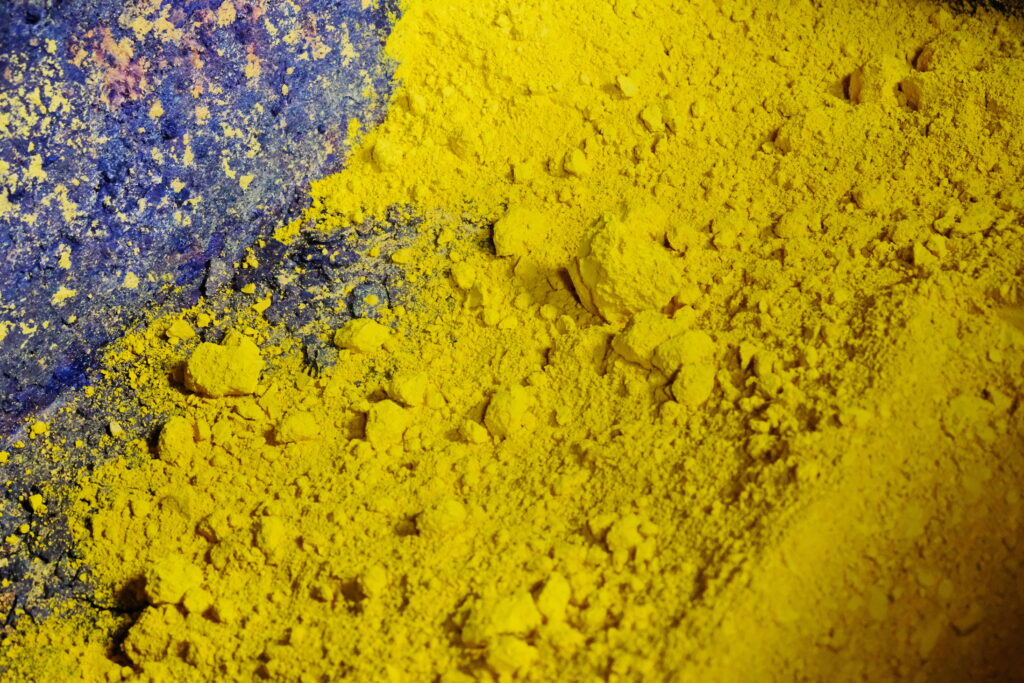
Critical minerals are essential components in many of today’s rapidly growing energy technologies. From lithium in electric vehicle batteries, to copper used in wind turbines and electricity networks, these minerals are at the heart of the green transition. The demand for these minerals will increase as clean-energy technologies continue to develop and become even more widely adopted. The International Energy Agency (IEA) forecasts a significant uptick in mineral requirements for clean energy technologies. According to its Sustainable Development Scenario (SDS), the world’s total mineral demand could quadruple by 2040. Electric vehicles and battery storage are expected to account for about half of this growth over the next two decades. A few major producers dominate the global market Problematically, the global market for critical minerals is dominated by just a few key players. China controls a significant portion of overall worldwide production, not to mention 85% of the processing capacity needed to refine these minerals for manufacturing purposes. China’s dominance extends to lithium, graphite, rare earth elements and cobalt, which are all essential for clean energy technologies. Russia also holds considerable weight in the resource-extraction sector. For example, it controls 43% of the palladium market and a quarter of vanadium production. These minerals have wide-ranging applications, with palladium used in catalytic converters and vanadium in batteries. The United States is heavily reliant on mineral imports from China. This dependence poses significant economic and security risks as any supply-chain disruption could have far-reaching impacts. As a result, the U.S. has initiated the Partnership for Global Infrastructure and Investment (PGII) and the Minerals Security Partnership (MSP). The PGII is a shared G7 commitment, while the MSP drives co-operation of 13 countries and the European Union (EU). They both aim to catalyse public and private investment in responsible global supply chains of critical minerals. Fortunately, Central Asia is emerging as a key player in the global critical minerals landscape. The region is perhaps best noted for its substantial reserves of uranium, of which it is the world’s largest supplier. Less known is the fact that the region also holds 38.6% of global manganese ore reserves, 30.07% of chromium, 20% of lead, 12.6% of zinc and 8.7% of titanium, as well as significant reserves of other critical materials. Eyes turn to Kazakhstan’s special contribution While all of Central Asia is rich in these minerals, Kazakhstan is increasingly noticed as the stand-out performer. Kazakhstan is perhaps best known as the global leader in uranium production. It has the world’s largest reserves of this metal, and has been the world’s top producer for several years. Uranium is necessary for the global nuclear energy supply chain, and Kazakhstan has implemented advanced recovery techniques, making the extraction process both efficient and environmentally friendly. Kazakhstan also has significant potential in rare earth elements, and is one of the world's largest producers of chromium (used primarily in producing stainless steel and other alloys) with one of the world's largest deposits and significant mining operations in the northwest regions. The country is...
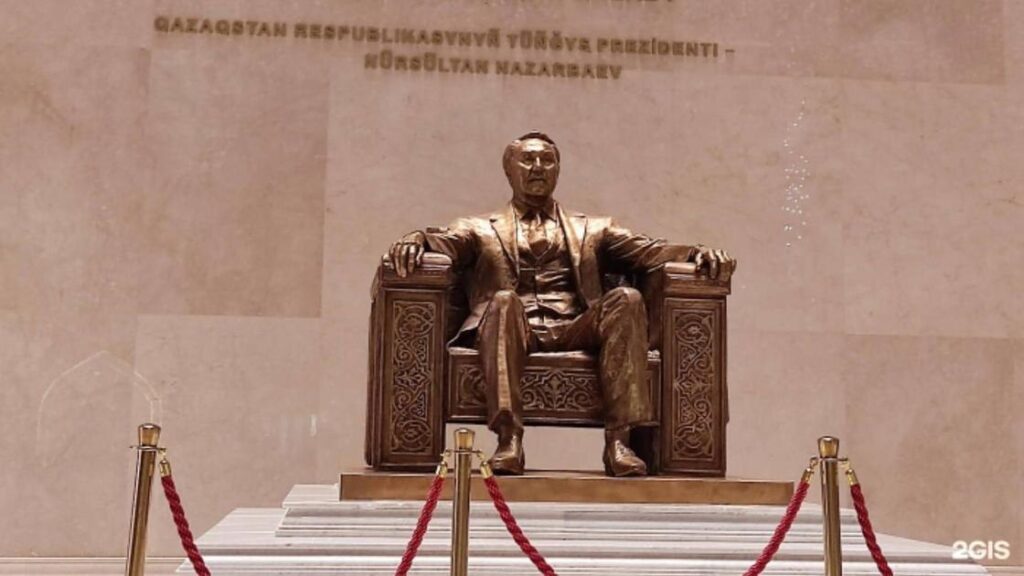

Elbasy No More: Monument to Nazarbayev Removed From National Museum

In a further sign of the dismantling of the cult of personality which the first President of Kazakhstan strove to build around himself, a monument to Nursultan Nazarbayev has been removed from the National Museum of Kazakhstan in Astana. According to the Minister of Culture and Information, the decision was made in relation to the modernization of the exhibition space. "This exhibit is the property of the museum, and in connection with the changes in the concept of the hall, [the monument] will be moved into permanent storage in the Museum Fund", the National Museum said in a statement. Renovation work has already begun at the hall of the National Museum which depicts "Independent Kazakhstan." The hall hasn’t been updated since 2014, and the management intends to highlight important events from the recent history of the country. The National Museum of Kazakhstan was built upon a direct order from former President Nazarbayev within the framework of a government program called "Cultural Heritage." It is the largest museum in the country, with its buildings occupying a total area of 74,000 square meters, with an exposition area adding another 14,000 square meters. The statue of Nazarbayev first appeared in the museum in July 2018. Above the sculpture of the former president a placard in Kazakh in Latin script reads, "My dream is for Kazakhstan to be an eternal country. Time will pass; people will pass - but independence will remain. The first president of the Republic of Kazakhstan, Elbasy (leader of the nation), Nursultan Nazarbayev." Could this mark the beginning of a wider trend? This is not the first time a monument to Nazarbayev has been removed. During the events of January 2022, a statue of the first president was demolished during riots in Taldykorgan. Later, another monument to Nazarbayev was removed from the National Defense University in Astana, and a picture of Nazarbayev which hung in the Almaty subway was also removed. In January 2023, the law on the first president and leader of the nation, which granted lifetime benefits and privileges to Nazarbayev was rescinded by the Constitutional Court. Earlier this year, a provocative exhibition by artist, Yerbosyn Meldibekov, about the fall of the ex-president and monuments to him was installed in the House of Officers, a military-cultural building in Almaty. Monuments and busts of Soviet-era leaders and revolutionaries in Kazakhstan still stand in parks and various buildings, though often no longer on central pedestals. As of 2021, there were still 159 statues commemorating Lenin, the majority of which are found in regions with a high-density of ethnic Russians, including Pavlodar and Akmola, and in the North Kazakhstan Region, where ethnic Russians outnumber Kazakhs, but since the fall of the Soviet Union, 341 had been demolished. Another lasting symbol of a cult of personality can be found among representatives of law enforcement agencies, who still revere the so-called "Godfather of the Chekists," Felix Dzerzhinsky. In the East Kazakhstan Region, which has an extremely high-density of ethnic Russians, a bust of...

Domestic Violence Victims Can Now Obtain EU Refugee Status After Ruling

Women who have suffered from domestic violence have the right to seek asylum in European Union (EU) countries, according to an EU Court of Justice ruling on January 16th. Anyone who has been subjected to physical and psychological violence, including sexual or domestic violence, can apply. If the those who apply do not meet the conditions for refugee status, they can claim additional measures of protection. Refugee status may already be granted to third-country nationals who are persecuted on racial, religious, or national grounds, as well as on the basis of political convictions or membership of a particular social group. According to the judges, threats from relatives "because of an alleged violation of cultural, religious or traditional norms" may qualify. Consequently, genital mutilation or forced marriage are often reasons for absconding, which women will have to disclose to authorities at the first interview. The EU came to this decision after the story of a Turkish national, a girl of Kurdish origin was forcibly married by her family. In the marriage, she was beaten and threatened by her husband, but managed to escape. The woman, who feared that her life would be in danger if she returned to Turkey, sought help and asked for international protection in Bulgaria. The local justices then referred the case to the Court of Justice of the EU. Karl Kopp, a migration expert for Pro Asyl - an independent human rights organization that advocates for the rights of refugees in Europe and Germany - said that the outcome is positive, and more women will be able to receive protection in the future. At present, Kazakhstan is discussing the issue of toughening punishment for domestic violence. A joint study by the Union of Crisis Centers and the Friedrich Ebert Foundation found that in 2021, the public safety authorities of Kazakhstan received almost 115,000 complaints of domestic violence. Of these, only 40% of cases made it to court, whilst 39% of perpetrators got off with sentences that restricted their freedom for periods ranging from two hours to three days.

Kazakhstan And Kyrgyzstan Address Border And Water Issues

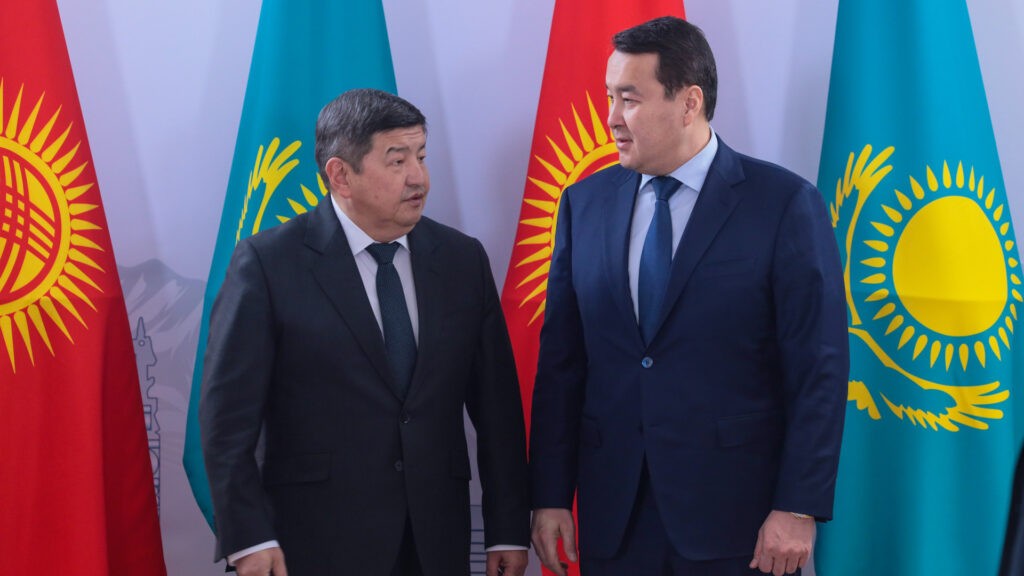
Kazakhstan and Kyrgyzstan will be working together to open an additional checkpoint for goods vehicles on their countries’ border. They are also set to further their cooperation in the water and energy sectors. These agreements were reached at a meeting between the Kazakh prime minister, Alikhan Smailov, and the chairman of Kyrgyzstan’s cabinet of ministers Akylbek Japarov in Almaty on February 1st.  Kyrgyzstan has complained for years about long lines at the Kazakh border for its cargo trucks bringing goods to Russia through Kazakhstan. The most recent big traffic jam occurred on the Kyrgyz side of the border in August 2023, when more than 600 trucks were stuck at the crossing.  These delays were caused by Kazakh authorities carrying out enhanced checks on trucks entering the country from Kyrgyzstan, ostensibly to combat illegal border activity. However, the situation caused speculation that the jams were a result of a dispute over irrigation water resources between Kazakhstan and Kyrgyzstan. Irrigation water remains an issue in Kazakh-Kyrgyz relations. Last summer the southern regions of Kazakhstan experienced a severe shortage of water for their fields, while upstream Kyrgyzstan also lacked water and couldn’t supply enough of it to its northern neighbor. Kazakhstan, especially its dry southern regions, is dependent on water coming from Kyrgyzstan.  At the meeting on February 1st Mr Smailov also spoke about the growing trade between the two countries, with bilateral trade growing by 12% and reaching $1.3bn between January and November 2023.

Earthquakes Rekindle Fears Over Lake Sarez

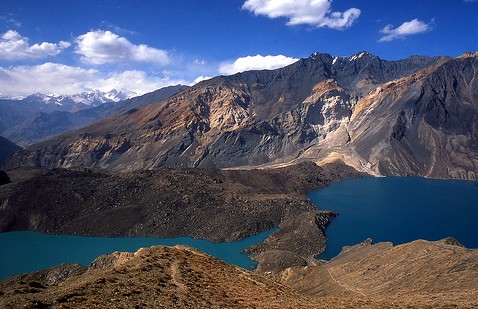
On the evening of January 30th, an earthquake struck in the Gorno-Badakhshan Autonomous Province on the border between Tajikistan and Xinjiang. Though this instance only had a magnitude of 4.4, it comes in the wake of the magnitude 7 quake which pounded the China-Kyrgyzstan border on January 23rd, shaking buildings in Almaty. As recently as February 2023, a series of earthquakes, the largest measuring 6.8, hit forty miles west of Murgab on the border between Tajikistan and China’s Xinjiang province. This was the eighteenth such instance measuring 6.5 or more over the course of the last century, and serves to focus attention on extremely remote Lake Sarez in Tajikistan. [/vc_column_text][vc_single_image image="14212" img_size="full" el_class="scond-image" parallax_scroll="no" woodmart_inline="no"][vc_column_text woodmart_inline="no" text_larger="no"]Plan of Lake Sarez and the Usoi Dam, 1913 At five-hundred-meters deep and 47 miles long, mountainous Lake Sarez contains more than 3.85 cubic miles of water. It was formed in 1911, when a 2.2 billion cubic meter landslide caused by an earthquake with an estimated magnitude of 6.5-7.0 blocked the Bartang River’s path. The sound of the quake was recorded over 2,350 miles away at the Pulkovo seismic station near St. Petersburg. Thus, the tallest natural dam in the world, the three-mile long, 567-meter high Usoi Dam was formed, whilst the villages of Usoi and Sarez were buried beneath the landslide and the lake, respectively, killing 302 people. According to the two survivors, the dust clouds cleared only after some days to reveal a mountain where the village of Usoi used to stand. The lake has been a potential disaster waiting to happen ever since. In 1968, a landslide caused two-meter-tall waves to rock the lake, and with glacial melting causing water levels to rise by eight inches a year, pressure on the natural dam is building. As early as the 1970s, plans were hatched to harness the lake as a hydroelectric power station, but technical issues and its far-flung location saw the scheme come to nothing. In 2018, a deal was signed with Hong Kong-based Heaven Springs Harvest Group to sell the lake’s “blue gold” as drinking water, but inaccessibility again largely scuppered the project.[/vc_column_text][vc_single_image image="13414" img_size="full" el_class="scond-image" parallax_scroll="no" woodmart_inline="no"][vc_column_text woodmart_inline="no" text_larger="no"]Murgab Bazaar, Gorno-Badakhshan - Photo: Times of Central Asia Back in 1997, a gathering of experts in Dushanbe concluded that the Usoi Dam was unstable. Their findings suggested that a powerful earthquake could precipitate a collapse of the dam. However, a study conducted by the World Bank in 2004 contradicted these conclusions, arguing that the dam was, in fact, stable. Nevertheless, the main threat identified was not the dam's general stability but a specific geological feature - a partially detached mass of rock, approximately 0.72 cubic miles in size. There are concerns that this precarious massive rock formation could detach and plunge into the lake. This event could trigger a catastrophic flood, and, as such, while the dam itself may be stable, the potential for disaster still looms large. In this earthquake-prone environment, were the dam to be breached a tidal...

Kyrgyzstan Wins ICC Case Against Kazakh State Gas Company

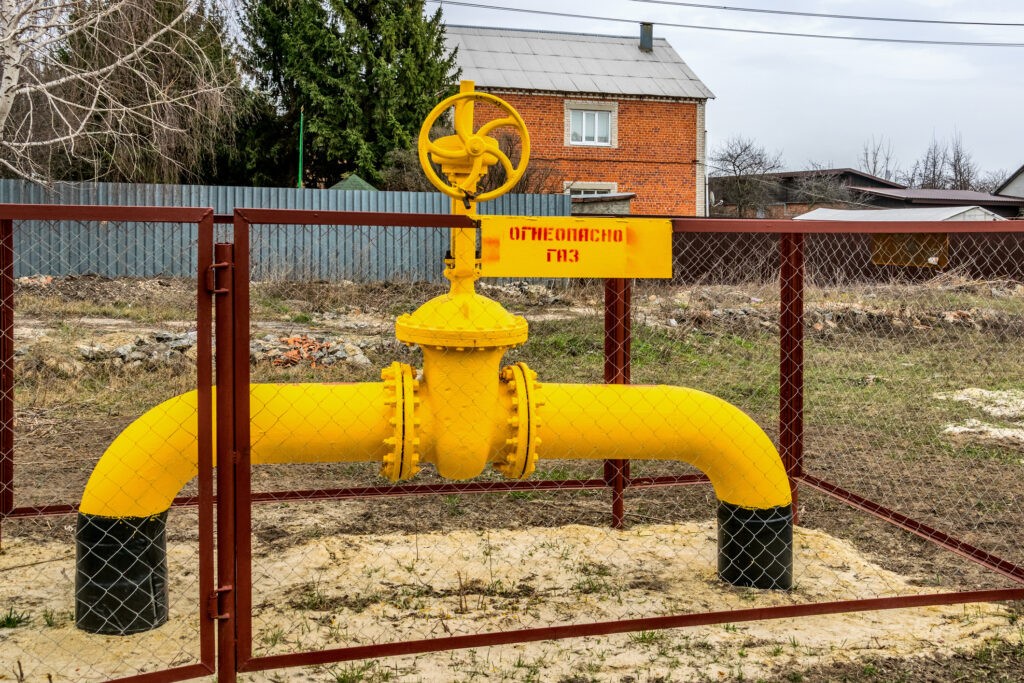
Officials at the International Chamber of Commerce's (ICC) International Court of Arbitrations in Paris, France, have ruled unanimously ruled in favor of the Kyrgyz Republic in a case brought by Kazakhstan's state natural gas company QazaqGaz that sought $35 million, according to the Ministry of Justice of the Kyrgyz Republic. The Kazakh company's claim was filed in 2020. QazaqGaz had originally sought $35 million during the arbitration proceedings, but later reduced its claims to $15 million by waiving its claim to lost profit. The claims against the Kyrgyz government were based on "expropriation and other violations of the claimant's rights." In 2004, QazaqGaz, together with the Kyrgyz national gas operator, JSC Kyrgyzgaz, established a joint venture (JV) for the purpose of modernizing and operating the Kyrgyz section of the Bukhara-Tashkent-Bishkek-Almaty gas trunk-line.  Under the agreement, the Kyrgyz gas operator transferred its share of the gas pipeline to the new JV. The investment agreement called for pipeline modernization, but later the contract was terminated by mutual consent. The Kazakh company then made claims based on three legal instruments: the Kyrgyz-Kazakh intergovernmental agreement on the promotion and protection of investments; the International Energy Charter, which includes substantive guarantees for the protection of foreign investments; and the Kyrgyz Republic's law on investments, which protects investors coming into the country. "The arbitration tribunal agreed with the Kyrgyz Republic's argument on the expiration of the statute of limitations on the plaintiff's claims arising from the Law on Investments in the Kyrgyz Republic and considered them inadmissible," the Kyrgyz Ministry of Justice said in a statement. It's worth noting that according to Kyrgyz law, the statute of limitations is three years from the moment the claimant discovered the violation of their rights. The International Arbitration Court rejected the claim on two other legal instruments. According to the Kyrgyz Ministry of Justice, the arbitration panel agreed with the defendant's argument that the actions of Kyrgyzgaz - which allegedly violated the rights of the plaintiff - cannot be attributed to the Kyrgyz Republic under the rules of international law on state responsibility. Therefore, the Kyrgyz Government cannot be held liable for the actions of Kyrgyzgaz in allegedly wrongfully terminating the contract. The International Arbitration Court ordered the Kazakh company to reimburse the Kyrgyz side for 60% of its arbitration costs. The decision can be appealed within one month. KyrgyzGaz is now called Gazprom Kyrgyzstan, and is owned by the Russian state gas company.